
REVIEW · SAPA TREKKING AND FANSIPAN
1-Day Sapa Long Trek – Rice Field Terrace, Ethnic Culture
One day, and Sapa feels endless. This 7-hour trek strings together Fansipan ridge views, Hmong village life, and Ta Van incense making, with a home-cooked lunch in between. It is the kind of day where the scenery keeps shifting, and the people you meet become the real reason to stay out on the trail.
I really like two things here. First, the panoramic mountain outlooks early on, when the Hoang Lien Son range frames Fansipan like the Roof of Indochina. Second, the lunch at Lao Chai Sang, shared with a Hmong family, with guides like Mao and Sue who explain what you are seeing as you walk.
The main drawback is practical, not cultural: the paths can get slippery and muddy after rain. Also, some village visits include people offering handmade goods, so if you dislike any sales pressure, keep your expectations steady and your spending limits clear.
In This Review
- Key highlights to watch for
- Starting in Sapa at 9:00 AM, chasing Fansipan from a ridge
- Muong Hoa Valley walking, rice terraces and river rhythms
- Y Linh Ho wooden bridge and the river-side pause
- Lao Chai Sang lunch with a Hmong family, comfort in the middle of the climb
- Learning Hmong clothing and natural dyes, what handwork really means
- Ta Van village around 3:00 PM, incense making in the late-day quiet
- Price and value: $24 for a full-day guide-led circuit
- The walk itself: how hard is it, and why mud changes everything
- Transport, group size, and the guide effect
- What to pack (and what to skip)
- Should you book this 1-day Sapa long trek?
- FAQ
- How long is the Sapa long trek?
- What is the group size?
- Is lunch included?
- Where does pickup happen?
- What language is the guide?
- What should I bring?
- Does the tour run in bad weather?
- Is it suitable for people with mobility or health issues?
Key highlights to watch for
- Fansipan-style views without a long push early in the morning, plus chances to choose easier or steeper paths depending on conditions
- Lao Chai Sang lunch with a Hmong family that feels like a meal with people, not a staged stop
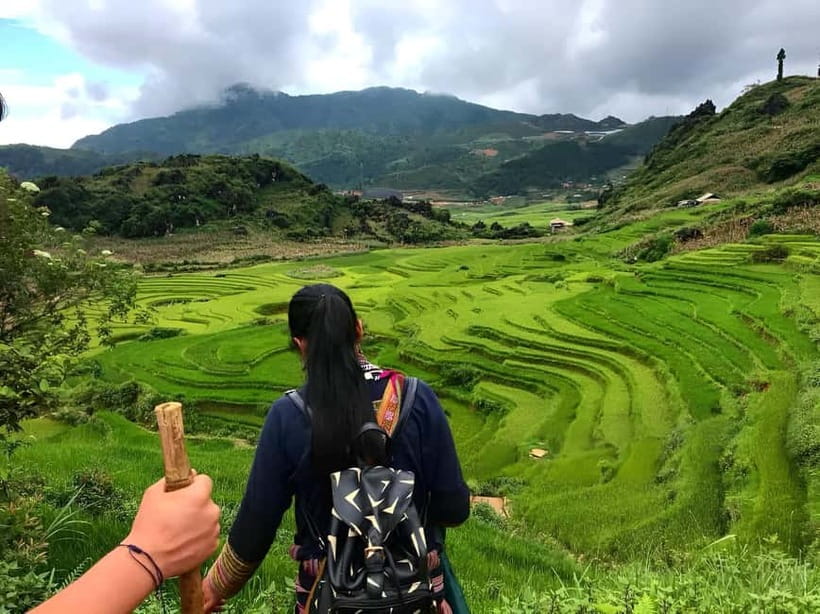
- Muong Hoa Valley rice terrace walking through open fields, river views, and quieter routes away from crowds
- A hands-on look at traditional Hmong clothing using handwoven fabrics and natural dyes
- Ta Van incense making at the end of the day, when the pace naturally slows and the village feels more intimate
Other Sapa walks, from gentle to genuinely hard
- Sa Pa: Muong Hoa Valley Trek and Local Ethnic Villages★ 4.6 · 864 reviews
- Sapa: Eco Adventure Terrace Fields and Local Villages Trek★ 4.9 · 636 reviews
- From Sapa: 1-Day Guided Trek to Lao Chai & Ta Van with Lunch★ 4.9 · 416 reviews
- Sapa 1 Day Long Trek: Trek to Hau Thao and Sa Seng Villages★ 4.6 · 344 reviews
Starting in Sapa at 9:00 AM, chasing Fansipan from a ridge
Your day kicks off in Sapa town around 9:00 AM, with pickup at your hotel (as long as you’re in Sapa town). You step into crisp mountain air fast, and you do not just ride to lookouts. You actually walk up to a ridge for wide views, with Fansipan rising from the Hoang Lien Son range like an unmistakable landmark.
This part matters because it sets the tone. When the mountain air is clear, the view gives you context for every bend you take later. When it is misty or cloudy, the ridge still makes you understand the valley shape, even if you get fewer dramatic peaks.
From my angle as a trip planner, I like that you are not rushing right into a jungle grind. You get a view first, then you descend into the valley. It feels like you are reading the map as you go, not just checking boxes.
One detail worth knowing: the tour is designed for a guided day on uneven ground, so comfortable shoes are not optional. You will be on trails that can be wet, especially around forested stretches.
Muong Hoa Valley walking, rice terraces and river rhythms
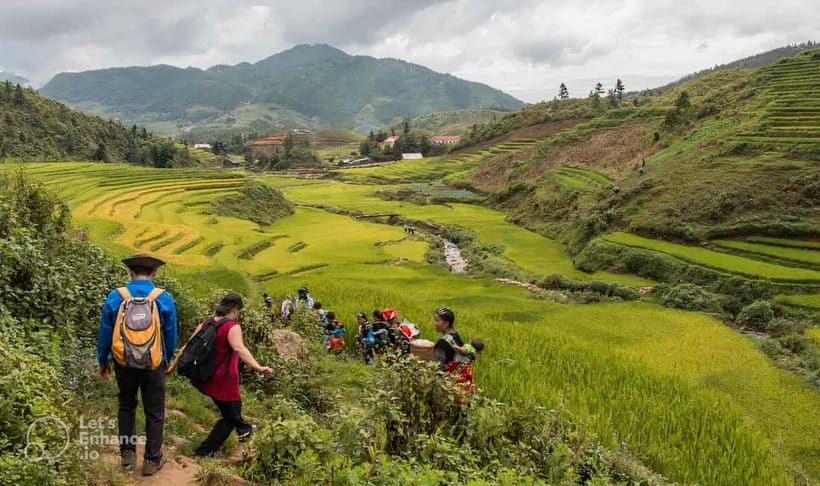
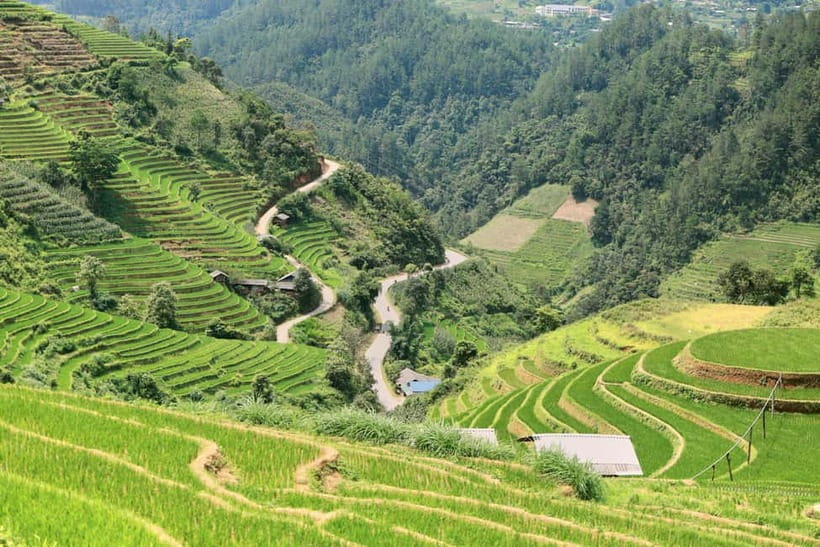
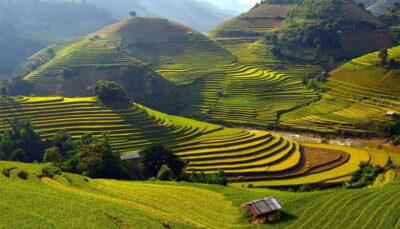
By late morning you shift into the rhythm of Muong Hoa Valley. The walk moves through rolling mountain slopes where rice terraces step down toward lower ground, and the scenery keeps changing as you move. The valley also brings water and sounds: you hear the constant rural hum of fields and you catch river glimpses as the route bends.
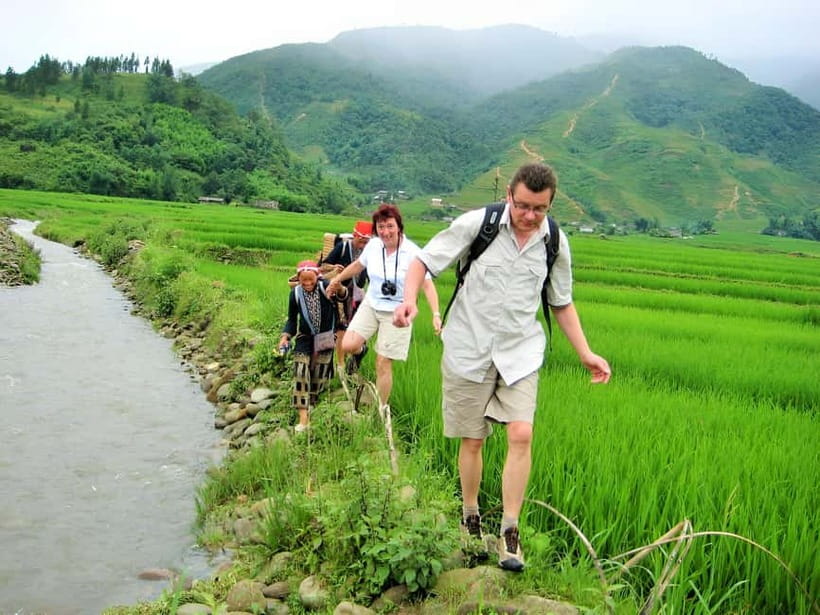
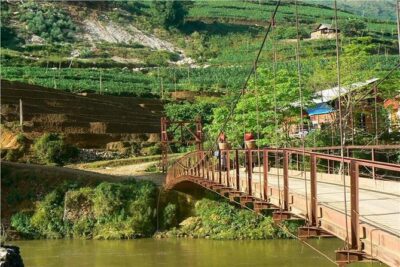
Around 11:00 AM, you reach Y Linh Ho, a Hmong village beside a clear river. You cross a wooden bridge, and it is one of those simple moments that instantly makes the countryside feel real. After that, you continue trekking deeper into the valley through rice fields with big peak backdrops. This is where many people start to relax into the day, because the walking becomes more about noticing than powering through.
I like the way this segment mixes open field paths with village edges. You get that “I am walking inside village life” feeling without the day turning into a nonstop grind.
Two practical considerations:
- If you visit after rain, the forest and dirt can feel slick. Your traction matters more than speed.
- The route timing keeps you moving, so if you want lots of long stops, tell your guide. They can adjust the pace.
Y Linh Ho wooden bridge and the river-side pause
The Y Linh Ho stop is short, but it is not random. You are going to remember the river, because it gives the trek a clean visual line through the valley. The wooden bridge crossing helps too. It forces a break in your stride and makes the area feel less like a route and more like a place.
This is also a good time to slow your photos down. The terrace lines and river reflections only look good if you give your eyes a moment. A common mistake is to treat every view like a quick snapshot. Instead, watch the light shift as you walk, because the valley changes as you move.
If you get a guide like Mao or Giang, you will likely hear stories about daily routines and what people grow and manage in different seasons. The best part is that the explanation feels tied to the walk you are doing, not like a lecture dropped into your itinerary.
Lao Chai Sang lunch with a Hmong family, comfort in the middle of the climb
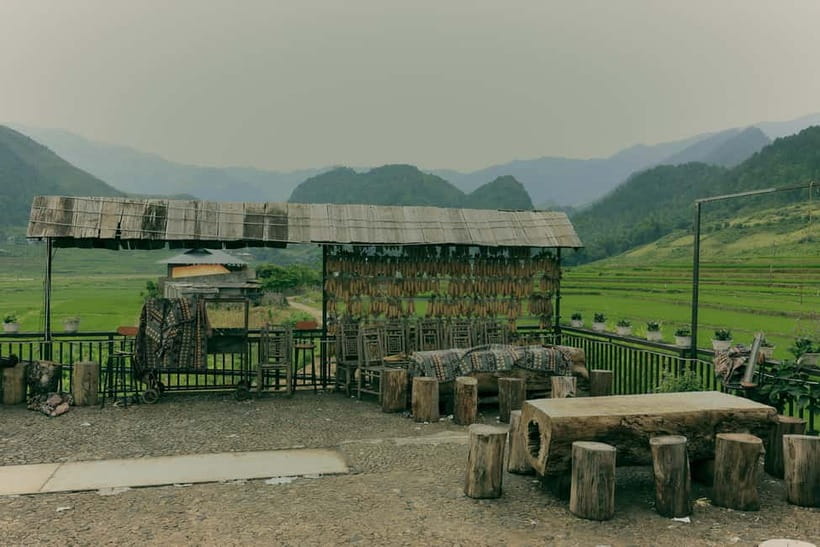
At about 12:30 PM, you arrive in Lao Chai Sang for lunch with a welcoming Hmong family. This is the meal stop that makes the trek feel balanced. You are not just fueling up, you are also stepping into how people live and cook in mountain homes.
The lunch is described as home-cooked, and in practice that usually means shared dishes with a warm, communal feel. Several guides in this set of experiences, including Sue and Mao, are known for taking time and keeping the mood friendly. If you have dietary restrictions, you can request catering in advance.
What I like about this kind of lunch stop is the way it prevents the day from turning into pure hiking. You get a cultural beat that is physical and sensory, not only visual. Also, it helps you reset before the afternoon walking.
The only caution is simple: you will probably want to carry less food for the second half because lunch is filling. Plan on drinking water during the walk and saving your snacks for later if you get hungry fast.
Sleep in a village, walk between them
Learning Hmong clothing and natural dyes, what handwork really means
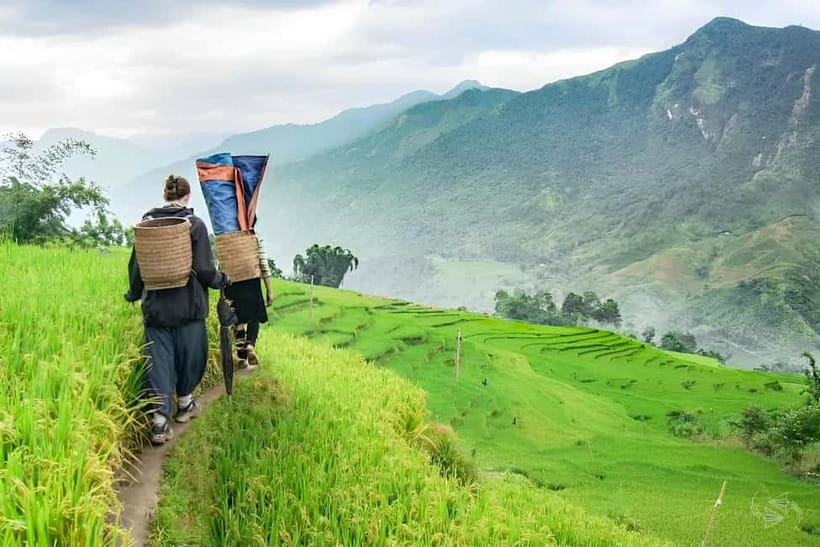
Around 2:00 PM, you visit a local stop to see how Hmong people create traditional clothing using handwoven fabrics and natural dyes. This is not just you watching an artifact behind glass. You see the process and you get a sense of what takes time in everyday craft.
This matters because clothing is identity here. When your guide explains why certain colors and patterns matter, you start to understand why village life includes so much careful work. It also helps explain the constant presence of textiles you see along the route.
From a practical standpoint, this stop can involve some selling of scarves or clothing items. If you plan to buy, go in calmly and treat it like a fair negotiation. If you do not want to buy, you can still enjoy the demonstration without committing. A small trick: ask questions about materials and dye sources, because it shifts the interaction from buying to learning.
Ta Van village around 3:00 PM, incense making in the late-day quiet
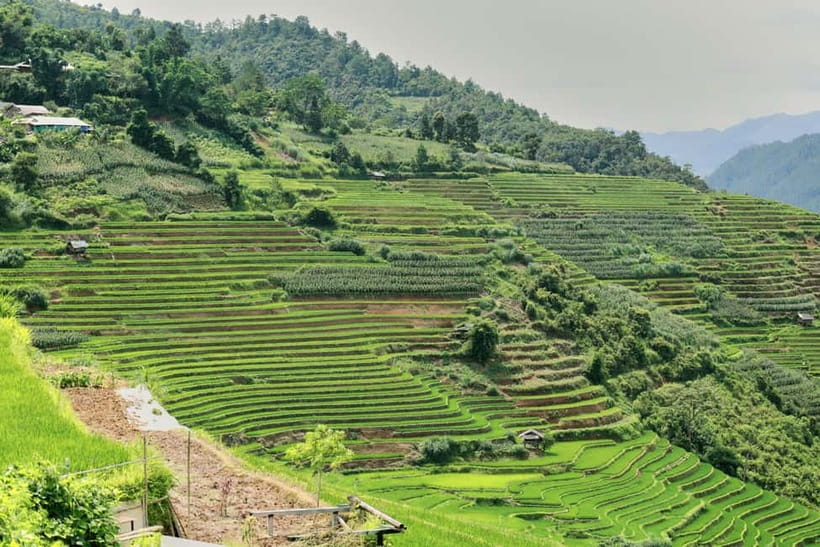
By roughly 3:00 PM, you reach Ta Van village. This is where the pace often becomes more relaxed before your ride back. The highlight here is learning the traditional art of incense making, tied to local beliefs and household routines.
Incense making feels like a good ending because it contrasts with the morning’s big views. Earlier you were seeing the mountains open up; now you are focusing on something close and slow. You also get the chance to walk and take photos around the village while the light softens.
One more reason I like Ta Van as an ending: it sets you up for a smoother return to Sapa. Your driver is waiting to take you back to town, so you are not stuck figuring out transport at the end of a long day.
Price and value: $24 for a full-day guide-led circuit
At $24 per person, the value here comes from what is included, not from the sticker price alone. You are paying for:
- Pickup and drop-off in Sapa town
- A friendly Hmong guide from local villages who speaks English and Vietnamese
- Entrance fees for village stops
- Home-cook lunch (prepared by local families)
- Rain ponchos or rain coats, plus a small bottled water
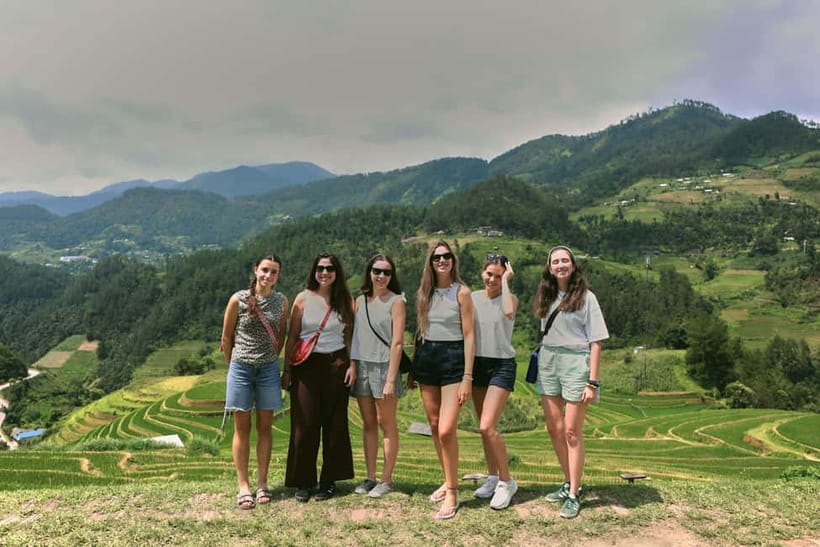
- Small group size, limited to 10 participants
That list is why this price can work. You are not just getting a route suggestion. You get local interpretation, cultural access at village homes, and basic gear for weather.
One small caveat: entrance fees and any “Fansipan trekking” items apply only if your route includes that portion. The tour also mentions Fansipan national park fees for Fansipan trekking, and a picnic lunch at the rest stop in the middle of Fansipan mountain for Fansipan trekking only. If your day is mostly valley walking and viewpoint stops, you can treat those as conditional extras rather than guaranteed.
Also, the small-group limit is a big deal. It keeps the experience from feeling like a conveyor belt and makes it easier for your guide to adjust pace and answer questions.
The walk itself: how hard is it, and why mud changes everything
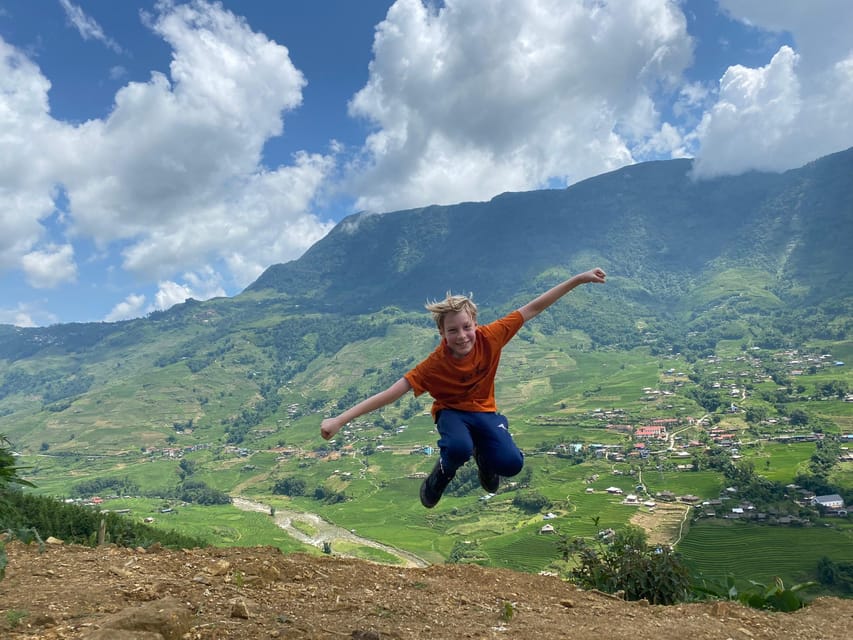
This trek is not sold as an easy stroll. It is a guided day hike with uneven terrain. In real terms, many people cover around 12 to 15 km on a route like this, with steep or slippery sections depending on the trail and recent rain.
You also need to be honest about who this suits. The tour is not suitable for people with back problems, mobility impairments, heart problems, wheelchair users, fear of heights, visual impairments, or pre-existing medical conditions. If any of those apply, do not try to “push through.” Pick a gentler alternative.
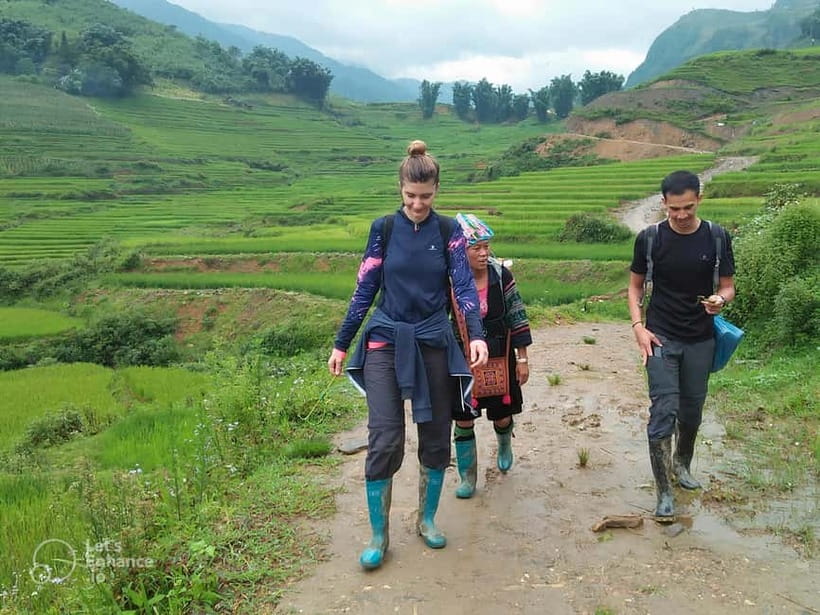
Weather is the biggest variable you can control. Guides handle rain or shine, and they provide ponchos or rain coats. Still, rain turns dirt trails into traction tests. Several people mention slippery ground in forest parts and recommend good hiking shoes, sometimes even rubber boots.
My practical advice:
- Wear shoes with grip you trust in wet dirt.
- Assume you will step in mud at least once.
- Pace slower than you think. Short steps help on uneven ground.
If conditions are rough, you can usually go slower. Some guides, like Mao, are known for asking if you want easier or steeper paths. That flexibility can save your knees.
Transport, group size, and the guide effect
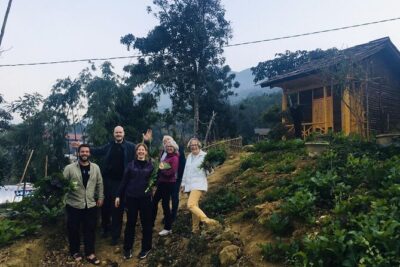
A standout in these experiences is the guide. Many named guides show up across departures, including Pao, Sue, Mao, Giang, Thao, Sung, and Soso. The consistent theme is effort, friendliness, and storytelling that ties local life to what you are walking through.
Small-group size matters too. With a limit of 10, you are less likely to feel like you are competing for attention. On some days, people even report very small groups, which makes it easier to keep the pace comfortable and ask questions.
The flow of the day also helps you relax. Pickup happens in town, you start at 9:00 AM, you finish with a driver waiting in Ta Van. That structure keeps logistics simple, so your focus stays on the trail and the village moments.
What to pack (and what to skip)
Bring:
- Hiking shoes with good grip
- Hat or sun hat
- Suncream and sunglasses if it is clear
- Insect repellent
- Toiletries
Also bring what your body needs, like a small snack if you get hungry quickly. The included lunch covers you, but long hikes can surprise you.
Skip:
- Weapons or sharp objects
- Anything that violates the tour’s no-nudity rule
If you are doing a Fansipan-related portion, you may need to provide passport photos for national park registration. The tour also notes that if Fansipan trekking is included, descending can be by foot or cable car with an extra fee that may apply.
Rain prep matters most in the wet season. You will get ponchos or coats, but your shoes and socks are still your real protection.
Should you book this 1-day Sapa long trek?
Book it if you want a full day that mixes big views and real village interactions, and you are okay with a trek that can get muddy. At $24, the value is strongest when you care about guide-led culture, home-cooked lunch, and small-group pacing.
Skip it or choose a gentler route if:
- You have mobility or heart concerns, back issues, or visual impairment
- You hate uneven, slippery trails and cannot manage wet terrain
- You are very uncomfortable with any craft selling during village visits
My call: if you like walking, asking questions, and ending the day with incense making in Ta Van, this is a solid Sapa “one night” style experience. It gives you more than photos, it gives you context for the valley and the people who live there.
FAQ
How long is the Sapa long trek?
The duration is listed as 7 hours.
What is the group size?
The tour is a small group, limited to 10 participants.
Is lunch included?
Yes. A home-cook lunch is included. If your route includes Fansipan trekking, there can also be a picnic lunch at the rest stop on Fansipan mountain.
Where does pickup happen?
Pickup is included in Sapa town at your hotel (or at a listed pickup point in town). If you are outside Sapa town, you can request pickup with a fee.
What language is the guide?
The live tour guide speaks English and Vietnamese.
What should I bring?
Bring hiking shoes, a hat or sun hat, insect repellent, and toiletries. Suncream, sunglasses, and extra water can also help.
Does the tour run in bad weather?
Yes, tours run rain or shine. In wet season, bring a raincoat, even though ponchos or rain coats are provided.
Is it suitable for people with mobility or health issues?
No. It is not suitable for wheelchair users, and it is also listed as not suitable for people with back problems, mobility impairments, heart problems, fear of heights, visually impaired conditions, or pre-existing medical conditions.
Walk, Then Stay
- Sa Pa: Muong Hoa Valley Trek and Local Ethnic Villages★ 4.6 · 864 reviews
- Sapa: Eco Adventure Terrace Fields and Local Villages Trek★ 4.9 · 636 reviews
- From Sapa: 1-Day Guided Trek to Lao Chai & Ta Van with Lunch★ 4.9 · 416 reviews
- Sapa 1 Day Long Trek: Trek to Hau Thao and Sa Seng Villages★ 4.6 · 344 reviews
- EXPLORE SAPA: 2D1N TREKKING & HMONG CULTURE WITH DINH★ 4.9 · 191 reviews
Sapa on Foot
- Sa Pa: Muong Hoa Valley Trek and Local Ethnic Villages★ 4.6 · 864 reviews
- Sapa: Eco Adventure Terrace Fields and Local Villages Trek★ 4.9 · 636 reviews
- From Sapa: 1-Day Guided Trek to Lao Chai & Ta Van with Lunch★ 4.9 · 416 reviews
- Sapa 1 Day Long Trek: Trek to Hau Thao and Sa Seng Villages★ 4.6 · 344 reviews
- Sapa: Fansipan Cable, Cat Cat Village, Moana Instagram Tour★ 4.8 · 294 reviews
Other Sa Pa tours our reviewers keep coming back to
- Hanoi: Sapa Trekking 2 Days 1 Night – Sleeper Bus from Hanoi
★ 4.6 · 18 reviews - AUTHENIC 2D1N Trek & Bungalow Retreat with Dinh Hmong Family
★ 5.0 · 19 reviews - Sapa: Ta Phin Village Trek & Red Dao Herbal Bath
★ 5.0 · 22 reviews - Sapa: Cat Cat Village, Moana, Alpine Coaster, Fansipan Cable
★ 4.7 · 22 reviews - From Hanoi: Explore Sapa 2-Day Tour
★ 4.3 · 22 reviews - Alpine Coaster Ban Mong Experience in Sapa – Vietnam
★ 4.3 · 22 reviews
Sapa Trekking and Fansipan, compared.
 ★ 5.0Sapa 2 Days 1 Night From Hanoi – Overnight in Ta Van VillageFrom $592,669 reviews
 ★ 5.0Hanoi – Sapa 2 Days 1 Night Overnight At HomestayFrom $89899 reviews
 ★ 4.6Sa Pa: Muong Hoa Valley Trek and Local Ethnic VillagesFrom $23864 reviews
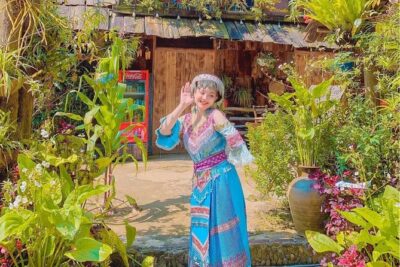 ★ 5.0Sapa: Fansipan Cable, Cat Cat Village & Moana Instagram TourFrom $30777 reviews
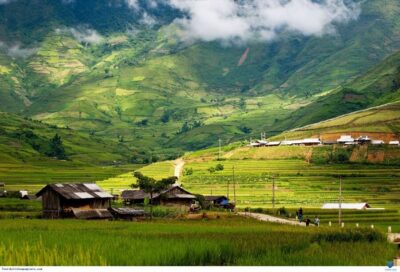 ★ 4.8From Hanoi: 2-Day Sapa Trekking Trip with Homestay & MealsFrom $71704 reviews
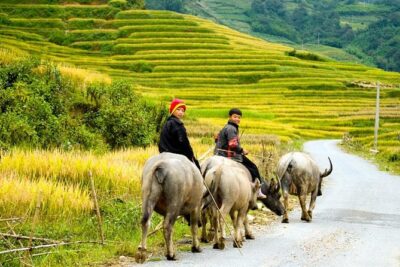 ★ 5.0Sapa 3 Days 2 Nights Trekking Tour (1 Night In Ta Van Village, 1 Night In Hotel)From $139699 reviews
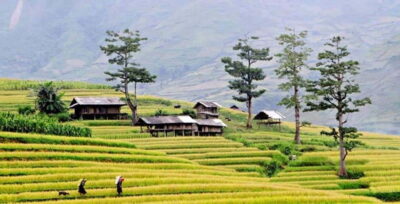 ★ 4.9Sapa: Eco Adventure Terrace Fields and Local Villages TrekFrom $27636 reviews
 ★ 5.03-Day Trekking Adventure of Sapa from Hanoi – Stay Ta Van VillageFrom $109611 reviews