
REVIEW · COOKING CLASSES
Experience Cooking Class for Lunch or Afternoon With Local Chef
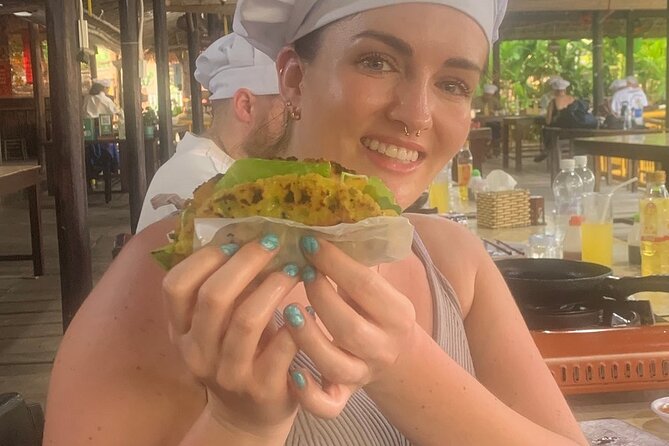
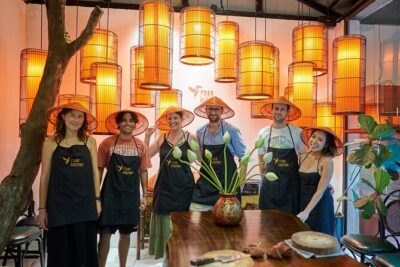
Hands-on Vietnamese cooking starts in a coconut village. This Hoi An class is built for learning local flavors fast, with a friendly setup and a maximum group size of 10. I like the way the day blends traditional tools like pounding and grinding with real cooking on your own stove. You’ll also leave knowing four specific Hoi An recipes, not just tasting.
You get picked up in the Cam Thanh Coconut Village area, enjoy a welcome drink, then cook, eat, and head back. The main drawback to consider is that it is a group tour, so the pace is shared, and you will have less one-on-one time than a private class.
In This Review
- Key highlights at a glance
- Why a Cam Thanh cooking class feels different
- Meeting in Cam Thanh and getting set up for about 3 hours
- Traditional rice tools: where the class starts before cooking
- Dish by dish: pancakes, spring rolls, papaya salad, lemongrass chicken
- Pancakes
- Spring rolls
- Papaya salad
- Lemongrass chicken
- What about phở mentioned in the description?
- The welcome drink and your end-of-class meal
- Price and value: why $27 can work in Hoi An
- Small group pacing: what you gain with under 10 people
- Lunch vs evening slots: choosing your 13:30 or 19:30 end time
- Vegan or vegetarian request: how to plan ahead
- Practical advice before you go to the stove
- Who should book this cooking class in Hoi An
- Should you book this cooking class?
- FAQ
- How long is the cooking class?
- What dishes will I cook?
- How many people are in the group?
- Where does the activity start and end?
- Can a vegan or vegetarian menu be arranged?
- What is the cancellation policy?
Key highlights at a glance
- Cam Thanh Coconut Village start point that feels more local than the busy old town
- Small group of up to 10 for a calmer, more interactive class
- Traditional rice tools like pounding and separating rice, plus grinding
- Four hands-on dishes you’ll actually make and eat: pancakes, spring rolls, papaya salad, lemongrass chicken
- Vegan or vegetarian menu available if you request it ahead
- Mobile ticket for a smoother check-in
Narrowing it down? These Hoi An tours kept surfacing in our reviews.
- Hoi An: Basket Boat Ride in the Coconut Forest★ 4.9 · 4,956 reviews
- Hoi An: Vietnamese Coffee Culture and Coffee Making Class★ 4.9 · 4,006 reviews
- Hoi An: Vietnamese Foldable Lantern Making Class★ 4.9 · 3,742 reviews
- Cooking Class Hoi An:Local Market, Basket Boat, Fishing & Cooking★ 5.0 · 3,660 reviews
Why a Cam Thanh cooking class feels different
Hoi An has plenty of food options, but a cooking class is different because you learn technique, not just flavor. This one is anchored in Cam Thanh Coconut Village, a quieter area where people still work with the rhythms of local ingredients and tools. That matters, because the class isn’t only about chopping and frying. It’s also about how Vietnamese cooks prepare key components before the stove ever gets hot.
Another reason I like this setup is that it is built around short, usable lessons. You cook four local dishes during a roughly 3-hour session, and then you eat what you made. That gives the experience a clear payoff: you can compare what you produced with what you were taught, then take that confidence home.
Finally, it is designed for real short stays. If you have limited time in Hoi An, you still get a hands-on feel for local cooking methods without spending half a day commuting across town or waiting around for long demos.
Meeting in Cam Thanh and getting set up for about 3 hours
The day starts with a pickup in the Cam Thanh Coconut Village area, near Hoian Eco Coconut Tour, Trần Nhân Tông Village street, Hội An. The activity ends back at the meeting point, which keeps your logistics simple.
Once you arrive, you will move to the cooking location inside the Coconut Village area. Before the stove work begins, there’s a welcome drink and time to rest at the restaurant. That small break is practical. In Vietnam’s heat, you want to get settled and hydrated before active prep starts.
From there, you join in the class and cook your dishes. The schedule lists the class ending around 13:30 for the afternoon option, or 19:30 for the evening option. The organizer notes the time can shift a little, which is common for village-based activities.
The biggest tip here is to plan your other plans loosely around those end times. You will be eating at the end, so treat the rest of your day as a buffer, especially if you want to wander old town afterward.
Traditional rice tools: where the class starts before cooking
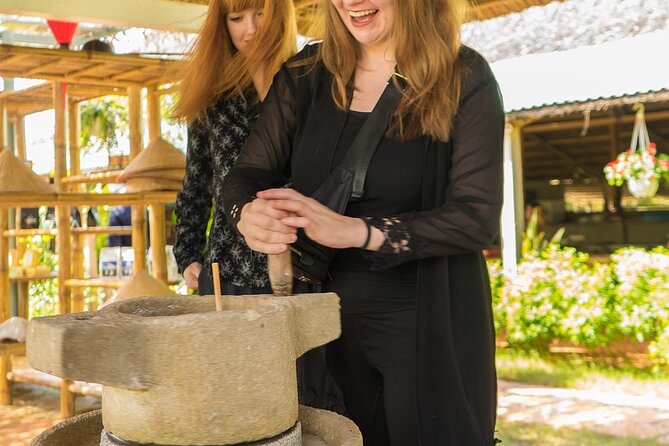
One of the best parts of this experience is that it includes traditional culture tools, not as a gimmick, but as a warm-up to cooking. You’ll get hands-on with activities like pounding and separating rice and grinding. The goal is to show how ingredients become usable, flavorful parts of a dish.
Even if you are not a kitchen person, this is the kind of activity that makes the rest of the class make sense. When you see how much effort goes into basic prep, you start understanding why some Vietnamese foods have the textures they do. It also helps you appreciate why certain sauces and fillings taste the way they do, because you learn how the ingredients get processed and combined.
This is also where the “small group” part helps. In a group of around 10, you can actually participate instead of standing at the edge for most of the session. You can ask quick questions and watch how others handle the tools, then try it yourself.
Dish by dish: pancakes, spring rolls, papaya salad, lemongrass chicken
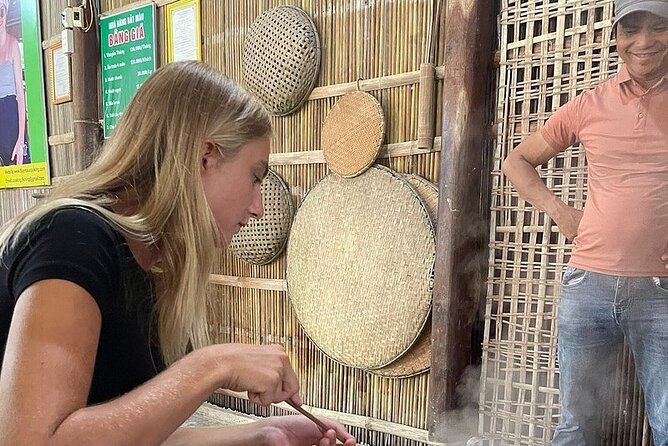
The cooking class focuses on four dishes made from Hoi An recipes, taught by a local chef using the methods and steps you can repeat later. The four dishes listed are:
- Pancakes
- Spring rolls
- Papaya salad
- Chicken with lemongrass
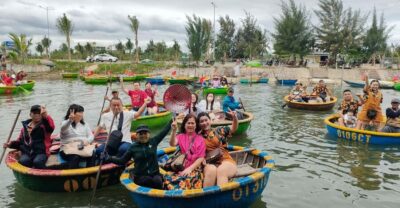
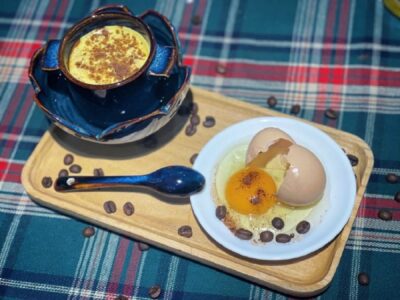
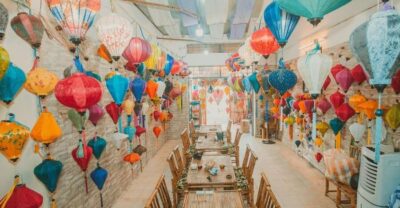
Pancakes
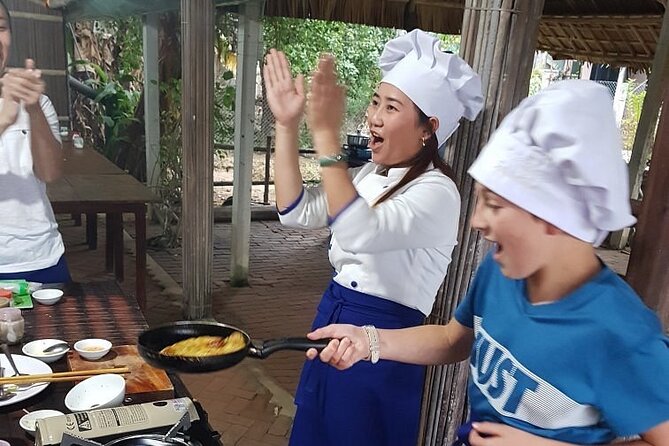
You’ll learn how to get the batter to behave and how to treat the pancake so it cooks evenly. The “hands-on” part matters here. It’s easy to watch someone cook one and forget what went into it. In this class, you are cooking along the way, which helps you understand texture cues, like when to flip and how to manage heat.
Spring rolls
Spring rolls are where technique shows. Rolling is only partly about speed. It’s about tightness, alignment, and getting the ingredients distributed so every bite tastes right. Since ingredients are prepared in advance, you spend time on the skills that really matter, like assembly and cooking rather than hunting down components.
Papaya salad
Papaya salad is a flavor lesson. You’re working with a mix of tang, crunch, and seasoning balance. This is one of those dishes where the difference between bland and great often comes down to small choices in how you mix and adjust. You’ll see the method used by locals, which helps you avoid the common mistake of pouring dressing without tasting along the way.
Lemongrass chicken
Lemongrass chicken is about aroma and depth. You’ll learn how the fragrance of lemongrass carries the dish, and how other flavors support it. Because the class is structured as cooking, not just seasoning, you’ll understand when to add components and how to prevent the chicken from turning dry or uneven.
What about phở mentioned in the description?
The class description frames the experience around authentic Vietnamese dishes and specifically mentions phở (Hanoi-style phở). The detailed itinerary and dish list you cook in the session focuses on the four Hoi An recipes above. So expect the class to center on those dishes, while the chef’s broader Vietnam cooking approach may reference phở-related techniques or flavor logic. If you’re coming for phở specifically, I’d ask the provider what phở content is included before you book.
The welcome drink and your end-of-class meal
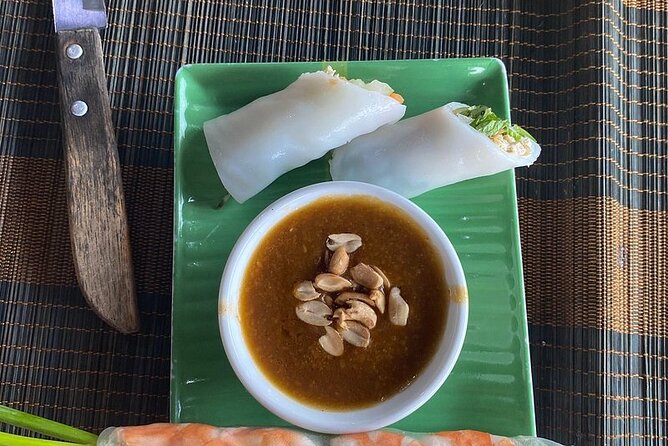
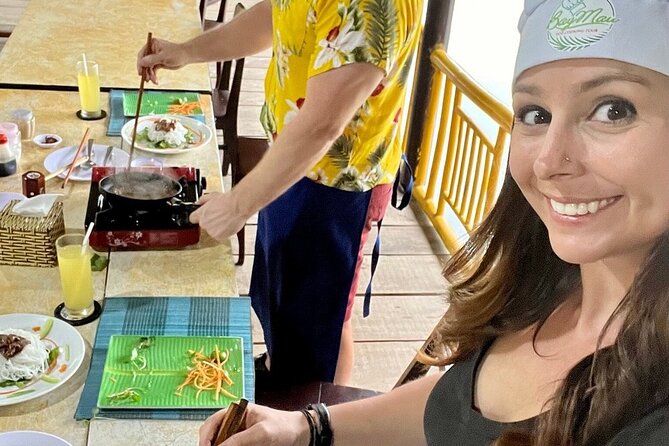
The routine is simple: arrive, take a rest with a welcome drink, then cook. After the lesson, you enjoy what you cooked along with side dishes prepared for you.
This is more than a nice extra. Eating your own dishes right after cooking is one of the fastest ways to learn. You can instantly connect the taste to the actions you just took. If something tasted off, you can ask about adjustments while the chef’s guidance is still fresh.
It also makes the class more “worth it” for a trip like Hoi An. Instead of booking a cooking class and then grabbing a separate meal after, you get the meal included as part of the experience. That means you’re paying for both instruction and lunch or dinner.
Also, since ingredients are prepared in advance, the class stays focused on cooking skills rather than long prep waits. It keeps your time efficient while still giving you real involvement.
Price and value: why $27 can work in Hoi An
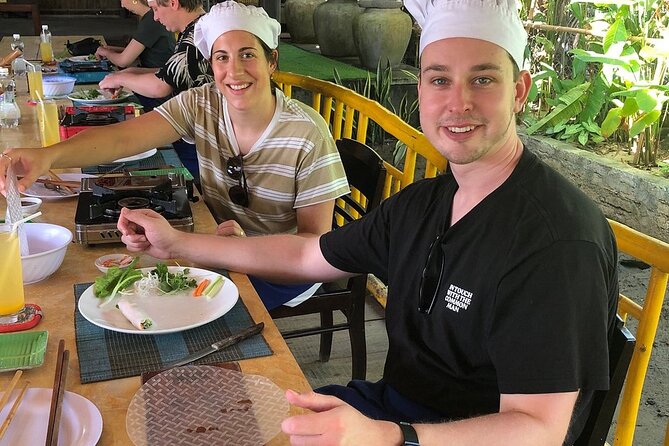
At $27 per person for about 3 hours, the value depends on what you want out of Vietnam food. If you want a quick tasting tour, you might spend less elsewhere. But if you want a skill you can use at home, this price starts to make sense fast.
Here’s the value math you should think about:
- You cook four dishes, not one.
- You eat the result, so you are not paying for instruction only.
- The group size is capped at about 10, which typically supports better interaction.
- You get included traditional tool activities like pounding and grinding, which adds context to the food.
And those details matter. In many cooking classes, you do one small task and watch the rest. Here, the format is explicitly designed for you to cook and then eat. The strong rating and high recommendation rate back up that the outcome feels satisfying, not just educational.
If you travel with teens, this kind of class can be a win. The feedback around the experience highlights that even teenagers enjoyed themselves and left feeling proud and confident about cooking again at home. That’s the difference between a food activity that works as a family day and one that only adults get excited about.
Small group pacing: what you gain with under 10 people
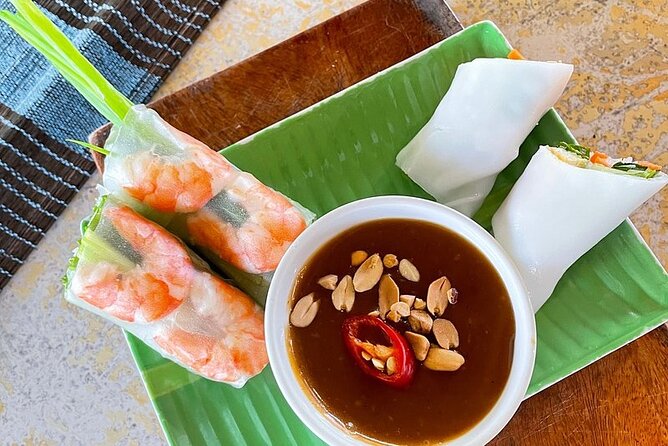
The experience is a group tour with a maximum of 10 travelers. The organizer notes the group size is around 10, and it can be combined with other participants. That doesn’t mean it becomes chaotic, but it does affect how fast the class moves.
For you, the advantage is that you’re not fighting for attention. In a small group, you can usually:
- see the chef’s technique clearly,
- get your questions answered between steps,
- and take part in the rolling, mixing, and cooking rather than waiting.
The practical consideration is that the class is still scheduled. You may not get the chef’s full focus on your personal preferences like an all-private class would. If you want special customization for your dishes, you’ll need to speak up at the start and be clear about your goals.
Lunch vs evening slots: choosing your 13:30 or 19:30 end time
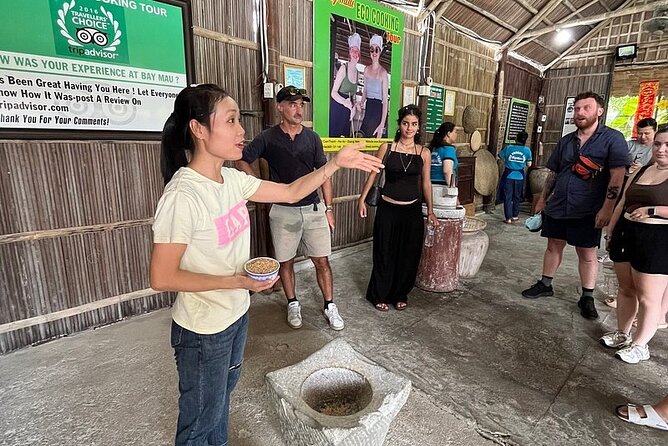
You can book for either an afternoon or evening session. The class ends around 13:30 for the lunch/afternoon option, or 19:30 for the evening option.
How I’d choose:
- If you want a daytime food experience, pick the earlier session so you still have energy to explore Hoi An afterward.
- If you prefer a slower evening rhythm, the later slot can work nicely, especially if you already planned daytime activities.
Since the class includes dining at the end, pick the slot that fits around your hunger and your energy, not around what time old town looks nicest. Vietnam nights can be tempting, but you’ll enjoy the class more if you arrive ready to cook, not already exhausted from too much sun.
Vegan or vegetarian request: how to plan ahead
The provider notes a vegan/vegetarian menu can be arranged if you request it. That’s important, because the four listed dishes include ingredients that are often animal-based or seafood-adjacent in many versions.
So the key move is simple: request your dietary preference at booking, and confirm what substitutions are possible for each of the four Hoi An dishes. Don’t wait until you show up, because small-group cooking works best when the kitchen can prep accordingly.
If you are traveling with picky eaters, this is also a good sign. A class that can adapt is easier for groups with mixed diets.
Practical advice before you go to the stove
To get the most from this class, think like a learner, not a tourist with a camera.
- Wear something comfortable that can handle kitchen heat. You will be close to cooking and possibly light splatter during rolling or mixing tasks.
- Be ready to taste as you go. Vietnamese cooking often involves adjusting balance. If you only taste at the end, you miss the logic behind the flavors.
- Ask quick questions when steps feel unclear. In a small group, you can usually catch the chef before the next dish moves you along.
One more practical note: the description says ingredients are prepared in advance. That’s good news for your timing, but it also means you should not expect a full “from scratch” ingredient gathering adventure. This is about cooking technique and local flavor methods, not about producing everything from raw materials.
Who should book this cooking class in Hoi An
This class fits best if you want:
- a hands-on Hoi An food lesson in a short timeframe,
- a small group setting with real participation,
- and a chance to learn how local cooks build flavor through tools and technique.
It’s also a smart choice if you care about bringing something home. The standout feedback emphasizes that people leave feeling confident to cook these dishes again at home. That’s the real souvenir, and it’s why this type of class can be worth more than another evening of eating out.
You might consider another option if you:
- want a very private setting with lots of personal tailoring,
- need a slow, leisurely cooking day rather than a scheduled 3-hour class,
- or are strictly focused on phở as the main goal. This experience centers on four Hoi An dishes.
Should you book this cooking class?
Book it if you want a focused, friendly way to learn real Hoi An cooking skills in Cam Thanh Coconut Village, then eat what you make. The small group limit, traditional tool component, and the four specific dishes are exactly the kind of structure that helps people feel confident afterward. At $27 for a 3-hour session that includes cooking and your meal, it is solid value for most visitors.
Skip it or ask extra questions before booking if you have tight dietary needs you want fully customized, or if you are only interested in phở and nothing else. Otherwise, this is a practical, enjoyable way to learn Vietnamese cooking without spending your whole day on logistics.
FAQ
How long is the cooking class?
The class is about 3 hours.
What dishes will I cook?
The class includes four local dishes for Hoi An: pancakes, spring rolls, papaya salad, and chicken with lemongrass.
How many people are in the group?
It is a group tour with a maximum of 10 travelers.
Where does the activity start and end?
You start with pickup in the Cam Thanh Coconut Village area near Hoian Eco Coconut Tour, Trần Nhân Tông Village street, Hội An, Quảng Nam. The activity ends back at the meeting point.
Can a vegan or vegetarian menu be arranged?
Yes, a vegan/vegetarian menu can be arranged if you request it.
What is the cancellation policy?
Free cancellation is available up to 24 hours in advance for a full refund. If you cancel less than 24 hours before the start time, the amount paid is not refunded.
Other Hoi An tours our reviewers keep coming back to
- 3 Hours Motorbike Tour in Hoi An Countryside.
★ 5.0 · 18 reviews - My Son Sanctuary Discovery Half day Private Tour
★ 5.0 · 18 reviews - Hoi An local food tour – enjoy taste of Vietnam at ancient town!
★ 5.0 · 18 reviews - Experience Cooking Class for Lunch or Afternoon With Local Chef
★ 5.0 · 18 reviews - HOI AN Vegetable Village, Basket Boat, Palm Forest PRIVATE TOUR
★ 5.0 · 18 reviews - Hoi An Countryside Tour with Bamboo Basket Boat Rowing , Buffalo Ride, Farming
★ 5.0 · 18 reviews
Cooking Classes, compared.
 ★ 5.0Hanoi Cooking Class: Culture, Local Market & Meaning CSR ImpactFrom $395,147 reviews
 ★ 5.05 Traditional Dishes Hanoi Cooking Class with Market TripFrom $354,890 reviews
 ★ 5.0Cooking Class Hoi An:Local Market, Basket Boat, Fishing & CookingFrom $283,660 reviews
 ★ 5.0Hoi An Cooking Class(Market,BasketBoat Crabfishing&Cooking Class)From $283,386 reviews
 ★ 5.0HCM:Mekong Delta Boat,Khotcake cooking Coconut Village,SmallGroupFrom $162,374 reviews
 ★ 4.8From Hoi An: Market Tour, Basket Boat Ride and Cooking ClassFrom $172,208 reviews
 ★ 5.0Hoi An Cooking Class(Local market,Basket Boat,Fishing & Cooking)From $281,323 reviews
 ★ 5.0Mekong Delta 4 Islands, TukTuk, Boat, Try Khot Cake Local CookingFrom $231,148 reviews
Also in these Vietnam lists