
REVIEW · COOKING CLASSES
5 Traditional Dishes Hanoi Cooking Class with Market Trip
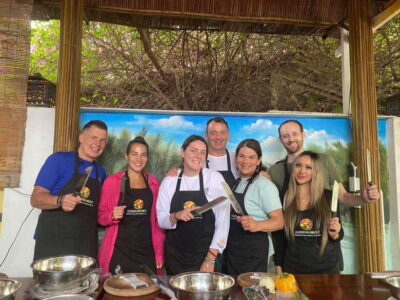
Food tastes better when you make it yourself. This Hanoi class pairs a real market run with a fast, hands-on cook session. You’ll shop with an English-speaking chef, then cook five traditional dishes and sit down to eat everything you make, with rice vodka included. Past classes led by instructors like Vy, Perla, and Emmy are consistently described as organized, fun, and interactive. One thing to consider: the pace is quick, so some prep may happen off-camera, and you may want extra attention if you learn best with slower step-by-step guidance.
I also like that it hits two big goals for visitors in Hanoi: it teaches you how Vietnamese flavors are built, and it gives you the recipe tools to recreate them later. The small group size (max 10) helps you actually cook, not just watch. Still, there’s no hotel pickup, so you’ll need to get yourself to the Old Quarter meeting point at 8 P. Gia Ngư, Hàng Bạc, Hoàn Kiếm.
You’ll finish around the meeting point again, with a cook book and certificate, plus coffee or tea along the way. The menu is structured and classic, including pho bo (beef noodle soup), bun cha (Hanoi BBQ pork noodle), nem ran (fried spring rolls), papaya salad, and egg coffee or chocolate. If you avoid red meat, you’ll learn vegetarian versions of the dishes.
In This Review
- Key Things To Know Before You Go
- Entering the Old Quarter at the Start Point
- Market Trip: Shopping Hanoi Like a Food Local
- Cooking 5 Traditional Dishes in 3 Hours 15 Minutes
- Your Menu, Broken Down: What Each Dish Teaches
- Pho bo: The Flavor Foundation
- Bun cha: Grilled Notes, Sticky-Savory Sauce
- Nem ran: Crunch and Texture Control
- Papaya salad: Acid, Crunch, and Herb Power
- Egg coffee or chocolate: A Sweet Finish With Hanoi Character
- How the Class Stays Hands-On (and What You’ll Really Do)
- Eating Your Own Food, With Rice Vodka and Coffee or Tea
- Vegetarian Versions and Non-Red Meat Options
- Price and Value: Is $35.07 Worth It?
- Who This Tour Suits Best in Hanoi
- Should You Book This 5 Traditional Dishes Cooking Class?
- FAQ
- What dishes do you cook in this Hanoi class?
- Do you have a vegetarian option?
- What’s included in the price?
- Is hotel pickup provided?
- How many people are in the group?
- Can I cancel for a refund?
Key Things To Know Before You Go
- Hanoi’s largest market, guided so you learn what to buy and why (not just where to walk).
- Cook five dishes in about 3 hours 15 minutes, with group participation and clear timing.
- English-speaking chef instruction, plus dietary adjustments for vegetarian or non-red meat eaters.
- Included rice vodka and coffee or tea, so the meal feels complete, not like a snack.
- Small group of up to 10, which matters when you’re trying to get hands-on at the stove.
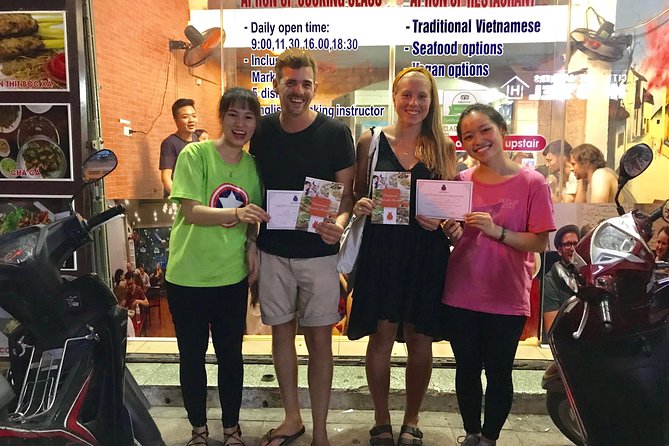
- You leave with a cook book and a certificate, useful if you want to cook again at home.
Narrowing it down? These Hanoi tours kept surfacing in our reviews.
- Hanoi Jeep Tour: Food, Culture and Fun by Vietnam Army Jeep★ 5.0 · 15,222 reviews
- Full-Day Ninh Binh Highlights Tour from Hanoi★ 5.0 · 7,761 reviews
- Hanoi: Ha Long Bay Day Cruise – Swimming, Meal, Kayaking★ 4.7 · 7,415 reviews
- Hanoi: Water Puppet Show Tickets★ 4.6 · 7,029 reviews
Entering the Old Quarter at the Start Point
This experience begins in Hanoi’s Old Quarter area at 8 P. Gia Ngư, Hàng Bạc, Hoàn Kiếm, Hà Nội 08404. That location is convenient because it puts you close to the part of Hanoi most visitors want to explore, but you should plan on walking over or using a local taxi or ride-hail if you’re staying elsewhere.
I like that there is no hotel pickup. It keeps the tour straightforward and helps you avoid the common Hanoi shuffle where you wait for transfers. The trade-off is simple: you need to arrive on time and find the meeting spot yourself.
Because the class runs about 3 hours 15 minutes and ends back at the meeting point, it also plays nicely as a “do something great in the middle of your day” activity. It’s not a half-day marathon, and it’s long enough to cover both the market and the cooking without dragging.
Market Trip: Shopping Hanoi Like a Food Local
The market portion is one of the best reasons to book this class. You don’t just get ingredients handed to you. You go out with your chef and learn how to pick produce and spices that match the dishes you’re about to cook.
Hanoi cooking is herb-heavy and sauce-driven, and the market is where you see that logic in real life. You’ll be looking at aromatics, greens, and other key items tied to dishes like pho bo and papaya salad. Even if you’ve eaten Vietnamese food before, seeing ingredient quality up close changes how you think about flavor.
One practical tip: go in hungry and with an open mind. Markets can be loud, busy, and sensory overload, but that’s also why they’re worth it. Your chef is there to translate what you’re seeing into buying choices you can use back home. In the better-run sessions, that explanation makes the shopping feel educational instead of chaotic.
Cooking 5 Traditional Dishes in 3 Hours 15 Minutes
You’ll cook five dishes during the class. The menu is clearly set, so you can plan around it rather than wondering what you’ll get.
Here’s what’s on the list:
- Pho bo (beef noodle soup)
- Bun cha (Hanoi BBQ pork noodle)
- Nem ran (fried spring roll)
- Papaya salad
- Egg coffee or chocolate
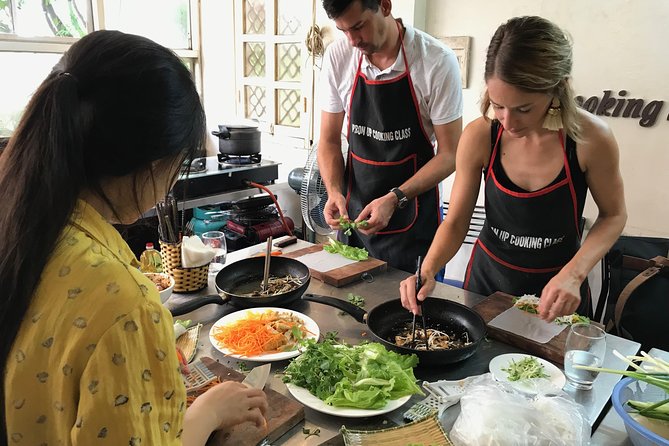
The best part is that it stays genuinely hands-on. Group sizes are small (max 10), and many comments highlight that everyone gets involved in preparation steps. That matters because a cooking class is not just about tasting. It’s about learning technique, and technique requires doing.
That quick pace is also the only potential drawback. Some prep work may be handled by staff to keep the timing moving. One review notes that parts like grilling or BBQ pork may be done for the group, even while you still participate in the main cooking flow. If you want a slower, more teacher-at-your-shoulder pace, you might feel you could use a bit more detailed guidance. Still, most people seem to feel the class is well run and easy to follow.
Your Menu, Broken Down: What Each Dish Teaches
Let’s talk about what you’re actually learning from each dish, and why each one is a smart pick for a Hanoi first-timer.



Pho bo: The Flavor Foundation
Pho bo is more than noodles and beef. It’s about building flavor through broth and balancing aromatics. During the class, you’ll see the ingredients that go into making pho and how the components fit together.
Even if the broth detail feels like a lot in a class setting, the value is that you’ll understand the basic structure. You’re not just copying a recipe card, you’re learning the logic so you can adjust ingredients later.
Bun cha: Grilled Notes, Sticky-Savory Sauce
Bun cha is Hanoi BBQ pork served with noodles and a sauce that hits sweet, salty, and tangy notes. This dish also connects you to a very local flavor profile: grilled taste plus dipping sauce culture.
In a cooking class format, this is where timing matters. You’ll likely coordinate multiple pieces at once, and that teaches you how Vietnamese meals are often built: sauces and components come together so each bite has the right mix.
Nem ran: Crunch and Texture Control
Nem ran, or fried spring rolls, are all about texture. The wrapping and filling matter, but frying is where you control outcomes.
What I like here for home cooks is that nem ran gives you a clear sense of doneness and crispness. Once you taste what properly cooked spring rolls should feel like, you get a practical benchmark for future cooking.
Papaya salad: Acid, Crunch, and Herb Power
Papaya salad teaches you how Vietnamese dishes often rely on acidity plus fresh herbs. You get that crunch from the base, and then flavor builds through dressing and seasoning.
If you’ve ever thought Vietnamese food tastes “bright” but couldn’t pinpoint why, this is one of the best lessons. The salad format makes the flavor adjustments feel immediate, because the balance is obvious in every bite.
Egg coffee or chocolate: A Sweet Finish With Hanoi Character
Egg coffee is one of Hanoi’s signatures, and you’ll either make egg coffee or chocolate, depending on the session. Either way, the class gives you a sweet finish that pairs well with the rest of the savory menu.
If you’re a coffee person, egg coffee adds a distinct local touch. If you’d rather avoid coffee, chocolate still keeps you in the dessert lane without leaving you out of the fun.
How the Class Stays Hands-On (and What You’ll Really Do)
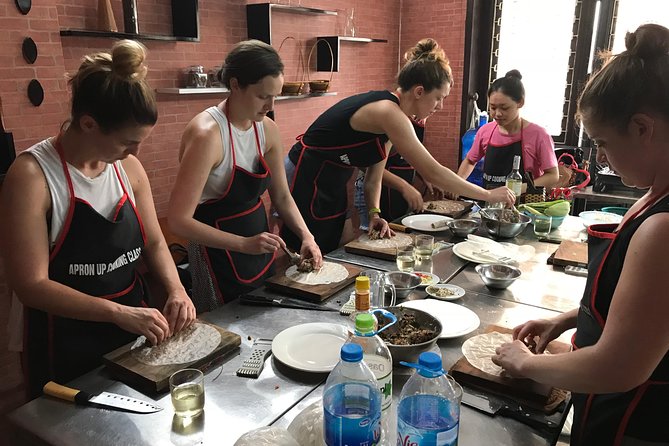
You’ll meet up with an instructor in the Old Quarter, then go to the market and return to the cooking studio to cook. Many cooking classes promise hands-on, but the real proof is whether you actually touch the food throughout the session.
The best-rated sessions emphasize that everyone participates, not just a few people. You’ll be working on multiple components during the class, so expect parallel tasks. That’s part of why people describe the session as run like a well-organized machine.
Here’s what you should mentally prepare for:
- You’ll get short instruction bursts, then work time at the station.
- Some items might already be partially prepared to keep the class within the time window.
- You’ll still have enough cooking steps to feel like you earned the meal.
If you’re traveling with a partner, this format can feel great because you can compare notes on sauces or wrapping technique. If you’re traveling solo, small groups make it easier to get your questions answered while you cook.
Eating Your Own Food, With Rice Vodka and Coffee or Tea
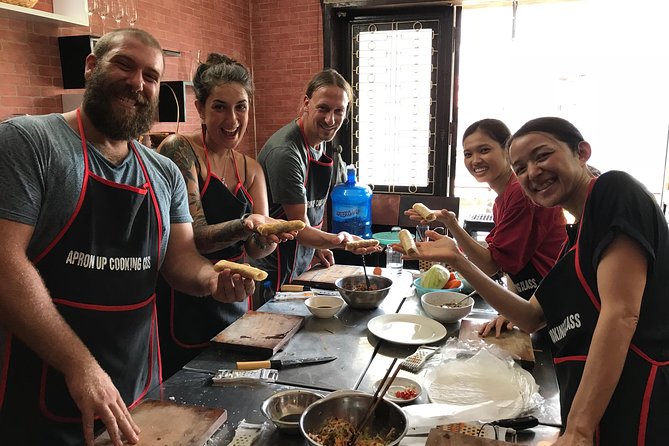
Once the cooking is done, you sit down and enjoy what you made. That is not a minor detail. It’s the part that turns the class from education into a real experience.
You’ll sip complimentary rice vodka during the meal, and coffee and/or tea is included as well. If you don’t drink alcohol, you should still be able to enjoy the meal, but the tour does list rice vodka as included, so plan accordingly.
This meal setup is also a practical win for visitors. You get a planned sit-down food moment without having to figure out restaurants on the fly. And since you made multiple dishes, you get a wider range of Vietnamese flavors than a typical single-dish meal.
Vegetarian Versions and Non-Red Meat Options
The menu includes beef and pork through pho bo and bun cha. The good news is that vegetarians and non-red meat eaters will learn vegetarian versions.
That matters because it keeps the class inclusive. Instead of you standing around while others cook the standard versions, you should be cooking something that matches your dietary needs. One review highlights that the instructor adjusted for allergies, which is a sign that the kitchen is thinking about more than just the base menu.
If you have a serious allergy, treat this as a cue to confirm details ahead of time with the provider. The data says they can adjust for dietary needs, but it does not list what specific allergies are covered. When it’s your safety, ask directly.
Price and Value: Is $35.07 Worth It?
At $35.07 per person for about 3 hours 15 minutes, you’re paying for more than a meal. You’re paying for guided market shopping, English-speaking instruction, cooking materials and prep support, and the finished meal you eat afterward.
Here’s what makes the value feel strong:
- Market ingredient selection saves you the guesswork if you want to shop later on your own.
- Five dishes means you’re not just learning one technique.
- Small group size (max 10) increases your chance of hands-on involvement.
- Included rice vodka and coffee or tea means you get a complete food moment.
When cooking classes are overpriced, it’s often because you get a demo and a tiny tasting. In this format, you cook and then eat. The overwhelmingly high rating (5 out of 5) supports that most people feel they’re getting their money’s worth, not just paying for a ticket.
Who This Tour Suits Best in Hanoi
This class is a good match if you want a structured introduction to Hanoi flavors without guessing where to eat or what to order. It’s also ideal if you like practical learning. You’re not just watching. You’re shopping, cooking, and then tasting the results immediately.
You’ll likely enjoy it most if:
- You like hands-on activities.
- You want to learn Vietnamese cooking with a real ingredient shopping component.
- You’re curious about classic Hanoi dishes like pho bo and bun cha.
- You appreciate small group instruction and clear pacing.
You might want to consider a different option if:
- You prefer super slow, step-by-step instruction with minimal multitasking.
- You’re very sensitive to alcohol presence, since rice vodka is included.
- You strongly dislike any market time, since the experience is built around shopping for ingredients.
One review even flags hygiene as a concern for them. That’s not something everyone raised, but if you have strict comfort limits around markets and shared prep spaces, it’s worth thinking about before you go.
Should You Book This 5 Traditional Dishes Cooking Class?
Yes, I think you should book it if you want the best kind of Hanoi souvenir: skills, not just photos. The combination of Old Quarter meet-up, guided shopping, and cooking five distinct dishes gives you a full flavor map of Hanoi in one session.
Book it especially if you want to eat what you cook in the same class. That immediate feedback loop helps you learn faster and it makes the meal more satisfying than a typical restaurant stop.
Skip it only if you know you need more time per step, or if you’re unwilling to spend part of the evening in a market environment. Otherwise, this is one of the simplest ways to turn Hanoi food curiosity into real, repeatable cooking.
FAQ
What dishes do you cook in this Hanoi class?
You cook five traditional dishes: pho bo (beef noodle soup), bun cha (Hanoi BBQ pork noodle), nem ran (fried spring roll), papaya salad, and egg coffee or chocolate.
Do you have a vegetarian option?
Yes. Vegetarians and non-red meat eaters learn vegetarian versions.
What’s included in the price?
Coffee and/or tea, rice vodka, and an English-speaking chef are included. You also get a cook book and certificate.
Is hotel pickup provided?
No. Hotel pickup and drop-off are not included. The tour meets at 8 P. Gia Ngư, Hàng Bạc, Hoàn Kiếm, and ends back at the meeting point.
How many people are in the group?
The maximum group size is 10 travelers.
Can I cancel for a refund?
Yes, free cancellation is available. You can cancel up to 24 hours in advance for a full refund. If you cancel less than 24 hours before the experience starts, the amount you paid will not be refunded.
Other Hanoi tours our reviewers keep coming back to
- Hanoi Vespa After Dark Street food + Train Street+ Live Music
★ 5.0 · 18 reviews - (Free Pick-up) Vietnamese Body Massage in Hanoi City
★ 5.0 · 18 reviews - The Insider’s Hanoi,Train Street, Countryside Highlight by Vespa
★ 5.0 · 18 reviews - Skip the line: Thang Long Water Puppet Theater Entrance Tickets
★ 4.0 · 18 reviews - Hanoi Street Food Tour and MORE
★ 5.0 · 18 reviews - Hanoi – Hoa Lu – Tam Coc – Mua Cave – 1 Day / By Luxury Limousine & Small Group
★ 5.0 · 18 reviews
Cooking Classes, compared.
 ★ 5.0Hanoi Cooking Class: Culture, Local Market & Meaning CSR ImpactFrom $395,147 reviews
 ★ 5.0Cooking Class Hoi An:Local Market, Basket Boat, Fishing & CookingFrom $283,660 reviews
 ★ 5.0Hoi An Cooking Class(Market,BasketBoat Crabfishing&Cooking Class)From $283,386 reviews
 ★ 5.0HCM:Mekong Delta Boat,Khotcake cooking Coconut Village,SmallGroupFrom $162,374 reviews
 ★ 4.8From Hoi An: Market Tour, Basket Boat Ride and Cooking ClassFrom $172,208 reviews
 ★ 5.0Hoi An Cooking Class(Local market,Basket Boat,Fishing & Cooking)From $281,323 reviews
 ★ 5.0Mekong Delta 4 Islands, TukTuk, Boat, Try Khot Cake Local CookingFrom $231,148 reviews
 ★ 4.9Hoi An: Basket Boat Ride, Cooking Class by HangcoconutFrom $19802 reviews
Also in these Vietnam lists