
REVIEW · SAPA TREKKING AND FANSIPAN
Sapa Trekking Tour 2 Days 1 Night By Bus
Two days in Sapa feels like a week. You sleep on a sleeper bus from Hanoi, then spend two solid trekking days with ethnic minority villages in Vietnam’s northern highlands. It’s built for people who want real village contact, not just a photo stop shuffle.
What I liked most was the way the trip feels run-in and organized on the ground. I also loved the guide-led cultural context, from explanations shared by guides like Vu and Su to the practical help you get when trails turn slippery. And yes, the views over rice terraces and steep valleys are a real reward for doing the work.
One drawback to plan for is transport timing. The bus ride can run longer than expected, and that can mean fewer toilet breaks than you’d hope for on the outbound trip.
In This Review
- Key things to know before you go
- From Hanoi to Sapa: sleeper bus, pickup, and real start time
- Day 1 in Sapa: Muong Hoa Valley trekking to Lao Chai and a waterfall break
- Village stops: what you’re really seeing and how to make it respectful
- Day 2: trek distance and direction depend on homestay vs hotel
- Comfort on the bus and in cold mountain moments
- Meals and breaks: included lunches make pacing easier
- Price and value: what $85 gets you in real terms
- Who should book this tour, and who might not love it
- Practical tips: shoes, rain gear, and how to pace yourself
- Should you book this Sapa trekking tour by bus?
- FAQ
- What time does pickup start in Hanoi for this tour?
- How long is the Sapa trek with one night?
- How do I travel from Hanoi to Sapa?
- What meals are included?
- Do I get a choice of accommodation in Sapa?
- How far do the treks go?
- What is the maximum group size?
- What’s the cancellation policy if weather is bad or my plans change?
Key things to know before you go
- Sleeper bus with AC and WiFi so you start the trek with less stress.
- Max group size of 15 for a more manageable, guide-friendly pace.
- Two trekking plans depending on homestay vs hotel option, with different distances.
- Ethnic village focus including Black H’mong, Dao, and Dzay communities.
- Meals included: breakfast, dinner, and two lunches, so you are not hunting food after hikes.
- Mountain weather matters since the program depends on good conditions.
Other Sapa walks, from gentle to genuinely hard
- Sapa 2 Days 1 Night From Hanoi – Overnight in Ta Van Village★ 5.0 · 2,669 reviews
- Hanoi – Sapa 2 Days 1 Night Overnight At Homestay★ 5.0 · 899 reviews
- From Hanoi: 2-Day Sapa Trekking Trip with Homestay & Meals★ 4.8 · 704 reviews
- Sapa 3 Days 2 Nights Trekking Tour (1 Night In Ta Van Village, 1 Night In Hotel)★ 5.0 · 699 reviews
From Hanoi to Sapa: sleeper bus, pickup, and real start time
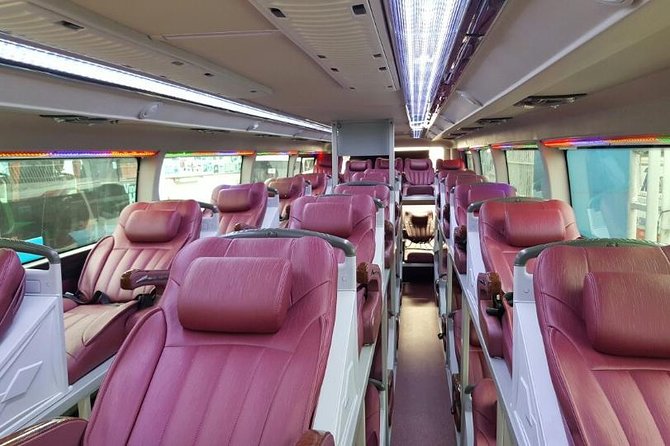
Your day kicks off early. Pickup is scheduled for 6:30 am in Hanoi, with transport by taxi from the Old Quarter to the bus station. Then you head to Sapa on a sleeper bus with air-conditioning and WiFi on board.
Arrive in Sapa around 13:00. That timing matters because you are not strolling around town for hours before hiking. You typically transition pretty quickly from arrival to meeting your local guide and getting moving.
Sapa is a popular base for highland treks, and this tour treats it like a launching point instead of a sightseeing-only town. If your goal is to use your time efficiently, this is the right rhythm.
Day 1 in Sapa: Muong Hoa Valley trekking to Lao Chai and a waterfall break
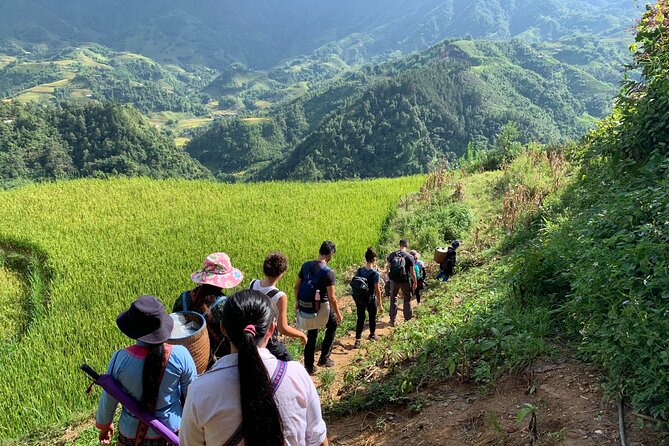
Day 1 centers on a downhill trek into the Muong Hoa Valley. For the option that includes an overnight homestay, you start with a 12 km trek down the valley toward a Black H’mong village area, including Lao Chai.
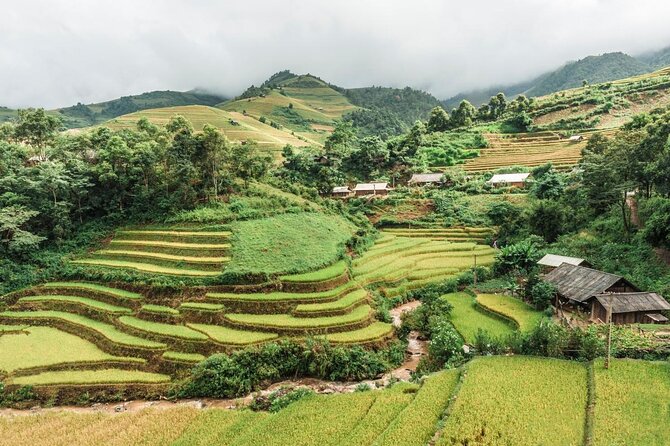
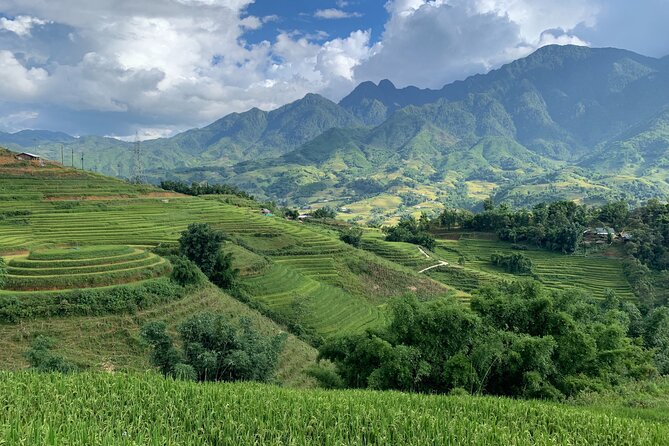
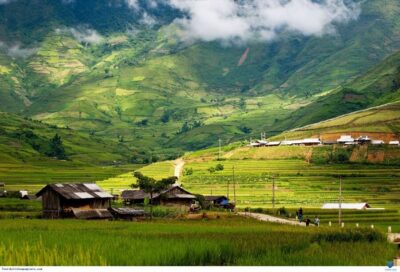
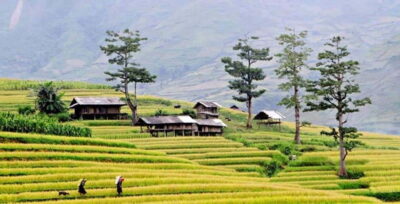
Along the way, you pass through village hamlets and familiar names on the Sapa trekking circuit, including Y Linh Ho before continuing toward Lao Chai. Expect a mix of walking on small trails and steep gradients. This isn’t a flat stroll. It’s also not just “survive the mud” either. When the weather is clear, you get wide views of rice terraces and layered hills that make the descent feel worthwhile.
The tour also builds in a cultural and food element beyond the walk. You’ll get chances to eat traditional Vietnamese meals and there is an advertised opportunity to swim by a waterfall. If you’re hoping for a break that feels fun, not just exhausting, this is one of the reasons the tour can feel more balanced.
You’ll also visit additional villages during the two days, including Cat Cat, Giang Ta Chai, and Su Pan. One note for your expectations: if you really want everyday life only, Cat Cat can feel more staged for visitors, with plenty of “costume and photos” energy. I’d treat it as a cultural stop with mixed vibes, then focus on the walking and the conversations that feel more natural in the village areas.
Village stops: what you’re really seeing and how to make it respectful

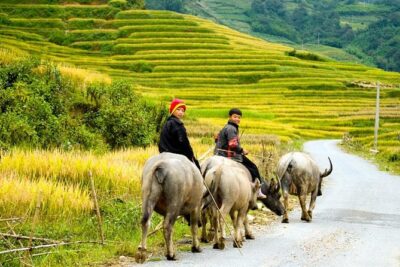
This trek is structured around villages of the Black H’mong, Dao, and Dzay communities. The value here is not just ticking off names, it’s getting a guided explanation of daily life, local routines, and how people live in the highlands.
A big part of why guides matter on these trips is that they help you “read” what you’re seeing. When explanations are clear, village visits stop feeling like a quick photo and start feeling like a conversation with context.
In the homestay option, you get morning access to Dzay daily life. You wake up early, learn from the day-to-day rhythm, and have breakfast with the Dzay family before you check out and keep trekking. That kind of structured morning routine can be more meaningful than arriving late in the afternoon, when homes are winding down.
Practical reality check: villages are active places, and you may get sellers following your group at times. That doesn’t mean the experience is fake, it means you’re in a living economy. Keep it simple: be polite, keep moving, and decide calmly if you want to browse.
Day 2: trek distance and direction depend on homestay vs hotel

Day 2 changes based on your overnight choice. That’s important because the tour isn’t just “same thing, different bed.” Your accommodation option nudges the trekking plan and morning timing.
If you chose the hotel option, you have breakfast, then check out. Then you start a 12 km trek down toward an area listed as Muo. In other words, it’s another full hiking day. You’re still getting the “valley descent” feeling, just on a different route and with a different set of village stops across the two days.
If you chose the homestay option, you wake up early and experience morning daily life with the Dzay. Then you have breakfast with the family and check out. After that, you start a 6-8 km trek into the next village area for the day (the route is listed in the plan but the village name is cut off in the details you received). This shorter distance can be a relief if you’re pacing carefully after Day 1.
Either way, you should plan for walking that includes uneven surfaces. One of the most honest things I can say is this: some parts can be rough underfoot. Good shoes are not optional if you want to enjoy it rather than fight it.
Sleep in a village, walk between them


Comfort on the bus and in cold mountain moments
This tour is not only about trekking. It also tries to keep you comfortable during the travel part.
On the bus, you have sleeping seats on an air-conditioned vehicle and WiFi. That sounds small, but it helps when you’re arriving tired and still have a hike day ahead. You also have the convenience of hotel pickup and direct transport, which saves you the chaos of negotiating your own way out of Hanoi.
One comfort detail I appreciated is the availability of a heating blanket after trekking, especially if you get rain. In Sapa, wet cold can sneak in even when the day starts mild. A little warmth at the right time can keep the whole experience from turning into endurance sport.
In general, the accommodations range from homestay to 5-star hotel depending on your option. That’s the kind of flexibility that makes this tour workable for both “I want comfort” travelers and “I want to live like locals for a night” travelers.
Meals and breaks: included lunches make pacing easier

Food can make or break a short trek, and this one covers key meals. You’re included for breakfast and dinner, plus lunch (2) during the two days.
Those included lunches matter because they prevent the most common trekking problem: getting hungry right when the schedule is tight. Instead, you eat at local restaurants tied into the day plan and get back to the trail without constant decision-making.
You’ll also get traditional Vietnamese meals tied to the experience. If you’re traveling from Hanoi, this is a good way to shift from city eating to mountain rhythms, without losing the comfort of “someone handled it.”
If you have dietary restrictions, the tour data you provided does not specify how flexible meals are. I’d message the provider before booking so you don’t gamble with assumptions.
Price and value: what $85 gets you in real terms
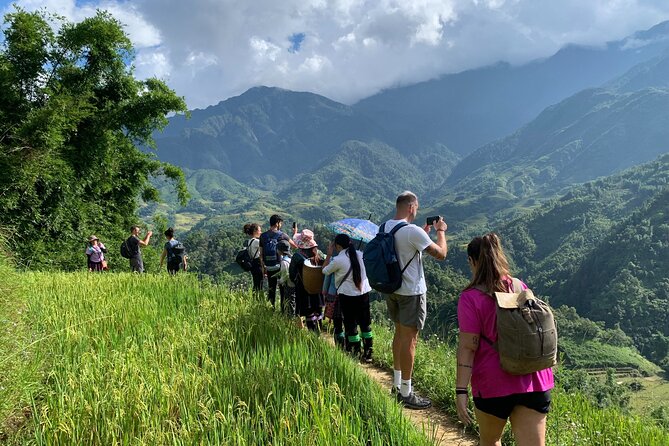
At $85 per person, the headline price looks low for a two-day highland trek with included meals and sleeper transport. The value comes from what’s bundled.
Included items on the tour are:
- Sleeper bus with air-conditioning
- WiFi on board
- Hotel pickup (as noted in the plan)
- Breakfast, dinner, and two lunches
- All fees and taxes
Not included:
- Private transportation
So you’re paying mainly for transport plus guided trekking structure, food, and the overnight option. If you tried to piece this together yourself, you’d likely spend time coordinating buses, guides, and meals. Here, it’s treated like one package, which is the whole point.
If you care about value, this is also a small-group style program with a maximum of 15 travelers, which usually means you’re not stuck on a massive herd pace.
The only “cost” you should consider is your effort. This is a moderate fitness trek, and the distances on Day 1 and Day 2 can stack up quickly.
Who should book this tour, and who might not love it
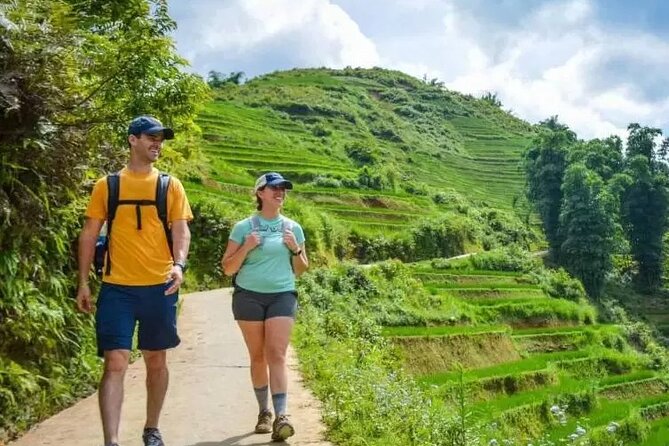
This works best if:
- You want a structured two-day trek without building your own itinerary.
- You’re comfortable with moderate fitness and uneven terrain.
- You like learning from a local guide rather than only walking from viewpoint to viewpoint.
- You want an easy transport solution out of Hanoi via sleeper bus.
It might not be ideal if:
- You hate long bus rides with limited flexibility. The ride can run longer than planned.
- You want a purely “authentic daily life only” experience, with no photo-focused village moments. Some stops can feel more tourism-shaped.
- You are extremely sensitive to cold and wet weather, even with a heating blanket option. Bring gear.
For families and mixed ages, the tour can still work because the trek distances are offered in different ways across accommodation choices. If your group has older participants, the homestay option with the 6-8 km second day may be easier to manage than repeating a 12 km day.
Practical tips: shoes, rain gear, and how to pace yourself
Pack like you’re walking more than you’re sightseeing. You’re dealing with:
- Steep valley paths
- Uneven ground
- Potential rain and cold conditions
A few practical moves:
- Wear shoes with grip, not smooth sneakers.
- Bring a light rain layer, not just an umbrella.
- Expect cold after trekking, even if daytime is warm. The tour notes comfort items like heating blankets help.
- Keep small cash for village areas if you want to buy crafts, even if you plan to skip it. Having options makes it easier.
On the behavioral side, keep a calm tone when sellers approach. You don’t need to argue. A firm no and moving on works.
Also, manage your expectations for the Cat Cat style stop. If you’re chasing the feeling of being in the middle of village life, spend more time listening and learning when the guide slows the group down.
Should you book this Sapa trekking tour by bus?
I’d book it if you want a plug-and-play way to get from Hanoi to Sapa and do two real trekking days with meals handled and a local guide driving the cultural side. The combination of sleeper transport, included food, small group size, and guide context makes it good value for many budgets.
I wouldn’t book it if your top priority is strict comfort, predictable bus timing, or a trek with minimal “tourism energy” at any village stop. If that’s you, you might prefer a different route or a more flexible private plan.
If you do book, do it with the right mindset: you’re trading a little comfort and schedule predictability for mountain walking, village understanding, and those classic Sapa valley views.
FAQ
What time does pickup start in Hanoi for this tour?
Pickup is scheduled to start at 6:30 am.
How long is the Sapa trek with one night?
The duration is listed as 2 days (approx.).
How do I travel from Hanoi to Sapa?
You travel by sleeper bus from Hanoi, and hotel pickup is included. The bus is listed as air-conditioned and has WiFi on board.
What meals are included?
The tour includes breakfast, dinner, and lunch (2) across the two days.
Do I get a choice of accommodation in Sapa?
Yes. You can choose homestay or a hotel, with options up to 5-star hotel depending on the booking option.
How far do the treks go?
For the homestay option on Day 1, it lists a 12 km trek downhill. On Day 2, the hotel option includes a 12 km trek down toward Muo, while the homestay option lists a 6-8 km trek.
What is the maximum group size?
The tour has a maximum of 15 travelers.
What’s the cancellation policy if weather is bad or my plans change?
You can cancel for a full refund up to 24 hours in advance. If the tour is canceled due to poor weather, you’ll be offered a different date or a full refund.
Walk, Then Stay
- Hanoi – Sapa 2 Days 1 Night Overnight At Homestay★ 5.0 · 899 reviews
- From Hanoi: 2-Day Sapa Trekking Trip with Homestay & Meals★ 4.8 · 704 reviews
- Sapa 3 Days 2 Nights Trekking Tour (1 Night In Ta Van Village, 1 Night In Hotel)★ 5.0 · 699 reviews
- 3-Day Trekking Adventure of Sapa from Hanoi – Stay Ta Van Village★ 5.0 · 611 reviews
- 3D and 2N Lan Ha Bay Cat Ba Island Kayaking & Trekking with Vega★ 5.0 · 593 reviews
Sapa on Foot
- Sapa 2 Days 1 Night From Hanoi – Overnight in Ta Van Village★ 5.0 · 2,669 reviews
- Hanoi – Sapa 2 Days 1 Night Overnight At Homestay★ 5.0 · 899 reviews
- From Hanoi: 2-Day Sapa Trekking Trip with Homestay & Meals★ 4.8 · 704 reviews
- Sapa 3 Days 2 Nights Trekking Tour (1 Night In Ta Van Village, 1 Night In Hotel)★ 5.0 · 699 reviews
- 3-Day Trekking Adventure of Sapa from Hanoi – Stay Ta Van Village★ 5.0 · 611 reviews
Other Hanoi tours our reviewers keep coming back to
- Hanoi Vespa After Dark Street food + Train Street+ Live Music
★ 5.0 · 18 reviews - (Free Pick-up) Vietnamese Body Massage in Hanoi City
★ 5.0 · 18 reviews - The Insider’s Hanoi,Train Street, Countryside Highlight by Vespa
★ 5.0 · 18 reviews - Skip the line: Thang Long Water Puppet Theater Entrance Tickets
★ 4.0 · 18 reviews - Hanoi Street Food Tour and MORE
★ 5.0 · 18 reviews - Hanoi – Hoa Lu – Tam Coc – Mua Cave – 1 Day / By Luxury Limousine & Small Group
★ 5.0 · 18 reviews
Sapa Trekking and Fansipan, compared.
 ★ 5.0Sapa 2 Days 1 Night From Hanoi – Overnight in Ta Van VillageFrom $592,669 reviews
 ★ 5.0Hanoi – Sapa 2 Days 1 Night Overnight At HomestayFrom $89899 reviews
 ★ 4.6Sa Pa: Muong Hoa Valley Trek and Local Ethnic VillagesFrom $23864 reviews
 ★ 5.0Sapa: Fansipan Cable, Cat Cat Village & Moana Instagram TourFrom $30777 reviews
 ★ 4.8From Hanoi: 2-Day Sapa Trekking Trip with Homestay & MealsFrom $71704 reviews
 ★ 5.0Sapa 3 Days 2 Nights Trekking Tour (1 Night In Ta Van Village, 1 Night In Hotel)From $139699 reviews
 ★ 4.9Sapa: Eco Adventure Terrace Fields and Local Villages TrekFrom $27636 reviews
 ★ 5.03-Day Trekking Adventure of Sapa from Hanoi – Stay Ta Van VillageFrom $109611 reviews