
REVIEW · HUE IMPERIAL CITY AND ROYAL TOMBS
Hue Royal Tombs Tour: Visit Best Pagodas & Mausoleums
Nguyen emperors built their answers in stone. What makes this tour interesting is that you do not just see tombs, you see a whole worldview, planned for emperors, families, and even court staff, spread across Hue with a private car. I love the custom itinerary idea, because you can shape the day to fit your pace and interests. One drawback to plan for is that tomb entry tickets are not included, so your total cost will depend on how many sites you choose.
I also like the feel of having an English-speaking guide who can explain the people behind the architecture, including what life looked like for wives, concubines, and eunuchs. You will cover major royal sites plus two standout pagodas, so the day feels balanced rather than temple-only or tomb-only. If you have only a strict half-day window, you may need to choose fewer stops to avoid rushed photo moments.
In This Review
- Key highlights at a glance
- Why Hue Royal Tombs and Pagodas feel worth the time
- Pickup, pacing, and building your own Hue route
- Tu Duc Tomb: the emperor who planned for his own afterlife
- Minh Mang Tomb: a palace-like city built for wives, concubines, and eunuchs
- Khai Dinh Tomb: European and Oriental styles in one royal statement
- Gia Long and Dong Khanh: going beyond the headline names
- Thien Mu Pagoda: Buddhism, origin stories, and a living spiritual site
- Tu Hieu Pagoda and Thich Nhat Hanh: the Root Temple connection
- Price and logistics: what $15 covers, and what you must plan for
- The guide and driver quality is the real multiplier
- Who this Hue Royal Tombs Tour suits best
- Should you book this Hue Royal Tombs Tour?
- FAQ
- How long is the Hue Royal Tombs Tour?
- Where will I be picked up and dropped off?
- Is this a private tour?
- Do I get an English-speaking guide?
- Are tomb entry tickets included in the price?
- What ticket options should I consider?
- Is food and drinks included?
- Can I customize which places I visit in Hue?
- What is the cancellation policy?
Key highlights at a glance
- Private car pickup and drop-off from Hue city center (or Hue train station), so you spend less time figuring out transport.
- Nguyen royalty context at the mausoleums, with stories about wives, concubines, and eunuchs tied to each emperor.
- Two pagodas with very different vibes, including Thien Mu (built in 1601) and Tu Hieu (Root Temple linked with Thich Nhat Hanh).
- Flexible ordering of stops, letting you build a route around your interests and energy level.
- Guides like Bi, Duy, and Tra My who keep things paced and clear, not rushed.
- Efficient travel time between far-apart sites, with scheduled scenic drives and breaks for photos.
More of the citadel and the tombs along the river
- Hue Customizable Tour with Imperial Citadel & Forbidden City★ 4.9 · 937 reviews
- Hue :Exploring Royal City with Multi Options and Dragon Boat★ 5.0 · 675 reviews
- Hue City Tour Full Day – Group Tour★ 4.7 · 518 reviews
- From Hue: DMZ Tour with Vinh Moc Tunnels and Khe Sanh Base★ 4.9 · 503 reviews
Why Hue Royal Tombs and Pagodas feel worth the time
Hue is one of those places where “royal” is not a vibe, it is a system. These mausoleums and temple sites show how power, religion, and daily court life were organized, then frozen in space for centuries. And when you add the pagodas to the mix, the city stops feeling like a single-theme museum.
I like this kind of tour because it gives structure without taking away freedom. You can pick the stops that matter most to you, from the big famous emperors to the pagodas people still connect to today. The private transport helps a lot, because Hue’s major sites are not all next door.
The main thing to watch is pacing. With a 2 to 8 hour range, you have to decide how many tombs and pagodas you really want, because each one deserves time on site.
Pickup, pacing, and building your own Hue route
Your tour starts with pickup in Hue city center hotels or from Hue Train Station. You then ride in a private car, with your guide and driver handling the route while you focus on photos, walking, and questions. If you choose the option with a guide, you get live English interpretation.
This is one of those tours where timing is everything. The day is built around breaks, photo stops, and guided time at each major stop, so you are not stuck waiting in a bus line. The scenic drives between monuments also matter, because it keeps the day from feeling like a treadmill.
If you prefer a calmer experience, I suggest you keep the number of royal tombs modest and spend more time in the places that grab you. For example, if you want deep meaning, choose fewer tombs and let the guide explain details.
Tu Duc Tomb: the emperor who planned for his own afterlife
Tu Duc is the kind of tomb that makes you slow down without trying. It was built by Emperor Tu Duc for himself from 1864 to 1867, and it also functioned as a place where he lived and worked during his lifetime. That overlap, life plus afterlife, makes the site feel more personal.
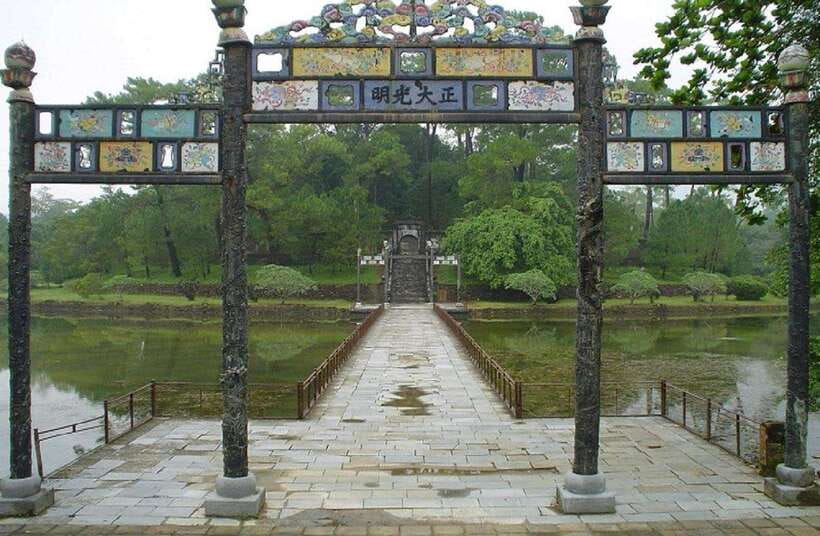
The tomb area is about 12 hectares, separated into two distinct zones: a temple area and a burial area. That design helps you understand the idea that ritual and burial were not treated as the same thing, even though they share one overall complex.
You also get context about who lived there after his death. The tomb became a residence for minor wives, concubines, and eunuchs after 1883. If you are curious how court life continued beyond an emperor’s reign, this stop answers that question in a concrete way.
Minh Mang Tomb: a palace-like city built for wives, concubines, and eunuchs
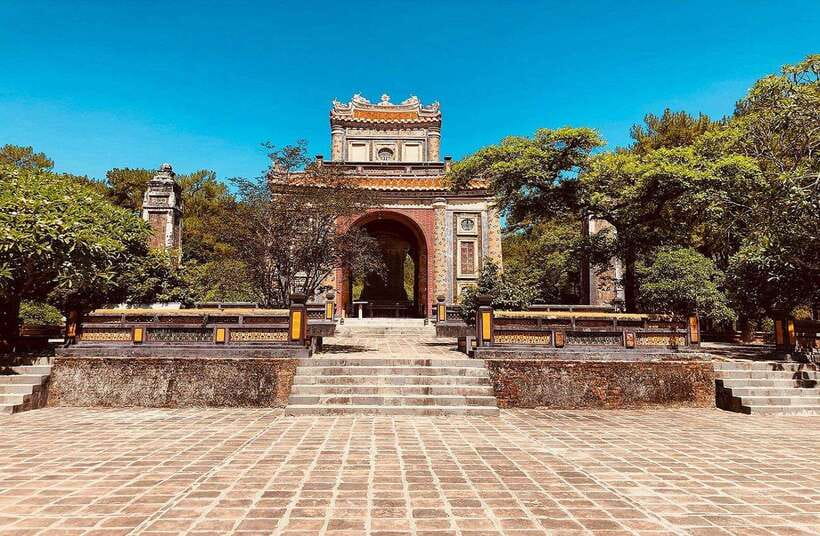
Minh Mang’s tomb is massive in a way that is easy to underestimate until you are standing there. It was started in 1840 and completed in 1843, after Minh Mang began construction, died during the building period, and then his son King Thieu Tri finished it. The complex covers about 15 hectares for King, Queen, and other key court members.
One detail I really appreciate is the number of buildings. There are 26 buildings for different functions, which makes it feel less like one monument and more like a working residential and ceremonial space. It is also described as a living area for minor wives and concubines who had no children for him, plus eunuchs after his death.
If you like architecture that communicates daily reality, you will probably enjoy this one more than you expect. The guide’s explanations help connect layout to purpose, instead of turning it into just another photo stop.

Khai Dinh Tomb: European and Oriental styles in one royal statement
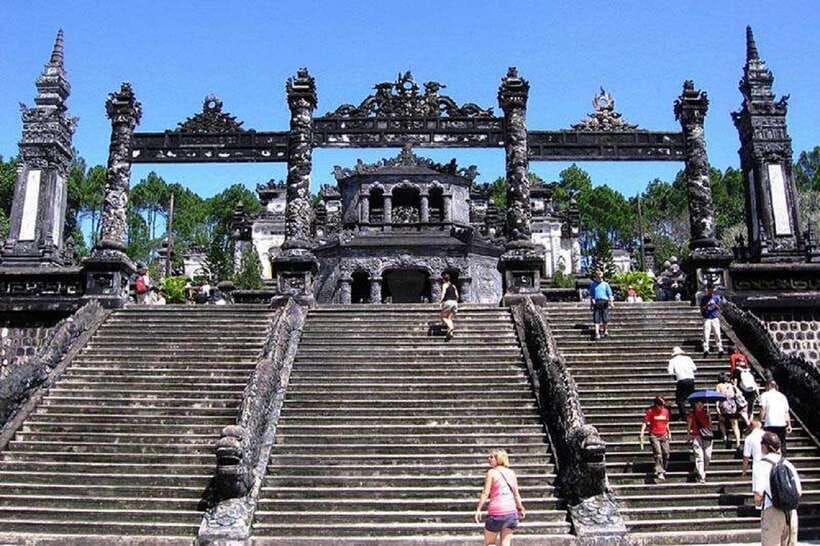
Khai Dinh’s mausoleum is where Hue shows its willingness to blend influences. Construction began in 1920 and finished in 1931. Khai Dinh started the work from 1920 to 1925, and after his death his child took over from 1925 to 1931.
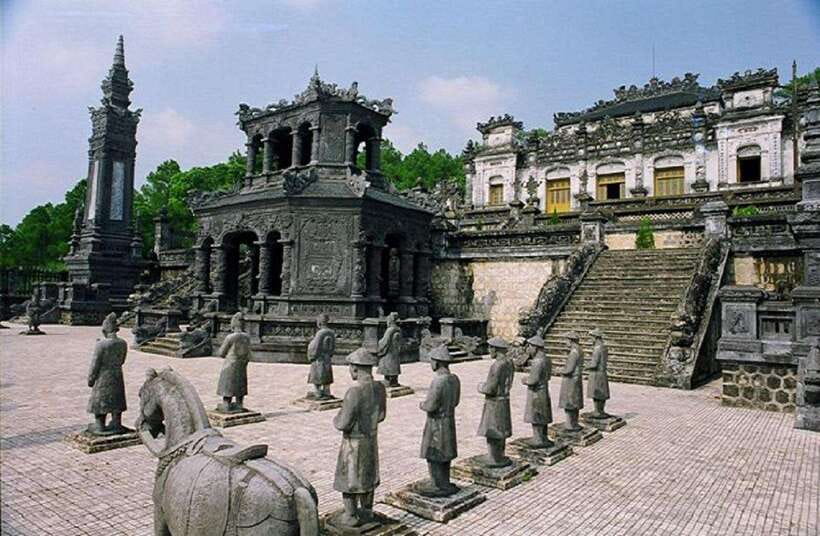
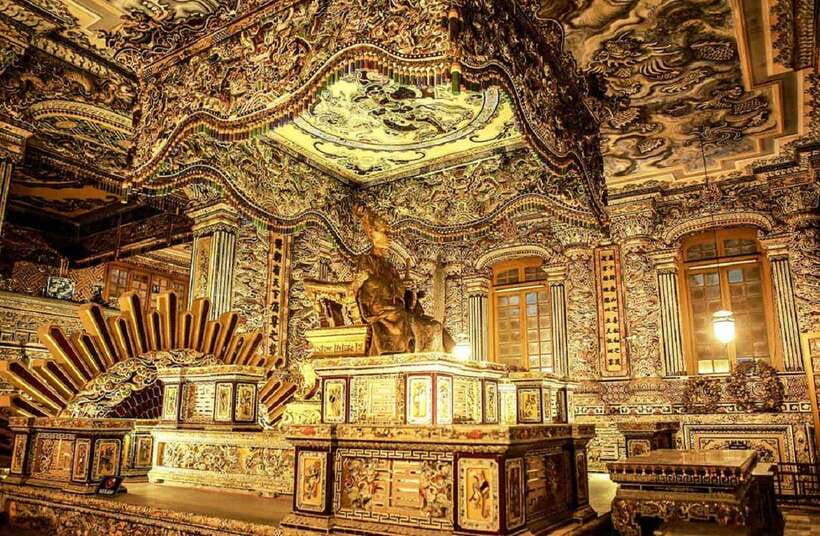
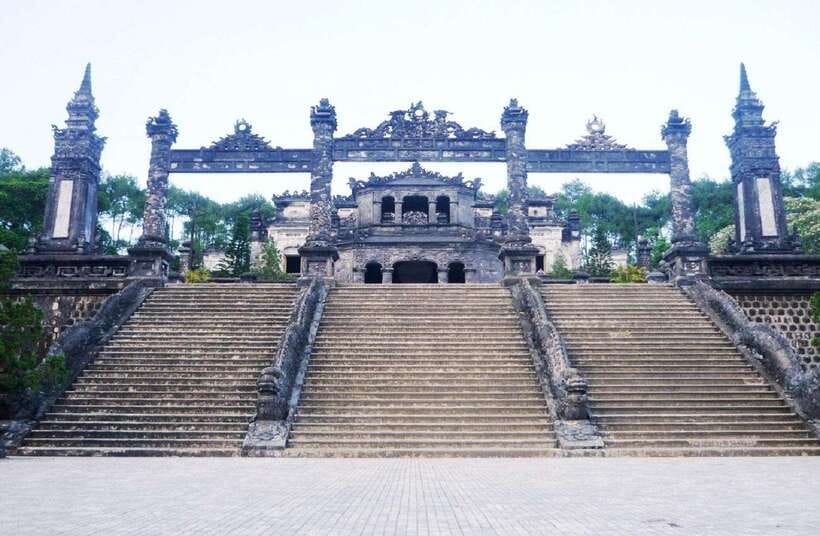
This tomb is also specifically noted for blended styles of Orient and European. That means you are not just seeing Nguyen royal design, you are seeing a moment of cultural contact expressed in stone and layout.
The site’s measurements are also striking, described as about 48.5 meters by 117 meters. And there is an important burial note here: the Nguyen king is buried underneath his tomb, so the structure is both a monument you visit and a covering over what lies below.
If you like when a place tells a story through style, Khai Dinh is one of the best stops on the day.
Gia Long and Dong Khanh: going beyond the headline names
If you only choose the most famous tombs, you miss something: the dynasty does not consist of one personality. Visiting Gia Long and Dong Khanh helps you see the wider span of Nguyen rule.
Gia Long’s mausoleum complex began in 1814 and was completed in 1820. It is the burial site of Emperor Gia Long, the founder of the Nguyen Dynasty, and the complex is described as many royal mausoleums within the larger area. In practice, that means the site feels like a family and dynasty footprint, not a single-portrait monument.
Then comes Dong Khanh, also called Tu Lang. It is located in a more rural setting, in Thuong Hai village, Thuy Xuan ward, Hue city. Architecturally, it is described as having about 20 large and small architectural works, with relatively high density, and it is divided into two areas: palace area and tomb area.
What I like about pairing these two is the shift in setting and scale. Gia Long gives you the founder’s legacy complex, while Dong Khanh adds a sense of lived-in spacing, spread out in a village environment.
Thien Mu Pagoda: Buddhism, origin stories, and a living spiritual site
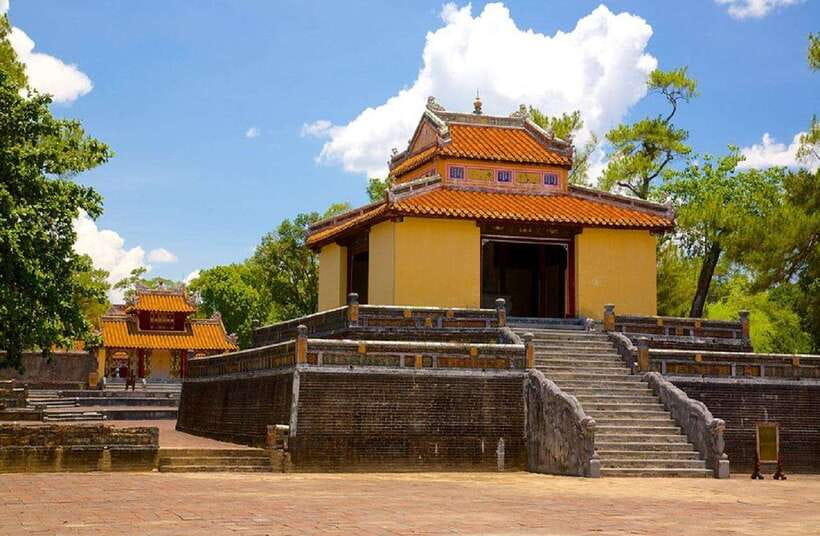
After royal mausoleums, Thien Mu brings you back to living belief in Hue. This pagoda was built in 1601 by the founder of the Nguyen family in Central Vietnam, and it is tied to a local legend about why it was built. According to the description, it was created because of a dream of local people.
So yes, it is religious space. But it is also cultural space, because the origin story explains the relationship between faith and the community that surrounds it. When you stand in these pagoda settings with a guide’s context, you understand why locals still treat them as meaningful, not just scenic.
This stop typically includes time for photos and a guided visit, with a break before you head onward. I find this kind of pacing helps your brain switch gears from stone tomb symbolism to temple atmosphere.
Tu Hieu Pagoda and Thich Nhat Hanh: the Root Temple connection
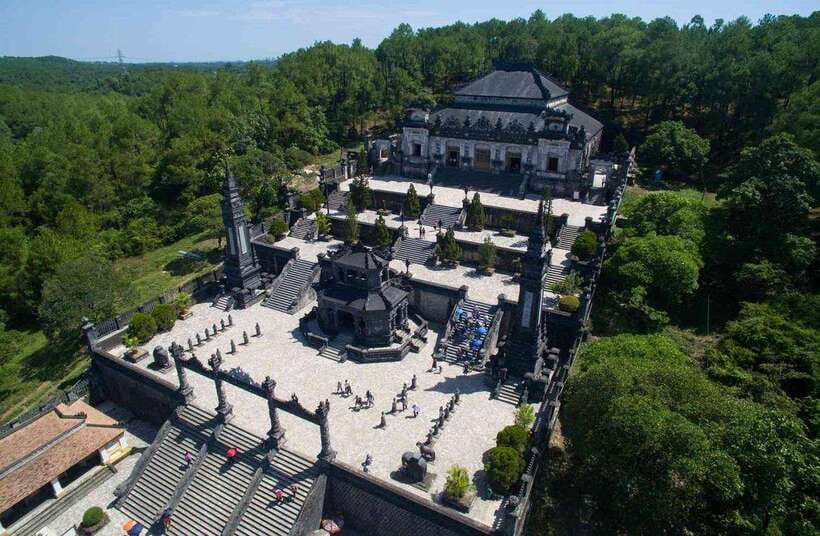
Tu Hieu Pagoda is also known as the Root Temple, and it carries weight as a major cultural and historical site of Hue. One reason this stop is especially interesting to modern visitors is the named spiritual connection: Zen Master Thich Nhat Hanh is listed as living there after returning to Vietnam from the US.
If you care about how Vietnamese spirituality connects to the global peace and mindfulness conversation, this is a meaningful moment in the day. Even if you are not deeply into Buddhism, the fact that a widely known teacher is associated with the place makes Tu Hieu feel current, not stuck in a textbook.
The schedule also gives time for walking and hiking style movement at this stop, so wear shoes you can handle. There is also time blocks listed for additional activities such as bike or scooter rides and even yoga, but you should treat those as optional components tied to your specific plan, not something you assume is always included.
The key idea: Tu Hieu is the calm counterpoint to the royal tombs. It gives you a different kind of insight into why Hue has so many sacred sites.
Price and logistics: what $15 covers, and what you must plan for
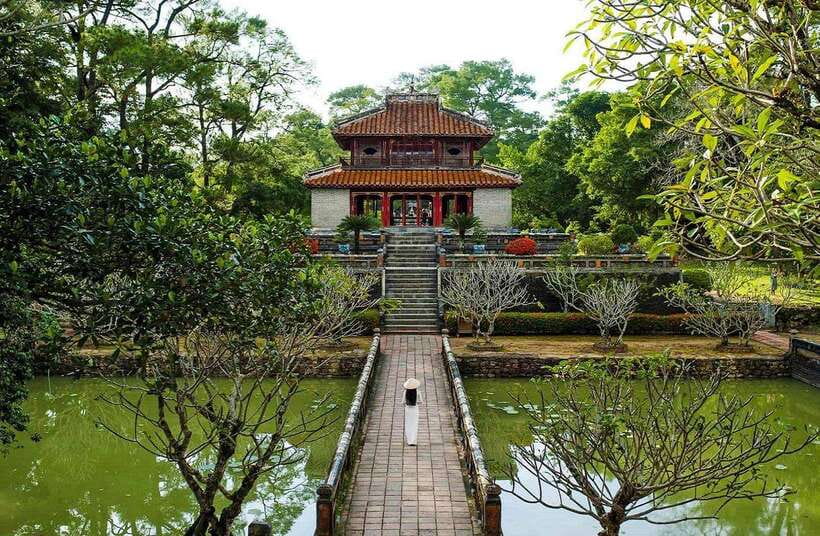
The tour price is listed at $15 per person, with a duration range of 2 to 8 hours. That base price is for the private transportation and the structure of the day, with pickup and drop-off in city center included. The English live guide is tied to the option you choose, but the private car part is core.
Entry tickets are not included. Tomb tickets are listed as 150k per tomb/person, and the tour notes that you might want to buy combo tickets for the Imperial City and tombs. The combo pricing given is 420k per person for Imperial City with 2 tombs, or 530k per person for Imperial City with 3 tombs, valid in two days.
That matters because your real cost depends on how many tombs you pick. If you are doing multiple royal tombs, the combo could be a smarter value than paying separately, especially since it is valid for two days. If you are doing just one or two tombs, buying individual tickets might be simpler.
A small but important note: the tour provider also mentions different options with different numbers of included royal tombs for different prices. So before you lock it in, check how many tombs are included in your chosen option, then compare to ticket costs.
The guide and driver quality is the real multiplier
A good private tour can still feel dull if the guide is reading a script. This one tends to rise above that because the guides and drivers are described as attentive, punctual, and happy to explain.
I keep seeing names like Bi and Duy as standouts. In one account, Bi was described as charming and good at sharing curiosities during the drive. Another experience praised Duy for arriving right on time, greeting warmly, and providing insights on other ancient sites you pass on the way, plus giving ample time at each stop and not rushing.
David is mentioned as an excellent driver, and that matters here because the sites are far apart. When the driver is careful and the route is smooth, you are more likely to actually enjoy the walking and not just survive the travel.
Tra My is also noted as a really good guide during a morning focused on mausoleums. And in one account, the guide went beyond monuments by offering practical advice like where to change money for a better price, and even bringing the group to a typical coffee spot for a salty coffee. That kind of local help can turn a good day into a memorable one.
In short, you are paying for access to the monuments, but you are really getting value from the pacing and the explanations that connect the place to the people.
Who this Hue Royal Tombs Tour suits best
This tour is ideal if you want the major Nguyen royal tombs plus the strongest pagoda stops, without trying to manage transport on your own. If you like history explained in human terms, you will probably enjoy the guided attention to wives, concubines, and eunuchs, because that turns court structure into something you can picture.
It is also a good fit for travelers who want flexibility. Since you can customize your itinerary to choose the best sightseeing places in Hue city, you can reduce the number of tombs if your energy is lower, or extend time if you want more photos and questions.
If you are in a group where people have different interests, this structure helps. The tombs satisfy royal history curiosity, and the pagodas give you a different cultural lens.
Should you book this Hue Royal Tombs Tour?
Book it if you want a well-paced private day that connects tomb architecture to how court life worked, then balances it with two major pagodas. The private car, pickup convenience, and English guide options make it easier to focus on the sites instead of planning the logistics.
I would hesitate if you are trying to do a long list of tombs without budgeting for entrance tickets. Since tomb tickets are 150k per tomb and combo options exist, you should do a quick mental math based on how many stops you truly want.
If you like the idea of spending your Hue time on meaningful monuments rather than guessing your way between them, this tour is a strong choice. Just pick the number of tombs that matches your patience for walking and your appetite for royal backstory, then enjoy the day.
FAQ
How long is the Hue Royal Tombs Tour?
The duration is listed as 2 to 8 hours, depending on your chosen stops and starting time availability.
Where will I be picked up and dropped off?
Pickup is available from Hue city center hotels or Hue Train Station. Drop-off is back at your hotel.
Is this a private tour?
Yes. The tour is described as a private group with private transportation by car or van.
Do I get an English-speaking guide?
The tour offers a live tour guide in English for the option with a guide.
Are tomb entry tickets included in the price?
No. Tomb tickets are not included. The price is listed as 150k per tomb/person.
What ticket options should I consider?
The tour notes that you may want combo tickets for the Imperial City and tombs, priced at 420k per person for Imperial City with 2 tombs, or 530k per person for Imperial City with 3 tombs. Combo tickets are valid in two days.
Is food and drinks included?
No. Food and drinks are not included on the tour.
Can I customize which places I visit in Hue?
Yes. You can customize your personal itinerary to visit the best sightseeing places in Hue city, including the listed royal tombs and pagodas.
What is the cancellation policy?
Free cancellation is available up to 24 hours in advance for a full refund.
Hue, Citadel and Tombs
- Hue Customizable Tour with Imperial Citadel & Forbidden City★ 4.9 · 937 reviews
- Hue :Exploring Royal City with Multi Options and Dragon Boat★ 5.0 · 675 reviews
- Hue City Tour Full Day – Group Tour★ 4.7 · 518 reviews
- From Hue: DMZ Tour with Vinh Moc Tunnels and Khe Sanh Base★ 4.9 · 503 reviews
- Hue: Private Car to Hoi An via Fabulous Stops★ 5.0 · 371 reviews
Other Hue Vietnam tours our reviewers keep coming back to
- Hue Royal Tombs Tour: Visit Best Pagodas & Mausoleums
★ 4.9 · 19 reviews - Hue Imperial city walking tour and optional royal tombs
★ 4.7 · 19 reviews - Hue Imperial City & Abandoned Water Park Tour by E-Scooter
★ 5.0 · 20 reviews - From Hue: Private Half-Day DMZ Tour with Vinh Moc Tunnels
★ 4.8 · 22 reviews - Phong Nha National Park: Paradise Cave Half-Day Tour
★ 5.0 · 23 reviews - Guided Private Tour – Explore Hue’s Royal Tombs & Thien Mu
★ 5.0 · 24 reviews
Hue Imperial City and Royal Tombs, compared.
 ★ 5.0Hue to Hoi An ( Hoi An to Hue) Top Gear with Lefamily Riders Tours ( 1 way)From $503,156 reviews
 ★ 5.0Easy Rider private tour via Hai Van pass from Hue – Da Nang – Hoi An (1Way|Loop)From $551,542 reviews
 ★ 4.9Hue Customizable Tour with Imperial Citadel & Forbidden CityFrom $12937 reviews
 ★ 4.6Imperial City, Hue: Day Tour from Hoi An and Da NangFrom $47830 reviews
 ★ 5.0Easy Rider From Hue Da Nang Hoi An Via Hai Van Pass With Mister TFrom $58769 reviews
 ★ 4.7Da Nang/Hoi An: Hue Imperial City via Hai Van Pass & LunchFrom $9753 reviews
 ★ 5.0Hue to Dn/Hoi An: Hai Van Pass, beaches & Mt Monkey or vice versaFrom $59743 reviews
 ★ 5.0Hue: Imperial City Walk, Motorbike Tour & Private Car OptionsFrom $7732 reviews
Also in these Vietnam lists