
REVIEW · HUE IMPERIAL CITY AND ROYAL TOMBS
Hue Customizable Tour with Imperial Citadel & Forbidden City
Hue’s royal walls have a way of teaching fast. This tour works in two modes, a guided walking loop through the Imperial Citadel and Forbidden Purple City, or a private car day where you set the pace and mix in Hue’s big tombs and pagodas. I like how it turns place names into stories, including the day to day world of emperors, queens, wives, concubines, and eunuchs, and I also like that you get time for questions and photos instead of constant marching. One thing to plan for, you will pay extra for entry tickets to the Imperial City, and the walking option can feel warm because a lot of the route is outdoors.
In This Review
- A quick feel for the experience
- Highlights worth prioritizing
- Walking into Hue’s Imperial Citadel, starting at the bronze cannons
- Nine Holy Cannons and the imperial entrance logic
- Noon Gate, Flag Tower, and why ceremonies were engineered
- Thái Hòa Palace: the coronation center that makes the complex click
- The Mieu Temple and Nine Dynastic Urns
- Entering the Forbidden Purple City and seeing royal life as a system
- What the private car option adds, from Thien Mu to the tomb circuit
- Price, tickets, and what you actually get for $12
- Pacing tips that make this tour feel effortless
- What makes the guides stand out: stories that connect rooms
- Who should book this tour, and who might prefer something else
- Should you book Hue Customizable Tour with Imperial Citadel & Forbidden City?
- FAQ
- How long is the tour?
- What are the main parts of the walking tour?
- Where do we meet for the walking tour?
- Is the Imperial City entrance ticket included?
- What does the private car option include?
- Do I get a guide on the private car option?
- Are food and drinks included?
- What language is the tour offered in?
- How flexible is cancellation?
A quick feel for the experience
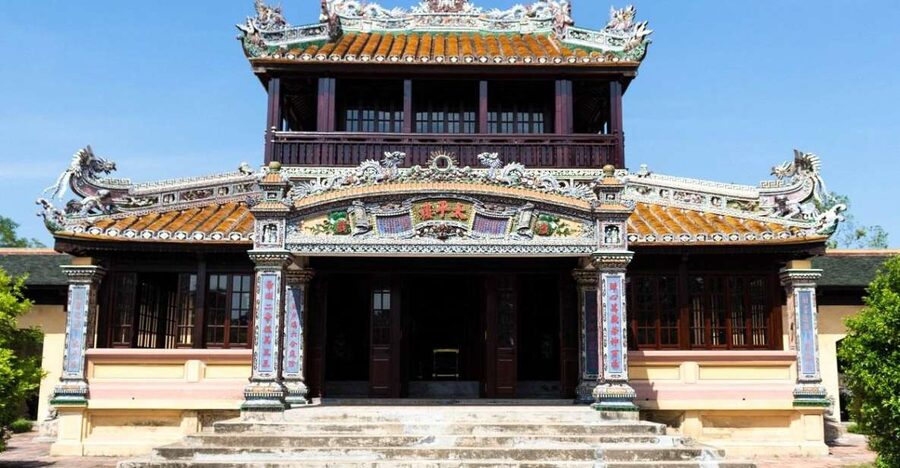
On the walking option, you start at the bronze cannons near the Ngan Gate (Cửa Ngăn), then move through key ceremonial spots and royal spaces like Noon Gate (Ngọ Môn), Flag Tower (Kỳ Đài), Supreme Harmony Hall (Điện Thái Hòa), and finally the Forbidden Purple City (Tử Cấm Thành). I’ve found the best part is when the guide explains why each building mattered, because the Nguyen Dynasty layouts can feel repetitive until someone connects the dots.
The main drawback is simple logistics: the Imperial City ticket is not included, and the tour’s duration can stretch depending on which option you pick. If you are sensitive to heat or long walks, you’ll want to choose your timing carefully and build in shade breaks where possible.
More of the citadel and the tombs along the river
- Hue Customizable Tour with Imperial Citadel & Forbidden City★ 4.9 · 937 reviews
- Hue :Exploring Royal City with Multi Options and Dragon Boat★ 5.0 · 675 reviews
- Hue City Tour Full Day – Group Tour★ 4.7 · 518 reviews
- From Hue: DMZ Tour with Vinh Moc Tunnels and Khe Sanh Base★ 4.9 · 503 reviews
Highlights worth prioritizing
- Nine Holy Cannons (Cửu Vị Thần Công), a rare bronze art set tied to Hue artisans and the early Nguyen era
- Thái Hòa Palace as a coronation center, plus the way the architecture signals power and order
- Forbidden Purple City (Tử Cấm Thành), where royal daily life is the real story
- A tour style that makes time for questions and independent looking, not just photo stops
- Private car option gives you flexibility to combine major Hue sights in one day
Walking into Hue’s Imperial Citadel, starting at the bronze cannons
Most tours start you at a gate. This one starts you at a detail that sets the mood. Your walking guide meets you near the 4 Bronze Cannons Area by the Ngan Gate (Cửa Ngăn), and there are matching cannons on the opposite side too. That matters because Hue’s imperial complex is full of pairs and symmetry, and the guide uses that logic to help you understand what you are seeing instead of just naming it.
From there, you’ll walk for about 2.5 hours inside the Imperial Citadel and onward into the Forbidden Purple City zone. Expect frequent short stops for explanation, photo moments, and a bit of breathing room. The guides in this program have strong communication skills in English, and names that show up again and again include Ha, Misa (Minh Sang), Nhien, Duy, Duy again, Linh, and Hoa.
If you want the simplest way to get value, arrive a bit early, wear breathable shoes, and plan to pause when your guide tells you to. It is not a race, and it feels better when you slow down.
Nine Holy Cannons and the imperial entrance logic
The tour begins with the Nine Holy Cannons (Cửu Vị Thần Công). These are not generic props. They were cast by Hue artisans in Gia Long’s second year (1803), and they are considered one of the most valuable bronze works of art. The cannons were originally set at the foot of the Imperial Citadel near the entrance of the Ngo Mon Gate, and later moved to their current spot during King Khai Dinh’s reign. That small timeline detail helps you see this complex as something that evolved, not a frozen museum scene.
Next comes the Stage of Flag area (the flag platform), where you get a short step-by-step explanation of ceremonial visibility and how rulers signaled authority. The route then moves toward Cua Ngo Mon (Ngo Mon Gate, Hue), and this is where the guide typically shifts from objects to meaning. You start to hear themes like hierarchy, ritual movement, and how the court used space like a stage.
A practical tip here: keep your water handy. Even if the explanations are short, the walkways add up, and early afternoon heat can sneak up fast.
Noon Gate, Flag Tower, and why ceremonies were engineered
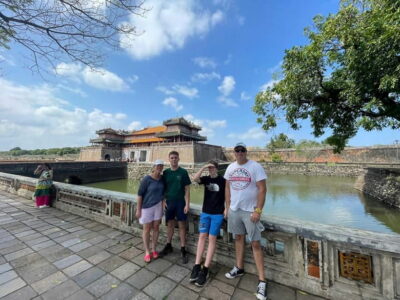
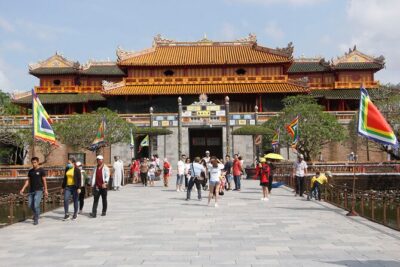
When you reach Noon Gate (Ngọ Môn Huế), you are looking at a ceremonial South Gate built in 1833 under King Minh Mang. Troops moved through it, and the kings used it for ceremonies, which is a big hint about how political power worked in daily life. You will likely hear about the traditional Vietnamese style approach too, which helps you notice how the gate feels like part of a single system rather than a standalone monument.
Then it’s to the Flag Tower (Kỳ Đài Huế). This sits on the south face of the citadel within the Nam Chanh fortress. It’s not just an architectural landmark. It is tied to the royal court, including the idea of signaling through flags from a formal location.
These stops are also good for photos, but only if you take the time to align angles. The guide’s storytelling makes that easier because they tell you what to look for, like symmetry cues and how the fortifications frame sightlines.

Thái Hòa Palace: the coronation center that makes the complex click
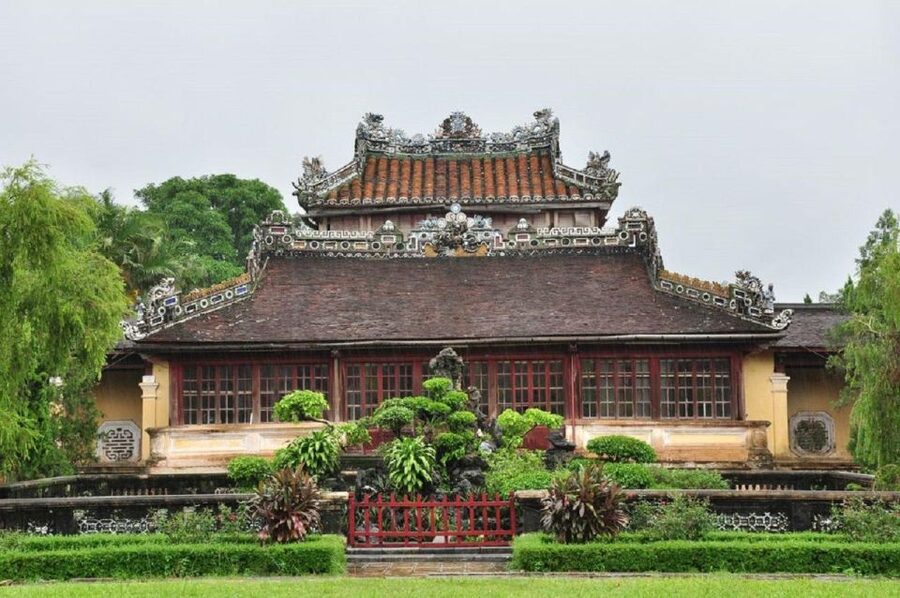
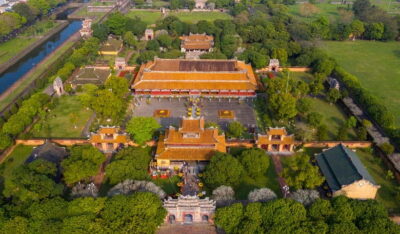
One of the biggest anchor points is Supreme Harmony Palace (Điện Thái Hòa). This palace is located within the Imperial City area and served as the coronation place of 13 Nguyen kings from Gia Long to Bao Dai. That is the kind of fact that changes how you see the next few buildings, because suddenly you understand that the citadel is built for major life events and political theater, not just display.
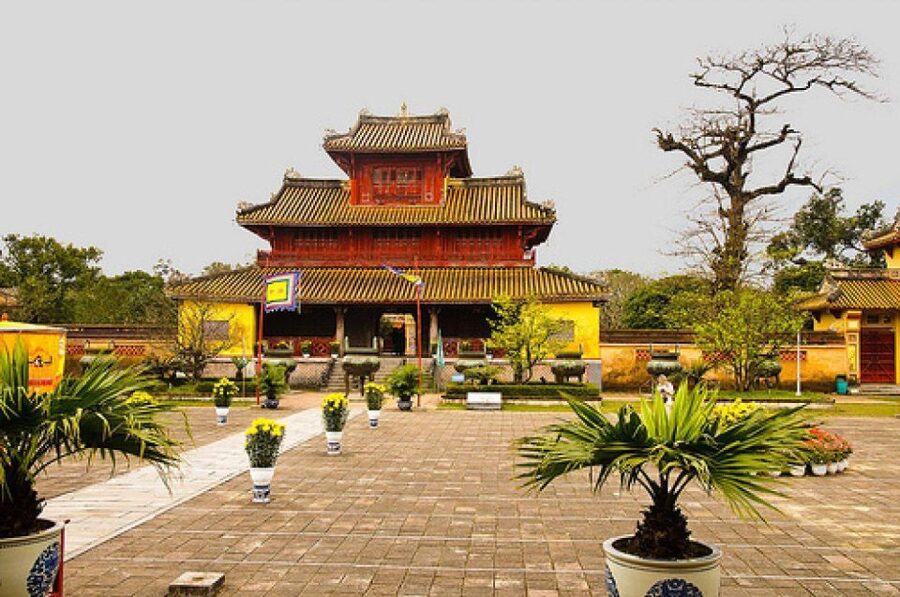
If you are the type who likes structure, you’ll appreciate that the guide typically explains how this space functioned as a center of the country in feudal regimes. And if you are the type who likes details, the route often slows down at pavilions and halls like Hien Lam Pavilion and other royal compound features, so you can spot construction and layout logic instead of rushing past it.
The Mieu Temple and Nine Dynastic Urns
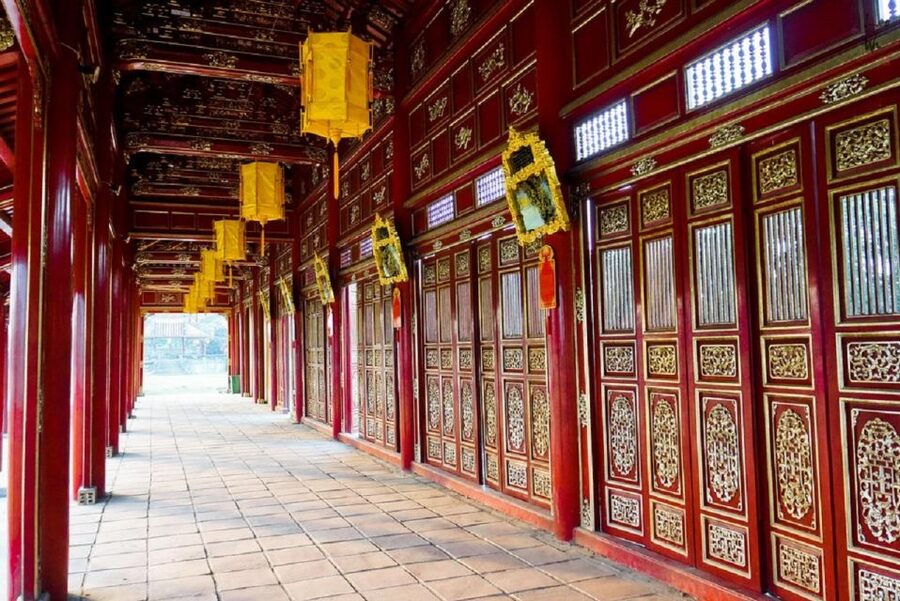
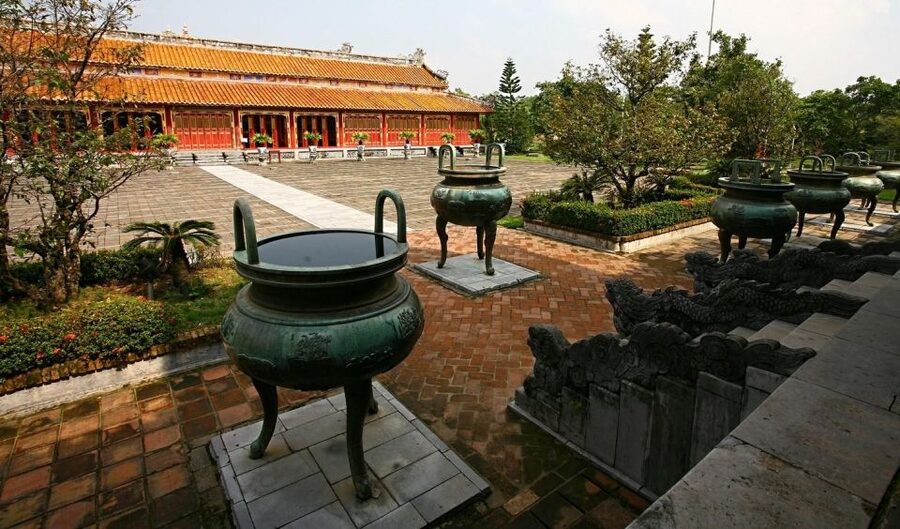
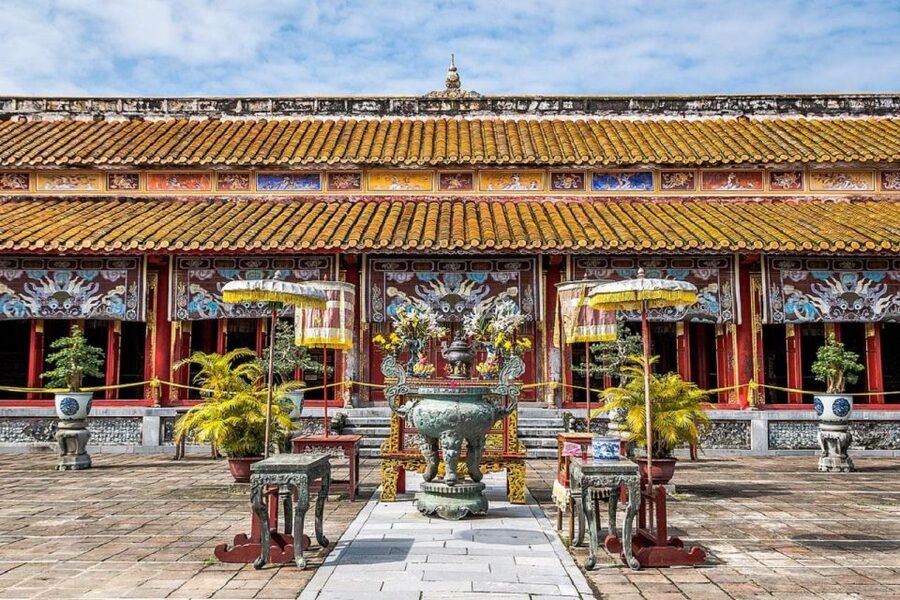
As you continue, you’ll pass by the Nine Dynastic Urns (Cửu Đỉnh Huế). These nine bronze urns are located in front of The Mieu Temple. Emperor Minh Mang commissioned them in the winter of 1835, and they were inaugurated on March 1, 1837. The story you’ll hear here is not only about bronze craftsmanship, it is about state symbolism and the idea that the ruler was tied to a formal order.
Then you reach The Mieu Temple (Thế Miếu Huế), also called The To Mieu. It was built in 1821 by the second kings of the Nguyen Dynasty, Minh Mang. It is a temple to worship 10 kings of the Nguyen Dynasty. Even if temples are not your usual interest, this one helps you understand how the Nguyen court blended politics, religion, and ancestor reverence into the same physical space.
This is where good guiding makes a big difference. Guides like Misa and Linh are repeatedly praised for turning these facts into clear explanations, and you can feel the result if you stop long enough to listen.
Entering the Forbidden Purple City and seeing royal life as a system
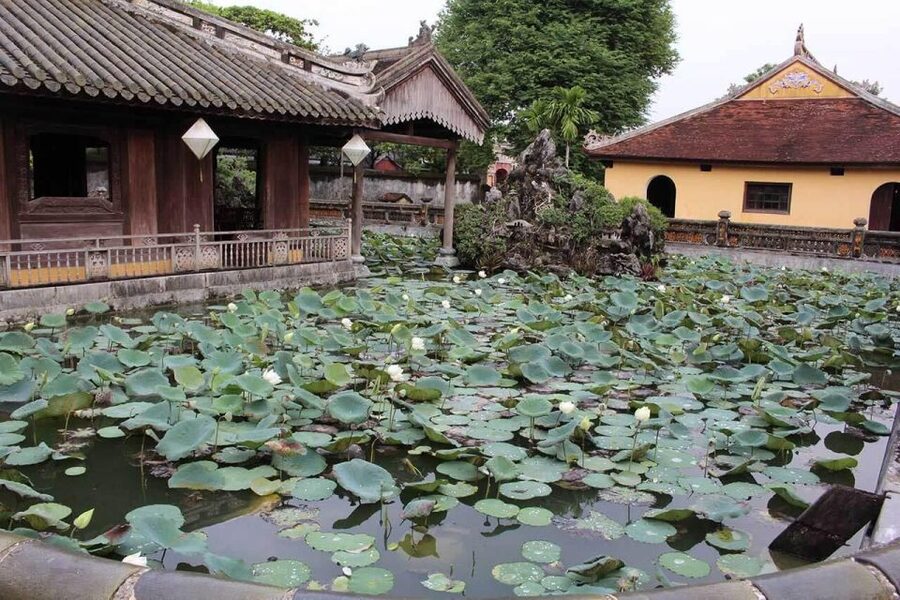
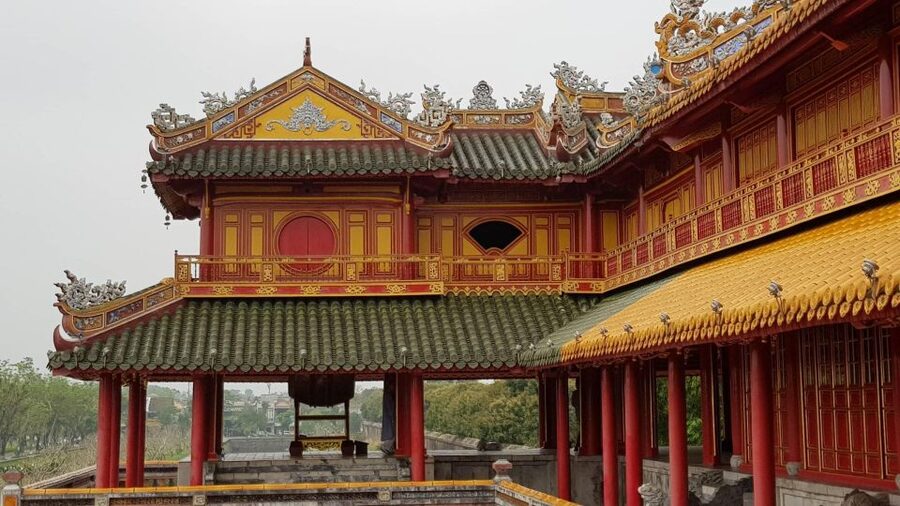
After the Forbidden Purple City (Tử Cấm Thành), the theme shifts to the lives inside the walls. This area is described as the complex’s core daily-life space for kings, queens, minor wives, and concubines of the Nguyen emperors. It sits behind the Thái Hòa Palace, and it was first built by King Gia Long (1804). Later, in the third year of Minh Mang’s reign (1822), the name changed into Forbidden Purple City.
If you only look at buildings, the complex can feel like architecture. If you understand how the court lived and moved, it becomes a map of power and privacy.
The route after the main forbidden zone also includes more interior ceremonial spaces and structures such as Kiến Trung Palace and Thai Binh Pavilion, plus garden and theater-like stops like Thiệu Phương Garden and Duyet Thi Duong Royal Theater. You might also see smaller temple areas such as Triệu Tổ miếu and the Cửa Hiển Nhơn doorway. These are shorter stops, but they are useful because they show the citadel was built as a complete world, not a single showpiece.
A note on stamina: by this point in the walk, you will likely want those short free-time windows your guide builds in. They’re not filler, they help you recharge so the last buildings still land.
What the private car option adds, from Thien Mu to the tomb circuit
If you choose the private car option, you are basically buying control. You get an English speaking driver who handles communication, and you customize a Hue day around the attractions you care about most. There is no separate tour guide license included with the car option, so you may rely more on the driver for practical help than for deep historical explanation.
Still, the lineup is strong. The private car lets you mix major hits like Thiên Mũ Pagoda, then tombs such as Minh Mang Tomb, Tu Duc Tomb, and Khai Dinh Tomb. If you want a classic contrast day, you can also add Thuy Tien abandoned water park to change the mood and get a quick modern Hue side.
One big value of the car option is pacing. Instead of squeezing everything into a single walking loop, you can spread the day, shorten time at a site you find less interesting, and linger at the one that clicks. You also get pickup flexibility from your hotel in the city center areas (it notes services for Hoi An/Hue) and from railway stations or Phu Bai Airport in Hue.
For me, this option makes the most sense if you are traveling with someone who hates long walks, if you’re catching Hue between transfers, or if you want to add tombs without stacking too much walking.
Price, tickets, and what you actually get for $12
The headline price is listed at $12 per person, and at that level, you should think of it as paying for the structured experience and the guide time, not for attraction entry. The important caveat is right in the details: entrance tickets to the Imperial City are not included, listed at 200k per adult. You may also find it useful to buy combo tickets that bundle Imperial City with 2 tombs for 420k, or with 3 tombs for 530k, valid for two days.
So is it good value? Yes, if your priority is understanding the complex with a real person guiding you through meaning. Walking without a guide through Hue’s royal spaces can be beautiful, but you’ll miss a lot of the symbolic logic. This tour is priced like it expects you to cover entry separately, which is normal for guided heritage sites.
Also, the service quality seems consistent. Transport is rated highly, and a large share of reviewers gave it perfect scores, which matters in a day where you do not want delays to eat your time.
Pacing tips that make this tour feel effortless
This itinerary has multiple walking segments, plus optional additions if you pick the private car. Here’s how to make it feel smoother.
Plan for shade breaks. Even during the walking portion, your guide includes break time at multiple stops. Use those moments to cool down, not just to check your phone.
Start earlier if you can. Many people pick morning or early sessions because the outdoor walking is noticeable. If you go later in the day, take your time with the Indoors first stops like Thái Hòa Palace area, then save your energy for the Forbidden Purple City walk.
Bring a light layer if you get rain. The route is outdoors for long stretches, and Hue weather can shift. You will still enjoy the tour in less-than-ideal conditions, but you’ll want to be prepared.
And if you are a question person, you are in luck. Guides here tend to make space for questions, and the pace often includes independent looking time, so you can follow your interests instead of only your guide’s script.
What makes the guides stand out: stories that connect rooms
I can’t promise the exact guide you’ll get, but the pattern is clear from the names and the descriptions: strong English, clear explanation of the Nguyen emperors and their world, and an easy friendliness. People mention Ha for being accessible and friendly, Duy for engaging storytelling, Nhien for tailoring and personal touch, and Misa for clear structure plus humor and strong communication.
One detail I love is how often the guide role extends beyond the palace walls. Ha, for example, is described as recommending food and coffee places afterward. That matters because your time in Hue is more than just monuments, and a guide who can point you to a good next stop helps you keep the day flowing.
Another repeated theme is explanation of symbolism, like why certain numbers or animal motifs matter and how Confucian order, feng shui ideas, and Buddhism connect to what you see in the citadel layout. If those themes are your thing, you’ll likely feel like the architecture finally makes sense.
Who should book this tour, and who might prefer something else
This tour is a great fit if you want a structured Hue experience that teaches you what to notice, especially if the Nguyen Dynasty theme interests you. The walking option is ideal for history lovers who can handle around 2.5 hours of walking, with stops and breaks.
Choose the private car option if you want to build your own circuit, like pagoda plus tombs, and you prefer less walking between sites. It also suits you if you’re time-limited.
If you are the type who hates guides and wants total freedom, you might feel constrained by scheduled stop timing. For that style, you’d probably prefer to rent a driver and do sites on your own. But if you like learning and want the palace spaces interpreted, the guide-driven approach is the whole point.
Should you book Hue Customizable Tour with Imperial Citadel & Forbidden City?
I’d book it if you want your Hue day to feel like more than a photo checklist. The Imperial Citadel and Forbidden Purple City are impressive on their own, but this tour gives you the structure to understand why, from the Nine Holy Cannons to Thái Hòa Palace and the royal-life layout inside the forbidden zone.
You should think twice if you don’t want to pay extra for tickets or if you know long outdoor walking is rough for you. In that case, pick the private car option so you can control how much walking you do at each stop.
If your goal is a satisfying blend of major sites, context, and a guide who can connect the details, this one is a smart way to spend time in Hue.
FAQ
How long is the tour?
It can run from 150 minutes up to 8 hours, depending on the option and itinerary you choose.
What are the main parts of the walking tour?
The walking tour focuses on the Hue Imperial Citadel and Forbidden Purple City, with about 2.5 hours spent walking there.
Where do we meet for the walking tour?
The guide meets you at the area with 4 Bronze Cannons near the Ngan Gate (Cửa Ngăn). There are also cannons on the opposite side.
Is the Imperial City entrance ticket included?
No. Entrance tickets to the Imperial City are not included, listed at 200k per adult. You may also choose combo tickets.
What does the private car option include?
You get a private car and an English speaking driver for communication. The schedule is customizable so you can add sights like Thiên Mũ Pagoda and several royal tombs.
Do I get a guide on the private car option?
The included guide is listed only for the walking tour option. For the private car option, the tour guide is not included, and the driver is described as not like a professional guide with a license.
Are food and drinks included?
No. Food and drinks are not included, but you can purchase them.
What language is the tour offered in?
The tour guide language is English.
How flexible is cancellation?
Free cancellation is offered up to 24 hours in advance for a full refund.
Hue, Citadel and Tombs
- Hue :Exploring Royal City with Multi Options and Dragon Boat★ 5.0 · 675 reviews
- Hue City Tour Full Day – Group Tour★ 4.7 · 518 reviews
- From Hue: DMZ Tour with Vinh Moc Tunnels and Khe Sanh Base★ 4.9 · 503 reviews
- Hue: Private Car to Hoi An via Fabulous Stops★ 5.0 · 371 reviews
- Hue Imperial Ancient City Walking Tour★ 4.8 · 308 reviews
Other Hue Vietnam tours our reviewers keep coming back to
- Hue Royal Tombs Tour: Visit Best Pagodas & Mausoleums
★ 4.9 · 19 reviews - Hue Imperial city walking tour and optional royal tombs
★ 4.7 · 19 reviews - Hue Imperial City & Abandoned Water Park Tour by E-Scooter
★ 5.0 · 20 reviews - From Hue: Private Half-Day DMZ Tour with Vinh Moc Tunnels
★ 4.8 · 22 reviews - Phong Nha National Park: Paradise Cave Half-Day Tour
★ 5.0 · 23 reviews - Guided Private Tour – Explore Hue’s Royal Tombs & Thien Mu
★ 5.0 · 24 reviews
Hue Imperial City and Royal Tombs, compared.
 ★ 5.0Hue to Hoi An ( Hoi An to Hue) Top Gear with Lefamily Riders Tours ( 1 way)From $503,156 reviews
 ★ 5.0Easy Rider private tour via Hai Van pass from Hue – Da Nang – Hoi An (1Way|Loop)From $551,542 reviews
 ★ 4.6Imperial City, Hue: Day Tour from Hoi An and Da NangFrom $47830 reviews
 ★ 5.0Easy Rider From Hue Da Nang Hoi An Via Hai Van Pass With Mister TFrom $58769 reviews
 ★ 4.7Da Nang/Hoi An: Hue Imperial City via Hai Van Pass & LunchFrom $9753 reviews
 ★ 5.0Hue to Dn/Hoi An: Hai Van Pass, beaches & Mt Monkey or vice versaFrom $59743 reviews
 ★ 5.0Hue: Imperial City Walk, Motorbike Tour & Private Car OptionsFrom $7732 reviews
 ★ 5.0Hue :Exploring Royal City with Multi Options and Dragon BoatFrom $12675 reviews
Also in these Vietnam lists