
REVIEW · SAPA TREKKING AND FANSIPAN
Highland Harmony Trek in Sapa
One good valley walk can beat a whole day of sightseeing. The Highland Harmony Trek threads Sapa’s rice-terrace views through Black H’mong and Giay communities, with calm pacing and real local stops rather than a checklist of photos.
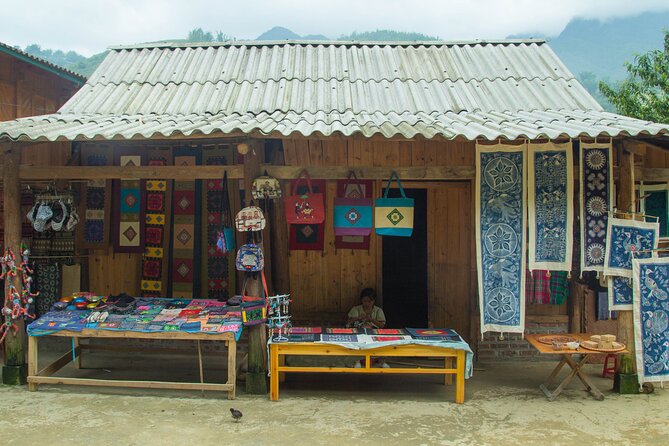
I especially love the easy-to-follow trail that still feels varied, plus the home-style lunch in Lao Chai that adds substance to the day. You also get guide-led stories about what life looks like here, including traditional work like indigo-blue dyeing.
A key consideration: this is a moderate fitness trek for 6 to 9 hours, and you’ll be on dirt paths, steps, and uneven ground. If you hate walking or you expect flat surfaces the whole time, you may feel it by mid-afternoon.
In This Review
- Highland Harmony Trek: Why This Route Feels Different
- Key Highlights You’ll Actually Notice
- Price and Time: The Real Value Behind $29
- Start Point at Green Sapa Homestay, Then Straight Into Muong Hoa Valley
- Stop 1: Muong Hoa Valley Views and Black H’mong Village Life
- Stop 2: Y Linh Ho, Narrow Paths and High Quiet Views
- Stop 3: Lao Chai Trail, Rice Terraces and a Proper Local Lunch
- Stop 4: Ta Van Village Finish in Giay Stilt-House Country
- How the Guide Turns a Walk Into Learning
- What the Trail Feels Like Day to Day (Not Just the Name)
- Transportation, Group Size, and the Mobile Ticket Convenience
- Weather and When to Book
- Who This Trek Fits Best
- Should You Book the Highland Harmony Trek?
- FAQ
- How long is the Highland Harmony Trek?
- What time does the tour start, and where do we meet?
- Does the trek include lunch?
- How many people are in the group?
- What fitness level do I need?
- What if the weather is bad?
Highland Harmony Trek: Why This Route Feels Different
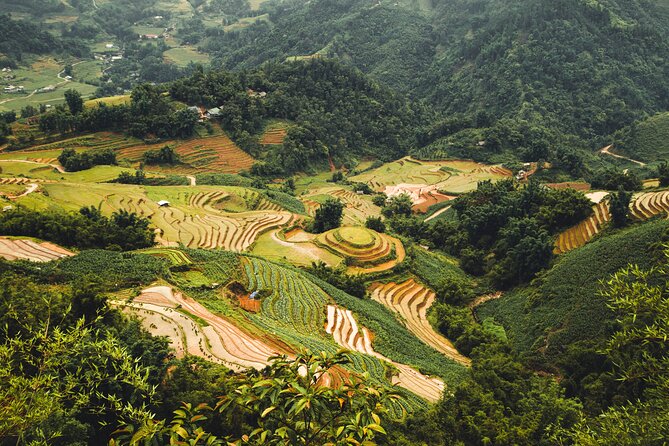
This trek has a nice rhythm, starting with a gentle descent and ending in a quieter village valley. Instead of repeating the same path or racing from one viewpoint to the next, the walk flows through recognizable places in Sapa’s wider Muong Hoa area, then gradually slows as you reach Ta Van.
What makes it work for most people is that the scenery and culture are tied together. You see terraces and river edges while also learning how farming and daily routines fit into the landscape you’re moving through. And with a small maximum group size, you’re not stuck behind a parade of strangers.
Other Sapa walks, from gentle to genuinely hard
- Sapa: Fansipan Cable, Cat Cat Village & Moana Instagram Tour★ 5.0 · 777 reviews
- Cat Cat Village, Moana, Fansipan Cable Car, Alpine Coaster – Sapa★ 5.0 · 420 reviews
- Sa Pa Full Day Trekking Tour★ 5.0 · 414 reviews
- Sapa Motorbike Tour With Local Guide 1 Day – Waterfalls, Villages★ 5.0 · 254 reviews
Key Highlights You’ll Actually Notice
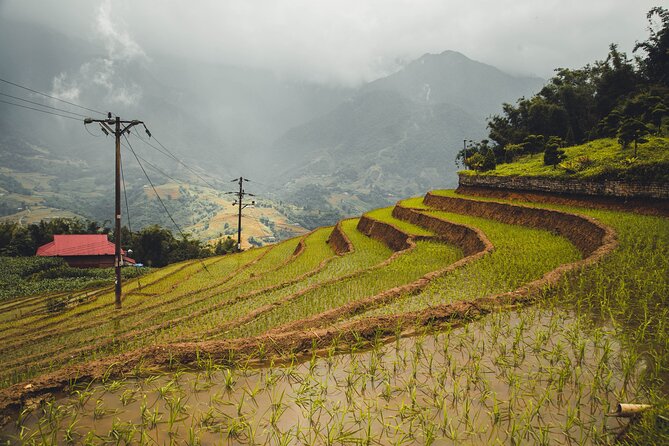
- Small group size (max 10) keeps the walk calmer and easier to follow.
- Muong Hoa Valley start gives you big views early, before the villages get busy.
- Y Linh Ho to Lao Chai flow means you cover multiple village settings without feeling rushed.
- Local lunch in Lao Chai is part of the experience, not an afterthought.
- Ta Van end in Giay community areas is a peaceful finish with stilt houses and fields.
- Local guide storytelling connects the sights to daily life, including traditional dyeing.
Price and Time: The Real Value Behind $29
At $29 per person for roughly 6 to 9 hours, this trek is priced like an experience, not a taxi ride plus a photo stop. The math gets better when you factor in what’s included: you’re not only walking, you’re also getting a guided route, village access, and a locally prepared lunch in Lao Chai.
The duration matters. This is long enough to feel like you did something meaningful, but it’s also built around a moderate effort level, not a hard training day. That balance is exactly why people tend to leave happy, especially if they want nature plus culture, not one or the other.
Start Point at Green Sapa Homestay, Then Straight Into Muong Hoa Valley
Your day starts at Green Sapa Homestay on Nguyễn Chí Thanh, with a start time of 8:30 am. Expect pickup and a return vehicle back to the same meeting point at the end. That back-and-forth support is useful in Sapa, where it’s easy to lose time figuring out transport between neighborhoods.
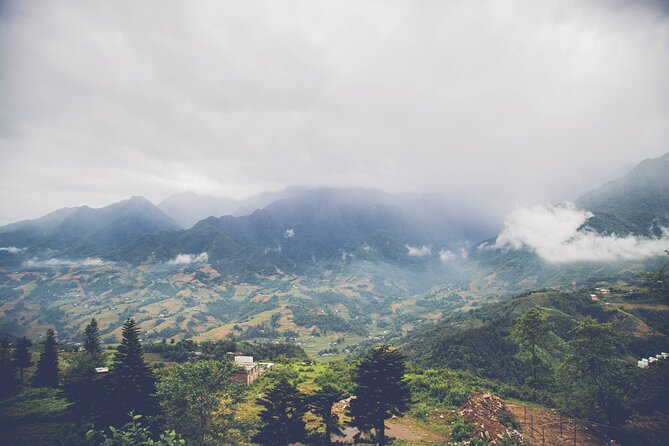
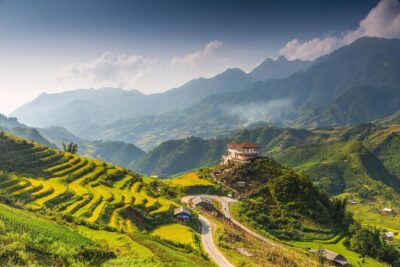
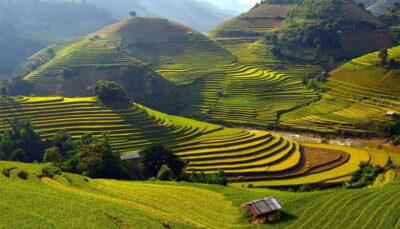
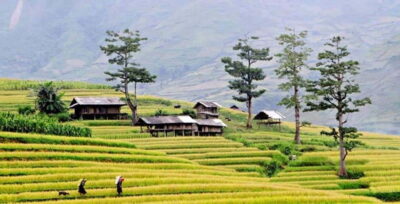
From there, the trek begins with a gentle descent into Muong Hoa Valley. You quickly get a sense of scale. Steep terraced hills sit close to narrow stone and dirt paths, and Black H’mong villages appear in the mix. This first stretch is where the day’s tone clicks into place: quiet, rhythmic walking, and early chances to look out across layers of fields.
What I like about this start for you is how it sets up the rest. If you ease into the valley, later village walks feel natural, not like a chore right after arrival.
Stop 1: Muong Hoa Valley Views and Black H’mong Village Life
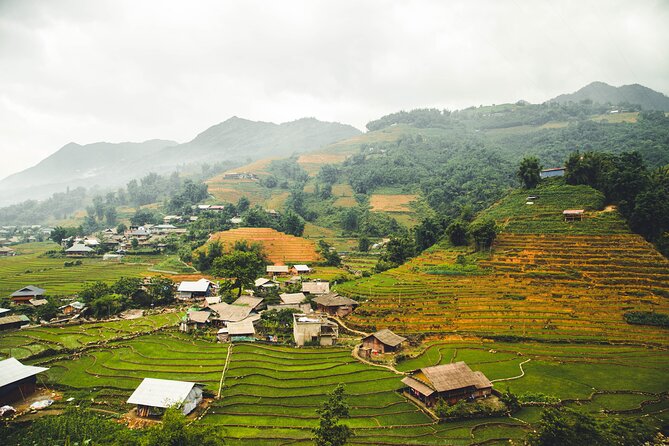
Muong Hoa Valley isn’t just pretty from a distance. On the ground, it’s a working area, and you feel that through what the trail passes and what your guide points out. Rice terraces stack up along slopes, and the path threads between village edges and farming zones.
Practical tip: plan on taking your time early. The first stop is where you’ll have the most energy, and it’s also where the photos come easily because you’re not yet rushed toward lunch or the next village.
Sleep in a village, walk between them

Stop 2: Y Linh Ho, Narrow Paths and High Quiet Views
After the opening descent, the route heads toward Y Linh Ho, a small Black H’mong village tucked into the hills above Muong Hoa Valley. This is the point where the trekking begins to feel more intimate. Narrow dirt paths lead you along steep terrain, with views that make you pause without needing a big viewpoint platform.
The value here is the village context. Y Linh Ho is not presented as a stage. You’re walking through daily life settings, and that changes the way the day feels. You’re not just passing through, you’re orienting yourself to how communities live with the valley around them.
Possible drawback: because this section follows narrow paths along steep areas, you’ll want good footing. If it’s slick or you dislike heights, consider bringing trekking poles or shoes with solid grip.
Stop 3: Lao Chai Trail, Rice Terraces and a Proper Local Lunch
Next comes Lao Chai, a larger Black H’mong village in the heart of Muong Hoa Valley. This is where the trail opens up into classic terrace views, and the daily village scene becomes easier to notice. Fields, homes, and footpaths sit close together, so even short breaks feel like you’re taking in real life, not a constructed attraction.
Then there’s lunch, and it matters. The trek includes a locally prepared lunch in Lao Chai, tied to H’mong hospitality rather than a generic meal stop. People who do this trek tend to highlight the warmth of the experience and how tasty, simple food feels when you’re surrounded by the environment that produces it.
A small but important detail: if you like getting explanations while you eat, this is usually the sweet spot. It gives your guide time to share how daily routines connect to farming practices and cultural traditions.
Stop 4: Ta Van Village Finish in Giay Stilt-House Country
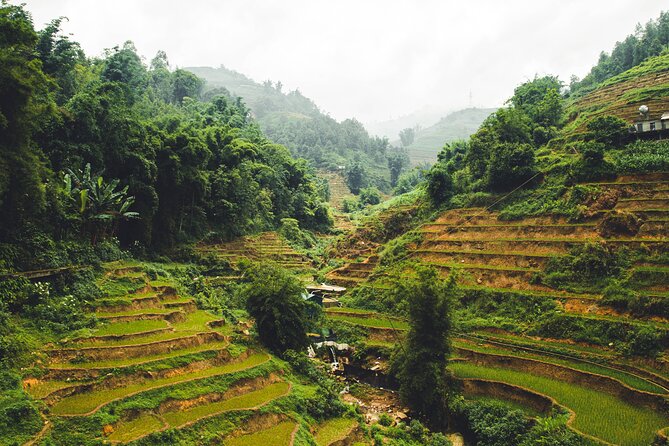
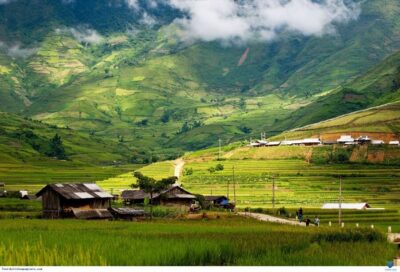
Your final stop is Ta Van Village, a tranquil village area associated with the Giay ethnic group. Here the valley floor feels different, with stilt houses lining the landscape and lush fields stretching around you.
The walking toward Ta Van often feels like a soft landing. You start the day with a descending valley flow, and you end with the calmer, more open feel of a village at rest. It’s the kind of finish that makes you notice sounds, wind, and distance, not just what you can photograph.
If you’re wondering what the cultural side looks like at the end, Ta Van is where you get a shift from Black H’mong village settings to Giay community life. That variety is one reason the trek feels more balanced than a single-village loop.
How the Guide Turns a Walk Into Learning
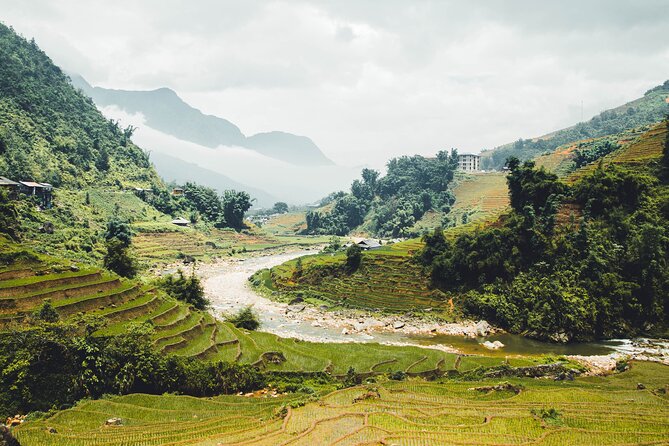
A big part of why people rate this trek so highly is the guide’s storytelling. You get explanations about ethnic groups living in the area and how traditions show up in everyday work. One example that comes through clearly is the discussion around indigo-blue dyeing, including the steps involved and why the process matters.
This is the practical version of cultural travel. Instead of memorizing facts, you connect what you see with what people do, and you build understanding while you walk. It’s also why the trek feels relaxing for many people, even though it’s active. When you’re learning, you stop thinking of it as chores and start thinking of it as time well spent.
What the Trail Feels Like Day to Day (Not Just the Name)
This trek has varied walking types. Expect a mix of:
- terrace viewpoints and open angles
- forest or shaded paths
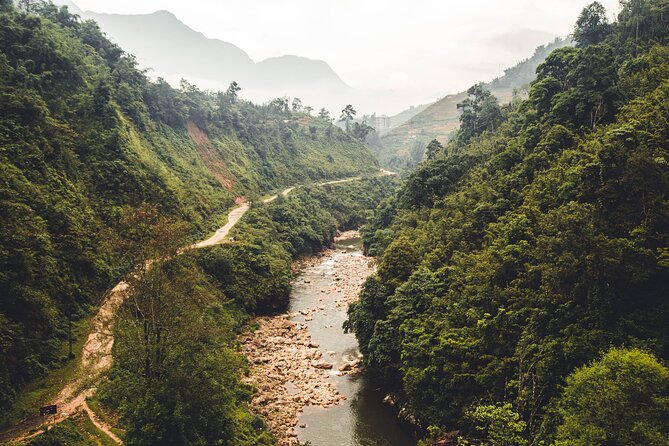
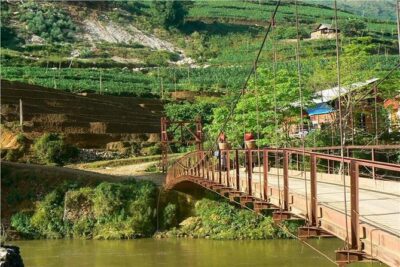
- riverside stretches and crossing points
That variety prevents the boredom slump. It also explains why “easy to follow” shows up in feedback. A good route helps you focus on the day instead of constantly checking where to step next.
Fitness reality check: you’ll still need moderate stamina. The trek lasts a long half-day to full-day range, and the terrain can be uneven. If you’re coming off jet lag, take it seriously. Slow down early so you don’t rush the steeper moments.
Transportation, Group Size, and the Mobile Ticket Convenience
This is built to be low-stress logistically. Pickup happens from the Green Sapa Homestay meeting point, and the vehicle brings you back at the end. The tour limits groups to a maximum of 10 travelers, which keeps things manageable for the guide and helps you maintain spacing on narrow sections.
You’ll also get a mobile ticket, and confirmation is received at booking. If you want less paperwork and more walking, that’s a plus.
Weather and When to Book
This trek requires good weather. That matters in Sapa because trails can become slippery when conditions are wet. If weather turns poor, the experience may be canceled and you’ll be offered another date or a full refund.
My practical advice: book a day when you have a little flexibility. If you land in Sapa with one strict schedule, you might end up unlucky. But if you can adjust based on conditions, you’ll improve your odds of a clear, comfortable hike.
Who This Trek Fits Best
This is a strong fit if you want a day in Sapa that isn’t just scenic viewpoints. It suits:
- people who like walking but want it manageable (moderate fitness)
- visitors who want culture connected to daily life, not staged stops
- anyone who enjoys local food more when it’s tied to place
- small groups or couples who prefer a calmer pace
If your idea of trekking is hours of intense elevation grinding, this likely won’t match that mood. If your idea is a meaningful valley walk with village encounters, it’s right on target.
Should You Book the Highland Harmony Trek?
I’d book it if you want a Sapa day that mixes valley walking, village context, and a real lunch in the middle of it. The $29 price feels fair because you’re not just paying for time on a trail, you’re paying for a route that connects Muong Hoa Valley to Y Linh Ho, Lao Chai, and Ta Van with a guide who explains what you’re seeing.
Skip or double-check your fit if you dislike long walks, uneven ground, or you expect the whole route to be fully flat. Otherwise, this is the kind of trek where the memories come from ordinary moments, like conversation in a village home and the view you catch when the trail opens up.
FAQ
How long is the Highland Harmony Trek?
The trek runs about 6 to 9 hours.
What time does the tour start, and where do we meet?
Start time is 8:30 am. The meeting point is Green Sapa Homestay, at 3-1 Nguyễn Chí Thanh, TT. Sa Pa, Sa Pa, Lào Cai 31752, Vietnam.
Does the trek include lunch?
Yes. You’ll have locally prepared lunch in Lao Chai.
How many people are in the group?
The tour has a maximum of 10 travelers.
What fitness level do I need?
You should have a moderate physical fitness level.
What if the weather is bad?
The experience requires good weather. If it’s canceled due to poor weather, you’ll be offered a different date or a full refund.
Walk, Then Stay
- Number one top rated ethical cultural trekking and homestay by ETHOS★ 5.0 · 456 reviews
- Sa Pa Full Day Trekking Tour★ 5.0 · 414 reviews
- 1-day Authentik trek & Panorama valley views★ 5.0 · 189 reviews
- 1 day Fansipan Trekking★ 5.0 · 180 reviews
- Trekking Through Rice Terraced Fields – 1Day★ 5.0 · 173 reviews
Sapa on Foot
- Sapa: Fansipan Cable, Cat Cat Village & Moana Instagram Tour★ 5.0 · 777 reviews
- Cat Cat Village, Moana, Fansipan Cable Car, Alpine Coaster – Sapa★ 5.0 · 420 reviews
- Sa Pa Full Day Trekking Tour★ 5.0 · 414 reviews
- Sapa Motorbike Tour With Local Guide 1 Day – Waterfalls, Villages★ 5.0 · 254 reviews
- 1 day Fansipan Trekking★ 5.0 · 180 reviews
Other Sapa tours our reviewers keep coming back to
- 1 Day Sapa Tour Explore Y Linh Ho And Lao Chai And Ta Van Village
★ 5.0 · 18 reviews - Canyoning Tour from Sapa Vietnam
★ 5.0 · 19 reviews - Sapa 2 Day Trekking with 1 Night Homestay
★ 5.0 · 20 reviews - Sapa Half-Day Motorbike Tour: Villages & Rice Fields
★ 5.0 · 22 reviews - Sapa Mountain Escape: 2-Day Trekking, Rice Terraces & Homestay
★ 5.0 · 23 reviews - Sapa Dragon Cloud Glass Bridge and Silver Waterfall Half-Day Tour
★ 5.0 · 25 reviews
Sapa Trekking and Fansipan, compared.
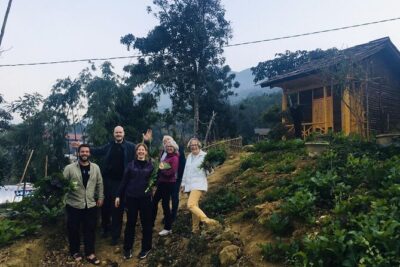 ★ 5.0Sapa 2 Days 1 Night From Hanoi – Overnight in Ta Van VillageFrom $592,669 reviews
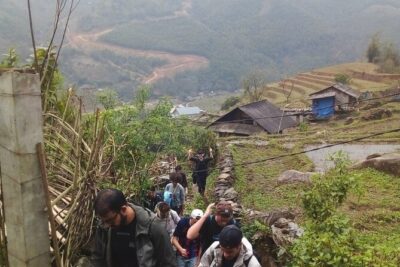 ★ 5.0Hanoi – Sapa 2 Days 1 Night Overnight At HomestayFrom $89899 reviews
 ★ 4.6Sa Pa: Muong Hoa Valley Trek and Local Ethnic VillagesFrom $23864 reviews
 ★ 5.0Sapa: Fansipan Cable, Cat Cat Village & Moana Instagram TourFrom $30777 reviews
 ★ 4.8From Hanoi: 2-Day Sapa Trekking Trip with Homestay & MealsFrom $71704 reviews
 ★ 5.0Sapa 3 Days 2 Nights Trekking Tour (1 Night In Ta Van Village, 1 Night In Hotel)From $139699 reviews
 ★ 4.9Sapa: Eco Adventure Terrace Fields and Local Villages TrekFrom $27636 reviews
 ★ 5.03-Day Trekking Adventure of Sapa from Hanoi – Stay Ta Van VillageFrom $109611 reviews
Also in these Vietnam lists