
REVIEW · SAPA TREKKING AND FANSIPAN
Half-Day Hometrek from Sapa with Hmong Sister House
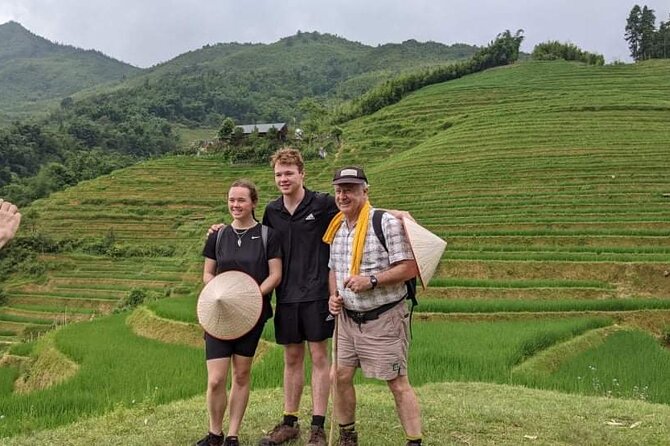
This trek feels personal in a short time. A half-day walk from Sapa Town to Hmong villages follows the old market route, with photo stops, rice terraces, and an English-speaking Hmong guide who explains everyday life along the way.
I also love how the path moves you through multiple communities without rushing, so you get big mountain views and a calmer feel than you might expect from a popular area. One possible drawback to plan for is that the trail can get muddy and uneven, so good footwear matters, and the pace may feel like more hiking than a casual stroll.
In This Review
- Key highlights at a glance
- A half-day hometrek route that tracks the old Sapa market path
- Price and what $25 buys you in real value
- Pickup from Sapa Town and the 9 km walk-ending homestay
- Stop 1: Starting in Sapa Town before Y Linh Ho opens the valley views
- Stop 2: Y Linh Ho, the market-path segment you will actually feel
- Stop 3: Lao Chai for rice paddies and big community perspectives
- Stop 4: Ta Van village, where Hmong culture becomes conversation
- Stop 5: Hau Thao and Zizi Mekhoo Sapa Homestay, the end of the story
- Pace, footwear, and the weather rule you should respect
- Shared group dynamics, and why local guides like Ku matter
- Who should book this Sapa hometrek, and who might skip it
- Should you book this half-day hometrek with Hmong Sister House?
- FAQ
- What is the duration of the half-day hometrek?
- What places does the route visit?
- Is pickup included, and where do they pick you up?
- What is included in the price?
- What should I do if the weather is bad?
- Is there a cancellation window?
Key highlights at a glance
- Market-path history, explained by a local guide on the old route Hmong people used to take to reach Sapa market
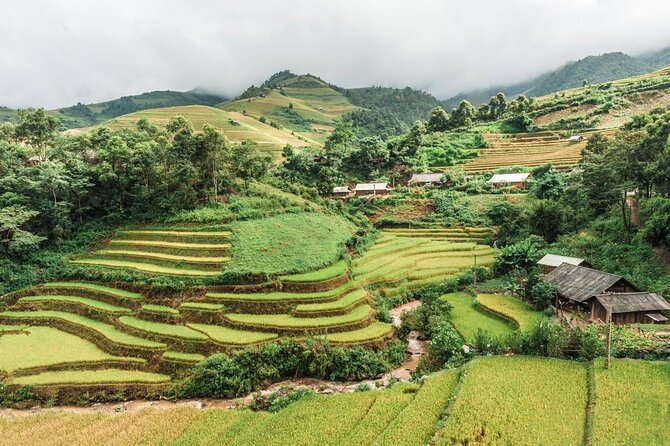
- Rice terraces and valley viewpoints at Y Linh Ho and Lao Chai for some of the best scenery on the walk
- Shared group up to 15 people, which keeps the vibe friendly but means you are hiking on a set schedule
- Family-run arrival at Hau Thao and Zizi Mekhoo Sapa Homestay, about 9 km from town, with optional family dinner
- Driver helps with luggage transfer, so your pack stays simpler during the trek
- Time-flexible start (6:00 AM to 2:30 PM), so you can usually pick a slot that fits your day
Other Sapa walks, from gentle to genuinely hard
- Sapa: Fansipan Cable, Cat Cat Village & Moana Instagram Tour★ 5.0 · 777 reviews
- Cat Cat Village, Moana, Fansipan Cable Car, Alpine Coaster – Sapa★ 5.0 · 420 reviews
- Sa Pa Full Day Trekking Tour★ 5.0 · 414 reviews
- Sapa Motorbike Tour With Local Guide 1 Day – Waterfalls, Villages★ 5.0 · 254 reviews
A half-day hometrek route that tracks the old Sapa market path
Sapa’s most memorable treks are the ones that give you a story while you walk. This one follows the path Hmong families once used when they hiked from their villages to reach the Sapa market. Today, it is a must-do route, but the point is still the same: you are moving between places where people live, farm, and trade, not just checking boxes on a map.
The whole experience is set up as a half-day trek with a start window from early morning to early afternoon. That matters because Sapa weather and visibility can change quickly. If you are staying in town and you want real village walking without losing a full day, this format hits the sweet spot.
You will also feel the tour is built around Hmong family life. At the end, you arrive at Hau Thao, where Zizi’s family lives at Zizi Mekhoo Sapa Homestay. That shift, from scenic stops to a family setting, is where the trek becomes more than views.
Price and what $25 buys you in real value
At $25 per person for about 4.5 hours, this is priced like a budget-friendly guided hike. What makes it good value is that you are not paying extra for the essentials that often add up.
You get:
- Pickup offered from Sapa Town, based on your convenient point
- Bottled water
- Lunch
- An English-speaking Hmong guide
- A set sequence of stops where local guidance is part of the experience
- Mobile ticketing
There is also a practical advantage: your guide can arrange for a driver to bring your luggage ahead to the homestay. That means you can travel lighter and avoid carrying a heavy bag on steep or muddy sections.
If you are comparing costs with other treks, look beyond the headline price. A lot of the value here is in the structure: the guide leads the route, explains the culture, and keeps the timing tight enough to be worth it even if you only have a half day.
Pickup from Sapa Town and the 9 km walk-ending homestay
The trek starts in Sapa (Sa Pa, Lao Cai), and you can share your pickup point like your hotel or bus stop. Then, after the walking loop, the tour ends at Zizi Mekhoo Sapa Homestay in Ban Pho village, about 9 km from Sapa Town.
That ending location is worth noting. You are not returning to the same spot immediately. The guide does the handoff at the homestay, where you can enjoy the view and explore the village area. If you are thinking about dinner plans, it is also where the optional family dinner is offered.
One more logistics point that helps: the tour is not private, and it has a maximum group size of 15 people. That is usually a good size for staying social and moving efficiently. It also means the schedule is predictable, but you may not get to slow down as much as you want if you are a very fast or very slow hiker.
Stop 1: Starting in Sapa Town before Y Linh Ho opens the valley views
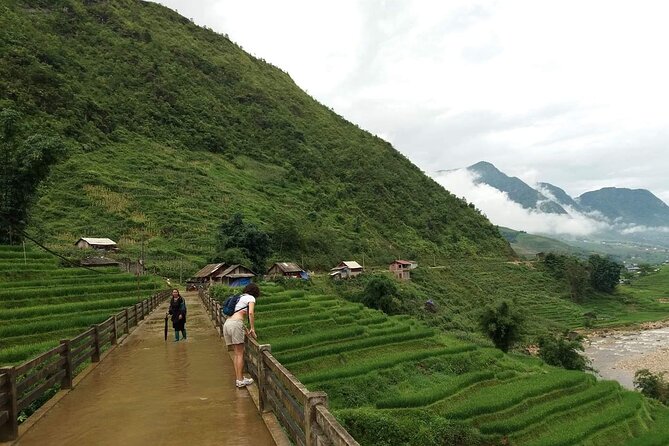
Your guide picks you up from Sapa Town, and you begin with a short stretch that sets the tone. This is the moment to ask quick questions, confirm your pace, and make sure you understand what you want from the walk. The tour uses a simple rhythm: walk, stop, look, listen, take photos, repeat.
Then you head toward Y Linh Ho. This stop is closely tied to why the route exists in the first place. In the old times, Hmong people like Zizi’s family hiked to Sapa market. Now that historic path has become a must-do trek, and Y Linh Ho is where the old idea turns into a scenic walking experience.
If your goal is getting that first sweep of mountains and terraces, Y Linh Ho is a strong early payoff. You are also still fresh enough to enjoy the photos without feeling like you are rushing before your legs catch up.
Sleep in a village, walk between them


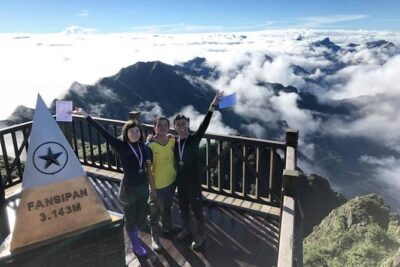
Stop 2: Y Linh Ho, the market-path segment you will actually feel
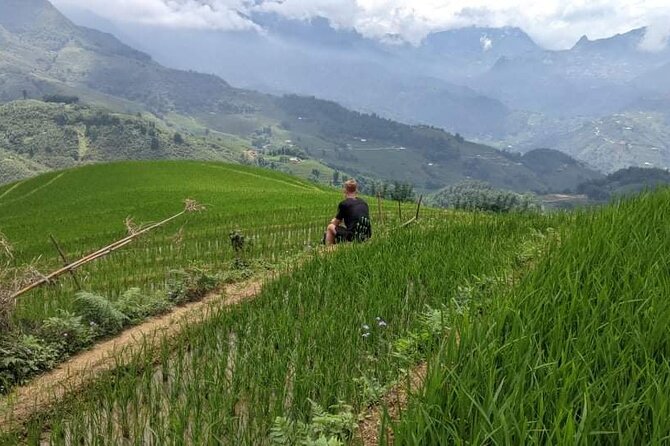
Y Linh Ho is where the trek becomes less about a single photo point and more about the feel of the route. You are walking parts of a path that people once used for practical reasons: reaching a market and connecting with other communities.
That context changes how you experience it. Instead of thinking of it as a staged scenic walk, you start paying attention to the shapes of the farms, the way people live with the terrain, and why the route makes sense.
This is also where you can get that classic Sapa sense of scale. Valleys open up, the sky looks wider, and rice-growing areas show their pattern across the slopes. If you like “look with meaning,” Y Linh Ho delivers.
Stop 3: Lao Chai for rice paddies and big community perspectives
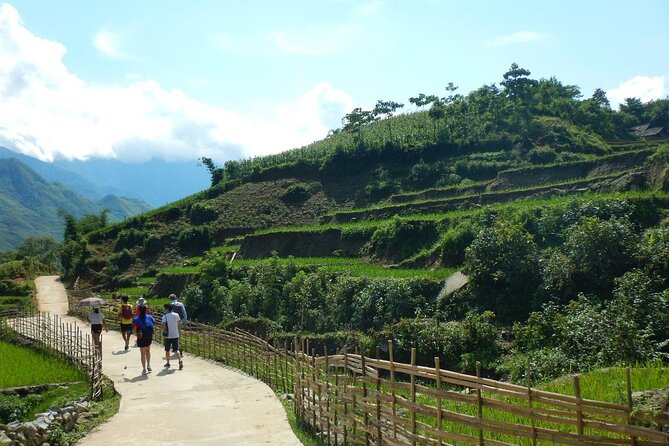
Lao Chai is the stop where you get a stronger sense of community layout. The walk moves through rice paddies and gives you an excellent perspective on major communities along the route.
You will also stop for photos at a stunning location, which is great if you like scenery but still want your guide to connect the landscape to daily life. It is not only about viewing. It is about understanding how people farm and how those fields shape the rhythm of village life.
One drawback to plan for here is effort. Rice-paddy terrain can mean slippery edges and uneven ground, especially after light rain. If you are traveling in shoulder season, expect “grippy shoes” to matter more than “pretty shoes.”
Stop 4: Ta Van village, where Hmong culture becomes conversation
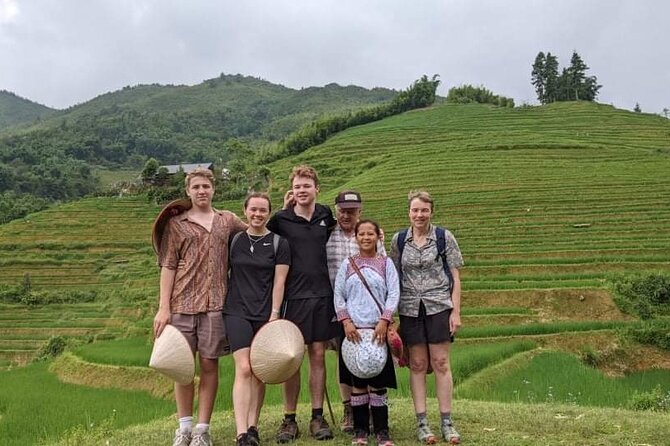
Ta Van is where you shift from scenery to stories. You will be accompanied by the Hmong guide, and the guide shares more history of the village and Hmong culture. This is the section where your experience can feel unusually personal, because you are asking questions and getting answers from someone who lives the culture.
In the best versions of this trek, guides do more than translate facts. They explain what daily life looks like and why certain parts of village routines matter. One highlight you can watch for is strong English and truly local knowledge. A guide named Ku comes up as an example of someone with very good English and local roots, and that kind of guide makes the cultural explanations feel real instead of rehearsed.
Ta Van is also a good break point if you need a steadier rhythm. You do not have to sprint to keep up with the group, and you can take a breath before the final village arrival.
Stop 5: Hau Thao and Zizi Mekhoo Sapa Homestay, the end of the story
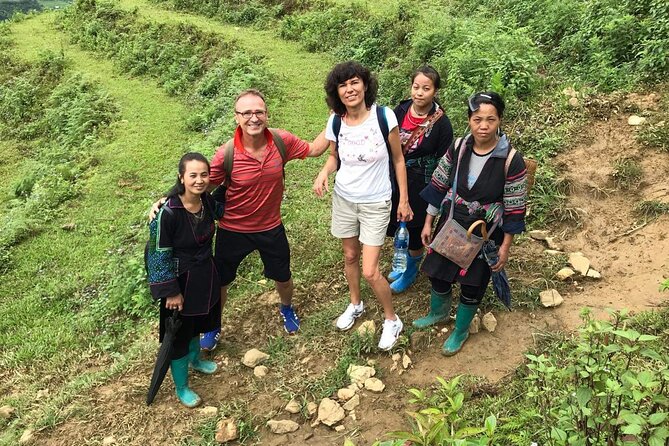
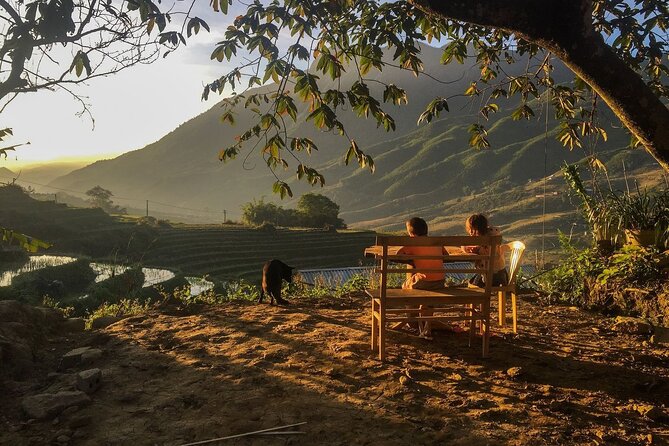
Hau Thao is the arrival village, and it changes the tone of the trek. The route finishes at Zizi’s family place at Zizi Mekhoo Sapa Homestay. After walking, you get the chance to enjoy the view and explore the village area.
This is also where the optional family dinner comes in. If you want a deeper cultural moment, you can join for the dinner cooked by Zizi Homestay. Your English-speaking Hmong guide stays with you to explain more about the history of the road and daily life in the hamlet.
Even if you skip the dinner, the arrival still matters. You are not just walking past houses. You are ending at a family home and taking in the surrounding area from inside village life.
Pace, footwear, and the weather rule you should respect
This is a 4 hours 30 minutes trek in a shared group format. It is not a long-distance hike, but it is also not a flat walk. Expect muddy paths at times, uneven steps, and short uphill stretches. One person even had a twisted ankle close to the start, and their guide helped them during the trek and arranged a bike back after they had to cut the hike short. That is a good reminder to bring the right gear and listen to your body early.
Footwear: wear shoes you trust on wet ground. If you know your ankles are touchy, take that seriously before you step onto the trail.
Weather: the tour requires good weather. If it gets canceled due to poor conditions, you will be offered a different date or a full refund. Since the trek depends on walking conditions, this rule is there for a reason.
If you are flexible, start earlier in the day. Better visibility often means better photos, and you usually face fewer damp surprises.
Shared group dynamics, and why local guides like Ku matter
This trek is not private, so you share the trail with a group of up to 15. That sounds small enough to feel personal, and it often does. Still, your experience depends on how your guide manages pace and attention.
The strongest part of the day is the guide’s cultural storytelling. In particular, a guide like Ku is described as having very good English and being a local who lives the culture. That changes the feeling of the trek in a big way, because you can ask real questions and get answers that connect to daily life.
When the guide truly understands the culture, the route stops feeling like a generic tourist hike. Instead, it becomes a guided conversation about how the market route shaped village connections, how rice farming fits into family life, and what everyday routines look like across communities.
Who should book this Sapa hometrek, and who might skip it
This trek fits best if you want:
- a half-day format in Sapa with real village walking
- rice paddies, mountain views, and multiple community stops
- an English-speaking guide who explains Hmong village life and the history behind the route
- a lighter travel setup, since the luggage transfer option is part of the plan
Most people can participate, and the tour is set up with that in mind. It is also suitable if you travel with a service animal, since service animals are allowed.
You might consider a different option if:
- you are very sensitive to muddy, uneven ground
- you want a fully private itinerary with total freedom to linger or rush
- you need more time than a half day for photos and slow conversation
Should you book this half-day hometrek with Hmong Sister House?
If you want an authentic feel without spending your whole day on the road, I think it is an easy yes. The value comes from the combination: guided village stops, rice-paddy scenery, a family-run homestay arrival at Hau Thao, and lunch and water included.
Book it if you:
- like guided history explained by locals
- want to see Y Linh Ho, Lao Chai, Ta Van, and Hau Thao in one tight route
- appreciate the comfort of a guide handling the practical details, including luggage transfer
Skip it or adjust expectations if you:
- have limited mobility or worry about muddy steps
- prefer a slower, longer trek where you can take breaks without feeling time pressure
One last tip: plan to travel light. Even with luggage transfer help, your comfort on the walk depends on what you carry and how stable your footwear is. If you get those two things right, you will walk away with the kind of Sapa memory that feels human, not just scenic.
FAQ
What is the duration of the half-day hometrek?
The trek is about 4 hours 30 minutes.
What places does the route visit?
It goes from Sapa Town to Y Linh Ho, then Lao Chai, then Ta Van, and finishes at Hau Thao at Zizi Mekhoo Sapa Homestay.
Is pickup included, and where do they pick you up?
Pickup is offered from Sapa Town. You can send your pickup point, such as your hotel or bus.
What is included in the price?
The tour includes bottled water and lunch. It is also listed with admission tickets as free.
What should I do if the weather is bad?
The trek requires good weather. If it is canceled due to poor weather, you will be offered a different date or a full refund.
Is there a cancellation window?
Yes, you can cancel for a full refund up to 24 hours in advance of the experience start time. Confirmation is received at booking.
Walk, Then Stay
- Number one top rated ethical cultural trekking and homestay by ETHOS★ 5.0 · 456 reviews
- Sa Pa Full Day Trekking Tour★ 5.0 · 414 reviews
- 1-day Authentik trek & Panorama valley views★ 5.0 · 189 reviews
- 1 day Fansipan Trekking★ 5.0 · 180 reviews
- Trekking Through Rice Terraced Fields – 1Day★ 5.0 · 173 reviews
Sapa on Foot
- Sapa: Fansipan Cable, Cat Cat Village & Moana Instagram Tour★ 5.0 · 777 reviews
- Cat Cat Village, Moana, Fansipan Cable Car, Alpine Coaster – Sapa★ 5.0 · 420 reviews
- Sa Pa Full Day Trekking Tour★ 5.0 · 414 reviews
- Sapa Motorbike Tour With Local Guide 1 Day – Waterfalls, Villages★ 5.0 · 254 reviews
- 1 day Fansipan Trekking★ 5.0 · 180 reviews
Other Sapa tours our reviewers keep coming back to
- 1 Day Sapa Tour Explore Y Linh Ho And Lao Chai And Ta Van Village
★ 5.0 · 18 reviews - Canyoning Tour from Sapa Vietnam
★ 5.0 · 19 reviews - Sapa 2 Day Trekking with 1 Night Homestay
★ 5.0 · 20 reviews - Sapa Half-Day Motorbike Tour: Villages & Rice Fields
★ 5.0 · 22 reviews - Sapa Mountain Escape: 2-Day Trekking, Rice Terraces & Homestay
★ 5.0 · 23 reviews - Sapa Dragon Cloud Glass Bridge and Silver Waterfall Half-Day Tour
★ 5.0 · 25 reviews
Sapa Trekking and Fansipan, compared.
 ★ 5.0Sapa 2 Days 1 Night From Hanoi – Overnight in Ta Van VillageFrom $592,669 reviews
 ★ 5.0Hanoi – Sapa 2 Days 1 Night Overnight At HomestayFrom $89899 reviews
 ★ 4.6Sa Pa: Muong Hoa Valley Trek and Local Ethnic VillagesFrom $23864 reviews
 ★ 5.0Sapa: Fansipan Cable, Cat Cat Village & Moana Instagram TourFrom $30777 reviews
 ★ 4.8From Hanoi: 2-Day Sapa Trekking Trip with Homestay & MealsFrom $71704 reviews
 ★ 5.0Sapa 3 Days 2 Nights Trekking Tour (1 Night In Ta Van Village, 1 Night In Hotel)From $139699 reviews
 ★ 4.9Sapa: Eco Adventure Terrace Fields and Local Villages TrekFrom $27636 reviews
 ★ 5.03-Day Trekking Adventure of Sapa from Hanoi – Stay Ta Van VillageFrom $109611 reviews
Also in these Vietnam lists