
REVIEW · COOKING CLASSES
DaNang Farm-to-Table Cooking Class with Market and Coffee Tasting
Fresh herbs meet hands-on cooking in Da Nang. You’ll get a true farm-to-table flow: walk through a nearby vegetable village, shop at the market, taste Vietnamese coffee, and then cook lunch in a small group with a guide who speaks English and French.
I love two parts most. First, the vegetable village and garden stop helps you see the herbs and produce you’ll use, not just hear about them. Second, the small-group size (max 10) means you can ask questions as you cook, and the instructors can actually check your work.
One catch to plan for: there’s no hotel pickup, so you’ll need to reach the meeting point at 9 Hàm Tử, Bắc Mỹ Phú, Ngũ Hành Sơn, Da Nang. If you rely on taxis, that’s easy, but you do want to time it so you arrive before the start.
In This Review
- Key things I’d circle on your plan
- Why This Da Nang Cooking Class Feels Like Real Vietnamese Food Skills
- Getting Oriented: Meeting Point and the 4.5-Hour Rhythm
- Veggie Village Walk: Meeting Herbs Before You Cook Them
- Coffee Tasting and the Market Stop for Everyday Ingredients
- Cooking in a Local Home: Step-by-Step, Family-Style Meal
- What You Might Cook, and How It Helps You Recreate It Later
- Price and Value: What $60 Gets You in Da Nang
- Who This Tour Is Best For (and Who Might Skip It)
- Should You Book This Da Nang Farm-to-Table Cooking Class?
- FAQ
- How long is the Da Nang farm-to-table cooking class?
- Where does the tour start and end?
- What is included in the price?
- Is hotel pickup included?
- How big is the group?
- What languages does the guide speak?
- Do I need a ticket on arrival?
- What is the cancellation policy?
Key things I’d circle on your plan
- Village first, cooking second, so ingredients make sense before they hit your cutting board
- English and French support, which matters when you want to ask why a sauce tastes a certain way
- Vietnamese coffee tasting included, not just a token sip
- Market shopping with a purpose, focused on everyday cooking ingredients
- Local-home, family-style lunch, so it feels like a real meal, not a staged performance
- Instructors bring energy, including names like Hannah and Blue from past classes
Narrowing it down? These Da Nang tours kept surfacing in our reviews.
- Full Day Golden Bridge and Ba Na Hills Small Group Tour★ 5.0 · 2,369 reviews
- Morning Small group to Marble Mountains – Am Phu Cave – Monkey Mountain★ 5.0 · 1,097 reviews
- Da Nang: Ba Na Hills and Golden Bridge Tour★ 5.0 · 938 reviews
- Da Nang & Hoi An: Food, Sightseeing, Culture & Hidden Gems★ 5.0 · 806 reviews
Why This Da Nang Cooking Class Feels Like Real Vietnamese Food Skills
Da Nang has plenty of food tours, but most end when you finish eating. This one pushes further. You learn how to buy ingredients like a local, then cook a traditional Vietnamese dish in a real home setting.
I also like that the format is practical. You’re not trying to memorize a recipe from a card. You’re shopping, tasting, and getting step-by-step help, which is the only way you’ll feel confident repeating the dish back home.
And yes, it’s fun. Feedback highlights instructor energy and a clean, organized setup, which makes it easier to focus when you’re chopping herbs, portioning ingredients, and following instructions without chaos.
Getting Oriented: Meeting Point and the 4.5-Hour Rhythm
The experience runs about 4 hours 30 minutes, and it ends back at the same place it starts. Plan for a half-day with a steady pace: walk and learn outdoors, then market time, then cooking and eating indoors.
The start point is 9 Hàm Tử, Bắc Mỹ Phú, Ngũ Hành Sơn, Đà Nẵng. Since there’s no hotel pickup, I suggest you use that address to set your taxi or ride-hail drop-off, or plan a simple route via public transportation. The location being near public transport is useful, especially if you want to skip long taxi rides.
A small-group limit of 10 travelers shapes the whole feel. It’s not cramped, but it’s also not so big that you get ignored. You can ask questions, and you’re more likely to get personal tips while you cook.
Veggie Village Walk: Meeting Herbs Before You Cook Them
The tour begins with a short walk to a nearby vegetable village. This part matters more than it sounds. When you see herbs and produce growing, you start to understand what Vietnamese cooking is built on: fresh aromatics, light flavors, and textures that work together.
You’ll learn about local farming life and how herbs and produce are grown. In feedback, the garden stop is remembered as a key moment, partly because it’s in town and feels close to everyday life, not a far-away attraction.
Here’s what you should look for. Point out the herbs you’ll later use in your dish, and ask your guide what they do in the flavor profile. Are they for fragrance? Freshness? A crunch element? Even if you’re not sure, the guide will help you connect the plant to the final taste.
Possible downside: this early walking portion can be a little warm, depending on the day. If you’re the type who gets overheated fast, bring light sun protection and water. The tour includes refreshments, but you’ll still want to stay comfortable from the start.
Coffee Tasting and the Market Stop for Everyday Ingredients
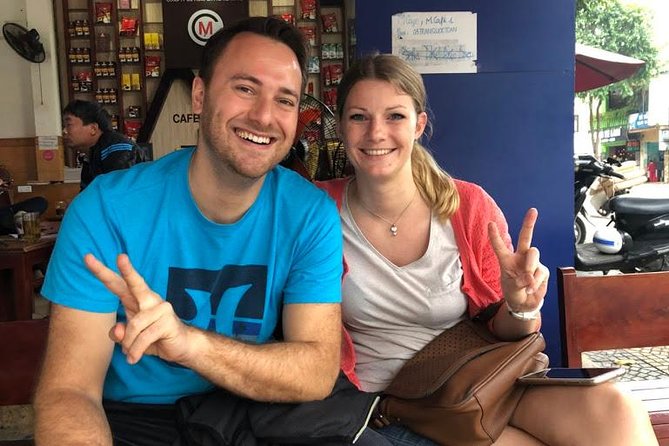
After the village, you’ll shift into shopping mode. The plan includes a Vietnamese coffee tasting, then you go to a local market to find essential ingredients used in daily cooking.
I like the sequence: coffee first, market second. Coffee is a quick flavor checkpoint in Vietnam, and it also helps you slow down before the busy market part. Then you’re ready to focus on what you actually need, like herbs, aromatics, sauces, and key staples that define Vietnamese meals.
Market time is where you get real value. Not because it’s fun to browse, but because the guide helps you see what to buy and why. Vietnamese cooking often relies on balancing fresh components with cooked sauces, and learning which ingredient does which job is the kind of knowledge you can carry home.
One interesting detail from feedback: the Han Market comes up as a favorite stop. That’s helpful if you’re trying to understand what kind of market experience this is. It’s not a staged “look and go” stop. It’s an ingredient hunt with an end goal, and that makes the shopping feel purposeful.
What to do while you’re there:
- Ask which ingredients are most important to keep fresh
- Watch how the guide points out herbs and leaves you might not recognize
- Take notes or photos so you can find the closest versions back home

Cooking in a Local Home: Step-by-Step, Family-Style Meal
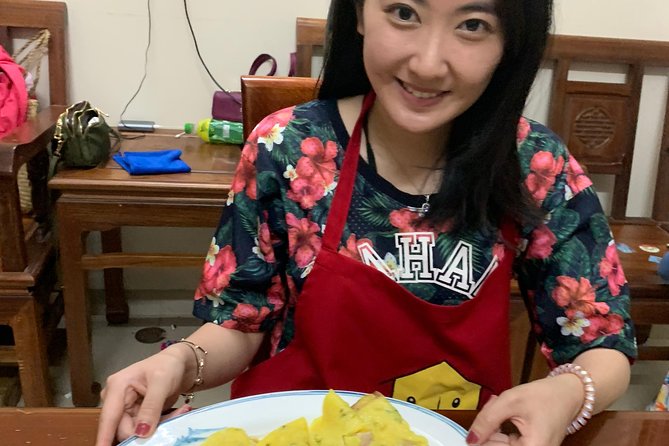
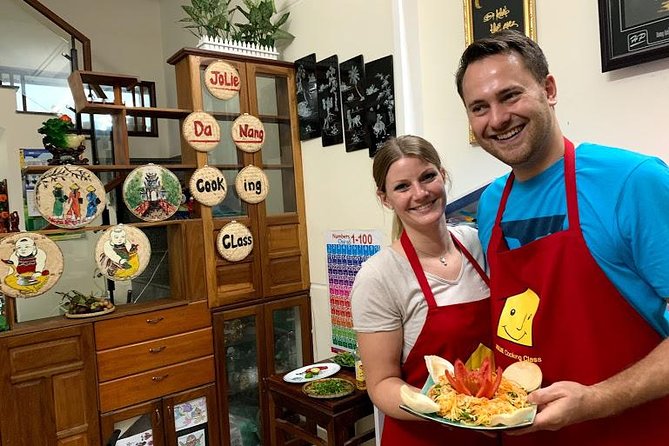
Now the best part. You head to a welcoming local home for a hands-on cooking class. This is where the farm-to-table idea becomes more than a marketing phrase. You actually make the food, using the ingredients you just learned to pick.
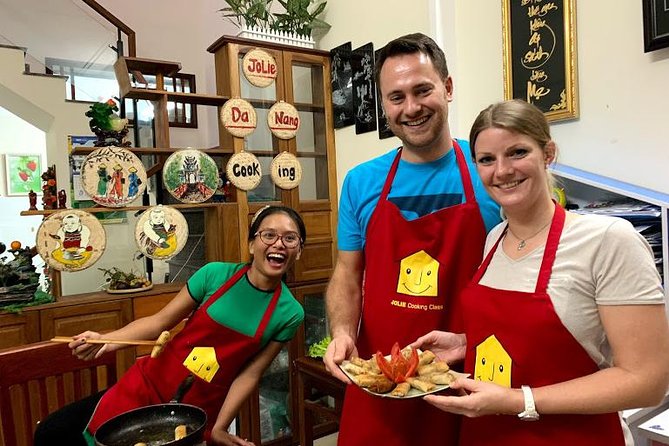
Expect a step-by-step approach, with time to ask questions. Your guide speaks English and French, which is a big win if you want to clarify techniques or translations of ingredient names. Feedback repeatedly points to a fun, high-energy instructor style, including instructors named Hannah and Blue, which can make a hands-on class feel less intimidating.
The format is family-style. That matters because it changes the vibe from classroom to meal. You’re not stuck in rows. You eat together, and it’s easier to talk, ask follow-up questions, and compare what you made.
You’ll also have all the key support elements:
- All ingredients and equipment are included
- Transportation during the experience is included
- The meal you prepare is included
From a practical standpoint, that means your only real job is to cook and learn. You don’t have to hunt down a tool you forgot at home, or improvise because you ran out of an ingredient.
One consideration: since it’s hands-on, you should come with a basic willingness to get a little messy. Vietnamese cooking is often built around mixing, chopping, and assembling fresh items, so expect to use your hands and focus more than you would at a restaurant.
What You Might Cook, and How It Helps You Recreate It Later
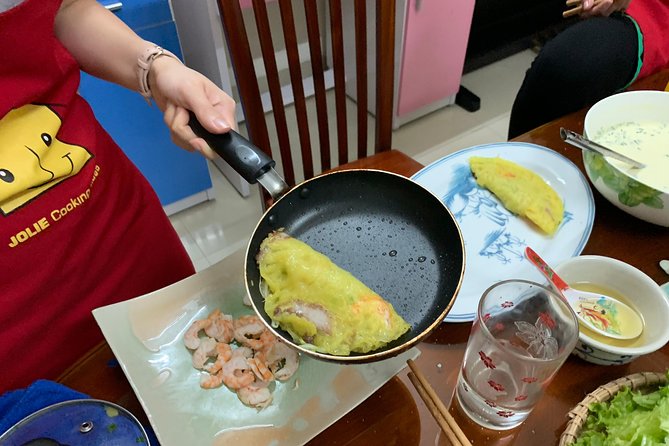
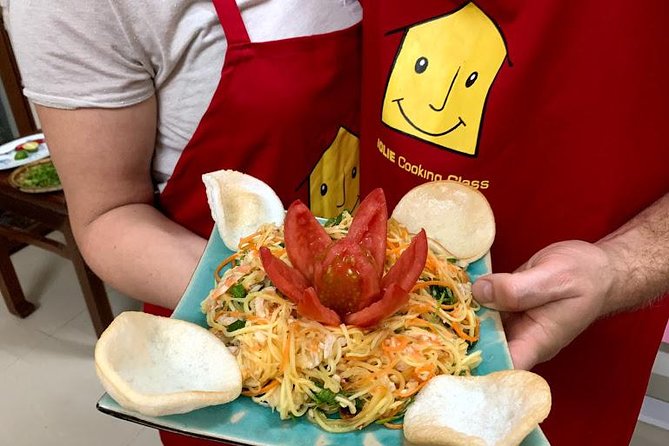
The class focuses on cooking a traditional homemade Vietnamese dish. In past classes, menus have included items like Pho Bo, papaya salad, pancake rolls, and an aubergine hot pot.
Even if your specific meal varies, the learning value stays similar: you’ll see how Vietnamese flavors get built.
- Herbs and leaves bring freshness and fragrance
- Sauces provide depth without being heavy
- Texture is part of the design, not an afterthought
The biggest reason this matters is confidence. The class is set up so you don’t leave with only a list of ingredients. You leave with a process. If you want to cook Vietnamese food for friends and family, that process is what lets you troubleshoot later.
Here’s what you should pay attention to while cooking, because it’s what most people remember long after the class:
- How the guide adjusts seasoning as the dish comes together
- Which ingredients are added early versus at the end
- What “done” looks like for the dish you’re making, beyond time alone
A small tip: take a photo of your ingredient setup before you start. When you’re cooking at home later, it’s often the layout that helps you reproduce the flow, not just the recipe.
Price and Value: What $60 Gets You in Da Nang
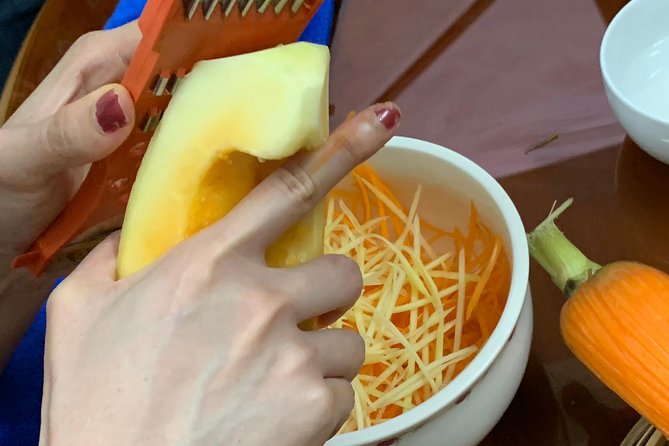
At $60 per person, you’re paying for more than a cooking lesson. You’re also paying for the whole “learn by doing” chain: village walk, market shopping, coffee tasting, hands-on instruction, ingredients, equipment, transportation during the experience, and the meal itself.
When you compare value, think about what would cost extra if you did it alone:
- Market browsing plus guidance on what to buy
- A cooking class instructor and structured steps
- Transportation and ingredient sourcing
- Coffee tasting and a meal that you actually prepare
The small group size also boosts value. Less crowding means more attention while you cook, and it’s easier to ask questions without waiting your turn.
Booked about 32 days in advance on average, which suggests it’s not the kind of thing you want to leave to the last minute if your dates are fixed. If you’re traveling in a peak period, earlier booking gives you more choice.
Who This Tour Is Best For (and Who Might Skip It)
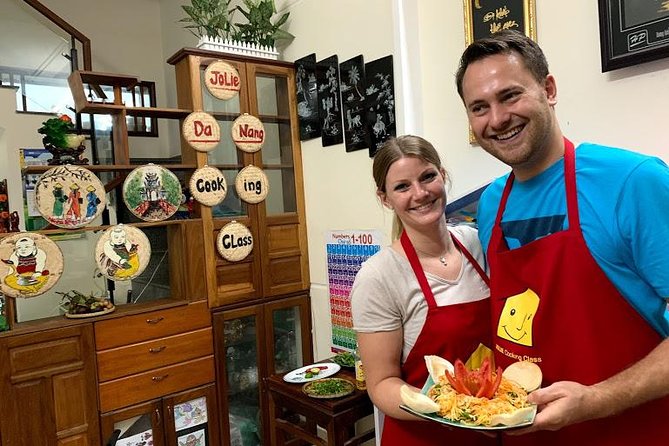
You should strongly consider this class if you want a Vietnamese cooking experience that teaches more than one recipe. The farm-to-table flow is designed for people who want to understand ingredients, then cook with confidence.
It’s also a great fit if you like food education but don’t want it to feel like school. The home setting, family-style meal, and guide interaction keep it friendly. Feedback repeatedly emphasizes how fun and organized the class feels, which is exactly what you want when you’re learning something new.
This may be less ideal if you mainly want a relaxing morning with minimal activity. There is a walking start and a market segment, so it’s active and hands-on.
It also won’t feel “worth it” if you’re the type who only wants restaurant-style dining. You’ll spend time cooking, not just tasting, and the satisfaction comes from making the food yourself.
Should You Book This Da Nang Farm-to-Table Cooking Class?
I’d book it if you want the best kind of souvenir. Not a magnet, not a shirt. A skill. The combination of a veggie village walk, market shopping, Vietnamese coffee tasting, and a hands-on class in a local home gives you a complete flavor education you can reuse.
I’d hold off only if you’re not comfortable getting to the meeting point on your own since there’s no hotel pickup. Otherwise, this tour is a smart, practical way to learn Vietnamese cooking in a way that sticks.
If you’re excited to ask questions, work with fresh herbs, and cook a meal you can actually repeat later, this is a good match.
FAQ
How long is the Da Nang farm-to-table cooking class?
It runs for about 4 hours 30 minutes.
Where does the tour start and end?
It starts at 9 Hàm Tử, Bắc Mỹ Phú, Ngũ Hành Sơn, Đà Nẵng 550000, Vietnam, and it ends back at the meeting point.
What is included in the price?
The experience includes the vegetable village and market visit, Vietnamese coffee tasting, a hands-on cooking class, all ingredients and equipment, transportation during the experience, and the meal you prepare.
Is hotel pickup included?
No, hotel pick up and drop off are not included.
How big is the group?
The experience has a maximum of 10 travelers.
What languages does the guide speak?
Your guide speaks both English and French.
Do I need a ticket on arrival?
You receive a mobile ticket.
What is the cancellation policy?
Free cancellation is available. You can cancel up to 24 hours in advance for a full refund. If you cancel less than 24 hours before the start time, the amount paid is not refunded. If the experience is canceled due to the minimum number of travelers not being met, you’ll be offered another date or a full refund.
Other Da Nang tours our reviewers keep coming back to
- Guided Dragon Bridge Breathing Fire/Water & Da Nang city tour
★ 5.0 · 18 reviews - Explore Hoi An ancient town and local villages with a local guide
★ 5.0 · 18 reviews - Da Nang To Hoi An Transfer By Limousine Dcar Luxury
★ 5.0 · 18 reviews - Private Candle Massage In Da Nang
★ 5.0 · 18 reviews - Da Nang : Lady Buddha – Marble Mountains – Am Phu Cave Tour
★ 4.8 · 18 reviews - Bana Hills & Golden Hand Bridge Tour from Hoi An/ Da Nang
★ 4.4 · 18 reviews
Cooking Classes, compared.
 ★ 5.0Hanoi Cooking Class: Culture, Local Market & Meaning CSR ImpactFrom $395,147 reviews
 ★ 5.05 Traditional Dishes Hanoi Cooking Class with Market TripFrom $354,890 reviews
 ★ 5.0Cooking Class Hoi An:Local Market, Basket Boat, Fishing & CookingFrom $283,660 reviews
 ★ 5.0Hoi An Cooking Class(Market,BasketBoat Crabfishing&Cooking Class)From $283,386 reviews
 ★ 5.0HCM:Mekong Delta Boat,Khotcake cooking Coconut Village,SmallGroupFrom $162,374 reviews
 ★ 4.8From Hoi An: Market Tour, Basket Boat Ride and Cooking ClassFrom $172,208 reviews
 ★ 5.0Hoi An Cooking Class(Local market,Basket Boat,Fishing & Cooking)From $281,323 reviews
 ★ 5.0Mekong Delta 4 Islands, TukTuk, Boat, Try Khot Cake Local CookingFrom $231,148 reviews
Also in these Vietnam lists