
REVIEW · COOKING CLASSES
Da Nang Cooking Class with Coffee Tasting and Market Visit
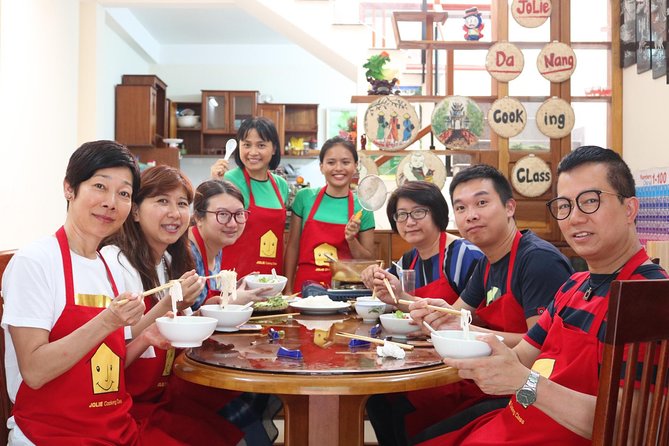
Da Nang tastes better with a plan. This Da Nang Cooking Class with Coffee Tasting and Market Visit strings together a coffee tasting and market visit, then sends you to cook at least four traditional Vietnamese dishes at a local family home. I like how the hosts keep it fun and educational, with English-speaking guidance from people like Rosie, Lan, Hanna, Lucy, Kelly, and Blue, plus those small moments where you might even pick up a few Vietnamese phrases.
There is one practical consideration: hotel pickup and drop-off is not listed as included in the details I have, and the meeting point is clearly set at 10 Trần Quốc Toản, Hải Châu. If you prefer being picked up from your exact hotel lobby, check first before you book.
In This Review
- Key highlights that make this class worth your morning
- Where the day starts: Vietnamese coffee tasting that sets the stage
- The market visit: shopping like local families
- Cooking at a local home: hands-on lessons you can actually use
- The meal you make: family-style lunch that fills you up
- Price and value: $45 for coffee, market time, and real instruction
- Timing and group size: why small matters in a cooking class
- Vegetarian options: ask early, then plan your menu
- Language and hands-on learning: English support and practical phrasing
- Who should book this cooking class in Da Nang?
- Should you book Jolie Danang Cooking Class with Coffee Tasting and Market Visit?
- FAQ
- How long is the Da Nang Cooking Class with Coffee Tasting and Market Visit?
- What does the tour include?
- Where does the experience meet?
- Is hotel pickup and drop-off included?
- Are there vegetarian options?
- Is the tour dependent on weather or a minimum number of travelers?
Key highlights that make this class worth your morning
- Coffee tasting that starts with real brewing and coffee culture, not just a quick sip
- Market shopping with fresh ingredient ideas, so you know what to buy and why
- Hands-on cooking at a local family home, with guidance that helps you replicate the basics later
- At least four traditional dishes, so you leave with variety and confidence
- Small group size (max 10), which keeps questions from getting lost
- Vegetarian options available, if you request it when booking
Narrowing it down? These Da Nang tours kept surfacing in our reviews.
- Full Day Golden Bridge and Ba Na Hills Small Group Tour★ 5.0 · 2,369 reviews
- Morning Small group to Marble Mountains – Am Phu Cave – Monkey Mountain★ 5.0 · 1,097 reviews
- Da Nang: Ba Na Hills and Golden Bridge Tour★ 5.0 · 938 reviews
- Da Nang & Hoi An: Food, Sightseeing, Culture & Hidden Gems★ 5.0 · 806 reviews
Where the day starts: Vietnamese coffee tasting that sets the stage
I like that this experience begins with coffee, because it gives you context right away. You meet your host at a local coffee shop, then start with a Vietnamese coffee tasting and learn about traditional brewing methods. It’s a simple move, but it changes the whole tone of the class, turning food into a story you can actually follow.
From the way hosts are described, the coffee portion often includes background on coffee production in Vietnam. That matters because Vietnamese coffee is not just a drink, it is a whole routine, from how beans are handled to how the final cup comes together. Even if you are not a coffee superfan, you’ll usually pick up at least one practical insight that makes the cooking portion easier to understand.
If you are the type who wants food experiences to connect to daily life, this start does that. You’re not jumping straight into chopping. You’re learning how people think about flavor in Vietnam.
The market visit: shopping like local families
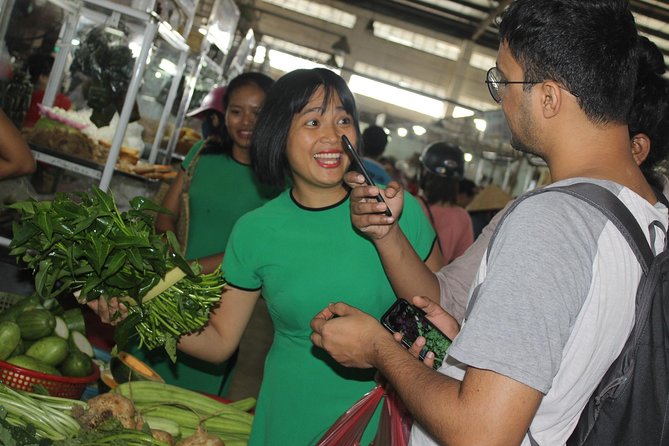
After coffee, you head to a nearby local market where you browse fresh ingredients and learn how Vietnamese families shop for daily meals. This is one of the best parts of the whole format because it teaches you what to look for, not just what to cook.
Here’s what you should pay attention to during the market visit:
- Freshness cues, like how produce looks and smells, and what looks used that day
- Ingredients you might not find at home, or that you might only know by translation
- How vendors and households make ingredient choices for quick, everyday cooking
This is also where small-group dynamics help. With a maximum of 10 people, it is easier to ask questions like what substitutes actually work, or which ingredient is essential versus optional.
A practical note, wear shoes you can walk in. Markets are not museum floors. You’ll be moving between stalls and handling shopping bags, even if the host does most of the guiding.
Cooking at a local home: hands-on lessons you can actually use
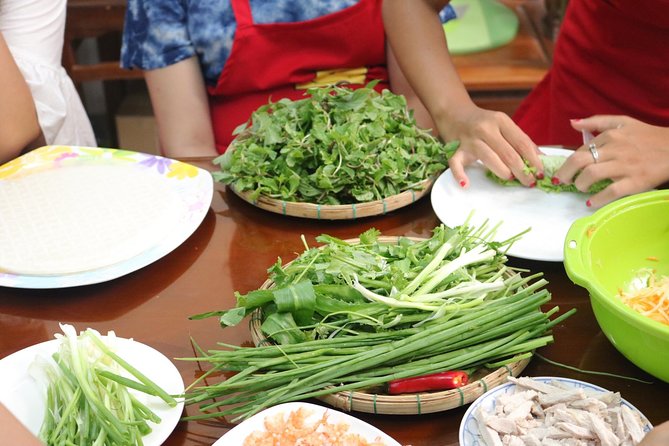
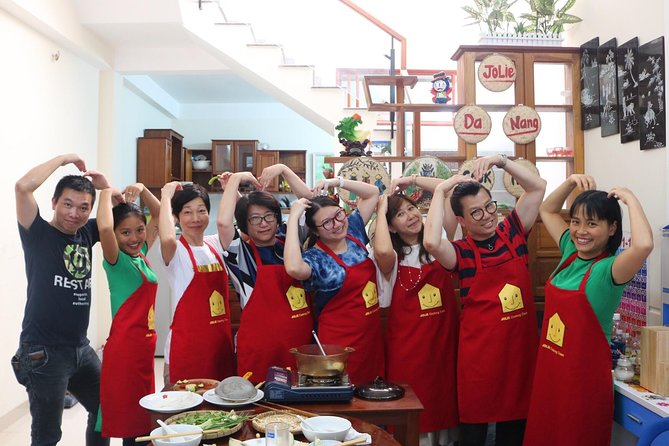
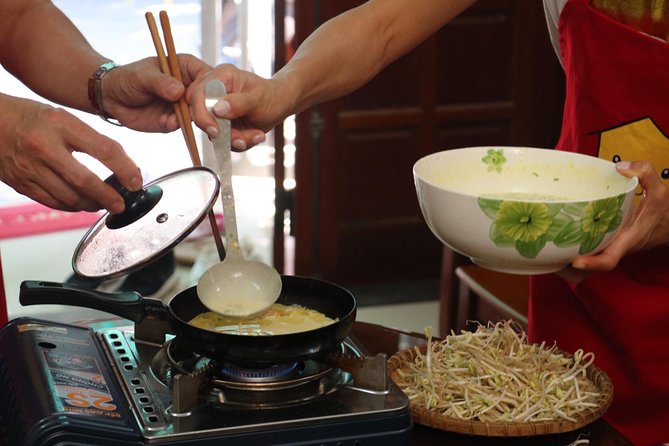
Next comes the heart of the class: a local family home cooking session with guidance from your host. You take part in a hands-on cooking class and prepare several traditional dishes, with the promise of at least four dishes by the end. Then you sit down to enjoy the meal you cooked in a warm, family-style setting.
This is the moment where you’ll either feel confident or feel lost, and the difference is usually the teaching style. In the feedback, hosts are consistently described as making the experience fun and educational, with a welcoming, hands-on vibe. Names you might encounter include Rosie, Lan, Hanna, Lucy, Kelly, and Blue, and multiple descriptions mention a playful energy during cooking, not just lecture mode.
What you’re really paying for here is technique transfer. Even without a stated list of specific recipes, a good cooking class gives you:
- A repeatable process (prep steps, cooking order, and timing)
- Flavor logic (what balances what, and when to adjust)
- Sanity-saving shortcuts (how to make it work with what you can buy at home)
Hygiene is also mentioned as a strong point, which matters because home kitchens can vary. If you care about cleanliness, you’ll likely feel reassured by how well everything is described.
The meal you make: family-style lunch that fills you up
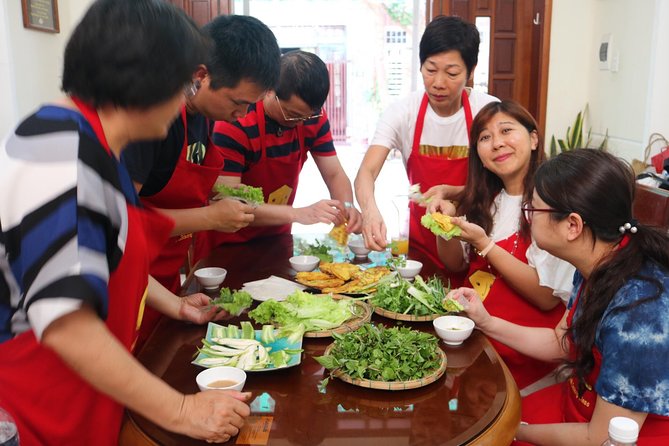
After cooking, you eat what you made. That sounds obvious, but it’s not always true in cooking classes elsewhere, where people end up with small tasting portions. Here, the meal you cook is the payoff, and the structure pushes you to finish the cooking, not just sample as you go.
In practical terms, this is a great option when you want a guaranteed lunch with minimal planning. Da Nang has plenty of food choices, but a class like this also removes the guesswork: you know you’ll eat what you understand, and you won’t have to translate a menu before you order.
You also get a built-in social rhythm. Family-style meals are meant to be shared, and a small group makes it easier to chat without making it feel like a formal dinner.

Price and value: $45 for coffee, market time, and real instruction
At $45 per person, this class is positioned as value, not as a luxury chef show. The reason it can feel like a good deal is that it stacks several parts into one package:
- Coffee tasting with explanation
- A market visit with ingredient guidance
- A hands-on cooking class
- Ingredients, equipment, and the meal
That is not just “food for $45.” You’re getting time, shopping know-how, and cooking fundamentals. If you’ve ever bought ingredients on your own and later realized you didn’t know what was essential, the market step is what changes the game.
For me, the best value signals are:
- Small group size (max 10)
- English-speaking guidance
- The fact that you cook and then eat together, which usually means you get more teaching moments than in a demo-only class
If your travel style is “learn something I can repeat,” this is one of those experiences where the price is easier to justify.
Timing and group size: why small matters in a cooking class
The duration is about 3 hours 30 minutes, which is a sweet spot for a morning activity. It is long enough to shop, cook, and eat without feeling rushed into a second plan. It is short enough that you can still enjoy the rest of your day in Da Nang.
The max group size of 10 is another quiet value driver. In cooking, the bottleneck is often attention, not ingredients. When the group is smaller, your host can spot what you are doing, correct small mistakes, and answer questions without you waiting forever.
One more practical point: you start at a set meeting address at 10 Trần Quốc Toản, Hải Châu, Đà Nẵng. That matters because it affects how easy it is to combine this with other plans. If you are staying near the meeting point, you’ll likely find it simple to get there.
Vegetarian options: ask early, then plan your menu
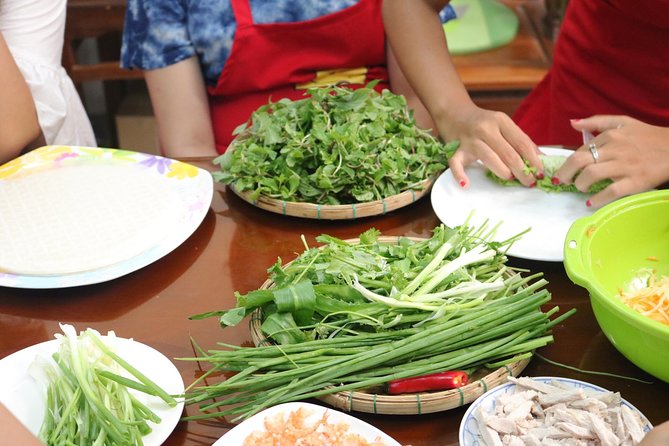
Vegetarian options are available. If you care about staying vegetarian during the cooking session, request it at the time of booking. That detail is important because vegetarian cooking is not just swapping one ingredient, it changes the balance of flavors and the final dish texture.
If you are flexible, you can also tell your host what you eat and what you avoid beyond vegetarian (like eggs or dairy), but the only guaranteed data point here is that vegetarian options exist when you request them.
Language and hands-on learning: English support and practical phrasing
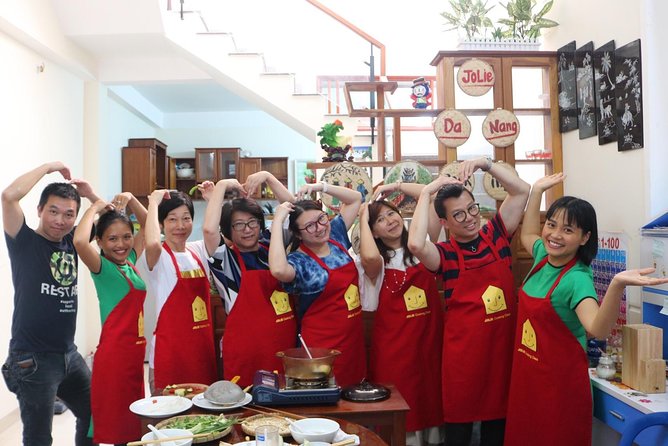
The guide is described as English speaking, which makes a big difference if your Vietnamese is limited. You’ll be able to follow explanations about coffee and ingredients during the market part, and you can understand cooking steps clearly during prep.
One review detail that I find especially useful is that hosts may help you practice some Vietnamese phrases. Even if you only keep a couple of them, it helps you connect to what you see and reduces the feeling that you’re just consuming a tour script.
In practice, the best way to learn on a class like this is to ask small, direct questions. Stuff like:
- Which ingredient is the flavor anchor?
- What happens if I cannot find this item at home?
- What should I watch while it cooks to know it is right?
A good host will answer those, and the small group format makes those questions realistic.
Who should book this cooking class in Da Nang?
I’d book this if you want more than a meal. This is for you if you enjoy:
- Hands-on cooking with guidance
- A market stop that teaches ingredient thinking
- Coffee culture as a gateway into Vietnamese food
- A small-group pace where you can actually ask questions
You might skip it if:
- You dislike market walks or prefer a strictly restaurant-based experience
- You have no interest in learning cooking basics and flavor logic
- You need hotel-to-hotel pickup as a non-negotiable (the meeting point is set, and pickup is not listed as included in the details)
If you are traveling with kids, this can still work because you get a clear sequence, but the data here does not specify age limits. When in doubt, message the provider and ask what ages work well for the group.
Should you book Jolie Danang Cooking Class with Coffee Tasting and Market Visit?
Yes, I think it’s a strong pick for most people who want a real food education in Da Nang. The biggest reasons are the structure and the teaching: coffee first, then a market that makes you smarter about ingredients, then cooking at a local home where you finish with the meal you made.
Book it if you’re hungry in every sense, ready to shop, chop, taste, and learn. If you want a no-effort experience with zero planning, double-check the meeting point timing and whether pickup is truly available for your specific hotel, since the details provided point to meeting at 10 Trần Quốc Toản.
FAQ
How long is the Da Nang Cooking Class with Coffee Tasting and Market Visit?
It lasts about 3 hours 30 minutes.
What does the tour include?
It includes a local market visit, Vietnamese coffee tasting, a hands-on cooking class at a local family home, and ingredients, equipment, and the meal.
Where does the experience meet?
The start meeting point is 10 Trần Quốc Toản, Hải Châu, Đà Nẵng 550000, Vietnam. The activity ends back at the meeting point.
Is hotel pickup and drop-off included?
Hotel pickup and drop-off is listed as not included, even though the overview mentions pickup and drop-off. The meeting point is clearly provided, so it is worth confirming details for your hotel before booking.
Are there vegetarian options?
Yes, vegetarian options are available. You should advise the provider at the time of booking.
Is the tour dependent on weather or a minimum number of travelers?
Yes. It requires good weather, and it also requires a minimum number of travelers. If it is canceled due to either, you will be offered a different date or a full refund.
Other Da Nang tours our reviewers keep coming back to
- Guided Dragon Bridge Breathing Fire/Water & Da Nang city tour
★ 5.0 · 18 reviews - Explore Hoi An ancient town and local villages with a local guide
★ 5.0 · 18 reviews - Da Nang To Hoi An Transfer By Limousine Dcar Luxury
★ 5.0 · 18 reviews - Private Candle Massage In Da Nang
★ 5.0 · 18 reviews - Da Nang : Lady Buddha – Marble Mountains – Am Phu Cave Tour
★ 4.8 · 18 reviews - Bana Hills & Golden Hand Bridge Tour from Hoi An/ Da Nang
★ 4.4 · 18 reviews
Cooking Classes, compared.
 ★ 5.0Hanoi Cooking Class: Culture, Local Market & Meaning CSR ImpactFrom $395,147 reviews
 ★ 5.05 Traditional Dishes Hanoi Cooking Class with Market TripFrom $354,890 reviews
 ★ 5.0Cooking Class Hoi An:Local Market, Basket Boat, Fishing & CookingFrom $283,660 reviews
 ★ 5.0Hoi An Cooking Class(Market,BasketBoat Crabfishing&Cooking Class)From $283,386 reviews
 ★ 5.0HCM:Mekong Delta Boat,Khotcake cooking Coconut Village,SmallGroupFrom $162,374 reviews
 ★ 4.8From Hoi An: Market Tour, Basket Boat Ride and Cooking ClassFrom $172,208 reviews
 ★ 5.0Hoi An Cooking Class(Local market,Basket Boat,Fishing & Cooking)From $281,323 reviews
 ★ 5.0Mekong Delta 4 Islands, TukTuk, Boat, Try Khot Cake Local CookingFrom $231,148 reviews
Also in these Vietnam lists