
REVIEW · COOKING CLASSES
5 traditional dishes Da Nang cooking class with market trip
A market trip sets the mood fast. This Da Nang cooking class pairs a shopping walk at Chợ Bắc Mỹ An with hands-on prep of 5 Central Vietnam dishes, so you learn what goes into each bite before the stove ever turns on. I like that the menu hits crowd favorites, and I like how the format stays friendly for different food comfort levels, from first-timers to home cooks who want real technique.
I also love that you do not just watch. You cook, you share a meal that includes fruits and rice vodka, and you leave with a cookbook and certificate to remind you what to recreate at home. The instruction style matters here too, and the class is described as patient and clear, including for kids.
One thing to consider: some parts may feel more shared than ultra-private. A couple of dishes are described as group-style or plating can get a bit busy, so if you want total solo control over every step, manage expectations (your instructor will still guide you).
In This Review
- Key highlights you will actually care about
- Entering the Chợ Bắc Mỹ An market without feeling rushed
- The half-day schedule: how 4 hours turns into real skills
- The five dishes you cook, and why each one teaches something
- Bun Bo Hue: learning the heart of Central Vietnam
- Bánh Xèo: crisp edges, workable batter, and real timing
- Tam Hữu fresh roll: rolling technique that actually holds up
- Young jackfruit salad: the balance game
- Avocado ice cream from Da Nang: the sweet finish
- What the meal experience feels like at the table
- Price and value for $39 in Da Nang
- Who this cooking class is best for
- Practical tips so you get the best result
- Should you book this Da Nang cooking class?
Key highlights you will actually care about
- Chợ Bắc Mỹ An market stop so you understand ingredients before cooking
- 5 cooked dishes in about 4 hours, not just tasting
- Central Vietnam lineup including Bun Bo Hue and Bánh Xèo
- Diet flexibility with a vegetarian option for the avocado ice cream
- Meal with fruits and rice vodka, plus time to chat with your instructor
- Small-group feel is common, even though the cap is 30
Narrowing it down? These Da Nang tours kept surfacing in our reviews.
- Full Day Golden Bridge and Ba Na Hills Small Group Tour★ 5.0 · 2,369 reviews
- Morning Small group to Marble Mountains – Am Phu Cave – Monkey Mountain★ 5.0 · 1,097 reviews
- Da Nang: Ba Na Hills and Golden Bridge Tour★ 5.0 · 938 reviews
- Da Nang & Hoi An: Food, Sightseeing, Culture & Hidden Gems★ 5.0 · 806 reviews
Entering the Chợ Bắc Mỹ An market without feeling rushed
Meet-up is at 07 Nguyễn Bá Lân, Bắc Mỹ An, Ngũ Hành Sơn, Đà Nẵng, about 10 minutes before start time. You head out quickly to the nearby market, which is the smartest way to start a cooking class. The market is not a “look and leave” stop. It is where you pick out key ingredients you will use later, so the cooking feels grounded and practical.
In the market, you learn the logic behind the dishes: what flavors matter, what textures make or break a dish, and why certain items show up repeatedly across Central Vietnam meals. This is especially helpful in Vietnam, where the same ingredient can behave very differently depending on how it is cut, seasoned, or paired.
A heads-up for your planning: market time can move fast in a busy place. If you tend to get overstimulated, bring water and keep your pace steady. Also, if you have strong dietary restrictions, it helps to communicate them at booking so the menu can be adjusted as described.
The half-day schedule: how 4 hours turns into real skills
This is an approximately 4-hour experience. You do not waste time traveling all over town, which is good news if you only have a morning or afternoon free in Da Nang.
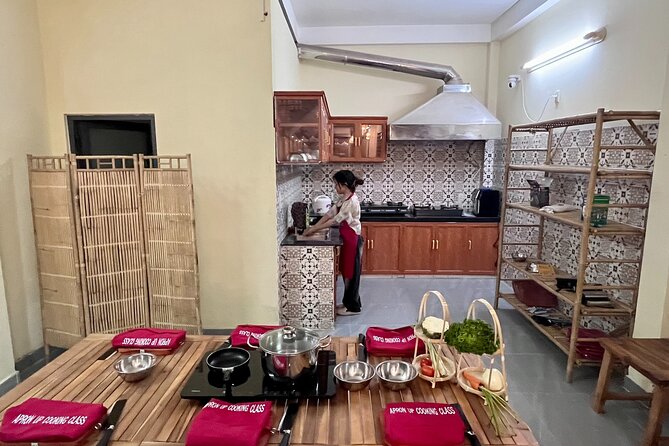
After the market visit, you return to the kitchen and cook together as a join-in class. You will prepare 5 dishes from the class menu, then eat what you made. The meal includes fruits and rice vodka, so you get a full “from market to table” arc rather than a quick tasting.
You also receive a cookbook and certificate at the end. For me, those small takeaways are a big deal because Vietnamese cooking can feel intimidating at home without a reminder of proportions and steps. A written reference helps you replicate the dishes, not just the memory of them.
The five dishes you cook, and why each one teaches something
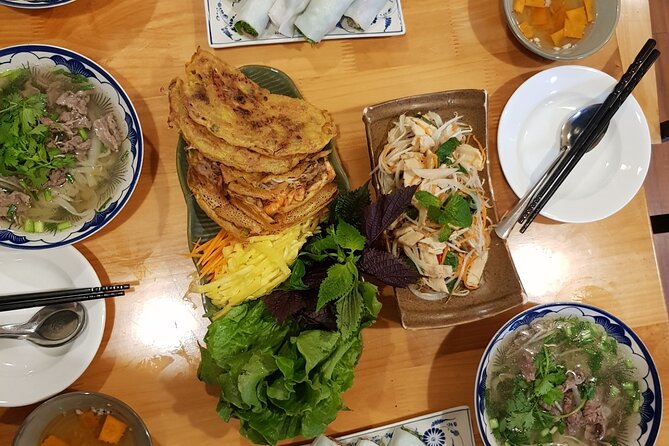
The class menu is built to be balanced, with both famous dishes and local comfort foods. You will cook this set of 5:
- Bun Bo Hue
- Bánh Xèo
- Tam Hữu fresh roll
- Young jackfruit salad
- Da Nang avocado ice cream (or a vegetarian version)
Even if you already tried some of these dishes in restaurants, the big win here is technique. Restaurant food is delicious, but you rarely learn why it tastes that way. This menu gives you multiple cooking skills: broth and seasoning, batter and crisping, rolling, and the balance of crunch, acid, and herbs.
Bun Bo Hue: learning the heart of Central Vietnam
Bun Bo Hue is known for deep, savory flavor and the kind of richness you cannot rush. In class, you are not just assembling noodles. You practice how to build and season the bowl so it tastes right, not just warm.
This matters because Bun Bo Hue is the dish many people remember as “spicy comfort.” If you get the seasoning and balance correct, the rest falls into place. And even if your bowl is not identical on the first try at home, you will understand what to adjust.



Bánh Xèo: crisp edges, workable batter, and real timing
Bánh Xèo is the showstopper for many people because the result is visual and crunchy. In the class setup, you get hands-on experience with cooking that crispy pancake-style dish, which is where practice pays off.
One review noted the importance of learning how the dish should look when it is properly cooked, and that is exactly what you want to learn. At home, Bánh Xèo can turn out soggy if your timing and heat are off. Here, you are learning the cues.
Tam Hữu fresh roll: rolling technique that actually holds up
Fresh rolls can be deceptively tricky. They look simple, but the filling amounts, moisture, and rolling pressure affect whether the roll stays intact.
There is one caution worth noting: one dish outcome was described as not coming together well in a particular class setting, with a roll that fell apart. That is not a reason to avoid the class, but it is a reminder to take the rolling portion seriously. Ask for help early rather than waiting until the end. If your first attempt is messy, that is normal. Rolling is a muscle memory skill, and instruction is part of the deal.
Young jackfruit salad: the balance game
Young jackfruit salad is about contrast. You want crunch, bright tang, and herbal lift without it turning overly heavy. This dish teaches you how Central-style salads often rely on balance more than single-note flavor.
The great part is that salad-making is very “learnable.” Once you understand the taste goals, you can recreate the approach with similar ingredients you find locally. That is a practical skill you can take home, not just a one-time meal.
Avocado ice cream from Da Nang: the sweet finish
The final dish is Da Nang avocado ice cream. It is a smart way to end because it shifts from savory work into something light and creamy, perfect after steaming, crisping, and slicing.
For vegetarians, the class offers a vegetarian version of the ice cream. That flexibility makes the class easier for mixed groups, like families or friend groups with different dietary needs.
What the meal experience feels like at the table
After cooking, you eat your creations together. The meal includes fruits and rice vodka, which makes it feel like you are part of the local rhythm, not just taking a class.
This is also when conversation matters. You chat with your instructor about local life. That part is not just entertainment. It helps you interpret what you ate in the context of everyday Central Vietnam, from how people balance flavors to how they think about street food versus home cooking.
One extra practical bonus: since you are eating what you made, you immediately learn what to fix next time. If a dish is too salty, too bland, or not crisp enough, you can connect the result to your exact step.
Price and value for $39 in Da Nang
At $39 per person, you are paying for a bundled experience: market visit, tools, cooking instruction, and a meal that includes multiple components. The value is strong because you do not just get one dish. You get 5 dishes plus a sit-down meal afterward, and you leave with a cookbook and certificate.
If you tried to recreate this day on your own, the time investment and cooking knowledge would be hard to match. You would still need ingredients, a kitchen setup, and guidance on technique. Here, you get the structure and instruction, which is what makes cooking classes worth it.
If you are traveling with a foodie mindset, it also offers good payoff per hour. In about half a day, you cover multiple dishes that represent different parts of Central Vietnam cooking.
Who this cooking class is best for
This class is a great fit if you want a hands-on food experience without needing advanced cooking confidence. It is described as suitable for beginners and includes patient teaching. It is also positioned as family-friendly based on class feedback that highlighted kids doing well with guidance.
If you like markets, you will probably enjoy the start more than you expect. If you do not like markets, it can still be worth it because the market shopping directly supports the cooking you do afterward.
It may be less ideal if you want a super private, fully personalized class where every step is one-on-one. The class cap is 30, and some aspects can feel shared.
Practical tips so you get the best result
- Arrive on time, about 10 minutes early, so you do not feel rushed in the market.
- Bring a bottle of water. Cooking and market walking can stack up quickly.
- If you have dietary needs, state them at booking. The menu is described as adjustable, with vegetarian options available.
- Wear comfortable shoes for market walking and kitchen time.
- Go in ready to ask questions. The class format works best when you participate, not when you watch silently.
Should you book this Da Nang cooking class?
If you want a Da Nang activity that feeds you, teaches you, and feels local, I would book it. The combination of market shopping at Chợ Bắc Mỹ An plus cooking 5 Central Vietnam dishes is a clean, efficient way to learn flavors and techniques. For the price, you get more than a meal, you get a practical skill set you can repeat later.
Book it especially if you enjoy street food culture and you want to understand why dishes taste the way they do, from seasoning choices to crisping and rolling basics. Skip it only if you strongly prefer a quiet, ultra-private class where nothing is shared and every dish is guaranteed to be perfectly identical on the first attempt.
Other Da Nang tours our reviewers keep coming back to
- Guided Dragon Bridge Breathing Fire/Water & Da Nang city tour
★ 5.0 · 18 reviews - Explore Hoi An ancient town and local villages with a local guide
★ 5.0 · 18 reviews - Da Nang To Hoi An Transfer By Limousine Dcar Luxury
★ 5.0 · 18 reviews - Private Candle Massage In Da Nang
★ 5.0 · 18 reviews - Da Nang : Lady Buddha – Marble Mountains – Am Phu Cave Tour
★ 4.8 · 18 reviews - Bana Hills & Golden Hand Bridge Tour from Hoi An/ Da Nang
★ 4.4 · 18 reviews
Cooking Classes, compared.
 ★ 5.0Hanoi Cooking Class: Culture, Local Market & Meaning CSR ImpactFrom $395,147 reviews
 ★ 5.05 Traditional Dishes Hanoi Cooking Class with Market TripFrom $354,890 reviews
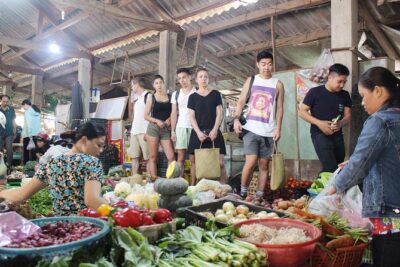 ★ 5.0Cooking Class Hoi An:Local Market, Basket Boat, Fishing & CookingFrom $283,660 reviews
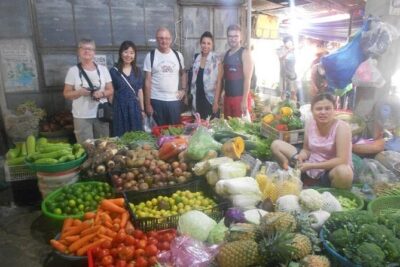 ★ 5.0Hoi An Cooking Class(Market,BasketBoat Crabfishing&Cooking Class)From $283,386 reviews
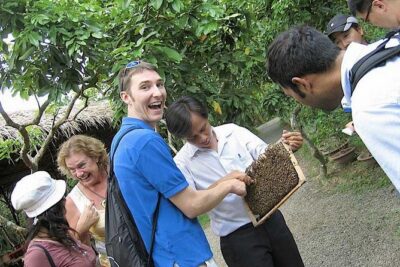 ★ 5.0HCM:Mekong Delta Boat,Khotcake cooking Coconut Village,SmallGroupFrom $162,374 reviews
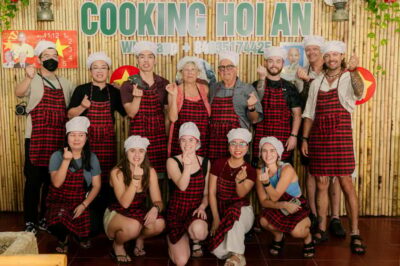 ★ 4.8From Hoi An: Market Tour, Basket Boat Ride and Cooking ClassFrom $172,208 reviews
 ★ 5.0Hoi An Cooking Class(Local market,Basket Boat,Fishing & Cooking)From $281,323 reviews
 ★ 5.0Mekong Delta 4 Islands, TukTuk, Boat, Try Khot Cake Local CookingFrom $231,148 reviews
Also in these Vietnam lists