
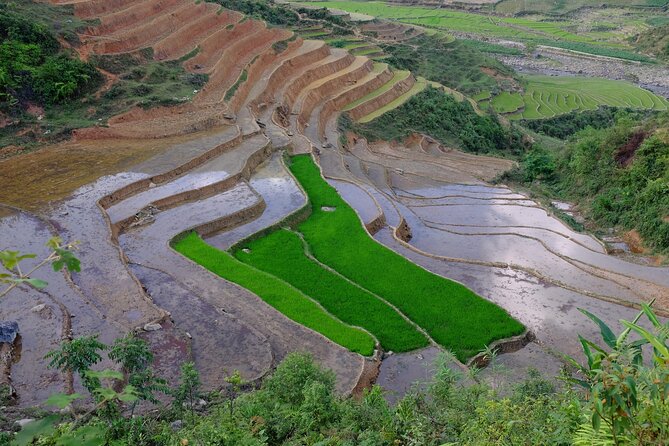
REVIEW · TREKKING AND VILLAGE HOMESTAYS
2D1N Buffalo trek by Hmong Sister House and Trekking
A buffalo trek sounds rugged, but this one feels human. You walk in the Sapa mountains on paths tied to daily H’mong life, including a night at a family homestead where Zizi’s mother lives. You also get local, English-speaking guidance that makes the villages more than scenery.
I love how the route mixes ethnic villages, forest, and terraced rice paddies. It is a practical way to see how people live with animals and the land, not just how they pose for photos. The second thing I like is the built-in rhythm: pickup around 7am, a hot shower and breakfast first, then trekking when you have energy.
One consideration is the pace and fitness level. The trip calls for moderate physical fitness, and since it runs in mountain weather, you should plan for possible weather-related date changes.
In This Review
- Key highlights worth your time
- A Buffalo Trek That Centers on Family Life in Sapa
- Day 1: Hau Thao Villages, Livestock Life, and a Cozy Homestay Reset
- Day 2: Sunrise, Rice-Field Mornings, Red Dao Village, and the Way Toward a Waterfall
- What You Learn When Your Trek Includes Real Daily Work
- Price and Value: What $110 Buys in Sapa Trek Time
- Logistics That Affect Your Comfort (Pickup, Timing, and Private Group)
- Small Practical Tips So Your Trek Feels Good
- Who This Buffalo Trek Is For (And Who Might Skip It)
- Should You Book Hmong Sister House and Trekking’s 2D1N Buffalo Trek?
- FAQ
- How long is the buffalo trek?
- How much does it cost?
- Is pickup included?
- What meals are included?
- Where does the trek start and finish?
- Is this a private tour?
- Do I need a certain fitness level?
- What happens if the weather is bad?
- Are service animals allowed?
Key highlights worth your time
- Homestay overnight at a real H’mong family home, including a night in the buffalo house setting
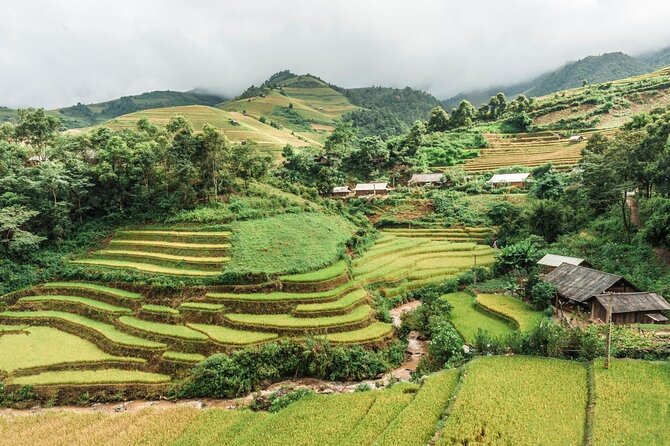
- Village-and-farm route through places like Hau Thao and a stop at a Red Dao village
- A guide who shares personal stories, with at least one guide named Li highlighted for making it memorable
- Morning starts that maximize daylight, including sunrise on day two and early rice-field activity
- Lunch prepared during the trek, so you are not hunting food on remote paths
- Pickup from the bus station area, which keeps your morning from feeling chaotic
Sleep in a village, walk between them
- Number one top rated ethical cultural trekking and homestay by ETHOS★ 5.0 · 456 reviews
- Sa Pa Full Day Trekking Tour★ 5.0 · 414 reviews
- 1 day Fansipan Trekking★ 5.0 · 180 reviews
- Trekking Through Rice Terraced Fields – 1Day★ 5.0 · 173 reviews
A Buffalo Trek That Centers on Family Life in Sapa
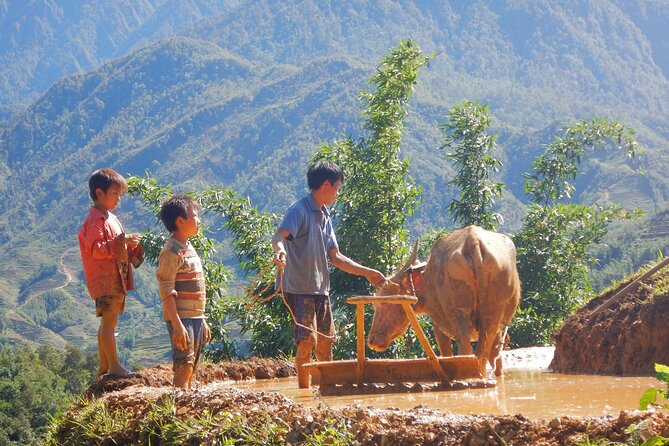
If you want Sapa that feels real, this style of trek is a strong bet. The point is not just to rack up kilometers. It is to follow H’mong routes through forest, terraced fields, and ethnic villages, then spend the night in a family space connected to livestock and work.
What makes it work for you is the balance. You get comfort in the beginning, then you earn the views. The day starts with a pickup from the bus station around 7am, a place to drop your luggage at Zizi homestay, and a hot shower plus a hearty breakfast before the first hike. After that, the walking begins and the experience shifts from lodge-mode into village-mode.
And yes, you will still see classic Sapa scenery. But you will also see how people make that scenery part of their working day. You will encounter animals sharing space with homes, and you will spend time in villages where life is shaped by the terrain, not by tourism schedules.
Day 1: Hau Thao Villages, Livestock Life, and a Cozy Homestay Reset
Day one is designed like a good trek day should be: get you fed and cleaned up before the steep bits.
After pickup around 7am, you reach Zizi homestay where you can leave luggage. Then you start with a hot shower and breakfast cooked by Zizi. This matters more than you might think. Mountain walks can be damp, and starting dry and warm helps your body feel better for the trail.
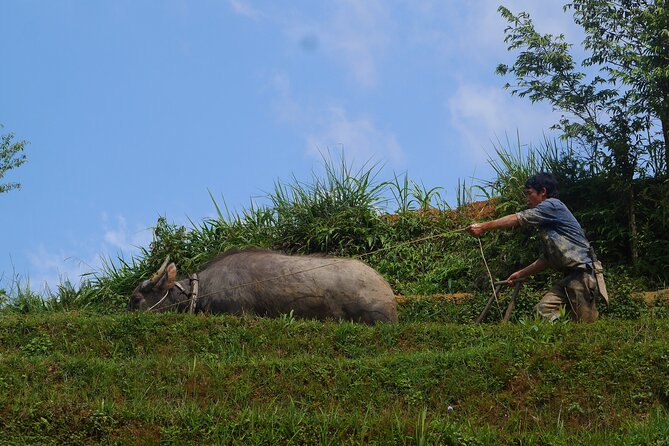
Then the trek begins out of the Hau Thao village area. From there, you explore nearby communities, focusing on traditional life for H’mong minorities in the mountainous region. One of the most useful things you will notice is that daily life is not separated into neat categories like home, work, and animals. The tour is set up so you actually see how livestock co-exists with inhabitants.
You will also stop for lunch prepared by your guide. That is a real value point. When treks do not include food, you end up negotiating for snacks in tiny places, or you walk too long hungry and cranky. Here, lunch is handled as part of the plan.
What to expect on the walking side: you are moving through a mix of terrain, including forest sections and pathways between villages. You will likely feel the elevation and the uneven ground typical to Sapa trekking routes, so bring shoes with grip and accept that your legs will do more work than your phone camera.
By the end of day one, you settle into the family homestay for the night. The description references the buffalo house setting connected to Zizi’s mother. Even without getting fancy, this is the core of the experience: you are not just passing through; you are staying where family life happens.
Day 2: Sunrise, Rice-Field Mornings, Red Dao Village, and the Way Toward a Waterfall
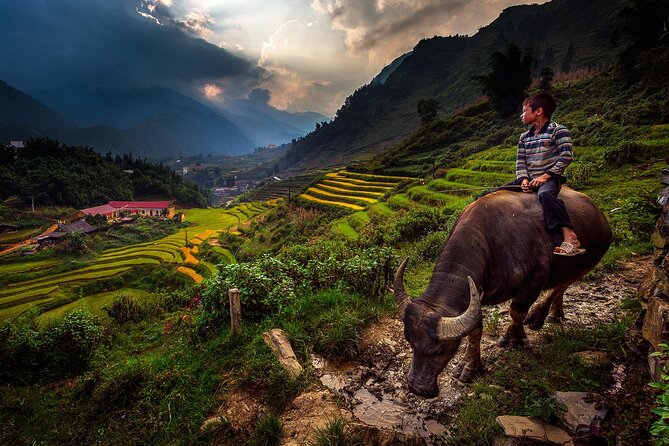
Day two starts slowly, then beautifully. You wake up with sunrise, have breakfast, and say goodbye to the family before heading down.
One of the best parts of this day is how it uses mornings. You will see farmers working early in the rice fields. Even if you have seen rice terraces before, watching agricultural routines at the right time gives you context. The terraces are not just a view, they are a schedule, a system, and a survival tool.
You then reach a Red Dao village. This helps you experience more than one ethnic community in the same general trekking area. The value here is contrast. You will get the sense that Sapa is not one culture, one style of house, or one way of living. It is a patchwork of communities adapting to mountain life.
From there, the route continues toward additional villages and a waterfall. The key idea is a downhill trek that still feels rewarding. Going down can be tempting to treat as easy, but mountain paths can be slippery, and downhill knees can complain fast. Pace yourself, keep a steady footing, and you will enjoy the scenery more than you will suffer through it.
By the time you finish, the activity ends back at the meeting point area. The tour stays organized, so you do not get stuck trying to figure out how to return after you are tired.
What You Learn When Your Trek Includes Real Daily Work
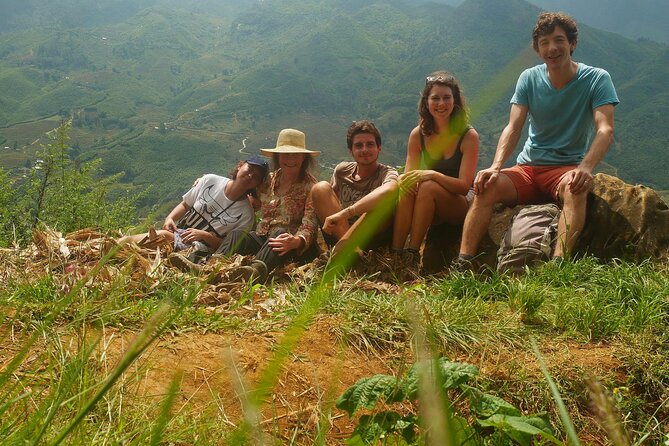
The standout theme across the experiences people value here is understanding life, not just visiting places.
A phrase from a standout guide perspective comes through clearly: Li is mentioned for being phenomenal and for sharing stories about her childhood and how her community lives in the past and now. That is what turns a trek from a checklist into a conversation.
So what will you actually take away while walking?
First, you get context for why livestock matters in the mountain ecosystem. When you see animals integrated into daily living, you understand that “buffalo house” is not just a cute phrase. It reflects how families manage food, labor, and the realities of land.
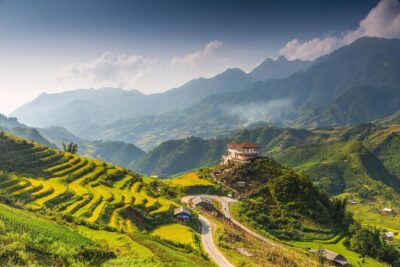
Second, you get a better feel for how terraced rice paddies shape movement. Paths in Sapa often follow the shape of the terrain, which means your walking route becomes a map of work. The early-morning rice activity on day two is especially useful for understanding that the mountains are actively used, not only admired.
Third, you learn how guides connect you to places using their own knowledge. You get a local English-speaking H’mong guide, so you are not guessing meanings. And because this trek is designed by Zizi, it has a personal logic that a generic group hike often lacks.
It is the kind of learning that stays with you. You will remember details like animals seen close to homes, early-field work, and the flow between villages more than you will remember any single view.
Price and Value: What $110 Buys in Sapa Trek Time
At $110 per person for about 2 days, this is not a “cheap hike.” But it also is not priced like a luxury tour. The value comes from what is included and what is not.
From the info you have, you get:
- Pickup offered from the bus station area around 7am
- Time at Zizi homestay before the trek, including hot shower
- Breakfast on day one (and breakfast again day two)
- Lunch prepared by the guide on day one
- Overnight stay in an authentic H’mong family house setting
- A local English-speaking H’mong guide
- A private tour format, meaning only your group participates
Those items are practical. Food and transport are usually the hidden cost on trekking days. Add an overnight homestay and guided walking through multiple areas, and the price starts to make sense.
You are also paying for interpretation. In remote places, a good guide does more than point directions. A guide like Li, who shares personal background, changes the tone of what you are doing.
If you want to maximize value, do two things. Book early enough to get your preferred date, since it is commonly booked about 85 days in advance. And match your expectations: this trek is about people, villages, and daily work. If you mainly want a full-day view spectacle with minimal walking, look elsewhere.
Logistics That Affect Your Comfort (Pickup, Timing, and Private Group)
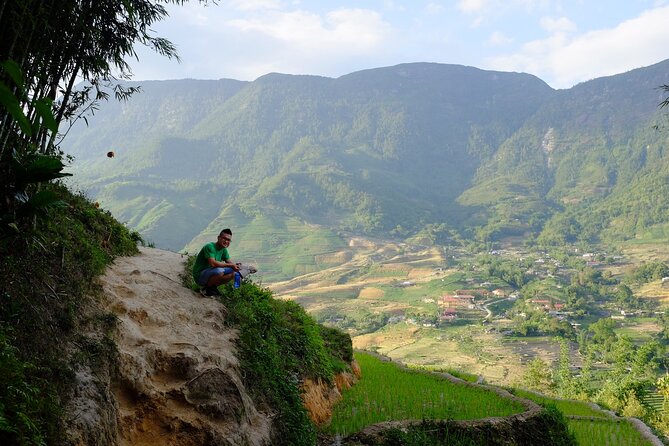
The tour runs within a broad day-time window, with opening hours listed from 6:00 AM to 2:00 PM. Since pickup is around 7am, plan to be ready early.
You also should expect the group to feel intimate. This is listed as a private tour/activity, so only your group will participate. That is a big deal for comfort and flexibility on a trek with village stops. It also means you are more likely to get questions answered as you walk.
Mobile ticketing is offered, which simplifies entry on the day. And pickup from the bus station helps you avoid the common Sapa problem of being stranded before your hike.
Weather is another reality. The experience requires good weather, and if it gets canceled due to poor conditions, you can choose another date or get a full refund. That matters because mountain trails can become unsafe or uncomfortable when the weather turns.
Small Practical Tips So Your Trek Feels Good
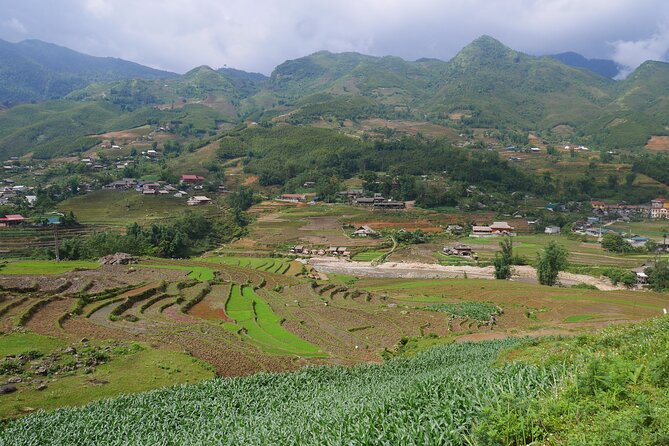
This trek is straightforward, but it is still in the mountains. A few smart moves can make it feel smoother.
- Pack for uneven ground. Wear shoes with grip. Paths between villages and down toward waterfalls can be slippery.
- Bring a light layer. Sunrise mornings can feel cooler, even if the daytime sun helps.
- Use the homestay time. Take the hot shower and settle your body before you start hiking on day one.
- Stay hydrated. Lunch is included day one, but you still need water on the trail.
- Move with a steady pace. Downhill on day two can be harder than it looks, especially with fatigue.
If you are sensitive about physical effort, treat the moderate fitness note seriously. You do not need to be an athlete, but you should be able to handle sustained walking on mountain terrain.
If you are traveling with a service animal, service animals are allowed. That is a helpful inclusion if you have specific accessibility needs.
Who This Buffalo Trek Is For (And Who Might Skip It)
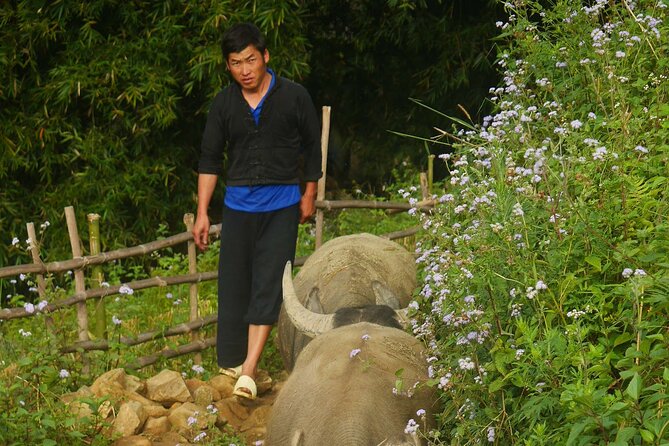
This trek is a strong fit if you:
- Want an authentic, people-focused Sapa experience rather than a quick photo loop
- Like village walks and cultural context that comes from your guide talking and showing
- Enjoy hiking but prefer short multi-day routes with built-in meals and overnight homestay
- Value an English-speaking local guide who shares stories tied to their home region
You might choose something else if you:
- Want a purely scenic viewpoint experience with minimal walking
- Have very limited mobility or know you cannot handle moderate trekking days
Also, if you like structure, this tour helps you. It has clear timing, scheduled meals, and an overnight base. You are not improvising your own route in unfamiliar areas.
Should You Book Hmong Sister House and Trekking’s 2D1N Buffalo Trek?
I would book it if your goal is to understand Sapa through daily life. The combo of village routes, rice terraces, and a night with a H’mong family connected to livestock gives you depth fast. You also get real comfort at the start with pickup, luggage drop, hot shower, and breakfast.
Pick this trek especially if you want the story side, not just the views. The mention of Li sharing personal childhood and how her community lives in past and present is a clue that your experience depends heavily on the guide connection. If you care about that, you will likely feel the difference.
One last decision check: you should be comfortable with moderate trekking and mountain weather. If you are good with that, then $110 for a guided, food-included, private, overnight homestay trek in Sapa is a fair deal.
FAQ
How long is the buffalo trek?
It runs for 2 days (about 2 days total).
How much does it cost?
The price is $110.00 per person.
Is pickup included?
Pickup is offered. The car brings you from the bus station area around 7am.
What meals are included?
Breakfast is included. Lunch is prepared by the guide on day one.
Where does the trek start and finish?
It starts at Hmong Sister House and Trekking in Ta Van, Mường Hoa, Sa Pa, Lào Cai, Vietnam, and ends back at the meeting point.
Is this a private tour?
Yes, it is listed as a private tour/activity, so only your group participates.
Do I need a certain fitness level?
The trek requires a moderate physical fitness level.
What happens if the weather is bad?
The experience requires good weather. If it is canceled due to poor weather, you will be offered a different date or a full refund.
Are service animals allowed?
Yes, service animals are allowed.
Walk, Then Stay
- Number one top rated ethical cultural trekking and homestay by ETHOS★ 5.0 · 456 reviews
- Sa Pa Full Day Trekking Tour★ 5.0 · 414 reviews
- 1-day Authentik trek & Panorama valley views★ 5.0 · 189 reviews
- 1 day Fansipan Trekking★ 5.0 · 180 reviews
- Trekking Through Rice Terraced Fields – 1Day★ 5.0 · 173 reviews
Other Sapa tours our reviewers keep coming back to
- 1 Day Sapa Tour Explore Y Linh Ho And Lao Chai And Ta Van Village
★ 5.0 · 18 reviews - Canyoning Tour from Sapa Vietnam
★ 5.0 · 19 reviews - Sapa 2 Day Trekking with 1 Night Homestay
★ 5.0 · 20 reviews - Sapa Half-Day Motorbike Tour: Villages & Rice Fields
★ 5.0 · 22 reviews - Sapa Mountain Escape: 2-Day Trekking, Rice Terraces & Homestay
★ 5.0 · 23 reviews - Sapa Dragon Cloud Glass Bridge and Silver Waterfall Half-Day Tour
★ 5.0 · 25 reviews
Trekking and Village Homestays, compared.
 ★ 5.0Hanoi – Sapa 2 Days 1 Night Overnight At HomestayFrom $89899 reviews
 ★ 4.6Sa Pa: Muong Hoa Valley Trek and Local Ethnic VillagesFrom $23864 reviews
 ★ 4.8From Hanoi: 2-Day Sapa Trekking Trip with Homestay & MealsFrom $71704 reviews
 ★ 5.0Sapa 3 Days 2 Nights Trekking Tour (1 Night In Ta Van Village, 1 Night In Hotel)From $139699 reviews
 ★ 4.9Sapa: Eco Adventure Terrace Fields and Local Villages TrekFrom $27636 reviews
 ★ 5.03-Day Trekking Adventure of Sapa from Hanoi – Stay Ta Van VillageFrom $109611 reviews
 ★ 5.03D and 2N Lan Ha Bay Cat Ba Island Kayaking & Trekking with VegaFrom $365593 reviews
 ★ 5.0Number one top rated ethical cultural trekking and homestay by ETHOSFrom $93456 reviews
Also in these Vietnam lists