
REVIEW · COOKING CLASSES
Vietnamese Spring Rolls Cooking Class
Crispy spring rolls feel like a craft. In Sapa, this hands-on class at Saigonese Trekking House teaches you how to roll rice paper, build a fresh filling, and fry spring rolls until golden and crunchy, with a traditional dipping sauce. You also get a cultural look at how Vietnamese meals balance flavors and textures in everyday comfort food.
I love that it is truly practical. You are not just watching, you are rolling and frying, then sitting down for a family-style meal that includes dinner.
One thing to consider is timing. At about 2 hours, you get guided instruction and a satisfying result, but it is not an all-day deep masterclass for perfecting every technique step-by-step.
In This Review
- Key Highlights You Will Actually Care About
- Crispy Spring Rolls in Sapa: Exactly What You Learn in 2 Hours
- Starting at Saigonese Trekking House, With Tea and a Small-Group Rhythm
- Ingredient Intro in a Vietnamese Kitchen Mindset
- Rolling Rice Paper Without Panic: The Skill the Whole Class Depends On
- Building the Filling: Noodles, Mushrooms, and Vegetables
- Frying Until Golden and Crunchy: The Texture Test
- Traditional Dipping Sauce and the Family-Style Meal You Eat
- Price and Value: Is $25 Worth It?
- Weather and Timing: The One Practical Catch
- Who Should Book This Spring Roll Class
- Should You Book the Vietnamese Spring Rolls Cooking Class?
- FAQ
- What dish will I learn to make?
- How long is the Vietnamese spring rolls cooking class?
- How much does the class cost?
- Where does the class meet?
- Is dinner included?
- Is there a welcome drink?
- What is included in the class experience?
- What is not included?
- How many people are in the group?
- What is the cancellation policy?
Key Highlights You Will Actually Care About
- Small group size (max 10) means more hands-on attention while you practice rolling and frying.
- Rolling rice paper with guidance, so you understand how thin wraps behave and hold filling.
- Fresh local filling focus, with noodles, mushrooms, and vegetables built into the roll.
- Frying until golden and crunchy, not just cooking something edible.
- Meal is included, so you eat what you make in a warm, sit-down setting.
- Take-home recipe, so you can recreate the spring rolls later without guesswork.
Narrowing it down? These Sapa tours kept surfacing in our reviews.
- Sapa: Fansipan Cable, Cat Cat Village & Moana Instagram Tour★ 5.0 · 777 reviews
- Number one top rated ethical cultural trekking and homestay by ETHOS★ 5.0 · 456 reviews
- Cat Cat Village, Moana, Fansipan Cable Car, Alpine Coaster – Sapa★ 5.0 · 420 reviews
- Sa Pa Full Day Trekking Tour★ 5.0 · 414 reviews
Crispy Spring Rolls in Sapa: Exactly What You Learn in 2 Hours
This is a focused cooking class built around one iconic Vietnamese comfort food: crispy fried spring rolls. The appeal is simple. You get to practice a skill you can use again and again, then you get to eat the results while the experience is still fresh in your head.
The class is set up around texture. Vietnamese spring rolls are not only about flavor, they are about contrast: the wrapper’s delicate chew against a hot, crunchy fry. You’ll spend time on the rolling part and the frying part, which are the two stages that decide whether you end up with crisp spring rolls or soggy disappointments.
In two hours, the goal is clear: you walk away with a repeatable method and a recipe you can use anywhere.
Starting at Saigonese Trekking House, With Tea and a Small-Group Rhythm
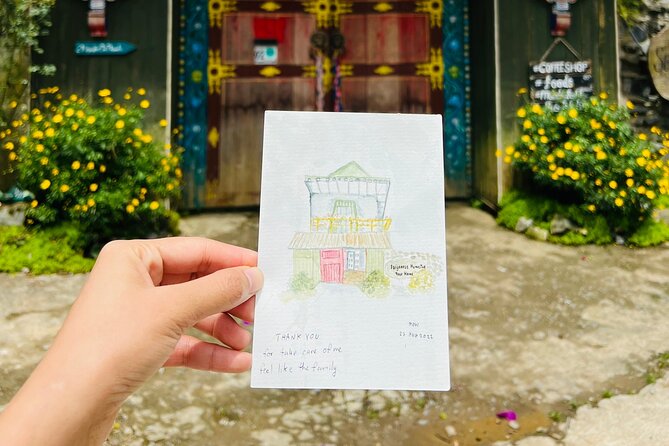
Your experience starts back at the Saigonese Trekking House meeting point on 02 Nguyễn Chí Thanh, in Sa Pa, Lào Cai. The location is convenient, described as near public transportation, which matters in a place where weather and getting around can change your plans quickly.
The class runs with a maximum of 10 travelers. That small size is a big deal for learning. When you are rolling rice paper and working near hot oil, you do not want long waits while the chef is helping someone else. The group size helps keep the pace moving and keeps you engaged.
You also get a welcome drink, coffee and/or tea. It is a small touch, but it makes the start feel less like a ticket scan and more like settling into a real kitchen.
Ingredient Intro in a Vietnamese Kitchen Mindset
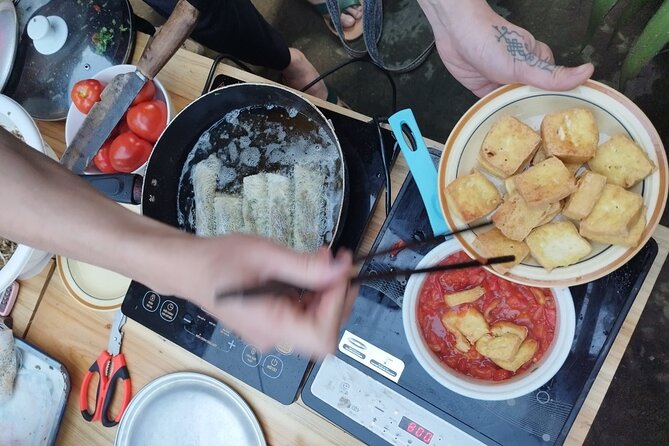
Before you start rolling, you get an introduction to essential ingredients. The class emphasizes fresh herbs and vegetables and local spices, which is where Vietnamese food often wins. Flavor is not just salt and heat, it is a mix of aromatic herbs, crunch from vegetables, and the savory depth from other components.
You’ll also get a practical understanding of what each ingredient is doing. Noodles add substance, mushrooms bring a savory, earthy note, and vegetables contribute texture and freshness. When you understand roles like that, cooking stops being guesswork later.
If you are someone who usually eats Vietnamese food but has not learned why it tastes the way it does, this ingredient stage is what makes the class worth more than a one-time meal.
Rolling Rice Paper Without Panic: The Skill the Whole Class Depends On
This class is built around hands-on rolling rice paper. That might sound straightforward, but rice paper has a learning curve because it is thin and flexible once it is ready, yet it can tear if handled too roughly.
You practice the rolling technique with guidance so the wrapper stays intact and the roll closes cleanly. The point is not perfection in one attempt. The point is learning what good rolling feels like, and what to adjust when things get sticky, too loose, or uneven.
This is also where the class becomes cultural. Vietnamese spring rolls are a day-to-day comfort food, not a showpiece. Learning the wrapper technique gives you a window into how Vietnamese home cooking actually works, step by step.



Building the Filling: Noodles, Mushrooms, and Vegetables
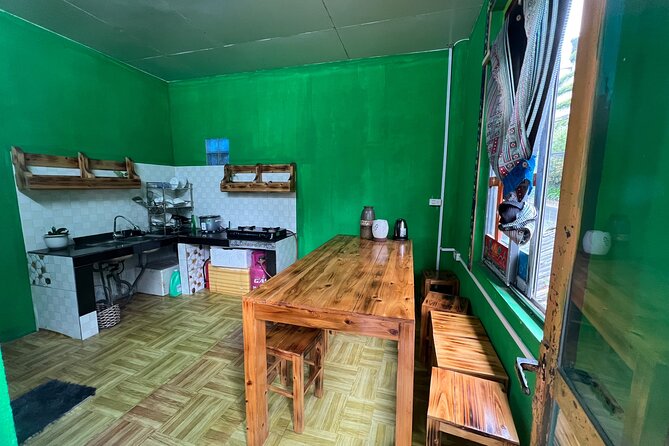
Once the wrapper part starts making sense, you move into preparing fillings. The class focuses on a combination of noodles, mushrooms, and vegetables, wrapped into crispy spring rolls.
You are not just stuffing whatever seems right. The filling process is guided toward balanced bites, so each roll has enough inside to feel satisfying after frying, without turning into an overstuffed mess that bursts or cooks unevenly.
This stage teaches you something useful beyond spring rolls. When you build a filling, you are shaping the final eating experience. The noodles help with body, mushrooms add savory depth, and vegetables bring freshness that cuts through the fried crunch.
Frying Until Golden and Crunchy: The Texture Test
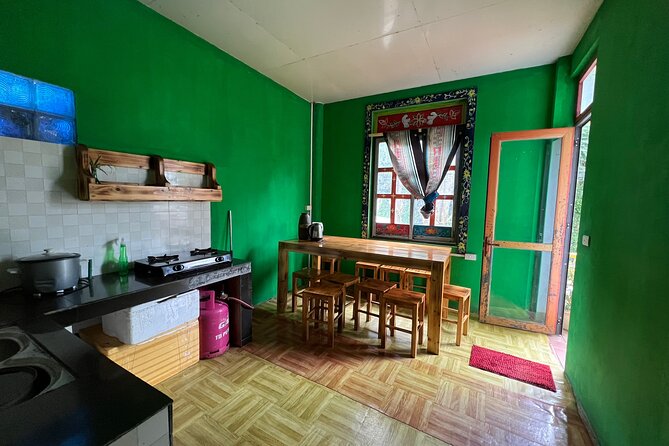
Frying is the moment of truth. The class guides you as you fry spring rolls until they turn golden and crunchy, which is the signature texture you came for.
Even without complicated theory, frying requires attention. Oil temperature, batch size, and how long you cook each roll will affect crispness. If you cook too briefly, you lose that crunch. If you cook too long, the roll can harden or become uneven.
What makes this class practical is that you are not left guessing. You learn the basic rhythm of frying the rolls so they come out crisp enough to match the promise of the dish.
And when you sit down later, you can connect the dots between technique and taste. You will know what caused the crunch, not just hope for it.
Traditional Dipping Sauce and the Family-Style Meal You Eat
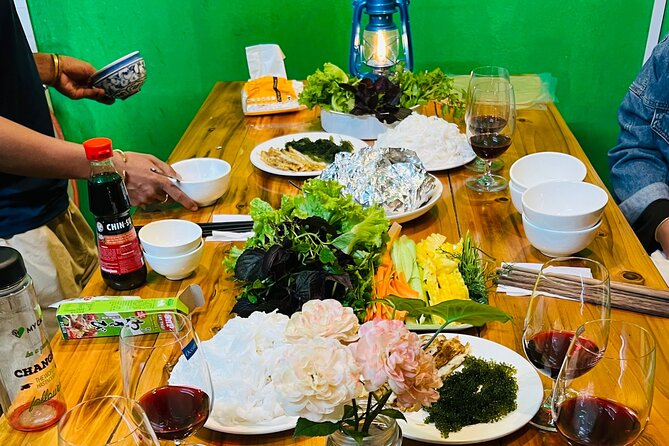
After frying, you enjoy your creations in a warm, family-style setting. Dinner is included, and the meal is built from what you made during the class.
You’ll also have a traditional dipping sauce as part of the experience. Dipping sauce is where Vietnamese flavors often broaden. It can brighten the fried bite, add tang, and bring everything into balance.
This is not a rushed grab-and-go meal. The structure is designed so you can actually taste what you cooked and connect it back to what you learned. That is the difference between a hands-on cooking class and a cooking show.
Another smart detail: you also take home a recipe. That turns the experience into something you can repeat later, rather than a memory you only revisit when you spot spring rolls at a restaurant.
Price and Value: Is $25 Worth It?
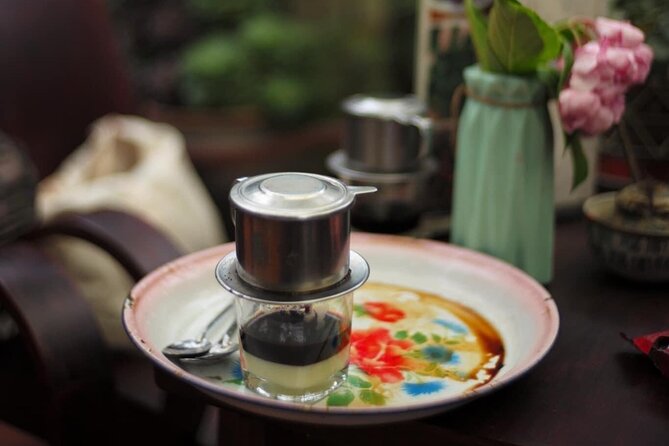
At $25 per person for about 2 hours, this class is priced like a true value experience rather than a fancy, markup-heavy food tour. The biggest reason it feels fair is that the class is genuinely hands-on and ends with you eating a meal you created yourself.
You also get a welcome drink (coffee and/or tea) and dinner included. In other words, you are not paying extra just to have food at the end. You are paying for instruction, practice, and the meal outcome.
Group discounts are mentioned as a feature. If you can pair up with friends or your travel buddy, you may be able to stretch the value even further.
If you want a low-cost way to learn a specific Vietnamese technique, this is one of the more sensible options in the Sapa food scene. If you are looking for a broad, multi-dish cooking day, this is less expansive. It is a focused class, and that focus is exactly why it works.
Weather and Timing: The One Practical Catch
This experience requires good weather. That matters because Sapa weather can be changeable, and the class can be adjusted if conditions are poor. If you hate last-minute plan changes, aim to book when you have a bit of flexibility in your schedule.
The class duration is about 2 hours. That is enough time to learn and cook, but it is still short. Come hungry, with the mindset that you are practicing a technique, not collecting a long list of dishes.
The tour ends back at the meeting point, so you are not dealing with a complicated route afterward.
Who Should Book This Spring Roll Class
This class is a great fit if you fall into any of these buckets:
- You want hands-on cooking rather than watching.
- You love Vietnamese food and want to understand it through technique.
- You care about learning a recipe you can recreate at home.
- You want a small-group setting, with a maximum of 10 people.
- You are vegetarian and want an approachable way to engage with Vietnamese cooking through spring rolls, since the class is described as suitable for vegetarian guests.
It may be less ideal if you are already a confident home cook who wants more advanced frying or sauce-making depth. This class is about learning the core method and getting a solid final product, not turning you into a culinary teacher.
Should You Book the Vietnamese Spring Rolls Cooking Class?
I think you should book this class if you want a compact, practical lesson that ends with a meal and a takeaway recipe. The combination of rolling rice paper, building a filling with noodles, mushrooms, and vegetables, and frying until golden crunch makes it feel like real skill-building. Add in the small-group size and dinner included, and the value stacks up.
If your schedule is tight, that two-hour timing is a win. If you are nervous about frying, do not worry too much. The whole structure is built to guide you through the key steps, and the final sit-down meal is there so you can taste the result right away.
If you are choosing between a generic food experience and something you can reproduce at home, this one leans clearly toward the practical side.
FAQ
What dish will I learn to make?
You will learn how to make crispy fried Vietnamese spring rolls, with a filling that includes noodles, mushrooms, and vegetables, plus a traditional dipping sauce.
How long is the Vietnamese spring rolls cooking class?
The class runs for about 2 hours.
How much does the class cost?
It costs $25.00 per person.
Where does the class meet?
The meeting point is Saigonese Trekking House, 02 Nguyễn Chí Thanh, TT. Sa Pa, Sa Pa, Lào Cai, Vietnam.
Is dinner included?
Yes. Dinner is included.
Is there a welcome drink?
Yes. You get a coffee and/or tea welcome drink.
What is included in the class experience?
Included items are the coffee and/or tea welcome drink and dinner.
What is not included?
Tips are not included.
How many people are in the group?
This class has a maximum of 10 travelers.
What is the cancellation policy?
Free cancellation is available up to 24 hours in advance for a full refund. If you cancel less than 24 hours before the start time, the amount you paid is not refunded. The experience requires good weather, and if it is canceled due to poor weather, you will be offered a different date or a full refund.
Other Sapa tours our reviewers keep coming back to
- 1 Day Sapa Tour Explore Y Linh Ho And Lao Chai And Ta Van Village
★ 5.0 · 18 reviews - Canyoning Tour from Sapa Vietnam
★ 5.0 · 19 reviews - Sapa 2 Day Trekking with 1 Night Homestay
★ 5.0 · 20 reviews - Sapa Half-Day Motorbike Tour: Villages & Rice Fields
★ 5.0 · 22 reviews - Sapa Mountain Escape: 2-Day Trekking, Rice Terraces & Homestay
★ 5.0 · 23 reviews - Sapa Dragon Cloud Glass Bridge and Silver Waterfall Half-Day Tour
★ 5.0 · 25 reviews
Cooking Classes, compared.
 ★ 5.0Hanoi Cooking Class: Culture, Local Market & Meaning CSR ImpactFrom $395,147 reviews
 ★ 5.05 Traditional Dishes Hanoi Cooking Class with Market TripFrom $354,890 reviews
 ★ 5.0Cooking Class Hoi An:Local Market, Basket Boat, Fishing & CookingFrom $283,660 reviews
 ★ 5.0Hoi An Cooking Class(Market,BasketBoat Crabfishing&Cooking Class)From $283,386 reviews
 ★ 5.0HCM:Mekong Delta Boat,Khotcake cooking Coconut Village,SmallGroupFrom $162,374 reviews
 ★ 4.8From Hoi An: Market Tour, Basket Boat Ride and Cooking ClassFrom $172,208 reviews
 ★ 5.0Hoi An Cooking Class(Local market,Basket Boat,Fishing & Cooking)From $281,323 reviews
 ★ 5.0Mekong Delta 4 Islands, TukTuk, Boat, Try Khot Cake Local CookingFrom $231,148 reviews
Also in these Vietnam lists