
REVIEW · HOI AN ANCIENT TOWN TOURS
Hoi An walking Tour – Private Tour
Hoi An walks better with a local guide. This private walking tour strings together Hoi An History Museum, Quan Thang House, Phuc Kien Assembly Hall, the Japanese Covered Bridge, and Tan Ky ancient house in about 2 to 3 hours.
I particularly like the way it connects the dots between Chinese merchants, the sea goddess Thien Hau, and Japanese craftsmanship. I also like the small cap of up to 10 travelers, which keeps the pace easier than big-group tours.
The only catch is simple: you are on foot for the full stretch, so heat, sun, and slippery old-stone sections can slow you down if you have heavy footwear or no water.
In This Review
- Key Stops and What Makes Them Worth Your Feet
- A Private Hoi An Walk That Actually Gives You Context
- Starting at Hoi An History Museum, Not the Old Streets
- Quan Thang House: The 18th-Century Merchant Home
- Phuc Kien Assembly Hall and Thien Hau, the Sea Goddess Link
- Japanese Covered Bridge (Chua Cau): More Than a Photo Stop
- Tan Ky Ancient House: Typical Hoi An Architecture You Can Read
- How Long It Takes, and What to Do With Your Free Afternoon
- Pickup, Mobile Ticket, and Small-Group Practicalities
- Price Value: Why $69 Can Make Sense in Hoi An
- Who This Tour Fits Best (and Who Might Skip It)
- What I’d Bring So the Walk Feels Easy
- Should You Book This Hoi An Walking Tour?
- FAQ
- What is the price of the Hoi An walking tour?
- How long does the tour last?
- Is pickup included?
- Does the tour use a mobile ticket?
- What stops are included on the walk?
- Is there free time after the walking portion?
- How many people are in the group?
- Where does the tour start?
- What happens if the weather is bad?
- Can I cancel for a full refund?
Key Stops and What Makes Them Worth Your Feet
- Hoi An History Museum first so you start with the timeline, not guesses
- Quan Thang House for a close look at the 18th-century merchant home story
- Phuc Kien Assembly Hall and Thien Hau to understand why sea trade shaped local beliefs
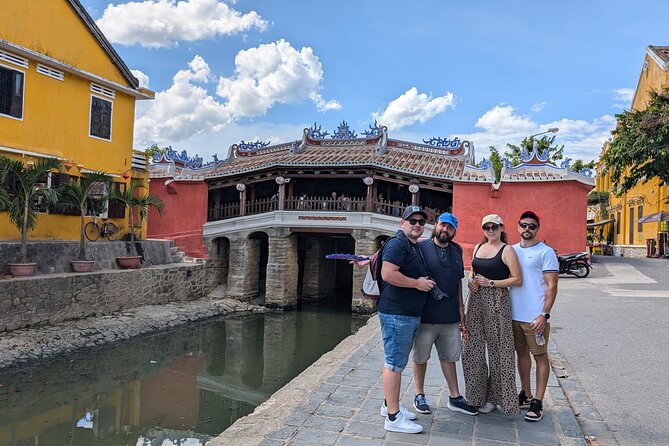
- Japanese Covered Bridge (Chua Cau) for architecture plus the Japanese merchant link
- Tan Ky ancient house for typical Hoi An architecture that is easier to read in person
Deeper into the Ancient Town
- Hoi An: Basket Boat Ride in the Coconut Forest★ 4.9 · 4,956 reviews
- Hoi An: Vietnamese Coffee Culture and Coffee Making Class★ 4.9 · 4,006 reviews
- Hoi An: Vietnamese Foldable Lantern Making Class★ 4.9 · 3,742 reviews
- Cooking Class Hoi An:Local Market, Basket Boat, Fishing & Cooking★ 5.0 · 3,660 reviews
A Private Hoi An Walk That Actually Gives You Context
Hoi An is one of those places where you can wander for hours and still feel like you are seeing pretty streets with no map in your head. This tour is designed to fix that feeling fast. You start with a museum, then you move through four major heritage sites in the Old Town area.
I like that the route is built around what Hoi An was: a trading town where different communities lived close to each other. That matters because many sights look similar from a distance, but once you know what each house or hall represents, the details start to mean something.
Also, this is a private-style experience with a max of 10 travelers. That sweet spot helps if you like asking questions, snapping photos at your own rhythm, or pausing when something catches your eye.
Starting at Hoi An History Museum, Not the Old Streets
You begin at the Hoi An History Museum, which is a smart move. Instead of trying to memorize names while you walk, you get an overview of the town’s historical development and cultural setting right away.
Here’s what that does for you in real life:
- It gives you a timeline in your head before you see the houses and temples.
- It helps you notice patterns, like why some buildings reflect particular community influences.
- It turns your first walk through the Old Town from sightseeing into understanding.
There’s also a practical angle. When you start with orientation, you usually waste less time later. You end up with clearer “Oh, that’s why this looks the way it does” moments as you move from stop to stop.
Quan Thang House: The 18th-Century Merchant Home
Next up is Quan Thang House at 77 Tran Phu. This home dates to the 18th century, and it was originally associated with a Chinese captain and merchant.
Why this stop works: a house is not just architecture. It’s social history. You get to see how wealth, trade connections, and family life shaped what people built and how they used space. Even if you do not study architecture, you can still pick up the logic behind the layout when someone points out the right features.
A helpful thing to keep in mind while you’re here: don’t rush the doorway details, courtyards, and the way the interior connects. This is the kind of place where you get more from slow looking than from fast photos.
Possible drawback: this is indoor or semi-covered at times, so if the day is hot, it can feel like you are bouncing between lighting conditions. Take a moment to adjust your phone camera settings, especially for dark interior corners.
Phuc Kien Assembly Hall and Thien Hau, the Sea Goddess Link
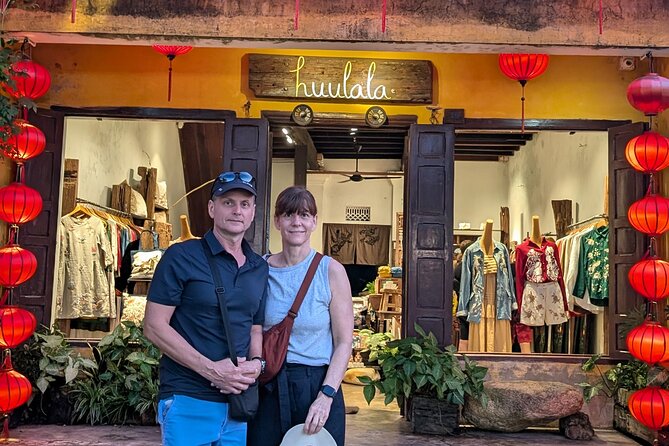
Your next major stop is Phuc Kien Assembly Hall at 46 Tran Phu Street, dedicated to Thien Hau, the sea goddess.
This is one of the most important concepts for understanding Hoi An: sea trade was not just commerce, it was risk. When people traveled across water for business, they needed protection and a way to make sense of storms and survival. Assembly halls like this show how community worship grew alongside economic life.
What I like about this stop in particular is that it changes how you look at the waterfront stories. You stop thinking of Hoi An as only “old streets and lanterns.” You start thinking about the people who depended on safe journeys.
Practical tip: when you enter a hall, pause for a few seconds before you start filming or taking photos. You’ll notice symbols and offerings more easily once your eyes adjust, and you’ll feel less rushed.
Japanese Covered Bridge (Chua Cau): More Than a Photo Stop
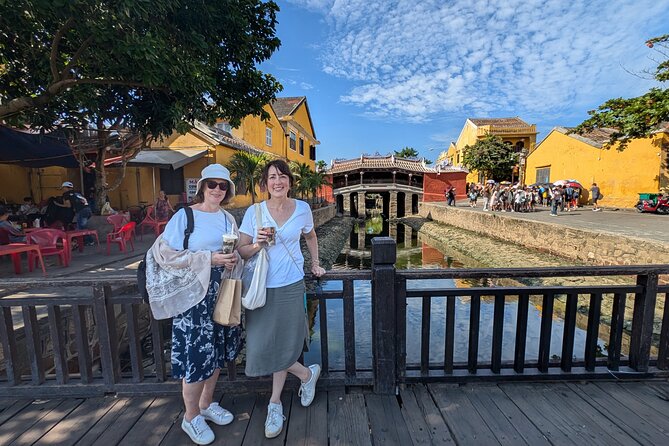
If you only remember one spot for the famous look, make it the Japanese Covered Bridge, also known as Chua Cau.
This bridge was built by Japanese craftsmen who were part of the broader community of Japanese merchants active in Hoi An. That one sentence matters, because it explains why the bridge exists in the first place and why it looks the way it does. It is not random decoration. It is a historical marker of cultural and commercial presence.
What you should do here:
- Take one “wide” photo from a step back so you capture the full span.
- Then get closer for details.
- Use the guide’s explanations to connect the architecture to the merchant story.
The caution is crowd-related. This is a landmark everyone wants to photograph. If you want cleaner shots, ask your guide when to step forward for the best angle, then wait for a brief lull.
Tan Ky Ancient House: Typical Hoi An Architecture You Can Read
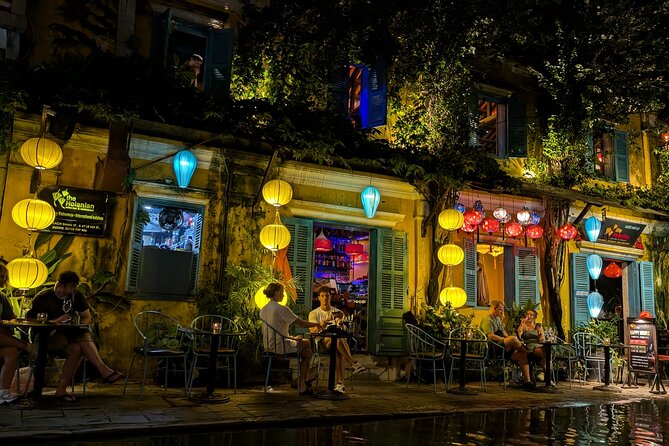
The last stop is Tan Ky ancient house. It’s not the oldest house in Hoi An, but it is among the most typical in terms of architecture.
That word typical is a gift. It means you’re not just seeing one special survivor. You’re seeing something that helps you understand what “normal” Hoi An traditional architecture looked like, and how merchants lived and ran their households.
When you visit Tan Ky, pay attention to how the building’s parts relate to each other. A guide-led walkthrough helps you notice features that you might otherwise skip, like how entrances, inner spaces, and structural choices reflect daily life.
You’ll likely feel this stop as the payoff. After History Museum, Quan Thang House, and Phuc Kien Assembly Hall, Tan Ky becomes easier to interpret. By then, you’re not just collecting sights. You’re building a picture.
How Long It Takes, and What to Do With Your Free Afternoon
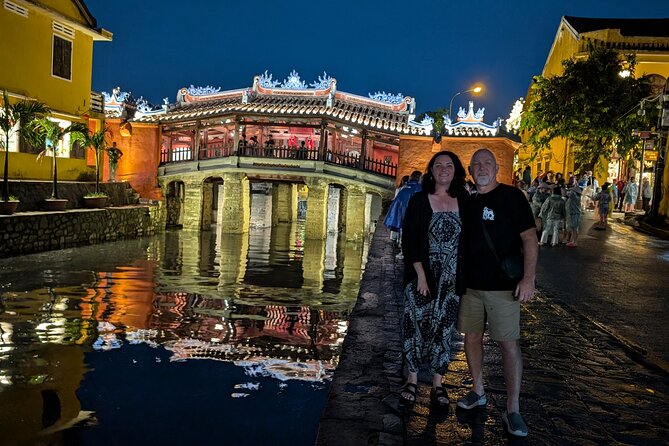
The tour runs about 2 to 3 hours. That’s a good length because it fits into almost any schedule in Hoi An, including a half-day plan where you still want time to wander on your own.
After the last stop, you get free time in the afternoon. This is where you can turn the tour into a personal route:
- Go back to whatever part of the Old Town pulled you in the most.
- Slow down for a café break and let the place settle into your mind.
- If you missed tiny details earlier, you can return with new context.
If you hate being locked into a timeline, this “free afternoon” piece is genuinely valuable. You finish with understanding, then you get to choose your own pace.
Pickup, Mobile Ticket, and Small-Group Practicalities
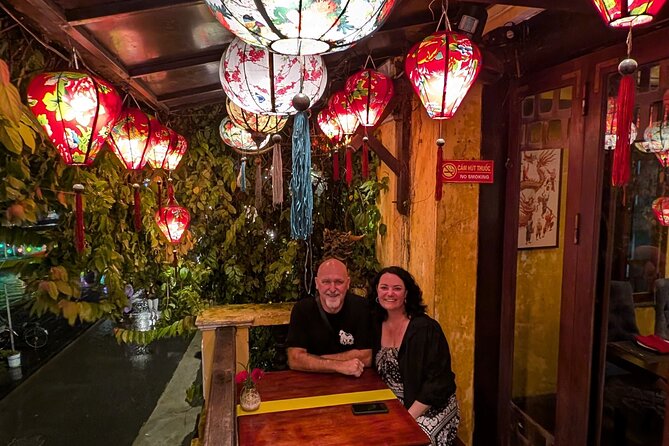
This experience includes pickup offered and you receive a mobile ticket. Pickup is one of those features you only appreciate after you have to coordinate a taxi or fight for the right drop-off point.
Also note the tour operates near public transportation. That matters if you decide you’d rather meet independently, or if you want flexibility if pickup times do not match your day.
Finally, the group size is capped at 10 travelers. In a walkable area like Hoi An’s Old Town, that limit keeps the group easier to manage. You’re less likely to feel glued to the person in front of you.
Price Value: Why $69 Can Make Sense in Hoi An
At $69 per person, you are paying for more than entry-level sightseeing. You’re paying for:
- A guided story that connects multiple heritage sites instead of random stops.
- A route that covers major landmarks in a tight time window (about 2 to 3 hours).
- A small group size that supports questions and slower attention.
Is it the cheapest way to see Hoi An Old Town? Usually no. But in places like Hoi An, the cost gap often buys you clarity. When you walk without context, you can end up paying more in time, energy, and confusion.
If your goal is to see the main heritage highlights with meaning and leave already oriented, this price can feel fair. If you prefer to wander independently and only want one or two landmarks, you might skip a guided format and spend that money on food, a lantern-lit evening, or extra museum time.
Who This Tour Fits Best (and Who Might Skip It)
This is a solid choice if you:
- Want an organized introduction to Hoi An’s historical and cultural connections.
- Like walking tours but also like structure, so you do not burn your afternoon guessing.
- Prefer smaller groups and straightforward pacing.
It may not fit as well if you:
- Have limited mobility and struggle with continuous walking in Old Town streets.
- Want long time at each stop. This tour is designed for a full circuit, not a slow, hours-long deep look.
What I’d Bring So the Walk Feels Easy
Even without fancy planning, you’ll enjoy this more with a few basics:
- Comfortable walking shoes with grip (Old Town can be slick in spots).
- Sun protection, especially if your tour runs during strong daylight.
- A small bottle of water.
- Your best walking behavior, meaning: do not block entrances, pause politely, and let the group flow.
Small note: this experience requires good weather. If rain rolls in, the schedule can change. Build in flexibility, and keep the day open.
Should You Book This Hoi An Walking Tour?
I think this is a good book if you want a fast, meaningful start to Hoi An. The itinerary covers the major heritage anchors: museum context first, then merchant houses and community halls, then the iconic Japanese Covered Bridge and the typical Tan Ky house. That sequence helps you understand what you see instead of just checking off landmarks.
Book it if you value:
- Clear connections between communities and trade
- A guided route that saves time
- A smaller group size that keeps things calm
Skip it if you already know Hoi An history, love drifting without structure, or you plan to spend most of your time far from the Old Town circuit.
If you’re deciding, my practical advice is this: if you want to leave with your head full of the right stories, this tour is the shortcut. If you want maximum freedom, put the money toward self-guided wandering and choose just one guided stop on a later day.
FAQ
What is the price of the Hoi An walking tour?
The price is $69.00 per person.
How long does the tour last?
It lasts about 2 to 3 hours.
Is pickup included?
Pickup is offered.
Does the tour use a mobile ticket?
Yes, you’ll receive a mobile ticket.
What stops are included on the walk?
The tour starts at Hoi An History Museum, then visits Quan Thang House, Phuc Kien Assembly Hall, Japanese Covered Bridge (Chua Cau), and Tan Ky ancient house.
Is there free time after the walking portion?
Yes, the afternoon is free after the tour ends.
How many people are in the group?
The tour has a maximum of 10 travelers.
Where does the tour start?
The start location is Hội An, Quảng Nam, Vietnam.
What happens if the weather is bad?
This experience requires good weather. If it’s canceled due to poor weather, you’ll be offered a different date or a full refund.
Can I cancel for a full refund?
Yes, you can cancel for a full refund up to 24 hours in advance of the experience start time.
Hoi An, Still More
- Hoi An: Basket Boat Ride in the Coconut Forest★ 4.9 · 4,956 reviews
- Hoi An: Vietnamese Coffee Culture and Coffee Making Class★ 4.9 · 4,006 reviews
- Hoi An: Vietnamese Foldable Lantern Making Class★ 4.9 · 3,742 reviews
- Cooking Class Hoi An:Local Market, Basket Boat, Fishing & Cooking★ 5.0 · 3,660 reviews
- Hoi An Cooking Class(Market,BasketBoat Crabfishing&Cooking Class)★ 5.0 · 3,386 reviews
Other Hoi An tours our reviewers keep coming back to
- 3 Hours Motorbike Tour in Hoi An Countryside.
★ 5.0 · 18 reviews - My Son Sanctuary Discovery Half day Private Tour
★ 5.0 · 18 reviews - Hoi An local food tour – enjoy taste of Vietnam at ancient town!
★ 5.0 · 18 reviews - Experience Cooking Class for Lunch or Afternoon With Local Chef
★ 5.0 · 18 reviews - HOI AN Vegetable Village, Basket Boat, Palm Forest PRIVATE TOUR
★ 5.0 · 18 reviews - Hoi An Countryside Tour with Bamboo Basket Boat Rowing , Buffalo Ride, Farming
★ 5.0 · 18 reviews
Hoi An Ancient Town Tours, compared.
 ★ 4.9Hoi An: Basket Boat Ride in the Coconut ForestFrom $34,956 reviews
 ★ 4.9Hoi An: Vietnamese Coffee Culture and Coffee Making ClassFrom $144,006 reviews
 ★ 4.9Hoi An: Vietnamese Foldable Lantern Making ClassFrom $103,742 reviews
 ★ 5.0Cooking Class Hoi An:Local Market, Basket Boat, Fishing & CookingFrom $283,660 reviews
 ★ 5.0Hoi An Cooking Class(Market,BasketBoat Crabfishing&Cooking Class)From $283,386 reviews
 ★ 5.0Hue to Hoi An ( Hoi An to Hue) Top Gear with Lefamily Riders Tours ( 1 way)From $503,156 reviews
 ★ 4.9Hoi An: My Son Sanctuary Early Morning w. Champa Food BrunchFrom $202,750 reviews
 ★ 4.8From Hoi An: Market Tour, Basket Boat Ride and Cooking ClassFrom $172,208 reviews
Also in these Vietnam lists