
REVIEW · COOKING CLASSES
Hanoi Cooking Class in a Haven of Tranquility – Thom culinary
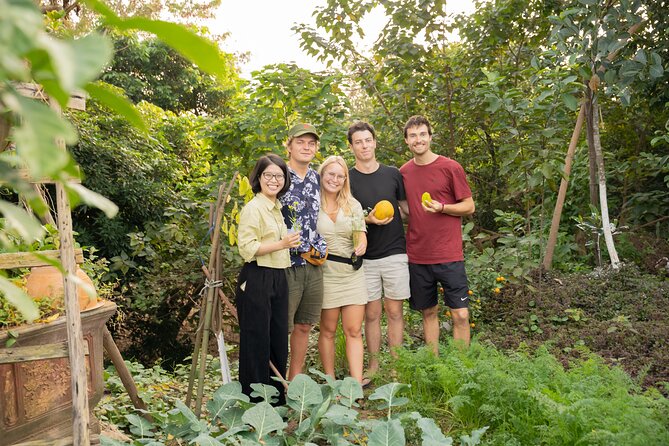
Cooking in Hanoi should feel calm. Thơm Culinary pairs a cyclo ride and market shopping with a peaceful herb-and-fruit garden house, then turns it into a hands-on class where you learn how Vietnamese flavors balance. I like the small group size (up to 8), because the teaching feels personal instead of rushed.
I also love the herb-first approach, with a garden harvest and clear explanations of herbs, spices, and taste balance. The only real drawback to plan for is the start in lively markets, so you will want comfy shoes and a bit of patience before the quiet garden part.
In This Review
- Key reasons this Hanoi cooking class is worth your time
- A quiet herb garden break in the middle of Hanoi
- From cyclo ride to Dong Xuan market, the shopping lesson starts fast
- Old City Gate and the markets for herbs, spices, and real comparisons
- Thơm Culinary: a garden house where cooking has a philosophy
- Harvesting herbs, exotic fruit, and learning what to use and why
- Hands-on cooking: four dishes you build from scratch
- After cooking: desserts, herbal drinks, rice wine, and table etiquette
- Price and what you really get for about $64
- Who this Hanoi cooking class suits best
- Should you book Thơm Culinary?
- FAQ
- How long is the Hanoi Cooking Class with Thơm Culinary?
- Where does the experience take place?
- What is the price per person?
- Is pickup from my hotel included?
- Do I get to cook, or is it mostly watching?
- Do you visit markets during the experience?
- Is there street food included?
- Will I eat dessert and drink beverages during the class?
- Is the group size small?
- Is the mobile ticket included, and do I get confirmation?
Key reasons this Hanoi cooking class is worth your time
- Cyclo to Dong Xuan market makes the food shopping part feel like part of the adventure, not a chore
- Four hands-on dishes so you actually learn the method, not only watch it
- Garden harvest of herbs and fruit, then you use them in what you cook
- Bottomless herbal drinks and rice wine with homemade desserts after cooking
- Market visits beyond Dong Xuan (including Cầu Đông and Thanh Hà) to compare ingredients and stalls
Narrowing it down? These Hanoi tours kept surfacing in our reviews.
- Hanoi Jeep Tour: Food, Culture and Fun by Vietnam Army Jeep★ 5.0 · 15,222 reviews
- Full-Day Ninh Binh Highlights Tour from Hanoi★ 5.0 · 7,761 reviews
- Hanoi: Ha Long Bay Day Cruise – Swimming, Meal, Kayaking★ 4.7 · 7,415 reviews
- Hanoi: Water Puppet Show Tickets★ 4.6 · 7,029 reviews
A quiet herb garden break in the middle of Hanoi
If your Hanoi plans include markets, streets, and scooters, Thơm Culinary gives you a needed reset. You start in the city’s energy, then shift to a calm garden house where cooking feels slower and more focused. It is a smart setup, because you come in hungry for street-level food knowledge, then you leave with technique and seasoning that you can repeat later.
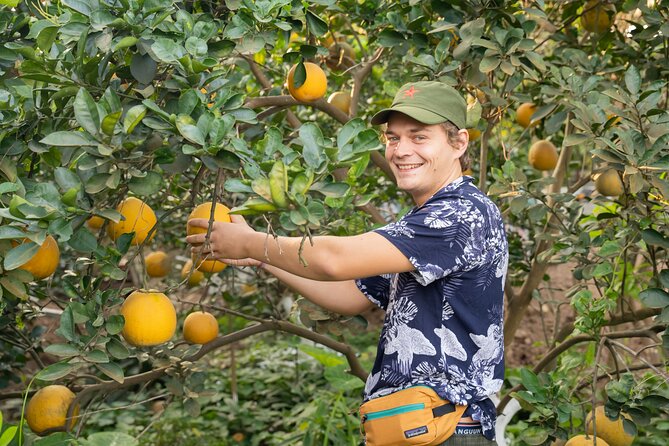
The garden setting is not just pretty scenery. It is part of the lesson. You harvest herbs and exotic fruit from a lush green garden, then connect those plants to the flavors you will build in your dishes. That herb-first mindset is the thread running through everything here.
Timing matters too. The experience runs about 4.5 hours, which is long enough for real cooking practice but short enough that it does not eat your whole day. For a first-time visitor to Hanoi food culture, that balance is a win.
From cyclo ride to Dong Xuan market, the shopping lesson starts fast
The class begins with a cyclo ride to Đồng Xuân Market, one of Hanoi’s most famous hubs. It is a quick way to get you oriented in the Old Quarter area while you’re still fresh, before the kitchen part takes over. You will also taste street food at traditional market stops, so you learn what Vietnamese flavors feel like in real form, not only as plated dishes.
Dong Xuân can be crowded, loud, and hot. That is normal. The practical advantage is that you get to see the ingredient chain up close, including how produce looks, how vendors present spices, and what people buy when they are not thinking about cooking classes.
What I like about this approach is that it teaches you how to shop by senses. You learn to notice aroma, freshness, and texture clues. When you later chop, sauté, and season, you already understand what you are aiming for.
Old City Gate and the markets for herbs, spices, and real comparisons
After the first market stop, the experience keeps moving through the food world with additional stops in the Old City area. You will pass by Old City Gate, then head to more market zones, including Cầu Đông and Thanh Hà markets.
This part helps you avoid a common mistake: thinking Vietnamese cooking is only about one ingredient or one sauce. In these markets, you start seeing patterns. Some stalls emphasize herbs, some focus on dried goods, and others sell the kinds of fresh items that change the final dish texture. Even the way items are grouped can teach you what cooks grab first.
You also get access to a range of ingredients used in Vietnamese cooking, including the plants behind those signature flavors. The guide explains the significance of herbs and spices, which means you are not just collecting items for the class, you are learning why certain combinations make sense.
The only thing to keep in mind is logistics. Markets mean walking and standing. Wear shoes you trust for uneven pavement and long periods on your feet, because you will be moving before you ever pick up a knife.
Thơm Culinary: a garden house where cooking has a philosophy
Once you reach Thơm Culinary, the mood changes. The setting is a tranquil oasis with a serene garden house, plus extra details like a family worship hall and a fish pond. These are not just decoration. They set up the idea that food is connected to daily life, routine, and respect for ingredients.
This is where the class shifts from street-level shopping to kitchen-level understanding. You learn the philosophy behind Vietnamese cooking by exploring herbs used in dishes and by practicing the art of balancing contrasting tastes and textures. Think of it as learning how Vietnamese cuisine builds layers. Sour, sweet, salty, and aromatic flavors work together, not separately.
If you have ever tasted Vietnamese food and wondered why it tastes both light and deeply flavored, this is the reason. You are learning how contrasts are managed, so your plate feels balanced rather than heavy.
And you get to do that with your own hands. After the garden and explanation time, the knives come out, and you start chopping, sautéing, seasoning, and plating.



Harvesting herbs, exotic fruit, and learning what to use and why
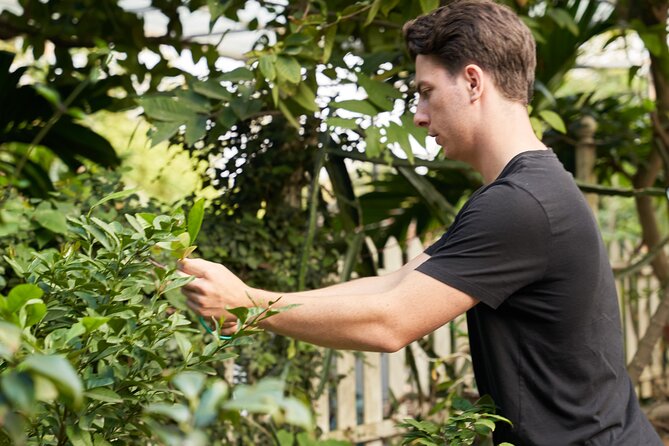
One of the most memorable parts is the herb harvest. You go into the garden and pick fresh herbs and exotic fruit, then connect what you harvested to what you will cook. This makes the class feel like farm-to-table, but with a very Hanoi flavor: herbs are central, not an afterthought.
In Vietnam, herbs are not just for garnish. They bring aroma, freshness, and a kind of herbal brightness that sharpens sauces and balances fried or sautéed ingredients. When you harvest them yourself, you stop treating herbs as optional.
The lesson is practical. You learn what to look for, how to handle herbs, and how to use them at the right moment. That timing matters, because some herbs taste best when used earlier, while others are better added later to keep their flavor lively.
If you are someone who wants to understand Vietnamese cooking beyond one dish, this is a strong moment in the experience. You come away with a clear mental map of how herb flavors fit into broader taste balancing.
Hands-on cooking: four dishes you build from scratch
At the center of the experience is the cooking itself: four hands-on cooked authentic dishes, guided by the hosts. The class is not just standing around. You will chop, sauté, season, and plate, step by step. That structure is why the experience is worth your time, especially if you have done cooking classes before where the hands-on part felt too short.
The guide’s emphasis on balancing contrasting tastes and textures helps you understand what makes Vietnamese dishes feel right. You are learning to adjust seasoning, not only follow a script. That is the difference between copying a recipe and learning a cooking method.
Because the group is small, instruction stays practical. If you miss a step or you are unsure about how a sauce should taste, you can usually get direct guidance. That is a big deal when you are working with herbs, acidic elements, and aromatics that can shift quickly.
One note for your comfort: cooking takes coordination. Bring an appetite and expect to work a bit, even if it is not physically intense. If you hate cutting vegetables, this might test your patience for the first 20 to 30 minutes, then you typically get into a rhythm.
After cooking: desserts, herbal drinks, rice wine, and table etiquette
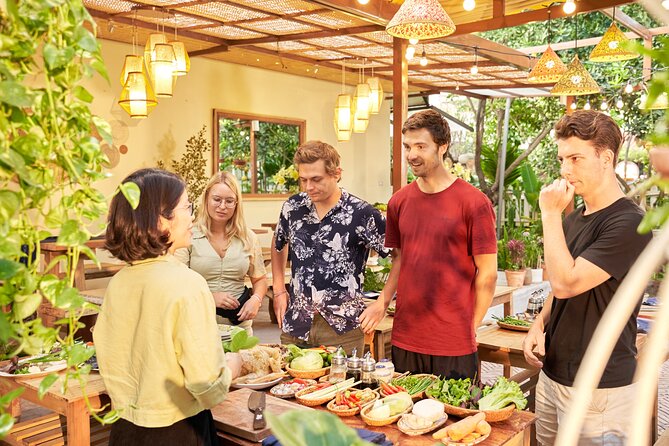
When you finish cooking, the feast is where everything clicks. You eat what you made, plus you get homemade desserts, herbal drinks, and homemade rice wine. The drinks are described as bottomless, which means you can take your time and keep the herbal side of the meal going.
This part is also instructional in a quieter way. You learn about eating etiquette and hear dish stories. That matters because Vietnamese dining is not only about what is on the table. It is also about how you share, how you combine flavors while eating, and when you use certain herbs or accompaniments.
If you are unsure what to do with herbs on your plate, this portion helps. A lot of first-time visitors see herbs and think garnish. You learn how they fit into the bite.
Rice wine is included, so if you do not drink alcohol, you can still enjoy the meal through the herbal drinks and desserts. The class environment is friendly and relaxed, so you do not need to force it.
Dessert and sweet treats also help balance the class theme. Vietnamese meals often end with something light and fragrant, not an overly heavy finale. That gives you a fuller picture of flavor balancing from start to finish.
Price and what you really get for about $64
The price is $64.31 per person for an experience around 4 hours 30 minutes, including round trip transport and all food and drink listed. On paper, cooking classes can vary a lot. What makes this one feel like good value is the mix: market time, ingredient education, garden harvest, hands-on cooking, and a full meal with drinks.
Key value pieces you are paying for include:
- Transportation (cyclo plus round trip) so you do not waste time arranging the day
- Four dishes hands-on, which is more substantial than classes that produce only one or two simple plates
- Market tastings and ingredient shopping, which many cooking classes skip
- Herb harvesting and garden context, which helps you learn ingredients in a memorable way
- Food and drink, including herbal drinks, homemade dessert, and rice wine
Is it the cheapest option in Hanoi? Probably not. But you are also buying a structured food education that starts in the markets and ends at the table with what you made.
If you are the type who likes to learn by doing, the cost feels reasonable. If you only want a casual cooking demo and do not care about markets or herbs, you might feel it is a bit long and active.
Who this Hanoi cooking class suits best
This tour works especially well if you want an authentic Hanoi food day without turning the whole plan into chaos. It suits you if you enjoy:
- Vietnamese food and want to understand how flavors balance
- learning from ingredient shopping rather than just a recipe card
- small group settings where you get real guidance
- a calmer kitchen after time in crowded markets
It is also a good option if you are traveling solo or as a couple, because the max group size keeps the feel intimate. If you prefer quiet activities only, you might find the early market portion loud, but the garden portion usually helps.
If you have dietary restrictions, the provided details do not spell out customization. That is not a dealbreaker, but you should check directly with the operator before booking, especially if you need vegetarian, vegan, gluten-free, or alcohol-free meals.
Should you book Thơm Culinary?
Yes, if you want a Hanoi cooking class that teaches more than recipes. The herb garden harvest, the hands-on practice for four dishes, and the market ingredient context make it a strong choice for anyone who wants Vietnamese cooking to make sense.
Skip or reconsider if you dislike markets or long standing time at the start. Also think twice if you only want a light, low-effort class, because you will be chopping and cooking for real.
If you want a half-day that blends Hanoi food street energy with a calm, instruction-heavy kitchen meal, Thơm Culinary is a smart bet.
FAQ
How long is the Hanoi Cooking Class with Thơm Culinary?
It lasts about 4 hours 30 minutes.
Where does the experience take place?
It takes place in Hanoi, Vietnam.
What is the price per person?
The price is $64.31 per person.
Is pickup from my hotel included?
Yes, pickup is offered, and the experience includes round trip transportation.
Do I get to cook, or is it mostly watching?
You cook hands-on. You will prepare 4 authentic dishes with guidance.
Do you visit markets during the experience?
Yes. You visit Đồng Xuân Market, and you also go to markets including Cầu Đông and Thanh Hà, plus you pass by Old City Gate.
Is there street food included?
Yes. You get street food delights tasting at traditional markets.
Will I eat dessert and drink beverages during the class?
Yes. There are homemade desserts, herbal drinks, and homemade rice wine included.
Is the group size small?
Yes. The maximum group size is 8 travelers.
Is the mobile ticket included, and do I get confirmation?
You receive a mobile ticket, and confirmation is received at the time of booking.
Other Hanoi tours our reviewers keep coming back to
- Hanoi Vespa After Dark Street food + Train Street+ Live Music
★ 5.0 · 18 reviews - (Free Pick-up) Vietnamese Body Massage in Hanoi City
★ 5.0 · 18 reviews - The Insider’s Hanoi,Train Street, Countryside Highlight by Vespa
★ 5.0 · 18 reviews - Skip the line: Thang Long Water Puppet Theater Entrance Tickets
★ 4.0 · 18 reviews - Hanoi Street Food Tour and MORE
★ 5.0 · 18 reviews - Hanoi – Hoa Lu – Tam Coc – Mua Cave – 1 Day / By Luxury Limousine & Small Group
★ 5.0 · 18 reviews
Cooking Classes, compared.
 ★ 5.0Hanoi Cooking Class: Culture, Local Market & Meaning CSR ImpactFrom $395,147 reviews
 ★ 5.05 Traditional Dishes Hanoi Cooking Class with Market TripFrom $354,890 reviews
 ★ 5.0Cooking Class Hoi An:Local Market, Basket Boat, Fishing & CookingFrom $283,660 reviews
 ★ 5.0Hoi An Cooking Class(Market,BasketBoat Crabfishing&Cooking Class)From $283,386 reviews
 ★ 5.0HCM:Mekong Delta Boat,Khotcake cooking Coconut Village,SmallGroupFrom $162,374 reviews
 ★ 4.8From Hoi An: Market Tour, Basket Boat Ride and Cooking ClassFrom $172,208 reviews
 ★ 5.0Hoi An Cooking Class(Local market,Basket Boat,Fishing & Cooking)From $281,323 reviews
 ★ 5.0Mekong Delta 4 Islands, TukTuk, Boat, Try Khot Cake Local CookingFrom $231,148 reviews
Also in these Vietnam lists