
REVIEW · COOKING CLASSES
Hanoi: 5 Local Dishes Cooking Class with Meal & Market Visit
Hanoi cooking classes are usually fun. This one adds a wet market run first, so your meal starts before you ever pick up a ladle. You’ll meet your English-speaking instructor at the Apron Up Cooking Class in the Old Quarter, then head out to shop like a local by selecting fresh ingredients for your 5-dish lineup.
What I like most is the hands-on format and the payoff. You cook, you learn the small technique details that make flavors snap into place, and then you sit down to eat the results. One thing to consider: transportation isn’t included, and the class involves moving around and cooking, so it is not a fit for everyone.
In This Review
- Key takeaways
- Market First in Hanoi Old Quarter: Your Shopping Trip Sets the Flavor
- Two Set Menu Choices for 5 Hanoi Recipes
- Menu path A options you might cook
- Menu path B options you might cook
- Hands-On Cooking Skills: What You Actually Practice
- From Wet Market to Stove: The Lesson Flow You Can Expect
- 1) Meet, then shop the wet market
- 2) Cooking 5 dishes step by step
- 3) Sit down and eat your meal
- From Rice Whisky to Egg Coffee: Your Meal Includes the Fun Stuff
- Vegetarian-Friendly Hanoi Cooking Without the Usual Compromise
- Timing, Group Energy, and Why the Instructions Matter
- Price and Value: Is $40 Worth It in Hanoi?
- Who This Class Is Best For (And Who Should Skip It)
- Should You Book Apron Up Cooking Class in Hanoi?
- FAQ
- Where do I meet for the class?
- How long is the cooking class?
- What is the price?
- What’s included in the experience?
- Are there vegetarian options?
- How many dishes will I cook?
- What dishes can be on the menu?
- Is transportation included?
- Is the class taught in English?
- Is it suitable for children or people with mobility needs?
Key takeaways
- Wet market ingredient shopping before you cook, so you learn what to look for and why it matters
- Two set menus that both build toward 5 traditional Hanoi dishes, with vegetarian adaptations available
- Tea plus rice whisky sampling, along with seasonal fruit during the meal
- Step-by-step instruction meant to get you from chopping to plating without guessing
- Cookbook and certificate to take home, so the experience doesn’t disappear after you leave
Narrowing it down? These Hanoi tours kept surfacing in our reviews.
- Hanoi Jeep Tour: Food, Culture and Fun by Vietnam Army Jeep★ 5.0 · 15,222 reviews
- Full-Day Ninh Binh Highlights Tour from Hanoi★ 5.0 · 7,761 reviews
- Hanoi: Ha Long Bay Day Cruise – Swimming, Meal, Kayaking★ 4.7 · 7,415 reviews
- Hanoi: Water Puppet Show Tickets★ 4.6 · 7,029 reviews
Market First in Hanoi Old Quarter: Your Shopping Trip Sets the Flavor
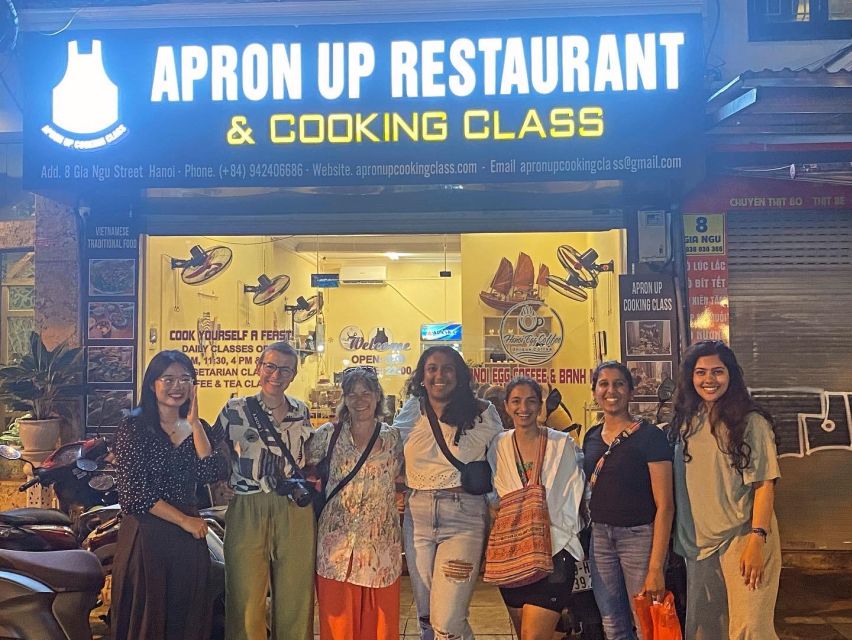
The best part of this class is also the least glamorous: the shopping. You start in Hanoi’s Old Quarter at Apron Up Cooking Class, looking for the big Apron Up sign. From there, you head to a local wet market where your instructor selects and purchases the fresh ingredients you’ll use later.
Why this matters for you: Hanoi cooking is ingredient-driven. When you see what the cooks choose, and how they pick what’s fresh, you start understanding flavor instead of following a random recipe. The class is designed so the market trip is not a sightseeing add-on. It is part of the lesson plan.
You’ll also get a feel for how Vietnamese cooks think about balance and timing. Even if you have zero experience, the market stops make the later steps easier, because you know what you’re looking at and what it’s supposed to do in the dish.
If you’re worried about standing around with a clipboard, don’t be. The whole experience is built around doing, not watching. Several instructors are known for keeping things moving and making sure everyone has a role, especially when the group is small.
Two Set Menu Choices for 5 Hanoi Recipes
You won’t be stuck making random dishes. You choose between two set menu options, and the class is structured so each path gets you to 5 dishes.
Menu path A options you might cook
This set can include combinations like:
- Banh xeo pancakes
- Bun cha (grilled pork and noodles)
- Pork rib noodle soup
- Beef fresh rolls
- Chicken salad
- Banana ice cream
Menu path B options you might cook
The other set can include combinations like:
- Pho
- Bun cha
- Fried spring rolls
- Papaya salad
- Egg coffee
Both menus can be adapted to vegetarian diets. That’s a big deal. Instead of being forced into a sad “no meat” version, you should expect vegetarian-friendly choices across the meal.
One clever idea: if you want to go deeper, you can take 2 classes to learn both set menus. That turns the experience into a real Hanoi food sampler, not a one-and-done cooking event.



Hands-On Cooking Skills: What You Actually Practice
This is a 3.5-hour class focused on building real cooking ability. You’re making 5 dishes hands-on, with step-by-step guidance from an English-speaking instructor. The goal is not just to finish plates. The goal is to understand the process well enough that you can repeat it later.
Here’s what the hands-on part usually feels like in practice:
- You prep ingredients while learning what to notice, not just what to do
- You follow technique steps for each dish, then get chances to repeat key movements
- You get tips and tricks aimed at making the final flavor taste right, not just look right
- You work as a team, with the class constantly progressing so nobody gets stuck waiting too long
In many classes like this, the “instruction” can end up being vague. Here, people consistently praise instructors for clear explanations and patient coaching. Guides such as Vy, Winnie, Ruby, Bella, Kim, and Perla come up again and again for their ability to keep the atmosphere relaxed while still making sure everyone can succeed.
That’s the difference between eating Vietnamese food and learning Vietnamese food. You’ll leave knowing why the dish tastes the way it does and what to watch for when you recreate it.
From Wet Market to Stove: The Lesson Flow You Can Expect
You can think of the experience in three stages: buy, cook, eat.
1) Meet, then shop the wet market
You start at Apron Up Cooking Class and head into the wet market. Your instructor chooses and purchases ingredients for your dishes. You’re learning what’s fresh and relevant for the recipes you’ll make next.
Practical note: if you have issues with mobility or long standing, this part is not ideal. Wet markets involve walking and uneven ground, and you’ll be active.
2) Cooking 5 dishes step by step
Back in the cooking space, you’ll make your dishes with step-by-step instructions. Expect frequent “do this now” moments, not long lectures.
The class menu choice matters because each dish trains a different skill. A pancake is not the same process as rolling fresh herbs. Soup is not the same timing as a salad or noodle dish. The mix of dishes across the two menu paths is basically a buffet of technique.
3) Sit down and eat your meal
After you finish cooking, you get to eat what you made. This is one of the most satisfying parts of the experience, because you finally taste the results right away, instead of waiting a day to wonder what went wrong.
You’ll also have tea and rice whisky sampling, plus seasonal fruit.
From Rice Whisky to Egg Coffee: Your Meal Includes the Fun Stuff
This class is built around comfort food satisfaction: you do the work, then you get to enjoy it. The meal includes what you prepared, plus tea and rice whisky, along with fruit.
Rice whisky can be a first-time try for many people. The key here is that it’s served as a tasting, not as a requirement. If you’re not into it, you still get the full meal and the rest of the experience.
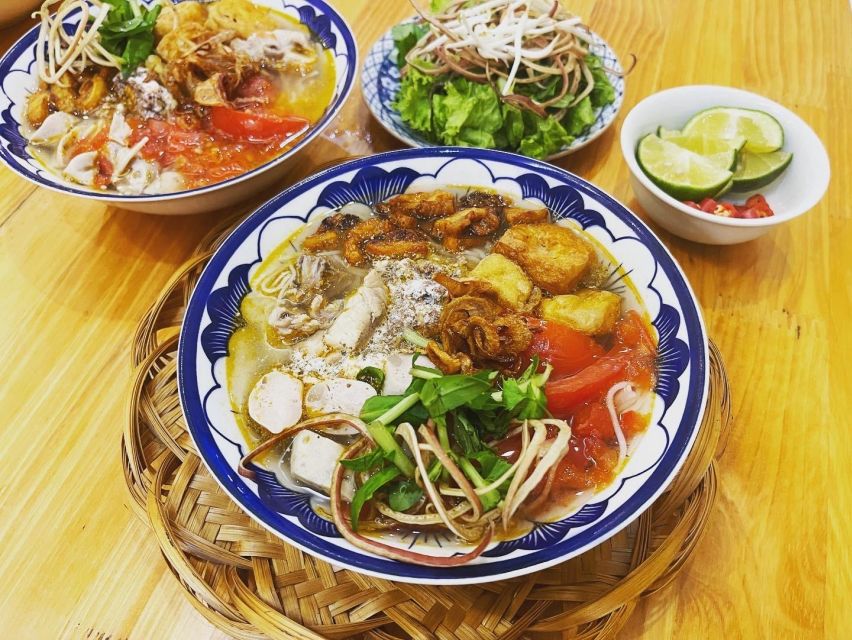
Then there’s the food itself. Some menu paths include egg coffee, which is a fun Hanoi-style finish. Others lean into noodle bowls like pho or grilled pork classics like bun cha. If you end up cooking banh xeo, you’ll see how Hanoi cooks turn batter and filling into something crisp and satisfying.
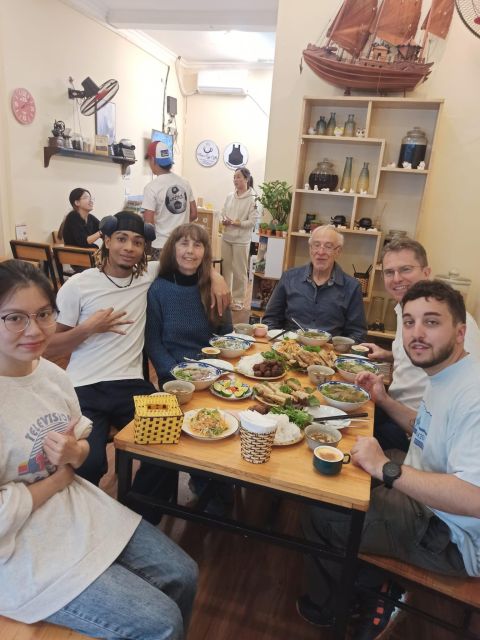
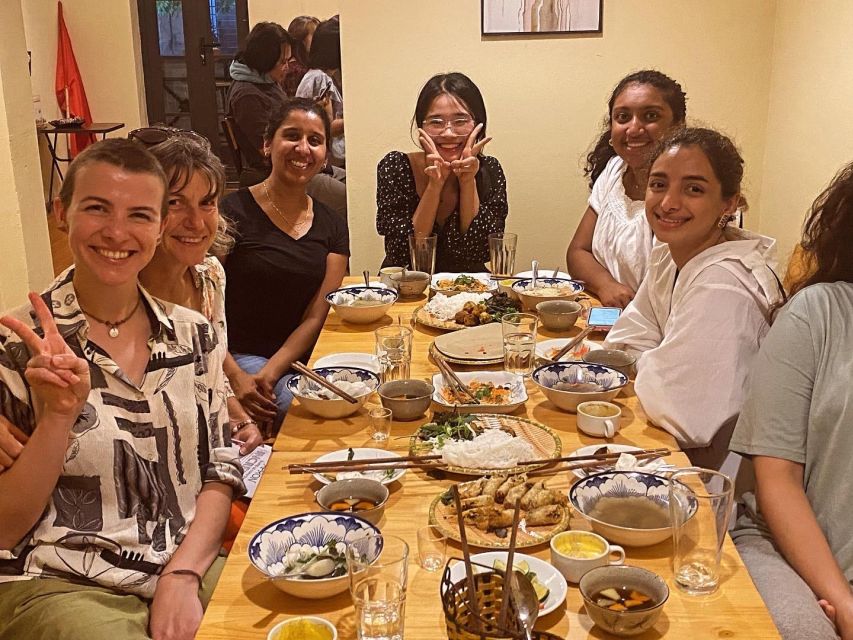
Either way, the “eat together” part helps the class feel like a proper evening out. People often mention meeting and chatting with fellow class members from different places, which makes the meal more social than you might expect.
Vegetarian-Friendly Hanoi Cooking Without the Usual Compromise
Vegetarian food can be an afterthought in a lot of cooking classes. Here, vegetarian adjustments are built into the menu approach. The class offers two set menus that can be adapted to vegetarian diets, with vegetarian options available across the dishes you make.
What that means for you: you can pick a path without mentally planning your substitutions in advance. You should still get to cook a full set of 5 dishes, not a reduced version.
In practice, the structure matters. If the class is set up for a full course set, vegetarian adaptations can slot into the same rhythm and timing, so you’re not waiting longer while everyone else cooks something you cannot eat.
If you’re traveling with a vegetarian friend or partner, this is one of the calmer choices. You’re less likely to spend the meal split into, I’ll eat something, and you’ll eat something else.
Timing, Group Energy, and Why the Instructions Matter
The class runs about 3.5 hours, and you’ll need to check available start times. That timing is part of the value. It’s long enough to feel like you learned something real, but not so long that you lose the rest of your day to the stove.
Group size can affect your experience. The class is designed as a team format, and people often praise the fact that it keeps moving, with everyone doing something. When the group is smaller, the vibe can feel more like guided coaching than a class with a big crowd.
Instructors also make a difference. Many praised hosts highlight:
- patient, step-by-step teaching
- clear instructions you can follow even as a beginner
- explanations that connect ingredients to final flavor
If you’re brand new to cooking, you’re still likely to finish strong. Some people even report being able to cook well even with limited experience, mostly because the guidance focuses on the steps you can control.
If you’re an experienced cook, the tips and technique details can still be useful. You’ll likely learn how Hanoi cooks approach each dish, not just how to cook a version of it.
Price and Value: Is $40 Worth It in Hanoi?
At $40 per person, you’re paying for more than a meal. You’re paying for:
- a market visit where you learn ingredient selection
- hands-on instruction making 5 dishes
- your lunch or dinner
- tea plus rice whisky tasting
- tools and ingredients provided
- a cookbook and certificate to take home
Transportation is not included, so you’ll need to handle getting to and from the meeting point in the Old Quarter.
Now, value. A lot of cooking classes charge similar money but give you a shorter cooking window, or fewer dishes, or mostly demonstrations. This one is built around 5 dishes you help make, then sit down to eat. That’s why people consistently call it one of the best things to do in Hanoi.
You’re also getting a souvenir with practical use: the cookbook and certificate. The cookbook matters because it helps you reproduce what you learned, at least at home.
Think of it like this: you’re buying a guided skill experience that ends with a meal. If you love food and want more than just eating, the cost starts to make sense fast.
Who This Class Is Best For (And Who Should Skip It)
This class is a great fit if you:
- want a hands-on way to learn Hanoi food
- like markets and want a practical shopping skill, not just photos
- enjoy eating what you cooked, together with others
- need vegetarian options that are still a full meal
It may not be a great fit if you:
- need wheelchair access or have mobility limitations, since it is not suitable for wheelchair users or people with mobility impairments
- are traveling with very young kids, since it’s not suitable for children under 4
Also keep your expectations realistic. This is not a “master every technique in Vietnam” workshop. It’s a focused 3.5-hour experience designed to teach you enough to recreate key parts later.
Should You Book Apron Up Cooking Class in Hanoi?
Yes, if you want your Hanoi trip to include a genuine food education with a meal at the end. The combination of market shopping, cooking 5 dishes hands-on, and eating together makes it a high-value evening. The vegetarian-friendly menu adaptations are another strong reason to book, especially if you’re traveling with someone with dietary restrictions.
I would skip it only if you can’t manage a wet market stop and active cooking, or if you strongly prefer experiences where you do zero hands-on work. Otherwise, this is the kind of activity that tends to leave you with more than a full stomach. It leaves you with food skills you can actually use.
FAQ
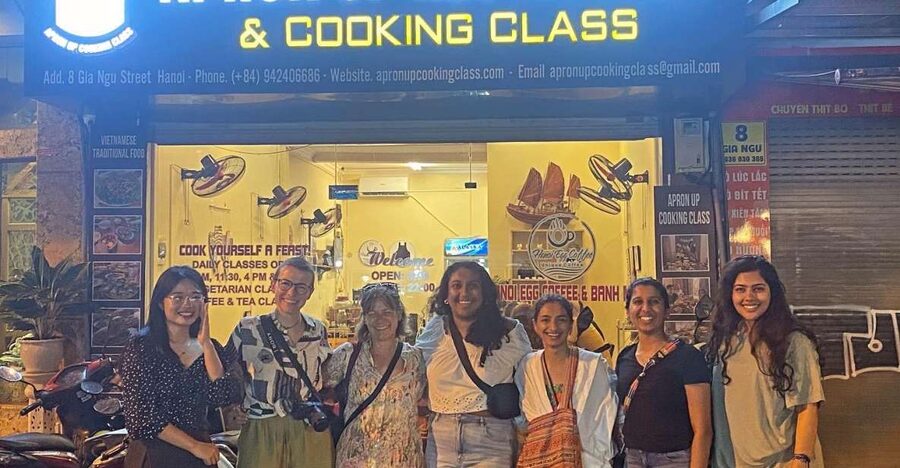
Where do I meet for the class?
You meet at the Apron Up Cooking Class in Hanoi’s Old Quarter. Look for the big Apron Up sign in front of the venue.
How long is the cooking class?
The class lasts about 3.5 hours. Start times vary, so you’ll need to check availability.
What is the price?
The price is $40 per person.
What’s included in the experience?
It includes an English-speaking instructor, a market trip, all ingredients and tools, hands-on cooking of 5 dishes, tea and rice whisky, fruit, a lunch or dinner, and you take home a cook book and a certificate.
Are there vegetarian options?
Yes. The two set menus can be adapted for vegetarian diets.
How many dishes will I cook?
You’ll cook 5 traditional Hanoi dishes.
What dishes can be on the menu?
Depending on the set menu, you might cook items such as banh xeo pancakes, bun cha, pork rib noodle soup, beef fresh rolls, chicken salad, banana ice cream, pho, fried spring rolls, papaya salad, and egg coffee.
Is transportation included?
No. Transportation is not included.
Is the class taught in English?
Yes, the instructor provides the class in English.
Is it suitable for children or people with mobility needs?
It is not suitable for children under 4 years old. It is also not suitable for people with mobility impairments or wheelchair users.
Other Hanoi tours our reviewers keep coming back to
- Hanoi Vespa After Dark Street food + Train Street+ Live Music
★ 5.0 · 18 reviews - (Free Pick-up) Vietnamese Body Massage in Hanoi City
★ 5.0 · 18 reviews - The Insider’s Hanoi,Train Street, Countryside Highlight by Vespa
★ 5.0 · 18 reviews - Skip the line: Thang Long Water Puppet Theater Entrance Tickets
★ 4.0 · 18 reviews - Hanoi Street Food Tour and MORE
★ 5.0 · 18 reviews - Hanoi – Hoa Lu – Tam Coc – Mua Cave – 1 Day / By Luxury Limousine & Small Group
★ 5.0 · 18 reviews
Cooking Classes, compared.
 ★ 5.0Hanoi Cooking Class: Culture, Local Market & Meaning CSR ImpactFrom $395,147 reviews
 ★ 5.05 Traditional Dishes Hanoi Cooking Class with Market TripFrom $354,890 reviews
 ★ 5.0Cooking Class Hoi An:Local Market, Basket Boat, Fishing & CookingFrom $283,660 reviews
 ★ 5.0Hoi An Cooking Class(Market,BasketBoat Crabfishing&Cooking Class)From $283,386 reviews
 ★ 5.0HCM:Mekong Delta Boat,Khotcake cooking Coconut Village,SmallGroupFrom $162,374 reviews
 ★ 4.8From Hoi An: Market Tour, Basket Boat Ride and Cooking ClassFrom $172,208 reviews
 ★ 5.0Hoi An Cooking Class(Local market,Basket Boat,Fishing & Cooking)From $281,323 reviews
 ★ 5.0Mekong Delta 4 Islands, TukTuk, Boat, Try Khot Cake Local CookingFrom $231,148 reviews
Also in these Vietnam lists