
REVIEW · HOI AN ANCIENT TOWN TOURS
From Hoi An: Cooking Class at Organic Farm
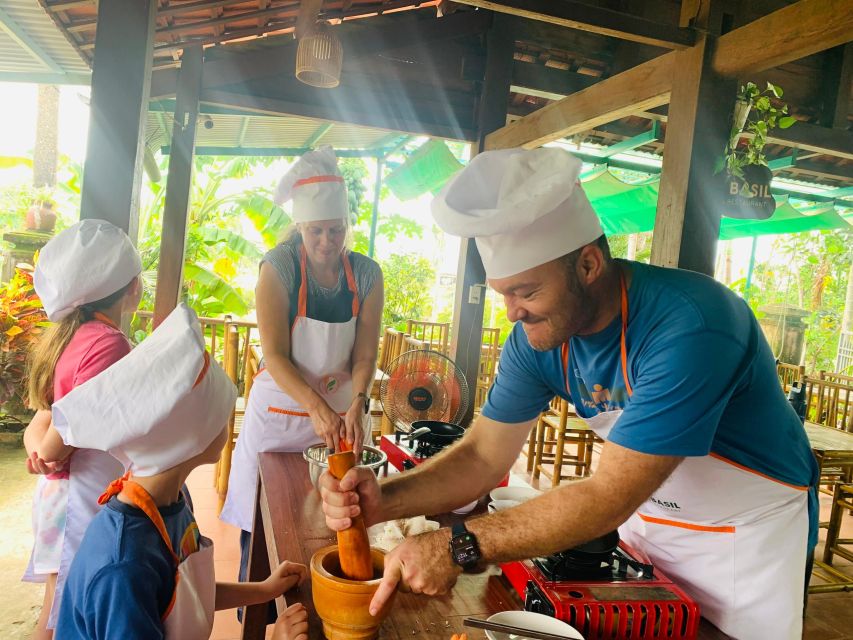
Four dishes, one working farm in Hoi An. I like this class because it starts in the Tra Que vegetable village and ends with you eating what you cooked, Vietnamese style. It is a hands-on organic, farm-to-table experience that feels closer to a local household than a tourist kitchen.
I especially love the farm prep side of it, because you are not just memorizing recipes. Hosts like Min (and sometimes Jessica, based on past sessions) explain what they grow and why it tastes the way it does, then you cook with that ingredient context in mind. The second thing I like: the class is built around four iconic dishes, so you get a real sweep of Vietnamese flavors instead of only one dish repeated.
One consideration: there is no pick-up, so you need to get yourself to Lemon Basil Cookery and Restaurant in Tra Que. If you hate navigating on your own, factor in a little extra time before the start.
In This Review
- Quick hits
- Tra Que vegetable village, where the class actually starts
- Getting the timing right, so you do not miss the start
- Meet the English-speaking chefs, and watch the teaching style
- Farm tour and spring rolls prep, from herbs to the first roll
- Green papaya salad, learning the flavor balance (not just the steps)
- Fish in clay pot, where timing feels like the secret ingredient
- Bánh Xèo crispy pancake, the hands-on challenge that feels worth it
- Communal dining, eating what you made with the group
- What the $27 price buys you, and where the value really comes from
- Who this class is for in Hoi An
- Practical tips before you go to Lemon Basil Cookery
- Should you book this Lemon Basil cooking class?
- FAQ
- Where is the meeting point for the cooking class?
- Is pick-up included?
- How long is the cooking class?
- What dishes do you cook in the class?
- How much does the class cost?
- What’s included in the price?
- Is the class good for beginners?
- Can I request dietary accommodations?
- What group size should I expect?
- What is the cancellation policy?
Quick hits
- Tra Que organic farm tour first, so you cook with ingredients you just saw growing
- Small group up to 10, which keeps the coaching personal
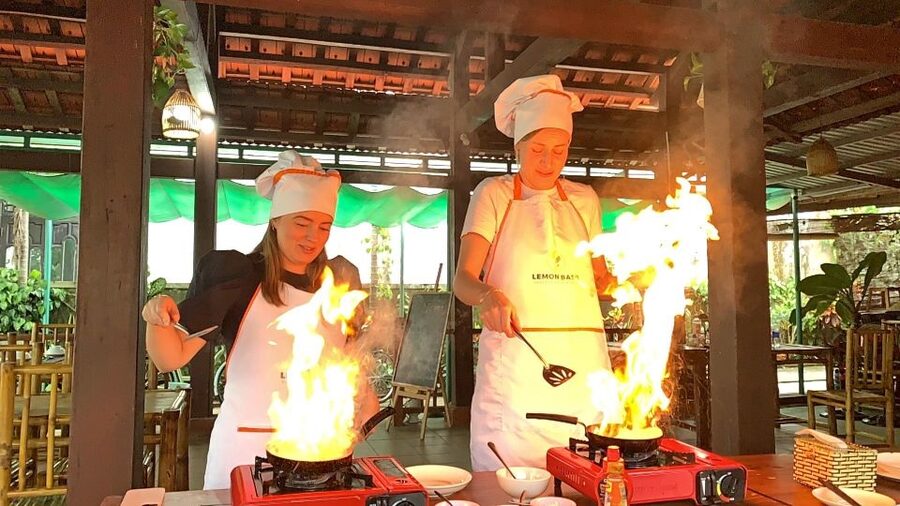
- Four dishes: Tra Que Spring Rolls, Green Papaya Salad, Fish in Clay Pot, and Bánh Xèo
- English-speaking chefs who teach hands-on, not just show-and-tell
- Communal dining where you eat together right after cooking
- Certificate of completion, a nice souvenir for your food-nerd bragging rights
Deeper into the Ancient Town
- Hoi An: Basket Boat Ride in the Coconut Forest★ 4.9 · 4,956 reviews
- Hoi An: Vietnamese Coffee Culture and Coffee Making Class★ 4.9 · 4,006 reviews
- Hoi An: Vietnamese Foldable Lantern Making Class★ 4.9 · 3,742 reviews
- Cooking Class Hoi An:Local Market, Basket Boat, Fishing & Cooking★ 5.0 · 3,660 reviews
Tra Que vegetable village, where the class actually starts
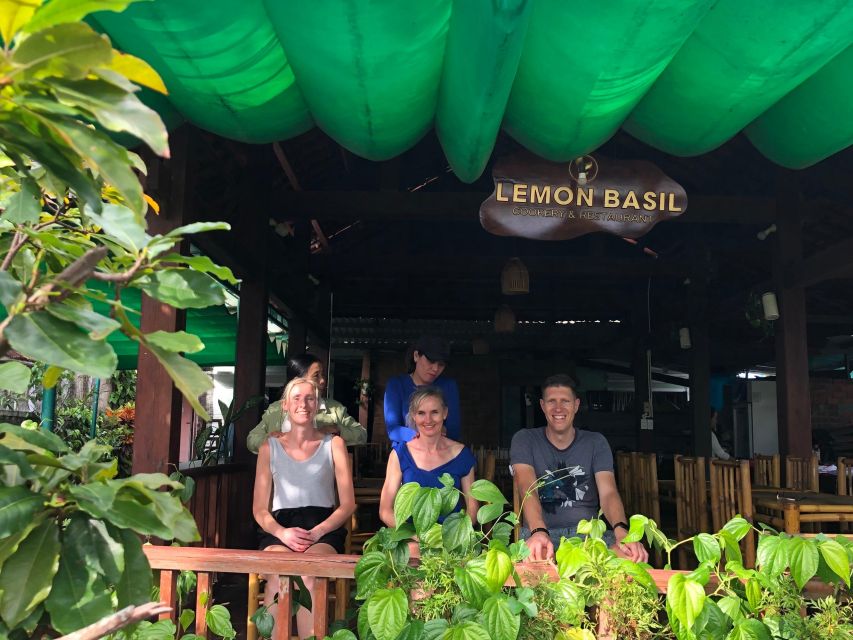
Hoi An has plenty of food tours. This one starts earlier than most, with a farm-to-table rhythm you can feel right away. The meeting point is Lemon Basil Cookery and Restaurant, located in Tra Que vegetable village. Once you arrive, you are in the zone where herbs and vegetables are the main characters.
The farm part matters because Vietnamese cooking is heavily ingredient-driven. When you see greens, herbs, and produce growing in the same space you will later eat from, it makes the flavors make sense. You also get a better sense of what “fresh” means in this region, which helps when you later try to recreate dishes at home.
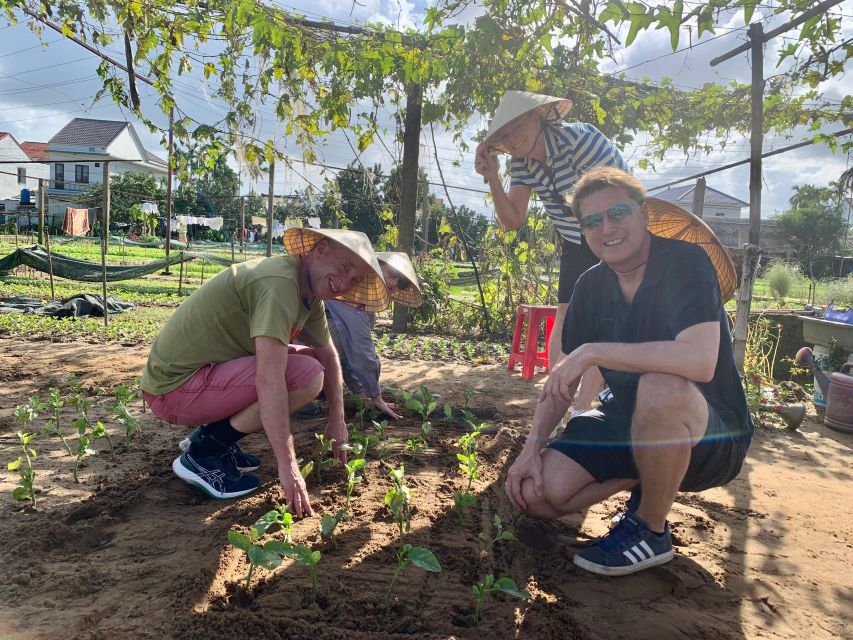
It is not a long lecture about theory. It is practical, sensory, and grounded. You are walking around the organic farm area, learning what is cultivated there, then moving on to cooking. In several past sessions, people have even helped with small farm tasks like planting spinach or watering crops, depending on what is happening that day.
Getting the timing right, so you do not miss the start
The class runs about 3 hours (listed as roughly 3 to 3.5 hours). That means every segment has a purpose, and you do want to be on time. Plan to arrive about 5 to 10 minutes early so you can settle in before the group starts.
There is no pick-up, so you have to handle your own way there. In Hoi An, that is usually straightforward, but it is still a real difference versus tours that pick you up and drop you off. If you are staying far from Tra Que, give yourself a buffer so you are not stressed right before you start chopping and cooking.
Also note the group size is limited to 10 participants. This is part of why the pace works. You will likely get more direct help when you are cooking, compared with larger classes where everyone watches from a distance.
Meet the English-speaking chefs, and watch the teaching style
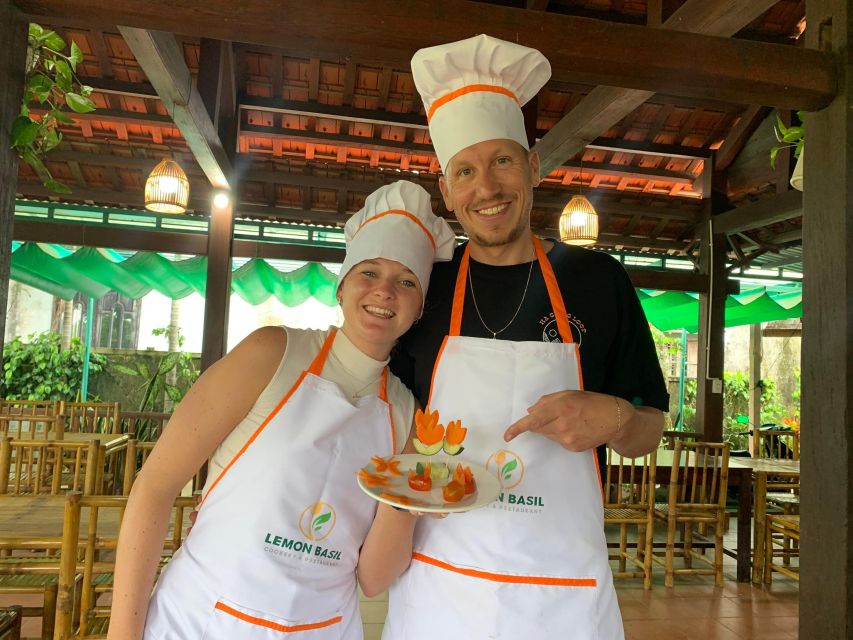
The cooking is led by English-speaking chefs. That matters more than people think, especially when you are learning techniques like rolling spring rolls or timing a clay-pot fish.
In past sessions, the host energy has been a standout. Min has been mentioned repeatedly as a friendly, funny teacher, and she is not the type who just bark instructions. Jessica and other family helpers show up too, creating a more relaxed, home-kitchen feel. The result is that even if your cooking skills are basic, you can still keep up.
You are also asked about dietary needs. The class is designed to be flexible, as long as you tell them in advance. In earlier experiences, guests who did not eat pork were accommodated without trouble, so the team takes restrictions seriously.
Farm tour and spring rolls prep, from herbs to the first roll
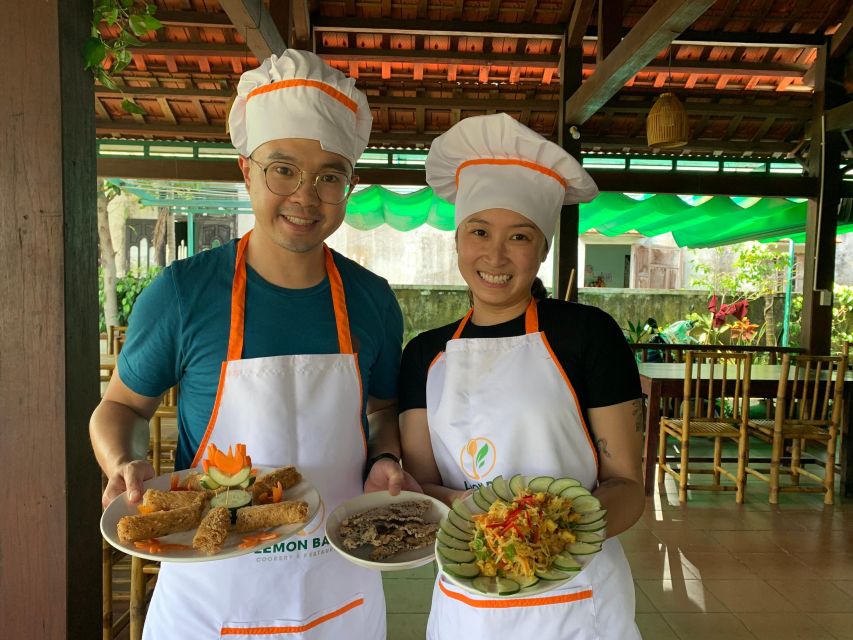
You start with an introduction to ingredients on the farm. This is where you build your mental map: what herbs are used, what produce is fresh, and what the ingredients look like before they become food.
After that, you move into cooking with Tra Que Spring Rolls. This is a good first dish because it is hands-on from the start. You typically learn how the rolls come together, how to work with the wrapper, and how the filling flavors should balance. The spring-roll style connected to Tra Que is closely tied to the local herb-and-vegetable focus of the area, which is one reason this dish pairs so well with a farm tour.
Why I think spring rolls are a smart starting point for the class:
- You get immediate feedback on your technique.
- It is a lighter dish that builds confidence before the hotter cooking.
- The ingredient emphasis makes the rest of Vietnamese cooking feel easier to understand.
Green papaya salad, learning the flavor balance (not just the steps)
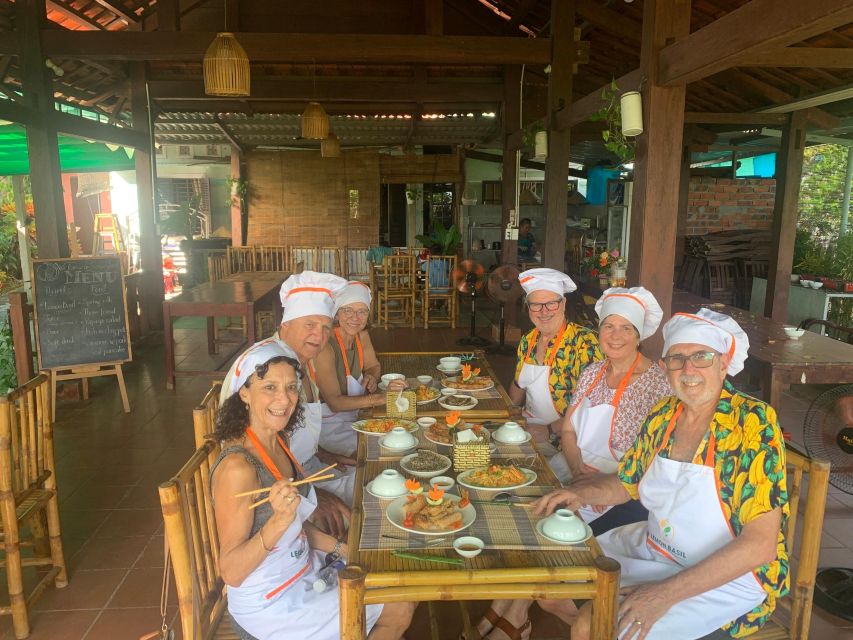
Next up is Green Papaya Salad. You are learning more than chopping. Vietnamese salads often come down to balance, and this is where the class earns its keep.
Green papaya salad usually means a careful mix of crunch, sour, salty, and aromatic notes from herbs and seasonings. The teaching focus is how to bring it together so it tastes right, not just how to follow a recipe card. The goal is that when you leave, you can recognize what is off if the dressing is heavy, too sharp, or not punchy enough.
One helpful way to think about this section as you cook: treat it like training your palate. Taste as you go, adjust, and learn what “correct” feels like. If you are someone who normally cooks by exact measurements, this salad is a friendly way to shift your approach.
Fish in clay pot, where timing feels like the secret ingredient
Then you move to Fish in Clay Pot. This is a classic Vietnamese comfort-style dish, and clay pot cooking is all about controlled heat and steady cooking.
What you learn here is not only how to season and assemble the dish, but also how to respect timing. Clay pots can be forgiving, but you still need to watch the process so the fish and flavors reach the right stage. In earlier sessions, the fish described has included basa fillet, which gives you an idea of what kind of fish you might be working with, depending on availability.
This is one of the sections that feels most “Vietnam authentic” because clay pot cooking is strongly associated with traditional home style meals. It also gives you a technique you can translate later, if you ever cook with a clay pot or something that mimics slow, gentle heat.
If you are worried about fish cooking, you should feel okay. The class is small and you get guidance from the English-speaking chef team. You are not left alone to figure out timing like you are on a cooking show.
Bánh Xèo crispy pancake, the hands-on challenge that feels worth it
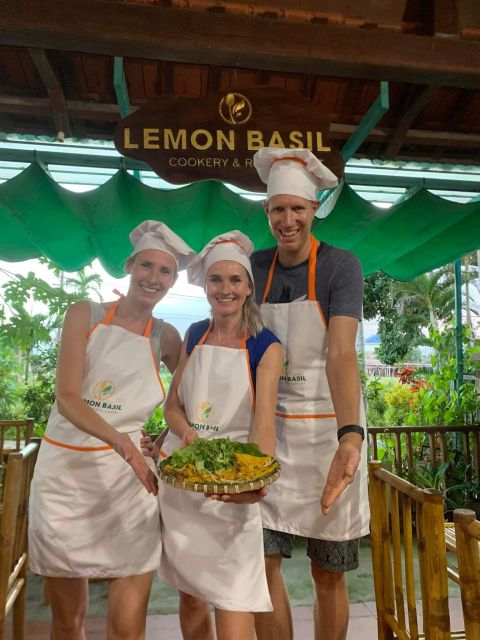
Bánh Xèo is the iconic Vietnamese crispy pancake, and it is also the section that many people remember most. It is hands-on and technique-based, especially because you are aiming for the right crispness and texture.
A big part of making Bánh Xèo well is managing heat and handling the batter. In past sessions, people have learned how to flip or work with the pancake during cooking, even if they were initially nervous about it. That kind of coaching is exactly why a small group format matters.
This dish is also a great final cooking challenge. By the time you reach it, you have already learned how the ingredients work together in earlier dishes. Now you apply that understanding to a dish that is dramatic when it comes out right.
And yes, it is okay if yours is not perfect on the first try. The point is practice with support, and you will leave knowing what to adjust next time.
Communal dining, eating what you made with the group
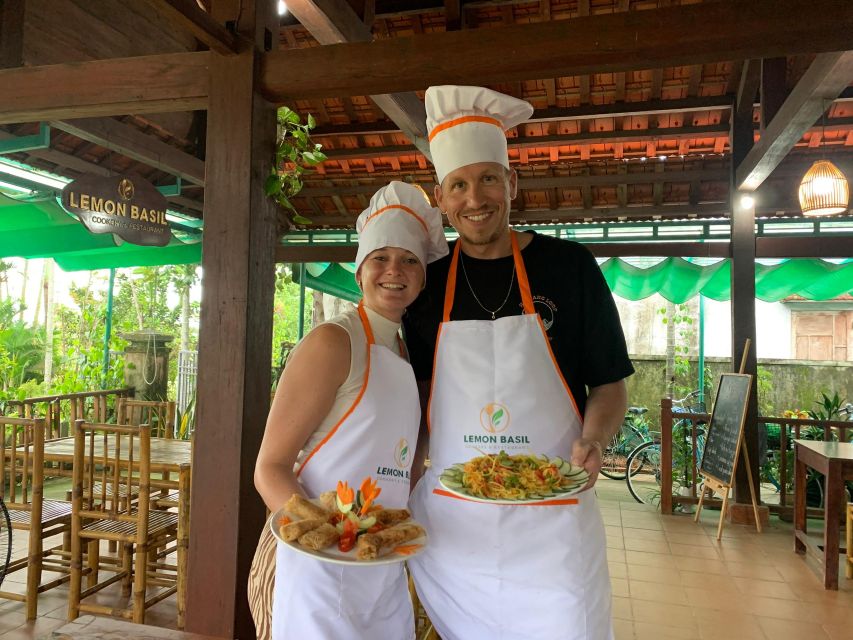
After cooking, you eat the dishes together in a communal setting. This part sounds simple, but it is a big value driver. You spend three hours working, tasting, learning, then you get to sit down and enjoy the results with the people in your small group.
Communal dining also creates an easy social flow. You can compare what you made, ask questions about flavor, and hear how others handled their cooking tasks. It is not forced. It just happens because you are sharing the same table and the same food.
Some past experiences have included fresh fruit at the end, with examples like mango, pink jackfruit, and lychees. That is not something I would assume as guaranteed every session, but it lines up with how Vietnamese meals often close with fruit.
The class also includes a certificate of completion, which is a fun touch if you like collecting proof of effort, not just photos.
What the $27 price buys you, and where the value really comes from
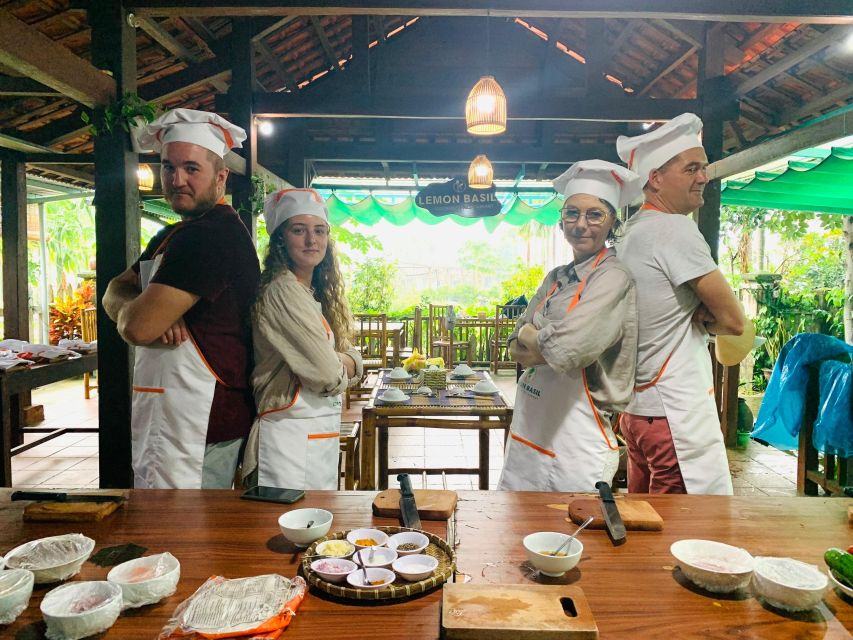
$27 for about three hours may feel like a small number, especially when you consider that you are getting:
- A farm tour in an organic vegetable village
- Hands-on instruction by English-speaking chefs
- Ingredients for four dishes
- Communal dining
- A certificate of completion
- A small group cap of up to 10
The real value is not only that meals are included. It is that your time is structured around four different dishes and multiple cooking techniques. You are not paying for a short tasting. You are paying for coached practice and ingredient context.
This is also why the price feels reasonable compared with classes that only cover one dish or where the farm element is a quick photo stop. Here, you spend enough time on both the ingredient side and the cooking side to actually learn something.
Who this class is for in Hoi An
This works best if you want more than a foodie souvenir. You should book it if:
- You love Vietnamese food and want to understand why it tastes the way it does
- You want hands-on cooking guidance, in English, in a small group
- You are traveling solo or with a friend and want an easy shared activity
- You enjoy learning through doing, not just watching
It may be less ideal if you require door-to-door convenience, because pick-up is not included. It is also not the best match if you hate being involved in chopping, rolling, and cooking. This is a working kitchen class, and you will be expected to participate.
Practical tips before you go to Lemon Basil Cookery
A few things I recommend you do so the experience stays smooth:
- Arrive 5 to 10 minutes early at Lemon Basil Cookery and Restaurant in Tra Que vegetable village.
- If you have dietary restrictions or allergies, tell the team in advance so they can adapt.
- Wear comfortable clothes you do not mind getting a little cooking-world on. At minimum, plan to handle kitchen tasks.
Since the class is taught in English and designed for all skill levels, you do not need to bring cooking experience. What you do need is a willingness to try. The instructors are there to guide you, including for tasks that feel tricky at first, like pancake flipping.
Should you book this Lemon Basil cooking class?
Yes, if you want a practical, farm-connected Vietnamese cooking lesson in Hoi An. The best reason to book is the combination: organic farm tour plus hands-on cooking of four iconic dishes, with English support and small-group coaching.
Skip it only if you strongly prefer pick-up convenience, or if you are looking for a more passive food tasting where you never touch the kitchen. Otherwise, this is a solid use of a half-day, and you will leave with both skills and a meal you helped make.
FAQ
Where is the meeting point for the cooking class?
The meeting point is Lemon Basil Cookery and Restaurant, located in the heart of Tra Que vegetable village.
Is pick-up included?
No. Pick-up services are not included. You will need to make your own way to the restaurant.
How long is the cooking class?
The duration is about 3 hours, with a note that it may run approximately 3 to 3.5 hours depending on timing.
What dishes do you cook in the class?
You cook four dishes: Tra Que Spring Rolls, Green Papaya Salad, Fish in Clay Pot, and Vietnamese Crispy Pancake (Bánh Xèo).
How much does the class cost?
The price is $27 per person.
What’s included in the price?
Included are the hands-on cooking experience with English-speaking chefs, ingredients for the listed dishes, communal dining of what you prepare, access to the organic farm tour, and a certificate of completion.
Is the class good for beginners?
Yes. It is suitable for all skill levels, and no prior cooking expertise is required.
Can I request dietary accommodations?
You should inform the organizers of dietary restrictions in advance. The class is described as flexible for different dietary needs.
What group size should I expect?
The group is small, limited to 10 participants.
What is the cancellation policy?
Free cancellation is available up to 24 hours in advance for a full refund.
Hoi An, Still More
- Hoi An: Basket Boat Ride in the Coconut Forest★ 4.9 · 4,956 reviews
- Hoi An: Vietnamese Coffee Culture and Coffee Making Class★ 4.9 · 4,006 reviews
- Hoi An: Vietnamese Foldable Lantern Making Class★ 4.9 · 3,742 reviews
- Cooking Class Hoi An:Local Market, Basket Boat, Fishing & Cooking★ 5.0 · 3,660 reviews
- Hoi An Cooking Class(Market,BasketBoat Crabfishing&Cooking Class)★ 5.0 · 3,386 reviews
Other Hoi An tours our reviewers keep coming back to
- 3 Hours Motorbike Tour in Hoi An Countryside.
★ 5.0 · 18 reviews - My Son Sanctuary Discovery Half day Private Tour
★ 5.0 · 18 reviews - Hoi An local food tour – enjoy taste of Vietnam at ancient town!
★ 5.0 · 18 reviews - Experience Cooking Class for Lunch or Afternoon With Local Chef
★ 5.0 · 18 reviews - HOI AN Vegetable Village, Basket Boat, Palm Forest PRIVATE TOUR
★ 5.0 · 18 reviews - Hoi An Countryside Tour with Bamboo Basket Boat Rowing , Buffalo Ride, Farming
★ 5.0 · 18 reviews
Hoi An Ancient Town Tours, compared.
 ★ 4.9Hoi An: Basket Boat Ride in the Coconut ForestFrom $34,956 reviews
 ★ 4.9Hoi An: Vietnamese Coffee Culture and Coffee Making ClassFrom $144,006 reviews
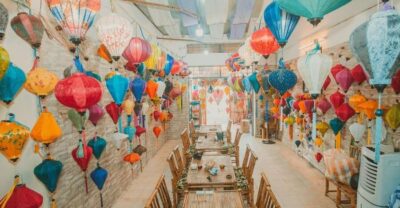 ★ 4.9Hoi An: Vietnamese Foldable Lantern Making ClassFrom $103,742 reviews
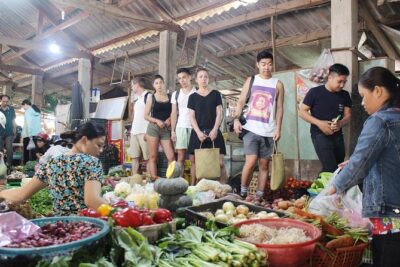 ★ 5.0Cooking Class Hoi An:Local Market, Basket Boat, Fishing & CookingFrom $283,660 reviews
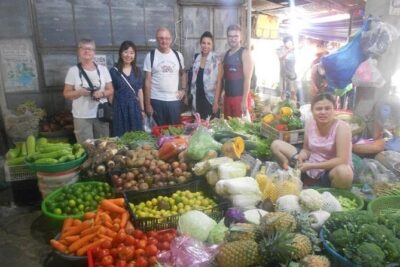 ★ 5.0Hoi An Cooking Class(Market,BasketBoat Crabfishing&Cooking Class)From $283,386 reviews
 ★ 5.0Hue to Hoi An ( Hoi An to Hue) Top Gear with Lefamily Riders Tours ( 1 way)From $503,156 reviews
 ★ 4.9Hoi An: My Son Sanctuary Early Morning w. Champa Food BrunchFrom $202,750 reviews
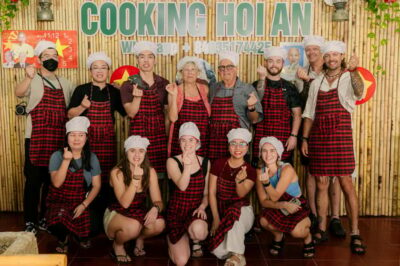 ★ 4.8From Hoi An: Market Tour, Basket Boat Ride and Cooking ClassFrom $172,208 reviews
Also in these Vietnam lists