
REVIEW · COFFEE EXPERIENCES
Experience specialty coffee with sustainable coffee farmers
Coffee gets personal in Da Lat. At HuyEco Coffee & Culture, farmer-owner Huy turns a coffee tasting into a hands-on lesson, from the beans to the cup, with sustainable growing stories mixed in. I love how you sample coffee that aims to show the original flavors, not something sweetened or disguised.
I also love the roasting and brewing part, where you compare different processing and roast styles and then make your own cup of traditional Phin coffee. The one possible drawback: the session runs from about 90 minutes to 5 hours depending on timing, and Da Lat can feel chilly, so bring a warm layer.
In This Review
- Key Things You’ll Love About This Coffee Tour
- HuyEco Coffee & Culture: Where Coffee Turns Into a Hands-On Lesson
- The 5 Coffees From the Farm, and Why “Original Flavor” Matters
- Roasting With Huy: From Green Beans to Real Coffee Smell
- Light, Medium, and Dark Brewing, Plus the Phin Finale
- Sustainable Coffee Farming, Explained by the Person Doing It
- Price and Time: Is $14 Good Value for What You Get?
- Practical Stuff Before You Go: What to Bring and Where to Meet
- Should You Book HuyEco Coffee With Sustainable Farmers?
- FAQ
- Where is the meeting point for this experience?
- How long does the tour last?
- Is this a small group activity?
- What is included in the price?
- What should I bring with me?
- Are hotel or airport transfers included?
- What languages will the guide speak?
- What is the cancellation and payment policy?
Key Things You’ll Love About This Coffee Tour
- Small group size (up to 10) keeps the pace friendly and question-friendly
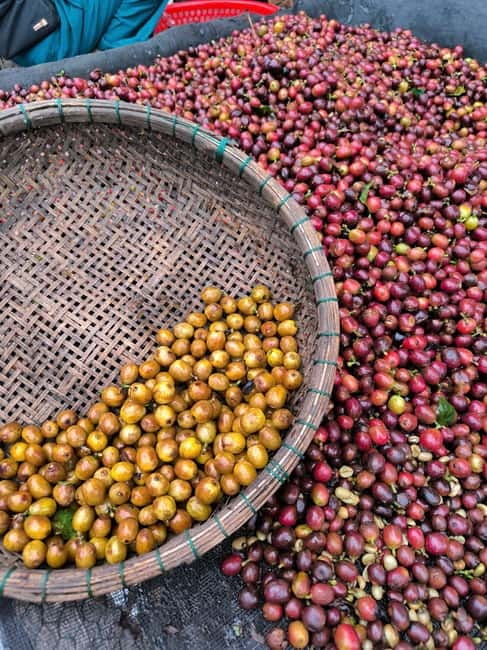
- 5 farm coffees covering Arabica and Robusta, plus different processing and roasting
- You roast the beans yourself, starting green and ending with coffee you’ll recognize as dark brown
- Light, medium, and dark brewing so you can taste roast impact, not just bean type
- Traditional Phin finale, so you don’t just drink, you make
- Sustainable coffee farming talk from the farmer running the shop
Narrowing it down? These Dalat tours kept surfacing in our reviews.
- Dalat: Three Waterfalls Small Group Tour – Alpine Coaster★ 4.9 · 1,256 reviews
- Dalat: 3 Waterfalls Day Tour — Datanla, Pongour & Elephant★ 4.9 · 931 reviews
- Dalat: Go Kart – Mongo Land – Countryside Small Group★ 5.0 · 600 reviews
- Dalat: Extreme Canyoning Adventure★ 4.9 · 223 reviews
HuyEco Coffee & Culture: Where Coffee Turns Into a Hands-On Lesson
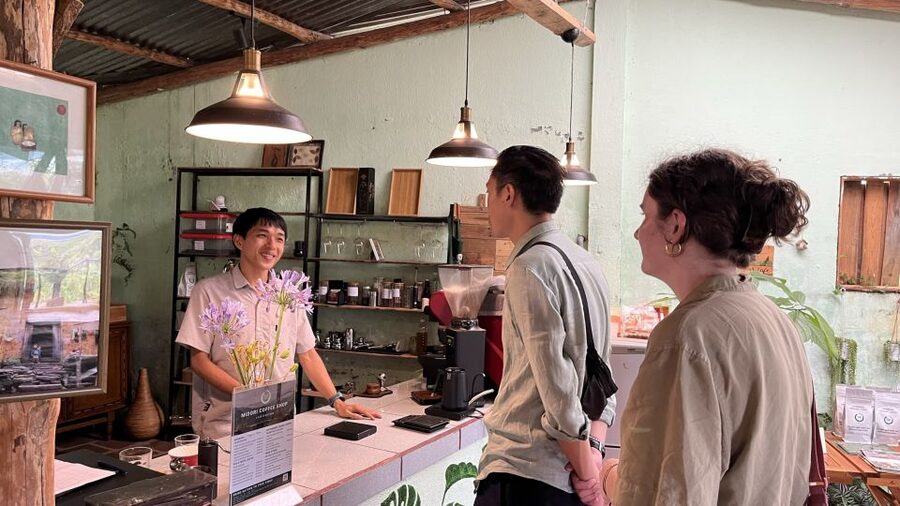
Da Lat is famous for its cool weather and its coffee culture, but this experience makes coffee feel personal. The meeting point is right in the center at a cafe called HuyEco Coffee & Culture, so you can reach it by walking, motorbike, taxi, or a booking app.
What makes this tour work so well is the size. You’re kept to a small group, up to 10 people, which means you actually get time to ask questions and compare flavors without the usual rush. The vibe is also described as relaxed and chill, with pleasant cafe areas and views from the property.
You might even meet the cafe’s little kittens, a detail that some visitors remember as part of the calm atmosphere. Just plan your visit like a normal cafe stop, then expect it to quietly turn into a mini workshop.
The tour is led by a live guide in English and Vietnamese, and it is run by the owner, Huy, who shares coffee growing and processing in a way that stays practical, not lecture-mode.
The 5 Coffees From the Farm, and Why “Original Flavor” Matters
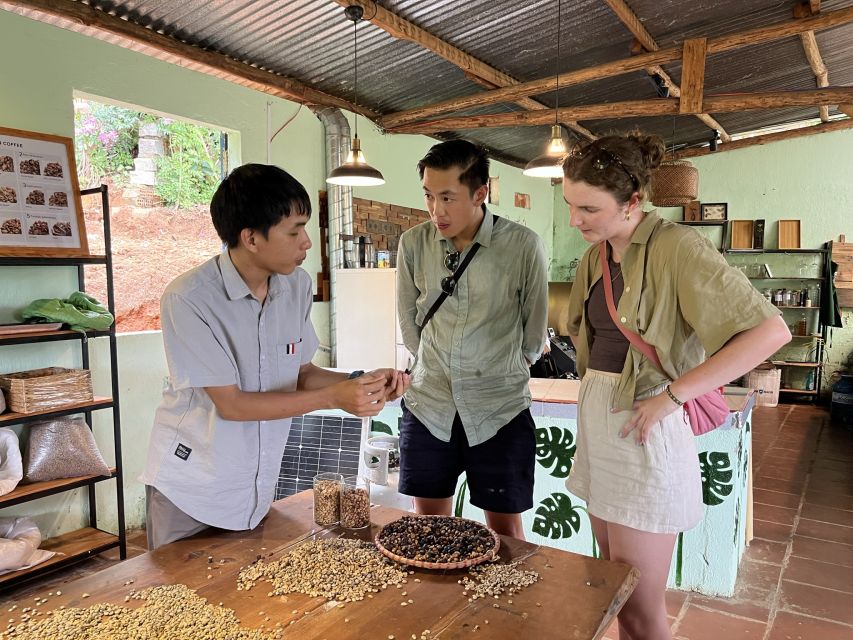
This is not a coffee flight where you mostly sip and nod. You’re tasting five coffees from the farm, including both Arabica and Robusta, and they differ by processing and roasting. The whole point is to help you notice what comes from the bean, what comes from processing, and what comes from roast level.
A good way to think about it: if someone always makes coffee one way, you never learn what “normal” really is. Here, you get to compare distinct styles, so sour, sweet, and fruity notes (when they show up) feel more explainable. You’ll also notice how some coffees taste clean and bright, while others feel heavier or more roasted, depending on roast and brewing.
One of the most praised parts is how you get to compare different coffees side by side. That matters because coffee can taste “good” for totally different reasons. When you taste five carefully presented options, you start to understand your own preferences instead of just chasing the strongest flavor.
When the tasting begins, focus on three simple things. First, aroma before the sip. Second, whether the flavor hits as sharp (acidity), gentle sweetness, or deeper roasted notes. Third, how the finish lingers. Even if you’re not a coffee expert, these checks help you turn the experience into something you can repeat at home.
Roasting With Huy: From Green Beans to Real Coffee Smell
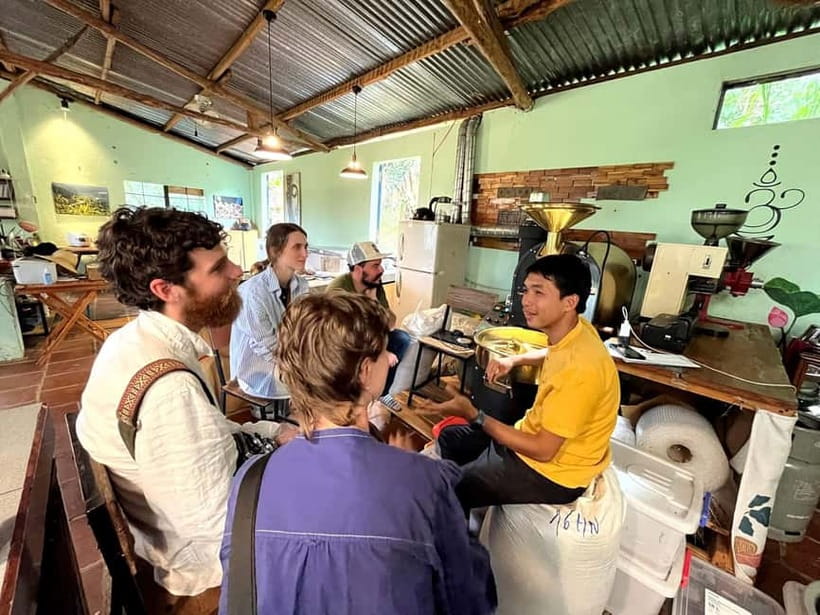
Then you move into the hands-on stage: you roast the coffee beans yourself. That moment is memorable because green coffee looks nothing like the coffee you buy in Vietnam or abroad, and the transformation is part science and part smell.
A lot of tours stop at tasting, but roasting teaches you faster than words can. As the beans roast, you start to connect why light roasts taste different from medium and dark. You also learn why the same bean can end up tasting completely different depending on roast timing and method.
Visitors describe the roasting experience as starting with green beans and turning into the familiar dark brown you recognize as coffee. You also get a feel for how roast style influences flavor, especially when you later taste across light, medium, and dark brew methods.
If you’ve ever wondered why coffee shops can make the same type of coffee taste wildly different, this helps answer that. You aren’t just tasting the result, you’re seeing the step that creates the result.
Light, Medium, and Dark Brewing, Plus the Phin Finale
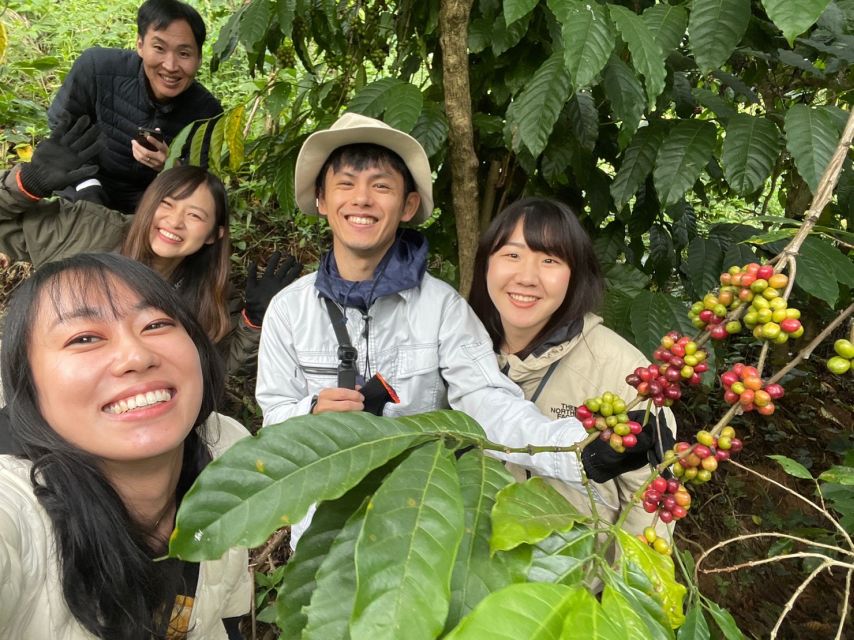
After roasting, you taste using different brewing techniques aligned with roast levels. Light, medium, and dark are used as the framework, and the comparisons are the point. This is where you can really connect what you learned while roasting to what you taste in the cup.
Brewing changes more than strength. It affects extraction, aroma release, and how quickly the flavor hits your palate. That’s why changing roast level plus brewing method is such a smart combo for learning. You end up with a clearer mental map: what you prefer, and what flavor traits come from each roast style.
Finally, you make your own traditional Phin coffee while watching the city. For me, that last step is what turns a tasting into a souvenir you can use. You leave with a small routine you can repeat, even when you’re back in your own kitchen.
Phin coffee is simple in concept but satisfying because it’s hands-on. You control the steps, you see the slow drip, and you taste your own cup instead of waiting for someone else to serve it. It’s also a fun way to slow down, especially in Da Lat, where people often want a calm experience between busier sightseeing blocks.



Sustainable Coffee Farming, Explained by the Person Doing It
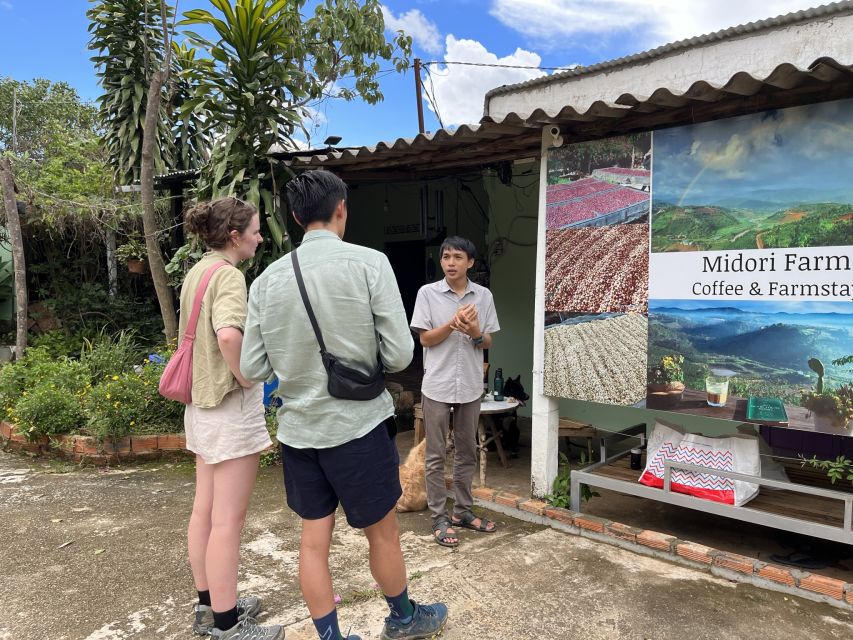
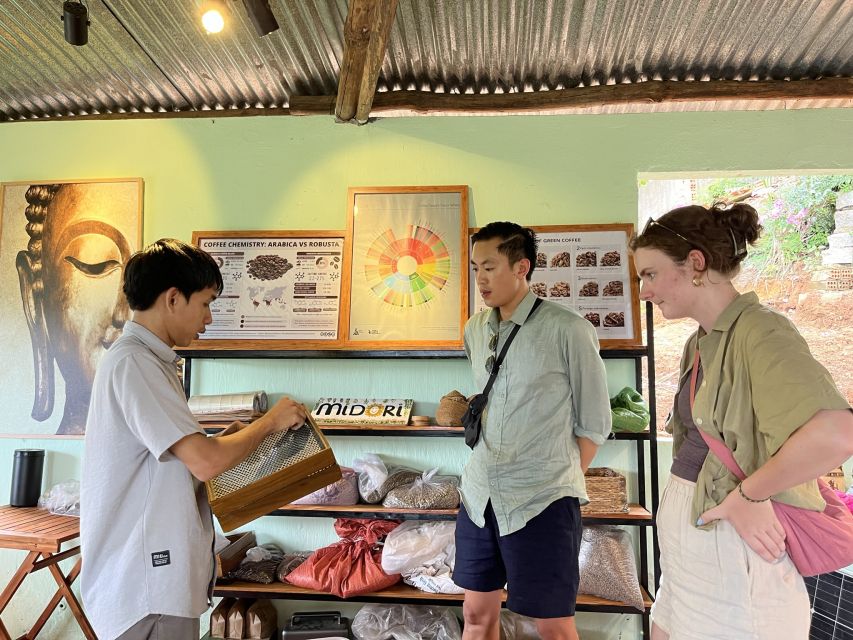
A big promise here is sustainable coffee farming, and it’s not just marketing talk. Huy shares how to grow coffee sustainably, connecting cultivation choices to flavor outcomes.
Even if sustainability details are new to you, the practical value is obvious. Better farming practices protect soil and help stabilize long-term quality, which matters because coffee flavor is sensitive. If plants are stressed or growing conditions are poorly managed, the cup can lose balance.
You’re also learning the “why” behind processing choices and roasting decisions. Different processing and roasting methods are discussed during the tour, and that ties directly into the tasting you do afterward. You’ll leave with more confidence than just a bag of beans, because you understand the variables that shape the taste.
If you care about where food comes from, this part is especially rewarding. It’s not framed like a lecture, it’s framed like coffee made on real ground with real decisions.
Price and Time: Is $14 Good Value for What You Get?
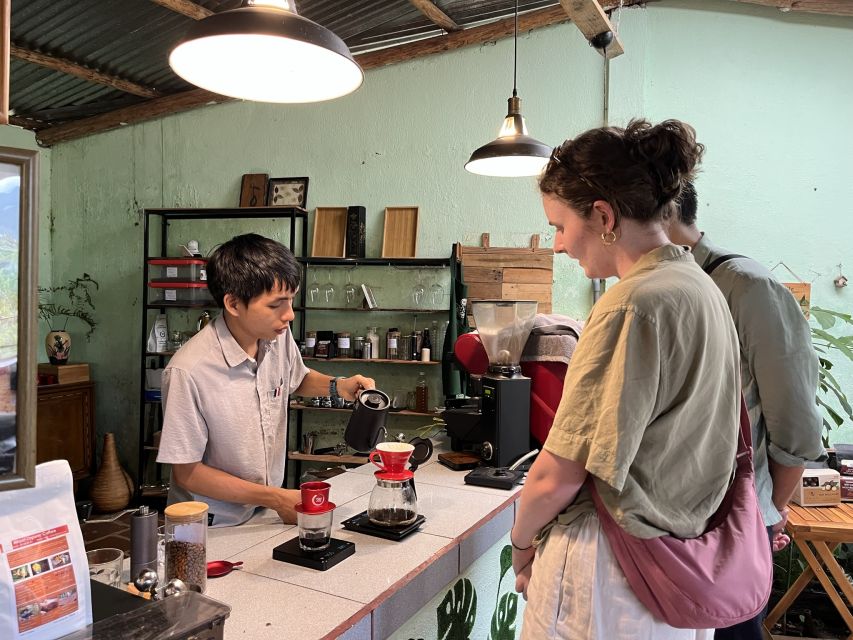
At $14 per person, you’re paying for a focused experience that includes 5 coffee drinks plus a tour guide ticket. You also get the hands-on roasting and the brewing comparisons, which are the costly parts of any food workshop, even when the ingredients are simple.
The value logic here is strong. You’re not just consuming coffee, you’re learning how the coffee is shaped. And because the group is capped at 10 people, you usually get better attention than the bigger “tasting only” experiences.
Duration is listed as 90 minutes to 5 hours depending on the session. Some visitors report shorter total time, like around 1.5 hours. Still, plan for the longer end if you want breathing room for tasting, questions, and the Phin step.
So who should consider the tour? If you like coffee, taste comparisons, and learning from a real producer, it fits well. If you only drink coffee occasionally, you might enjoy it, but you may wish you had more time to soak in the details.
Practical Stuff Before You Go: What to Bring and Where to Meet
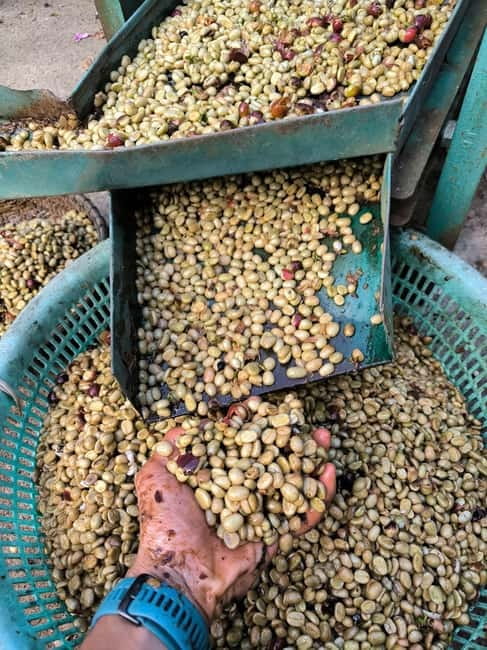
Bring your passport. That is listed as an additional requirement, so don’t show up empty-handed.
Dress for the weather. Da Lat can be cold, and one review mentions the host borrowed someone a jacket. That’s a nice gesture, but it’s not something to count on. Bring a warm layer, especially if you’re visiting later in the day.
Also, give yourself a little buffer for getting to the cafe in central Da Lat. The official meeting point is HuyEco Coffee & Culture in the center, and you can find it on Google Maps using the exact name. If you prefer taxis or booking apps, it’s straightforward.
Finally, note that transfers are not included. You’ll need to arrange your own way to and from the cafe and any areas visited during the session.
Should You Book HuyEco Coffee With Sustainable Farmers?
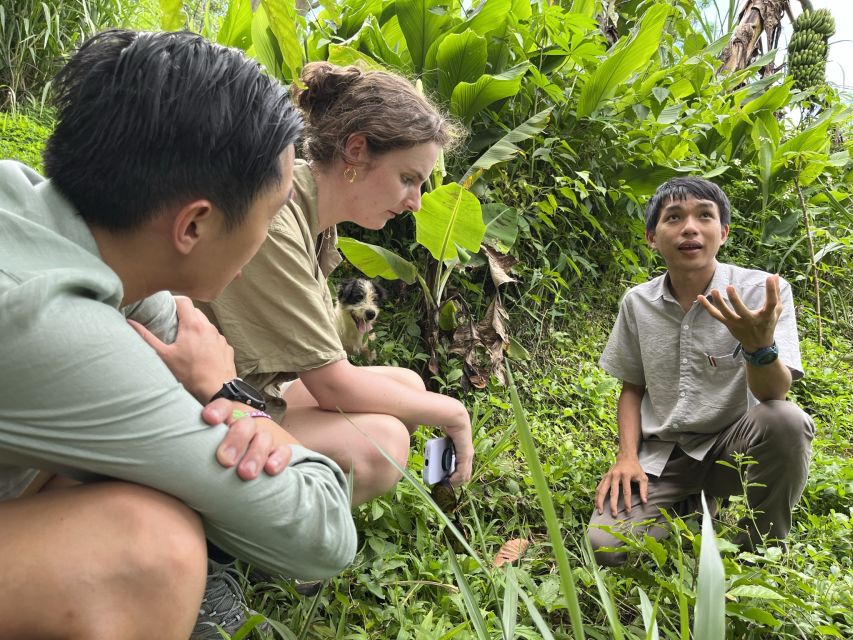
Book it if you want a coffee experience with actual learning built in. This tour is a good match if you enjoy comparing Arabica vs Robusta, tasting different processing styles, and understanding how light, medium, and dark roasting changes flavor. The roasting and Phin-making parts are the reason it feels different from a standard cafe stop.
Don’t book it if you’re expecting a long, fully guided farm hike with detailed nature-style stops, since the core format is coffee-centered at the cafe and through the workshop steps. If you are short on time, check the starting times available because the duration can vary from about 90 minutes up to several hours.
If your ideal Da Lat day includes good coffee, a calm atmosphere, and a friendly owner like Huy who explains the process clearly, you’ll likely have a great afternoon.
FAQ
Where is the meeting point for this experience?
The meeting point is at the cafe in central Da Lat called HuyEco Coffee & Culture. In Google Maps, search the name HuyEco Coffee & Culture carefully.
How long does the tour last?
The duration is listed as 90 minutes to 5 hours, depending on the starting time shown in availability.
Is this a small group activity?
Yes. It is a small group experience limited to 10 participants.
What is included in the price?
The price includes 5 coffee drinks at the coffee shop and the tour guide ticket.
What should I bring with me?
You should bring your passport.
Are hotel or airport transfers included?
No. Hotel or airport transfers are not included.
What languages will the guide speak?
The tour guide provides live interpretation in English and Vietnamese.
What is the cancellation and payment policy?
Free cancellation is available up to 24 hours in advance for a full refund. You can also reserve now and pay later, with no payment required today.
Other Dalat tours our reviewers keep coming back to
- Dalat Vietnam Canyoning
★ 4.9 · 18 reviews - Dalat: Home Cooking Class with Central Market Tour
★ 4.7 · 21 reviews - Dalat City Tour With Local Student – Donation Based
★ 5.0 · 30 reviews - From Nha Trang: Best Seller Top Site Luxury Da Lat City Trip
★ 4.5 · 32 reviews - Dalat: The Secret Tour Plus Pongour Fall – Small Group
★ 5.0 · 32 reviews - Dalat Easy Rider Motorbike Loop Day Tour
★ 4.8 · 32 reviews
Coffee Experiences, compared.
 ★ 4.9Hoi An: Vietnamese Coffee Culture and Coffee Making ClassFrom $144,006 reviews
 ★ 5.0Hanoi Coffee Experience: 6 Brews, 9 Recipes & 3 Liquor TastingsFrom $172,945 reviews
 ★ 5.0Hanoi Coffee Workshop: Taste Salt, Coconut and Egg CoffeeFrom $161,286 reviews
 ★ 5.0Hanoi: Salt Coffee Workshop Awake Your Senses With 6 BrewsFrom $23792 reviews
 ★ 5.0Early Morning My Son Sanctuary Trip w. Champa Food & CoffeeFrom $21629 reviews
 ★ 5.0Vietnamese Culture and Coffee Making ClassFrom $15497 reviews
 ★ 4.9Hanoi: Vietnamese Street Food Tour with Egg CoffeeFrom $24315 reviews
 ★ 5.0Da Nang Cooking Class with Coffee Tasting and Market VisitFrom $45310 reviews
Also in these Vietnam lists