
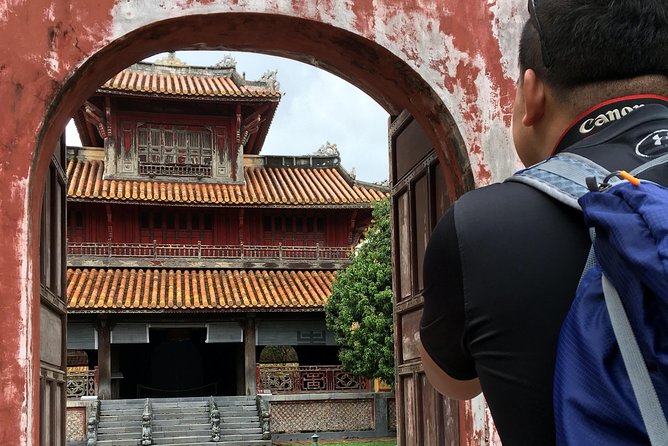
REVIEW · HUE IMPERIAL CITY AND ROYAL TOMBS
Hue Imperial City Walking Tour: Citadel & Forbidden City
Imperial City walls can feel like a maze. This Hue walking tour turns the Nguyen dynasty into something you can picture, with a tight 2.5-hour route through the Citadel’s gates, palaces, pavilions, urns, gardens, and temples. I like the small group size (max 8), because it’s actually easy to hear your guide and ask questions. I also like that the pace fits photos and real explanations, not a sprint. One thing to plan for, though: Imperial City entry fees are often extra (details below), and that can change the final cost.
The best part is how much meaning the guide puts behind what looks like set dressing from the outside. You’ll stop at key points like the Noon Gate and Thai Hoa Palace, then work your way inward toward the king’s family areas, ending at Hien Nhon Gate. If you’re short on time in Hue and want the “why” behind the architecture, this is a smart use of your hours.
In This Review
- Key highlights worth aiming for
- Why a guided walk matters inside the Hue Citadel
- Price and tickets: the part that can change your total cost
- The route from Ngo Mon gate to Hien Nhon gate (and how to enjoy it)
- Noon Gate (Cửa Ngọ Môn) and Thai Hoa Palace: start with the power symbols
- Pavilions, urns, and the ceremonial layers of Nguyen rule
- Gates with rules: Chuong Duc Gate for women, Hien Nhon for mandarins
- Forbidden Purple City and Kiến Trung Palace: the king’s world, restored
- Thai Binh Pavilion and Thieu Phuong Garden: when the walk turns quieter
- Guide-led storytelling: what turns a complex site into a clear story
- Weather, walking pace, and what to bring
- Should you book the Hue Imperial City Citadel and Forbidden City tour?
Key highlights worth aiming for
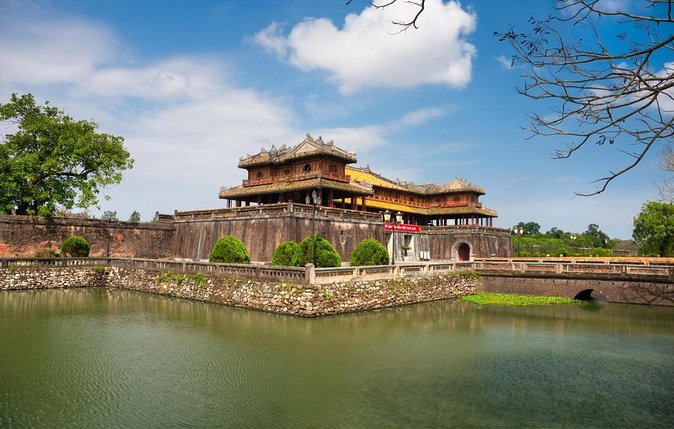
- Ngo Mon (Noon Gate) symbolism, where you start decoding royal power and ceremony
- Thai Hoa Palace, the central hall tied to court sessions and coronations
- Nine dynastic urns, a visual reminder of legacy across the nine Nguyen emperors
- Forbidden Purple City (king’s enclosure), including areas linked to wives and children
- Newly restored Kien Trung Palace, reopened after careful reconstruction
- Royal gardens like Thieu Phuong, where you see how leisure fit into monarchy
More of the citadel and the tombs along the river
- Hue to Hoi An ( Hoi An to Hue) Top Gear with Lefamily Riders Tours ( 1 way)★ 5.0 · 3,156 reviews
- Easy Rider private tour via Hai Van pass from Hue – Da Nang – Hoi An (1Way|Loop)★ 5.0 · 1,542 reviews
- Easy Rider From Hue Da Nang Hoi An Via Hai Van Pass With Mister T★ 5.0 · 769 reviews
- Hue to Dn/Hoi An: Hai Van Pass, beaches & Mt Monkey or vice versa★ 5.0 · 743 reviews
Why a guided walk matters inside the Hue Citadel
Hue’s Imperial City is not a small site. Even if you’re standing in front of famous buildings, you can still miss what matters because the compound is built for a whole system, not for modern visitors with five minutes per stop. A guide helps you link the spaces: gate to ceremony, palace to ritual, pavilion to dynastic storytelling, garden to daily life.
With this tour, the structure is practical. You don’t just get facts. You get orientation, context, and a sense of hierarchy. That matters in Hue because the layout is the message. Once you understand which areas were for ceremonies, which were for court, and which were restricted to the king’s family, the stone starts making sense.
Also, it’s built for conversation. The tour runs with a small group, so you’re less likely to feel stuck listening from the back. And since it is a walking format, you can keep up without constantly checking your phone or trying to guess which direction is “forward.”
Price and tickets: the part that can change your total cost
The tour price is listed at $9.00 per person, and it runs about 2 hours 30 minutes. That’s a low cost for a guided experience, especially with a maximum of 8 people.
But the fine print is important: Imperial City entry fees are not included for the group option. The Imperial City entrance fee is 200,000 VND per person for the group tour option. There is an included-ticket note for the private tour option only, so the math depends on which format you choose.
Here’s how I’d think about value in real terms. You’re paying for someone to translate a complicated royal site into something you can actually understand. Even if you add the site fee, you are still getting a guided route with time inside the main spaces. If you also plan to visit royal tombs later, it can be worth looking at a combo ticket idea, since the info provided specifically suggests buying a combo ticket for better value between the Citadel and tombs.
Meals are not mentioned as included in the option, so I’d plan to bring water or budget for a snack outside the gates. And if you appreciate good guides, tips are optional.
The route from Ngo Mon gate to Hien Nhon gate (and how to enjoy it)
Your walk starts at the Noon Gate area, then moves through the core ceremony and court spaces before reaching the more restricted king-family zones, and finally ending at Hien Nhon Gate.
Even though the tour is 2.5 hours, it doesn’t feel like a checklist. The stops are spaced to let you absorb each section. You’ll also get time at the most photogenic and meaningful locations, including several places that guests often find hard to interpret without a guide.
If you like getting your photos right, this route helps. It’s not only about where you stand. It’s about knowing which direction the architecture points, why a gate exists, and what a hall was used for. That turns photos from random angles into “I get this” images.
Noon Gate (Cửa Ngọ Môn) and Thai Hoa Palace: start with the power symbols

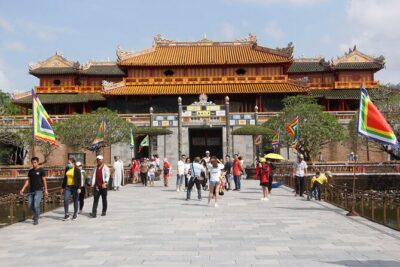
You begin near the Ngo Mon / Noon Gate, one of the major ceremonial gateways. This is more than a pretty entrance. It is tied to royal ceremonies and major events during the Nguyen Dynasty, so your guide sets the tone immediately by showing what kind of authority this place represented.
Next comes Thai Hoa Palace, described as the most important hall inside the Imperial City. This is where emperors held grand court sessions and where coronations took place. When you’re standing in a hall like this, it helps to hear what happened there, because the architecture is designed to communicate hierarchy. Without that story, you might just see a big room. With the story, you start to see the choreography of power.
A quick practical tip: don’t rush these first stops. If you get the meaning early, the rest of the walk clicks faster.


Pavilions, urns, and the ceremonial layers of Nguyen rule
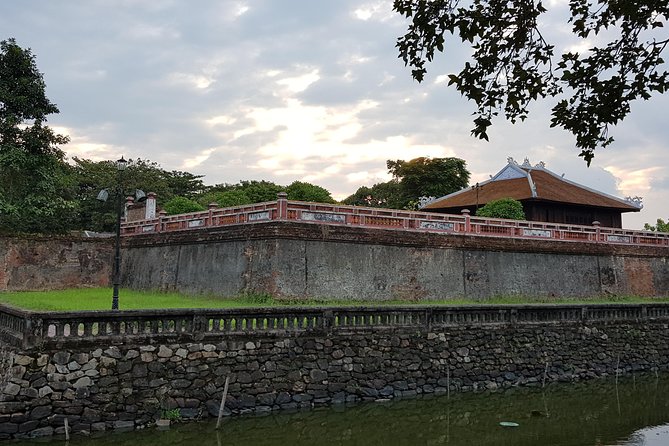
After the major palace hall, you move into the smaller but very telling details.
You’ll see the Hien Lam Pavilion, linked to Nguyen emperors and built to honor them. Even if you think you’ll remember it all, you won’t. That’s exactly why a guide’s explanation helps, because it connects the “over 200 years old” fact to cultural purpose.
Then comes the Nine Dynastic Urns, bronze urns tied to the nine Nguyen emperors. These kinds of objects can look like decorative history until someone explains what they symbolize. Here, the meaning is the point, and the guide ties it to dynastic legacy.
You also visit the Mieu Temple, an ancestral temple dedicated to past Nguyen kings. This is where you feel the difference between the Imperial City as a political stage and as a place where traditions were preserved. It’s also a reminder that the system wasn’t only about rulers. It was about continuity and ritual memory.
Gates with rules: Chuong Duc Gate for women, Hien Nhon for mandarins
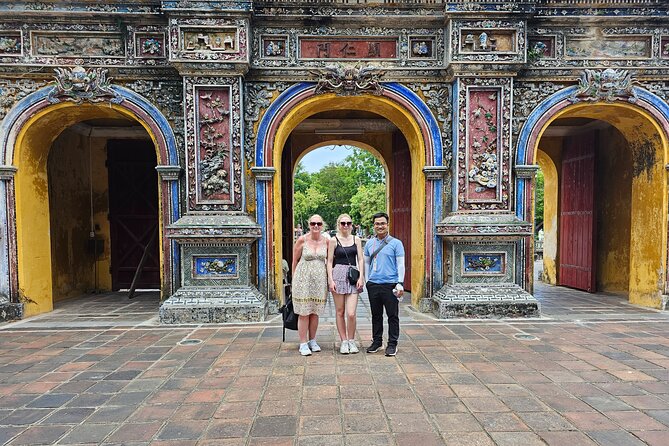
Two gates help show how restricted life was.
The Chuong Duc Gate (Cửa Chương Đức) is described as one of the four gates of the Imperial City and as a gate exclusively for women. That kind of detail instantly makes the site feel human. It’s not just “the palace.” It’s a place of rules and separation.
Later, you finish at Hien Nhon Gate (Cửa Hiển Nhơn), described as the entrance used by mandarins. Ending here makes sense, because the tour closes the loop by returning to how officials entered and moved through the world of the Nguyen dynasty.
If you’re the type who loves social history, pay attention at these gates. Gates are where you learn who was allowed in, and why movement mattered.
Forbidden Purple City and Kiến Trung Palace: the king’s world, restored
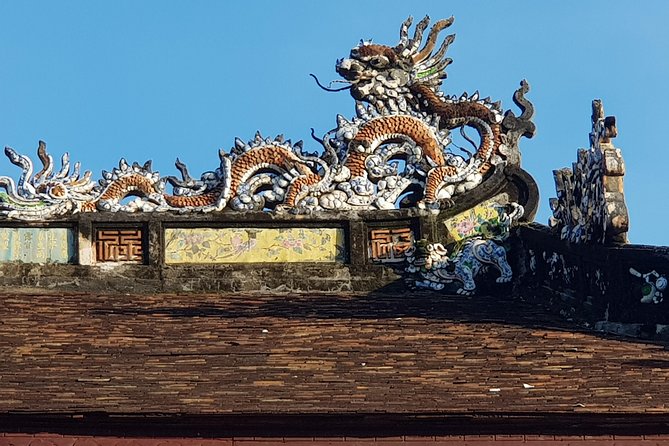
A major moment comes when you enter the Forbidden Purple City, the third enclosure within the Hue Imperial City. It is described as the royal family zone, where the king lived with wives and children. Even if the walls look similar, the guide’s framing makes it clear this area worked differently from ceremonial courts open to broader royal structure.
Inside the Forbidden Purple City area, you’ll also see multiple structures associated with the king’s family life. This is not just about the emperor as an idea. It’s about household space and daily proximity to power.
Next, you tour Kiến Trung Palace (Kien Trung Palace), called newly restored and reopened after years of careful reconstruction. Restoration can be controversial at other sites, but here, the key is that the reopening after reconstruction gives you a chance to see the building as it is meant to be understood, not as a half-remembered ruin.
Thai Binh Pavilion and Thieu Phuong Garden: when the walk turns quieter
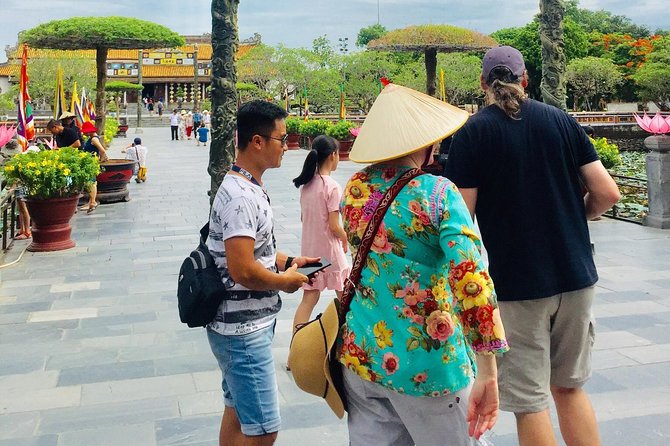
Not every stop is about court drama. You’ll also reach spaces tied to the king’s personal time and scenery.
Thai Binh Pavilion (Thai Binh Lau) is described as a place where the king could read books and enjoy the view. That detail changes how you see a pavilion. It stops being a random structure and becomes a window into how leisure, study, and setting were part of ruling.
Then comes Thieu Phuong Garden, also called the Royal Garden. It’s described as restored, with striking scenery, and it was a place for the king and his family to stroll and enjoy the surroundings. This is a good point in the tour to slow down. Your eyes can catch shapes and layouts that you might otherwise miss when you’re in “history mode.”
Guide-led storytelling: what turns a complex site into a clear story
What makes this tour consistently land well is the guide style. Across the names that show up, the pattern is clear: guides focus on turning architecture into story, and on keeping the tour understandable even when the site is large.
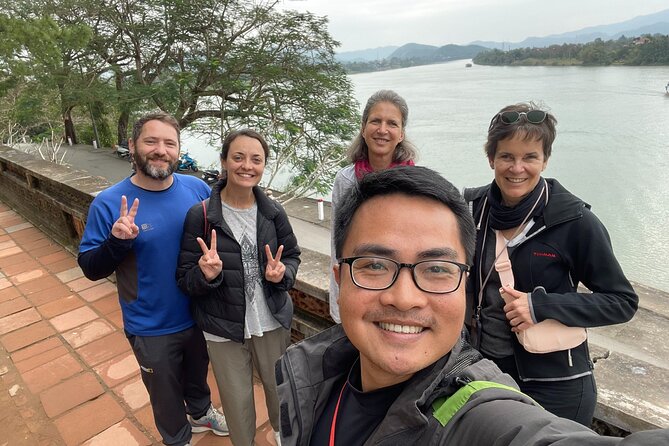
You may meet guides like Ngoc, Matthew, Hoa, Linh, Xi, Florence, and Sue, each described with strong English and a gift for explaining how the Nguyen dynasty functioned. Many of the best comments focus on how guides answer questions, pace the walk so you don’t feel rushed, and help you navigate crowds and confusing routes.
There’s also a practical benefit some guides bring up, like taking good photos for your group. That’s not guaranteed with every guide everywhere, but it’s a common highlight in people’s experiences here.
One fair caution from real feedback: a small minority of people felt the information wasn’t as detailed as expected, and one noted a guide spending time on a phone. That can happen anywhere. Your best defense is booking with confidence, arriving on time, and asking questions early if you want more detail.
Weather, walking pace, and what to bring
This is a walking tour inside an active outdoor site, so comfort matters. The experience notes that it requires good weather. If Hue is dealing with rain or poor conditions, you may be offered a different date or a full refund.
In practical terms, I’d plan for heat and sun. Even without exact weather promises, you are moving between gates, halls, and garden spaces. Bring water, wear shoes you can trust, and consider a hat.
This tour is listed as suitable for most travelers, and it is near public transportation. Still, if you have mobility limits, you’ll want to judge the day realistically based on your comfort with walking on uneven ground.
Should you book the Hue Imperial City Citadel and Forbidden City tour?
If your goal is to get value from limited time in Hue, I think this is an easy yes. For a low base price, you get a focused 2.5-hour route that explains what you are actually seeing, from the Noon Gate to the Forbidden Purple City and beyond. The small-group cap matters because it keeps your experience interactive.
Book it if:
- You want the “why” behind gates, palaces, and royal rules, not just photos.
- You like small-group walking tours where questions are welcome.
- You plan to spend at least a few hours in the Imperial City and want clarity fast.
Consider alternatives or upgrades if:
- You want a different time of day, since options can include sunrise or sunset tours.
- You prefer private pacing, especially if you’re traveling with family and want slower stops.
My bottom line: if you’re visiting the Imperial City and want it to feel like a real story instead of a maze of buildings, this is one of the better ways to spend your time in Hue.
Hue, Citadel and Tombs
- Hue to Hoi An ( Hoi An to Hue) Top Gear with Lefamily Riders Tours ( 1 way)★ 5.0 · 3,156 reviews
- Easy Rider private tour via Hai Van pass from Hue – Da Nang – Hoi An (1Way|Loop)★ 5.0 · 1,542 reviews
- Easy Rider From Hue Da Nang Hoi An Via Hai Van Pass With Mister T★ 5.0 · 769 reviews
- Hue to Dn/Hoi An: Hai Van Pass, beaches & Mt Monkey or vice versa★ 5.0 · 743 reviews
- Hue: Imperial City Walk, Motorbike Tour & Private Car Options★ 5.0 · 732 reviews
Other Hue tours our reviewers keep coming back to
- Hue to Hoi An Jeep Tour via Hai Van Pass
★ 5.0 · 18 reviews - Hue to Hoi An by Private Car with Sightseeing Stops
★ 5.0 · 18 reviews - Private Cycling Tour in Rural Hue with Farming Experience
★ 5.0 · 18 reviews - Hue Dragon Boat Tour: Perfume River, Royal Tombs, Hon Chen Temple
★ 5.0 · 18 reviews - Private Car from Hue to Hoi An With An English Speaking Driver
★ 5.0 · 18 reviews - Exploring Hue Imperial City With Professional Driver By Private Car
★ 5.0 · 18 reviews
Hue Imperial City and Royal Tombs, compared.
 ★ 5.0Hue to Hoi An ( Hoi An to Hue) Top Gear with Lefamily Riders Tours ( 1 way)From $503,156 reviews
 ★ 5.0Easy Rider private tour via Hai Van pass from Hue – Da Nang – Hoi An (1Way|Loop)From $551,542 reviews
 ★ 4.9Hue Customizable Tour with Imperial Citadel & Forbidden CityFrom $12937 reviews
 ★ 4.6Imperial City, Hue: Day Tour from Hoi An and Da NangFrom $47830 reviews
 ★ 5.0Easy Rider From Hue Da Nang Hoi An Via Hai Van Pass With Mister TFrom $58769 reviews
 ★ 4.7Da Nang/Hoi An: Hue Imperial City via Hai Van Pass & LunchFrom $9753 reviews
 ★ 5.0Hue to Dn/Hoi An: Hai Van Pass, beaches & Mt Monkey or vice versaFrom $59743 reviews
 ★ 5.0Hue: Imperial City Walk, Motorbike Tour & Private Car OptionsFrom $7732 reviews
Also in these Vietnam lists