
REVIEW · HUE IMPERIAL CITY AND ROYAL TOMBS
Hue Food Tour: Central Vietnam Culinary Heritage (Small Group)
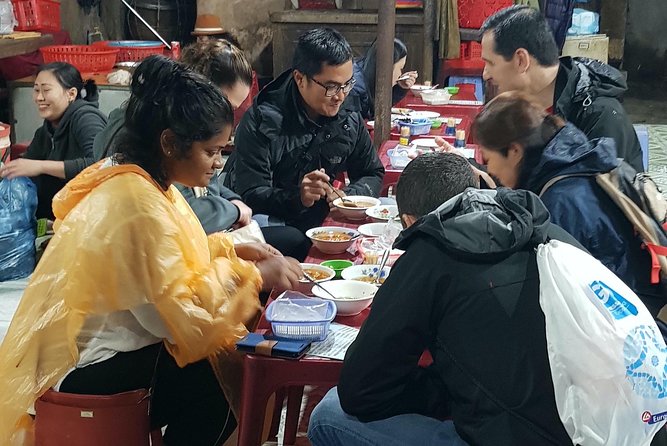
Hue tastes better when someone else picks the stops. This small-group walk gives you 8 Hue tastings plus the why behind each dish, so you don’t just eat, you learn. You’ll hear how meals are put together in Hue, and how to read a menu like a local.
I also like the personal feel. With a max group size of 8 travelers, guides can slow down, answer questions, and help you choose confidently when you return to the same streets on your own.
One thing to plan for is the outdoors factor. This experience needs good weather, so wear comfortable shoes and keep your day flexible if rain or heat rolls in.
In This Review
- Key highlights
- Hue Food Tour, the Fast Track to Ordering Like a Local
- The Small Group Setup and Your “How Do We Get There?” Options
- Stop 1 on Le Loi: Start Where Hue Families Eat
- Perfume River Stop for Bun Hen: Spicy Baby Clam Noodles
- Inside the Historic Citadel Area: Bun Bo Hue and the Chef Story
- Two Generations at the Next Stop: Banh Khoai and Nem Lui
- The Sweet Finish: Chè Huế at the End of the Walk
- What You Really Get: The 8 Dish Tasting Plus the Ordering Framework
- Price and Value: $34 for a Food Lesson, Not Just Snacks
- Practical Advice: Comfort, Pace, and Any Food Restrictions
- Who Should Book This Hue Food Tour?
- Should You Book? My Decision Checklist
- FAQ
- How long is the Hue food tour?
- What food is included in the tour price?
- How many people are in the group?
- Where do I meet and where does the tour end?
- What are the main Hue dishes you’ll taste?
- What happens if the weather is poor?
Key highlights
- Eight tastings in about 3 hours, including Hue signature classics
- Max 8 people, so you get real face time with the guide
- Perfume River and Citadel areas, so food comes with place and context
- Family-run, multi-generation kitchens, where locals actually eat
- You learn ordering basics, not just a list of dishes
- Cyclo or motorbike option, if you want a slower, easier city route
More of the citadel and the tombs along the river
- Hue to Hoi An ( Hoi An to Hue) Top Gear with Lefamily Riders Tours ( 1 way)★ 5.0 · 3,156 reviews
- Easy Rider private tour via Hai Van pass from Hue – Da Nang – Hoi An (1Way|Loop)★ 5.0 · 1,542 reviews
- Easy Rider From Hue Da Nang Hoi An Via Hai Van Pass With Mister T★ 5.0 · 769 reviews
- Hue to Dn/Hoi An: Hai Van Pass, beaches & Mt Monkey or vice versa★ 5.0 · 743 reviews
Hue Food Tour, the Fast Track to Ordering Like a Local
Hue is not only about historic tombs and river views. It is also about specific flavors and specific habits at the table. What I like about this tour is that it treats food like a language. You start tasting, then your guide connects the dots with simple context on how Hue meals are built and how to spot the right things when you’re scanning menus later.
The pace is also smart. Instead of cramming you through endless stops, the tour uses a clear flow: learn a bit, taste, then build on what you learned. That’s how you end up with something more useful than a stomach full of snacks.
And yes, you do taste. Included in the price is a brunch spread with 8 types of dishes, plus guiding. At the low price point, it is hard to beat the value if you’re the type who wants to try multiple Hue specialties without spending time figuring it out street by street.
The Small Group Setup and Your “How Do We Get There?” Options
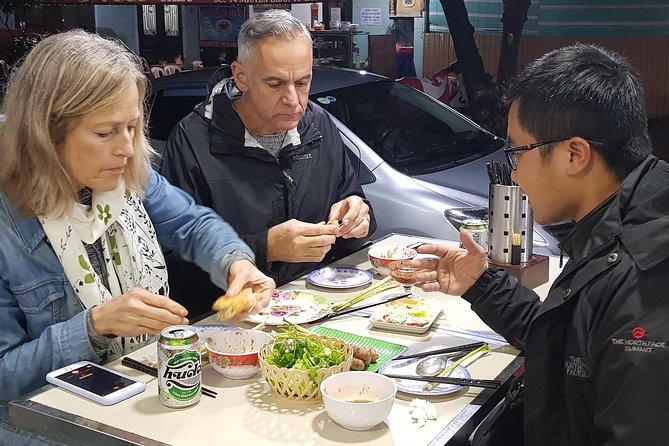
This is a small group tour with a stated maximum of 8 travelers, which matters more than you might think. In a food tour, the best part is often the back-and-forth, like asking why one shop makes something a certain way, or how to handle spice levels, herbs, or bowls that look similar but taste different.
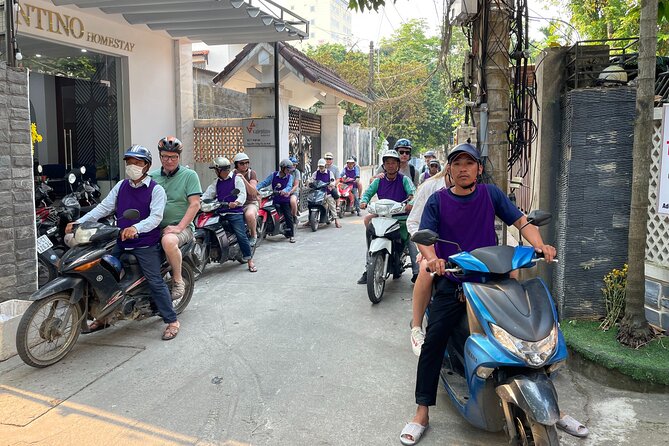
The tour is also flexible on movement. Even though it’s described as walking-focused, you can choose how to get around. Depending on your option, you can walk, ride a cyclo, or hop on a motorbike for parts of the route. That gives you control if you are visiting on hot days, after a long train ride, or if you simply want the sights without as much footwork.
You’ll also get a mobile ticket, which usually means less time hunting for papers and more time moving. And since the start and end points are in Hue’s central areas, you should be able to connect to local transport without too much drama.
Stop 1 on Le Loi: Start Where Hue Families Eat
You meet at 15 Lê Lợi, Vĩnh Ninh, Huế, and you kick things off at a beloved, three-generation family-run spot. The exact street food items at this first stop are not fully listed in the details you’re given, but you can expect classic Hue street flavors, the kind locals eat without turning it into a show.
This opening stop sets the tone. It’s not just about flavor, it’s about orientation. Your guide starts building the tasting framework you’ll keep using later, so you know what to pay attention to, what tastes are “signature Hue” here, and how to compare dishes as you go.
It also helps that the tour begins close to where you’re already likely to wander. Le Lợi is one of those streets that makes Hue feel like Hue, not like a film set. You walk in with questions, and you leave with a basic sense of what’s worth ordering next.
Perfume River Stop for Bun Hen: Spicy Baby Clam Noodles
Next, you cross the Perfume River with your guide and head to a well-known street vendor who has served locals for over 35 years. That length of service is a quiet quality marker. It usually means the shop has figured out what works consistently, and locals keep showing up.
Here, you taste Bun Hen, described as spicy baby clam noodles. This is the kind of dish that makes you understand why Hue food has its own personality. The flavor is not only about heat. It is also about the seafood character, the balance of broth, and how the accompaniments change the bite.
The practical win is what you learn while eating. Bun Hen is a great example of how to approach “menu mystery” dishes. Once you taste it with an explanation, you can recognize the category next time you see it, and you’ll know what style of bowl to look for and what to expect from the spice.
Also, crossing the river gives you a visual reset mid-tour. You’re not only tasting, you’re seeing Hue’s layout in a way that sticks.


Inside the Historic Citadel Area: Bun Bo Hue and the Chef Story
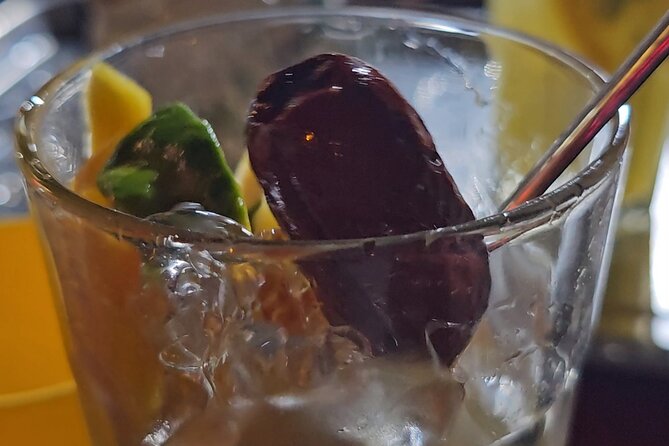
After the river, you continue into Hue’s historic Citadel area and visit a famous local eatery known for Bun Bo Hue, a spicy beef noodle soup. Here, you don’t just get served. You meet the chef behind the dish, which turns your bowl into a story.
This is one of the best parts of a Hue food tour like this, because chefs often reveal what they protect and what they tweak. With Bun Bo Hue, people can argue endlessly about how it should taste, but a chef explanation makes it more grounded. You start to understand the dish as a specific Hue specialty, not a generic “Vietnamese noodle soup.”
At this stop, your timing usually lines up with that 30 minute window, long enough to eat slowly and hear the details without the tour feeling like a rush. And since Bun Bo Hue is one of Hue’s top identity foods, it’s a strong anchor point. If you want only one bowl to remember from Hue, this is the one that typically earns that job.
Two Generations at the Next Stop: Banh Khoai and Nem Lui
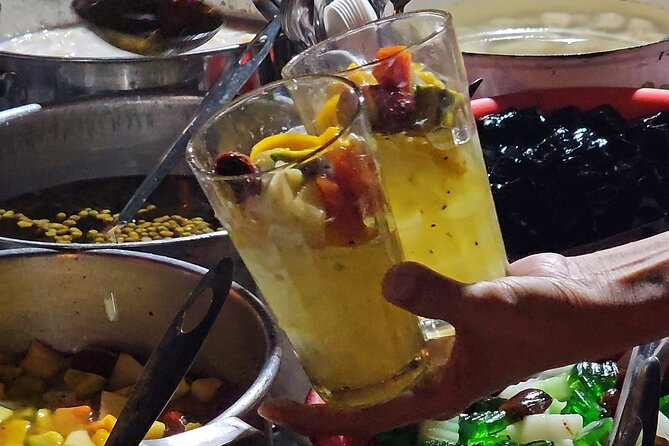
From the Citadel area, you follow your guide to another renowned three-generation family eatery. This is where you get two classic bites side-by-side: Banh Khoai and Nem Lui.
You’ll watch local chefs prepare them, which does two things for you. First, it makes the process clear. Second, it helps you understand why the texture and cooking style matter so much in Hue dishes.
- Banh Khoai is the crispy savory pancake. The clue here is right in the name, crispy. But the real lesson is how Hue keeps flavors bold without making every dish feel identical.
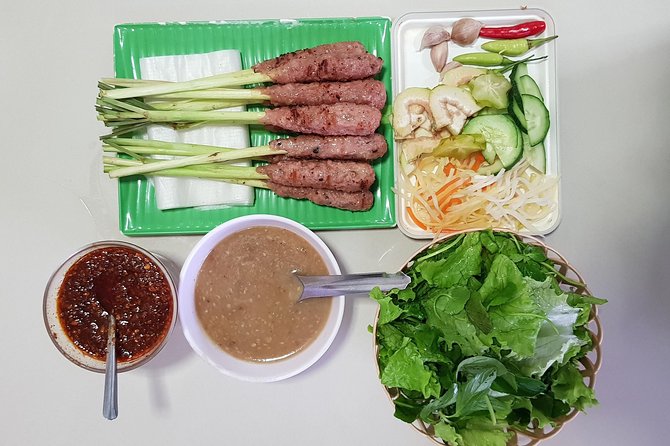
- Nem Lui is described as grilled lemongrass. If you’ve ever had grilled lemongrass in Vietnam, you know it can swing from fragrant to sharply punchy. Watching how it’s made helps you connect aroma to taste, so you don’t just eat, you recognize.
This stop also feels different because it has more action. If you like food experiences where you can see the work, this is likely a highlight.
The Sweet Finish: Chè Huế at the End of the Walk
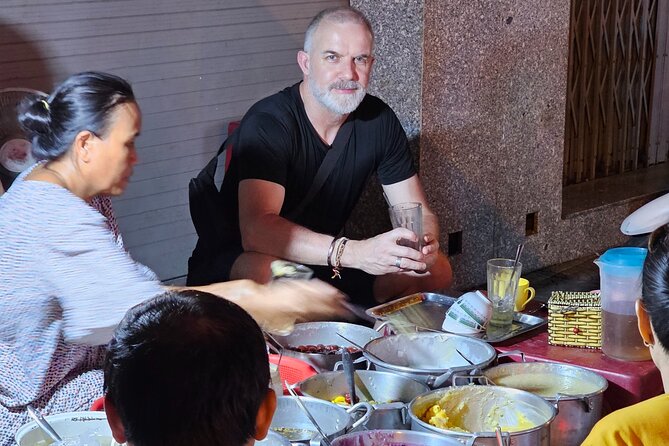
All the spice and savory fighting in your mouth leads somewhere, and in Hue it usually leads to dessert. The tour ends at Chè Mợ Tôn Đích, located at 20 Đinh Tiên Hoàng, Phú Hòa, Huế 49000.
Here you taste Che Hue, a traditional sweet treat. Che Hue is a good wrap-up because it resets your palate after noodle-heavy, meat-forward bites. It also reminds you that Hue food isn’t only about spice and broth. It can be cooling and comforting too.
You get a final 30 minute stop, which feels like an intentional landing. By the time you finish, you’re not just full. You’re ready to keep exploring Hue on your own without feeling like your only mission is finding food.
What You Really Get: The 8 Dish Tasting Plus the Ordering Framework
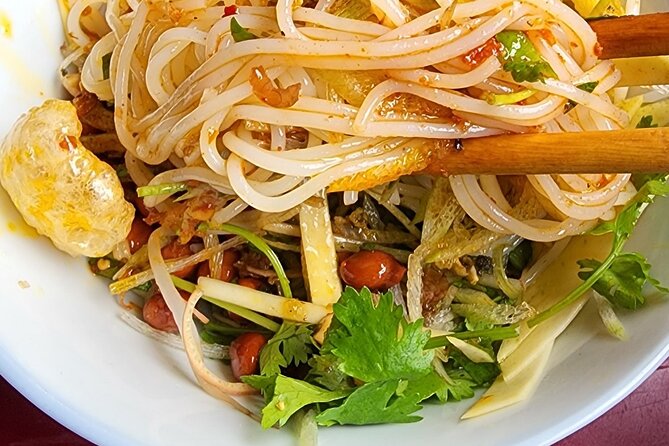
The most valuable part of a Hue food tour is the stuff that follows you after the last bite. This one is built around that idea. You’re not only tasting a set of Hue specialties. You’re learning a simple framework for how Hue meals are typically structured and what to look for when ordering.
That matters because Hue has many dishes that look similar at first glance. If you do not know the differences, you can waste money on bowls that are technically available but not what you wanted. With the guide’s menu tips, you get a mental shortcut. You’ll know what category you’re ordering and why it should taste a certain way.
And with 8 dishes included, you’re getting enough variety to spot patterns. You can compare broths, textures, and spice styles in one night. That makes it easier to choose what to order the next day when you’re back at a street stall.
Price and Value: $34 for a Food Lesson, Not Just Snacks
At $34 per person for a roughly 3 hour tour, the value is driven by two factors: the amount of food and the guidance.
You’re paying for a brunch-style set of 8 dish tastings plus a guide who helps you understand what you’re eating. If you were to order multiple Hue signature bowls on your own, you would likely spend similar money pretty fast, and you would still be doing guesswork.
So the better question is not just, Is it cheap? The better question is, Does it save you time and decision stress? In this format, it usually does. You start with a plan, eat your way through key Hue flavors, and end with enough knowledge to order confidently later.
Also, it’s a small group. That keeps the experience personal, which is harder to find at lower prices when tours push too many people into the same stalls.
Practical Advice: Comfort, Pace, and Any Food Restrictions
This tour is described as walking-focused, but you can choose other movement options. Still, I recommend showing up with comfortable shoes and a light plan for heat or humidity. Bring a small water plan if you usually get thirsty on food crawls.
If you have any food restrictions, the tour details explicitly ask that you let them know. Do that before you go. It’s the simplest way to avoid awkward last-minute swaps.
One extra tip from the general tone of feedback is that guides do a good job of explaining dishes and keeping things friendly. Several named guides show up in the experience feedback, including Matthew, Thanh, Mimi, and My. That matters because it suggests the guides put effort into both food and city context, not only the eating part.
Who Should Book This Hue Food Tour?
This is a great fit if you:
- Want a first-timer Hue experience that focuses on eating and understanding, not museums
- Like food tours that teach you how to order later
- Prefer small groups where you can actually ask questions
- Enjoy seeing where food comes from, especially multi-generation family kitchens
If you’re the kind of traveler who only wants one or two dishes, you might find the tasting format more than you need. But if you want to leave Hue with a short list of what to chase again, this format is efficient.
Should You Book? My Decision Checklist
Book this tour if you want:
- 8 Hue tastings with a guide
- Menu and ordering help so you can eat well after the tour
- A route that includes the Perfume River and the Citadel areas
- A small group limit of 8 travelers
Skip it or consider your options first if:
- Weather is shaky on your dates, since the experience requires good weather
- You dislike walking, though you can often choose transport options like cyclo or motorbike parts of the route
FAQ
How long is the Hue food tour?
The experience is about 3 hours.
What food is included in the tour price?
The price includes brunch, with 8 types of dishes, plus the guiding fee.
How many people are in the group?
The tour has a maximum group size of 8 travelers.
Where do I meet and where does the tour end?
You start at 15 Lê Lợi, Vĩnh Ninh, Huế, Vietnam. The tour ends at Chè Mợ Tôn Đích, 20 Đinh Tiên Hoàng, Phú Hòa, Huế 49000, Vietnam.
What are the main Hue dishes you’ll taste?
The tour includes Hue signatures such as Bun Hen, Bun Bo Hue, Banh Khoai, Nem Lui, and Che Hue.
What happens if the weather is poor?
The tour requires good weather. If it is canceled due to poor weather, you will be offered a different date or a full refund. You can cancel up to 24 hours in advance for a full refund.
If you want Hue’s food highlights without guessing, this is one of the cleaner ways to do it. You leave full, informed, and ready to order with confidence instead of crossing your fingers at the menu.
Hue, Citadel and Tombs
- Hue to Hoi An ( Hoi An to Hue) Top Gear with Lefamily Riders Tours ( 1 way)★ 5.0 · 3,156 reviews
- Easy Rider private tour via Hai Van pass from Hue – Da Nang – Hoi An (1Way|Loop)★ 5.0 · 1,542 reviews
- Easy Rider From Hue Da Nang Hoi An Via Hai Van Pass With Mister T★ 5.0 · 769 reviews
- Hue to Dn/Hoi An: Hai Van Pass, beaches & Mt Monkey or vice versa★ 5.0 · 743 reviews
- Hue: Imperial City Walk, Motorbike Tour & Private Car Options★ 5.0 · 732 reviews
Other Hue tours our reviewers keep coming back to
- Hue to Hoi An Jeep Tour via Hai Van Pass
★ 5.0 · 18 reviews - Hue to Hoi An by Private Car with Sightseeing Stops
★ 5.0 · 18 reviews - Private Cycling Tour in Rural Hue with Farming Experience
★ 5.0 · 18 reviews - Hue Dragon Boat Tour: Perfume River, Royal Tombs, Hon Chen Temple
★ 5.0 · 18 reviews - Private Car from Hue to Hoi An With An English Speaking Driver
★ 5.0 · 18 reviews - Exploring Hue Imperial City With Professional Driver By Private Car
★ 5.0 · 18 reviews
Hue Imperial City and Royal Tombs, compared.
 ★ 5.0Hue to Hoi An ( Hoi An to Hue) Top Gear with Lefamily Riders Tours ( 1 way)From $503,156 reviews
 ★ 5.0Easy Rider private tour via Hai Van pass from Hue – Da Nang – Hoi An (1Way|Loop)From $551,542 reviews
 ★ 4.9Hue Customizable Tour with Imperial Citadel & Forbidden CityFrom $12937 reviews
 ★ 4.6Imperial City, Hue: Day Tour from Hoi An and Da NangFrom $47830 reviews
 ★ 5.0Easy Rider From Hue Da Nang Hoi An Via Hai Van Pass With Mister TFrom $58769 reviews
 ★ 4.7Da Nang/Hoi An: Hue Imperial City via Hai Van Pass & LunchFrom $9753 reviews
 ★ 5.0Hue to Dn/Hoi An: Hai Van Pass, beaches & Mt Monkey or vice versaFrom $59743 reviews
 ★ 5.0Hue: Imperial City Walk, Motorbike Tour & Private Car OptionsFrom $7732 reviews
Also in these Vietnam lists