
REVIEW · MOTORBIKE AND VESPA TOURS
Motorbike Lesson in Hanoi
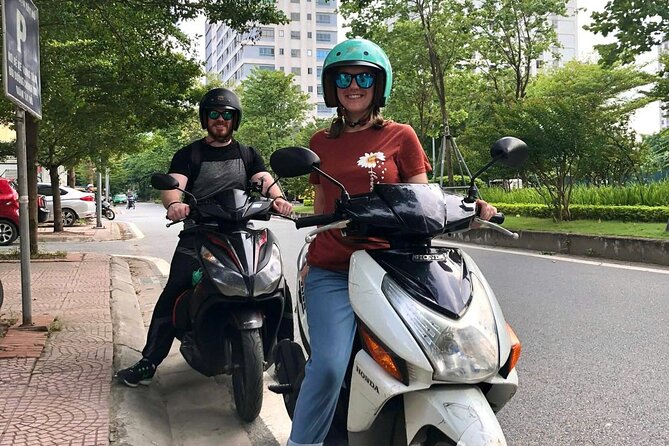
Hanoi traffic felt manageable after this lesson. Chicks n Bikes starts you in a quiet practice area so you learn balancing and braking before you touch real traffic, with calm, English-friendly coaching that focuses on building control, not fear.
What I like most is that it turns a scary idea into clear steps you can actually follow.
Next, you get guided riding around West Lake, where you practice reading the flow of motorcycles and cars instead of fighting it. Instructors like Mia and Thao are specifically called out for patience and encouragement, including how they handle nervous moments and even small falls without making you feel rushed.
A key consideration is that the session runs in about 2 hours and depends on good weather, so it builds strong basics but will not make you a long-distance expert overnight. If you’re planning something intense right after, you’ll likely want one more practice session or rental day.
In This Review
- Key points that make this motorbike lesson click
- How this 2-hour lesson turns Hanoi traffic into a skill
- Getting there: West Lake, pickup, and a clear start point
- Step one: the quiet practice area where balance and braking become real
- Step two: riding around West Lake, learning rhythm over rules
- Instructors you can trust, including Mia and Thao
- Price and value: $37.45 for real-world freedom
- Who should book this motorbike lesson in Hanoi
- Practical ways to get the most from your session
- Should you book this motorbike lesson or skip it?
- FAQ
- How long is the motorbike lesson in Hanoi?
- Is pickup available?
- What area do you ride in during the lesson?
- Where is the meeting point?
- Is this lesson private?
- Do you provide safety equipment?
- Do I need good weather?
- What is the cancellation policy?
Key points that make this motorbike lesson click
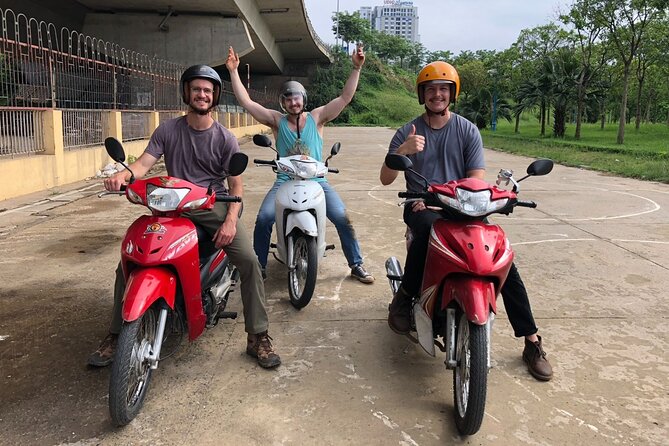
- Quiet-to-real training flow: start in a controlled area, then move onto Hanoi streets
- Patient, English-friendly instruction: clear coaching with feedback that helps you improve fast
- West Lake (Tay Ho) practice: a practical place to learn city riding without going straight into the toughest chaos
- Safety gear included: equipment is provided so you can focus on learning
- Private experience: only your group participates, so you’re not squeezed into a big class
- Designed for beginners and future loops: includes technique pointers that can help if you’re targeting the Ha Giang Loop
Two wheels, more routes
- Hanoi Motorbike Tour: Food, Culture and Fun by Vintage Motorbike★ 5.0 · 6,699 reviews
- Hanoi Motorbike Tours Led By Women: Hanoi By Night Foodie Motorbike Tours★ 5.0 · 1,734 reviews
- Hanoi Motorbike Tours Led By Women: Hanoi City Insight Motorbike Tours★ 5.0 · 816 reviews
- Hanoi Countryside Motorbike Tour: Red River Culture & Daily Life★ 5.0 · 681 reviews
How this 2-hour lesson turns Hanoi traffic into a skill
If Hanoi traffic makes you grip your travel budget and your imaginary brake lever at the same time, this is a smart first step. The lesson is built around one idea: you don’t learn to ride by memorizing rules. You learn by getting comfortable with the rhythm of motion, where balance, scanning, and controlled speed matter more than panic.
You start with the basics in a practice zone, then you transition to riding on real roads. That sequence matters because the biggest beginner problem is not “traffic knowledge.” It is simply not trusting your body with the bike yet.
In practice, the teaching approach is designed to help you notice what’s happening around you while you’re still thinking one step at a time. You’ll be guided to read traffic flow and make small, confident decisions, rather than trying to out-guess everything. That difference is exactly what makes the lesson feel like training, not a thrill ride.
And if your end goal is more freedom during your trip, this lesson gives you something concrete. You’re not just watching motorbikes from the passenger seat. You’re building the foundation that lets you consider renting later or planning routes with less dependence on taxis.
Getting there: West Lake, pickup, and a clear start point
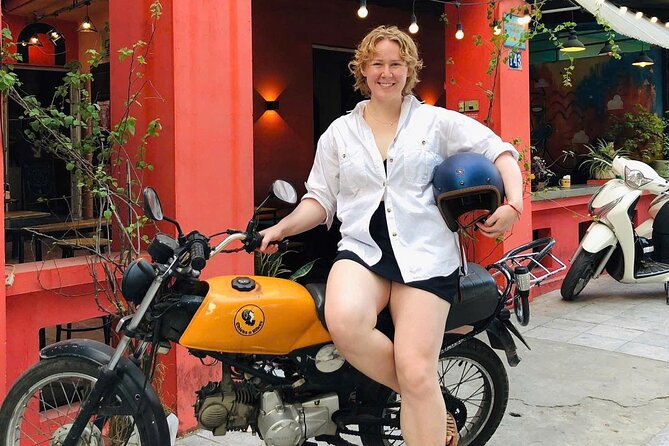
The lesson is based around West Lake, and that’s a big part of why it works well for first-timers. West Lake and the Tay Ho area are a practical starting point for city riding because you can learn pacing and scanning without immediately jumping into the most unpredictable situations.
You’ll start at 143 P. Nhật Chiêu, Nhật Tân, Tây Hồ, Hà Nội 100000, Vietnam. The activity ends back at the meeting point, so you’re not stuck figuring out transit after you’ve learned something intense.
A pickup is offered, which is a quality-of-life win in Hanoi. If you’d rather not spend your lesson thinking about how to reach the start, this removes friction. It also helps if you’re traveling with limited time and want the lesson to run smoothly from the first minute.
You’ll also get a mobile ticket, and confirmation happens at the time of booking. That’s small, but for a two-hour experience, anything that reduces waiting and admin stress helps.
Finally, this is a private tour or activity, meaning only your group participates. For many learners, that privacy makes a difference in how quickly you relax and absorb instruction, because you’re not competing for attention in a crowd.
Step one: the quiet practice area where balance and braking become real
The core of the lesson begins in a controlled practice area. That’s where you’ll work on the fundamentals in a way that keeps your mind from overload. Expect time dedicated to the physical basics, like balancing, and the control motions that make you feel less like you’re guessing.
This is where the “confidence first” strategy pays off. When you learn braking and steering while you feel safe, you build muscle memory before you face the real question: what do I do when someone pulls into my space?
Instead of being dropped into traffic, you learn how to handle the bike when your instincts say stop. That means if you’re nervous, you’re not alone in that. The teaching style is repeatedly described as patient and supportive, including guidance when someone falls.
Safety equipment is provided, so you’re not arriving empty-handed to an equipment puzzle. You can focus on the lesson goals instead of worrying about whether you have the right gear or not.
If you’re a complete beginner, this stage is also where you learn how to interpret your own stress. The instructors aim to keep you calm and steady while you practice, so you can learn without the added pressure of trying to look competent in front of others.
Step two: riding around West Lake, learning rhythm over rules
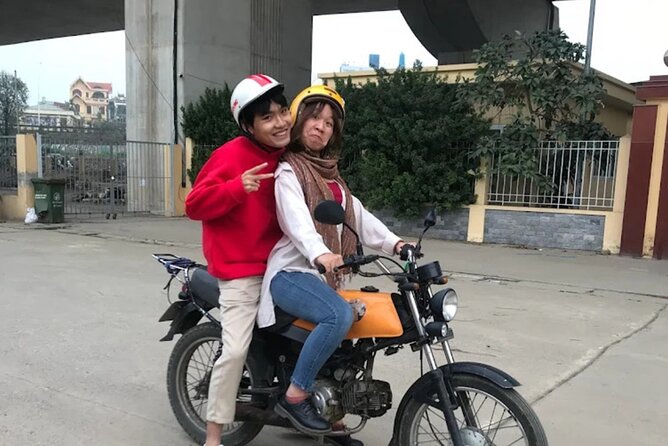
Once you’ve built basic control, you move onto real streets. This is the part that makes the lesson feel like more than a parking-lot crash course. The goal is to teach you to read the flow of traffic and move with it.
Hanoi riding has its own logic. Rather than treating driving as a strict set of rules you must follow perfectly, your instructor guides you to understand movement as something more like rhythm and spacing. You’re taught to notice how other riders behave and to make your choices smoothly.
West Lake is a practical training ground for this. It’s connected enough to feel like Hanoi, but it’s still a learning space where you can focus on scanning and decision-making without feeling like you’re immediately in the deepest chaos.
During this stage, you’ll also get insider tips on local road rules and motorbike culture. Even if you’re not memorizing every detail, you’re building a mental map of how to operate around traffic participants. That helps you stop treating every horn or sudden movement like a threat and start treating it like part of the system.
If you’re already thinking about the Ha Giang Loop, this stage can be especially useful. The lesson includes technique pointers that help with uphill and downhill riding, which is often where first-timers feel most intimidated. Even if you do not ride the Loop immediately, learning how to handle the bike with real road conditions makes future planning less stressful.



Instructors you can trust, including Mia and Thao
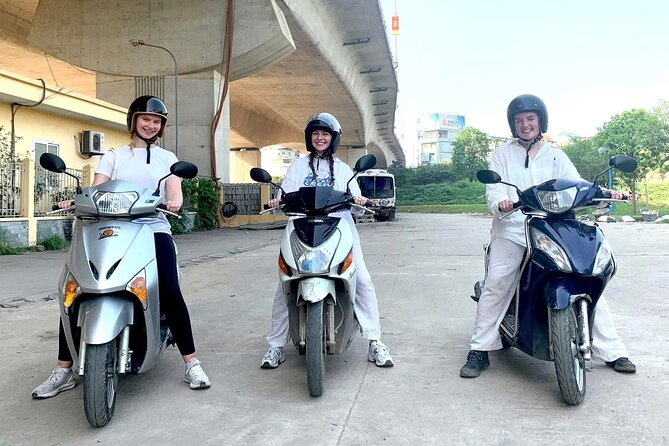
A motorbike lesson rises or falls on the instructor. Here, that support is one of the most praised parts of the experience.
Mia gets specific mention for being super patient and calm, with teaching that feels encouraging rather than demanding. People also talk about her clearly showing what to do, which matters if you learn better by watching first and then trying.
Thao also shows up in the feedback, with strong marks for energy and clear, step-by-step instruction. There’s also an emphasis on how quickly some learners gain enough confidence to rent their own bike later.
More important than any single name is the teaching style. The lesson is described as fun and positive, not harsh. If you make a mistake, the instructor’s job is to help you correct it without turning your nerves into embarrassment.
One review notes that someone had a fall and the instructor handled it with reassurance and careful support. That’s exactly the kind of atmosphere that lets beginners keep practicing instead of shutting down. In a city like Hanoi, continued practice is how confidence actually grows.
Also, if you prefer one-on-one coaching at your own pace, the private setup helps. You’re not competing with strangers for time, so you can ask the question you’re actually worried about, not the question you think you should ask.
Price and value: $37.45 for real-world freedom
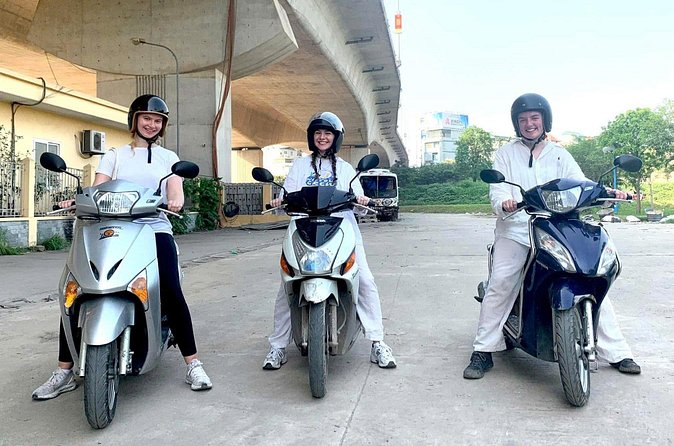
At $37.45 per person for about two hours, this is priced like a practical skill session, not a souvenir experience. The value comes from what you walk away with: confidence in control, plus a guided understanding of how to function on Hanoi streets.
Taxis can be convenient, but they keep you in a passenger mindset. Once you can ride, you can build your own day around what you actually want to eat, see, and explore. That matters in Hanoi, where the best moments often require quick, flexible movement.
This lesson also helps you avoid the most expensive kind of beginner mistake, the one where you rent too soon without foundational control and then spend the rest of the week anxious or stuck. A short coached start can prevent that spiral.
You also get tangible inclusions: pickup offered, a mobile ticket, and safety equipment provided. Those details reduce friction, which effectively adds value because your energy goes into learning, not logistics.
And if you’re eyeing bigger riding plans like the Ha Giang Loop, this experience can act like a first checkpoint. Learning uphill and downhill technique pointers, even at a beginner level, means you’re not walking into a tough route with zero preparation.
In short, the cost is small enough to take seriously as a first try, and structured enough to matter. It’s not just “a ride.” It’s a guided transition from fear to basic competence.
Who should book this motorbike lesson in Hanoi
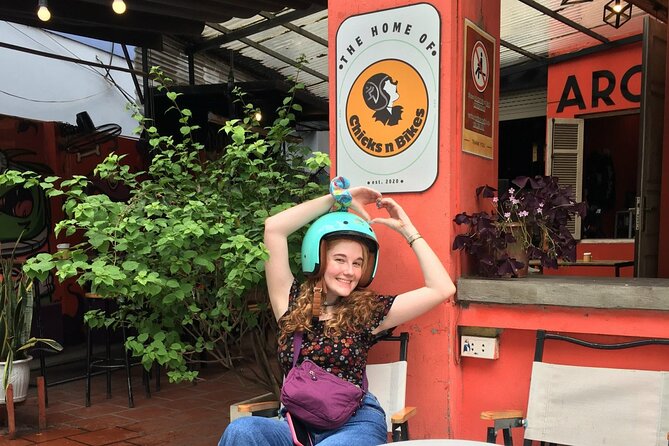
This is a great fit if you’re a beginner who wants real riding skills without jumping straight into tough traffic. It’s also a good match if you’re visiting Hanoi for a short time and want independence, because two hours is enough to shift your travel options.
It’s especially suitable if you’re thinking about riding beyond Hanoi later. The inclusion of uphill and downhill technique pointers is a clue that the instructors are not only focused on city confidence, they’re also thinking about what comes next.
You’ll likely feel comfortable here if you want patient, supportive coaching with clear English instruction. The tone of the teaching style shows up repeatedly in how instructors are praised for calm guidance and reassurance when things feel hard.
This can be less ideal if you’re dealing with a medical issue that affects balance or reaction time, or if you know you freeze under pressure. The lesson depends on good weather, too, so you should plan to book it when conditions are likely to cooperate.
Practical ways to get the most from your session
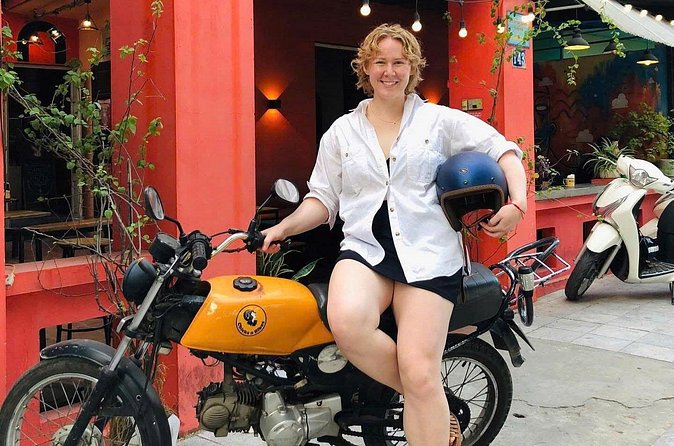
You don’t need to be fearless to do well. You do need to practice the basics with a calm mind so your instructor can guide your body through the right moves.
Before you ride, ask for the specific things you’re worried about. Beginners often worry about braking, turning, or what to do when traffic changes. If you flag your anxiety early, the instructor can tailor feedback to what will help you most.
Once you’re out on the roads near West Lake, focus on one goal at a time. Your instructor’s job is to teach traffic rhythm and how to read flow. Your job is to keep your attention where it belongs, on your control and what’s happening around you.
If you’re planning a longer ride later, take note of the uphill and downhill guidance. Even if you do not use it immediately, it’s the kind of technique that makes future days feel less intimidating because you’ve already heard and practiced the basics.
And when the lesson ends, don’t judge yourself too harshly. Two hours is a foundation. If you can control the bike and understand the rhythm, you’re already ahead of where most first-timers start.
Should you book this motorbike lesson or skip it?
Book it if you want the fastest path from passenger anxiety to hands-on city confidence. The combination of a quiet practice start, supportive instruction, safety equipment provided, and a guided ride around West Lake makes it a strong deal for beginners who want independence in Hanoi.
Skip it only if you know you can’t ride when conditions are a bit tricky, since the experience requires good weather. Also consider skipping if you’re expecting a one-session guarantee of long-distance mastery. This lesson is about fundamentals and street rhythm, not full expert status.
If you’re on the fence, think about what you want from Hanoi. If you want the option to explore beyond taxis, this is one of the smartest ways to invest a couple of hours and leave with real ability.
FAQ
How long is the motorbike lesson in Hanoi?
The lesson lasts about 2 hours.
Is pickup available?
Yes, pickup is offered.
What area do you ride in during the lesson?
The riding is around West Lake, with the activity starting at the meeting point in Tay Ho.
Where is the meeting point?
The start location is 143 P. Nhật Chiêu, Nhật Tân, Tây Hồ, Hà Nội 100000, Vietnam. The tour ends back at the same meeting point.
Is this lesson private?
Yes. It is a private tour or activity, so only your group participates.
Do you provide safety equipment?
Yes. All safety equipment is provided.
Do I need good weather?
Yes. The experience requires good weather, and if it is canceled due to poor weather, you will be offered a different date or a full refund.
What is the cancellation policy?
You can cancel for free up to 24 hours in advance for a full refund. If you cancel less than 24 hours before the start time, the amount paid is not refunded.
Back on Two Wheels
- Hanoi Motorbike Tour: Food, Culture and Fun by Vintage Motorbike★ 5.0 · 6,699 reviews
- Hanoi Motorbike Tours Led By Women: Hanoi By Night Foodie Motorbike Tours★ 5.0 · 1,734 reviews
- Hanoi Motorbike Tours Led By Women: Hanoi City Insight Motorbike Tours★ 5.0 · 816 reviews
- Hanoi Countryside Motorbike Tour: Red River Culture & Daily Life★ 5.0 · 681 reviews
- From Hanoi: 3-Day Motorbike Ha Giang Loop with Easy Rider★ 4.9 · 501 reviews
Other Hanoi tours our reviewers keep coming back to
- Hanoi Vespa After Dark Street food + Train Street+ Live Music
★ 5.0 · 18 reviews - (Free Pick-up) Vietnamese Body Massage in Hanoi City
★ 5.0 · 18 reviews - The Insider’s Hanoi,Train Street, Countryside Highlight by Vespa
★ 5.0 · 18 reviews - Skip the line: Thang Long Water Puppet Theater Entrance Tickets
★ 4.0 · 18 reviews - Hanoi Street Food Tour and MORE
★ 5.0 · 18 reviews - Hanoi – Hoa Lu – Tam Coc – Mua Cave – 1 Day / By Luxury Limousine & Small Group
★ 5.0 · 18 reviews
Motorbike and Vespa Tours, compared.
 ★ 5.0Ho Chi Minh City Street Food Tour & Sightseeing By MotorbikeFrom $289,413 reviews
 ★ 5.0Hanoi Motorbike Tour: Food, Culture and Fun by Vintage MotorbikeFrom $556,699 reviews
 ★ 5.0Saigon By Night and Street Food By Motorbike | Opt: Ao Dai RidersFrom $374,066 reviews
 ★ 5.0Private Street Food Tour by Motorbike/Car with Local StudentsFrom $453,950 reviews
 ★ 5.0Top Notch Street Food Motorbike Tour In Ho Chi Minh CityFrom $292,667 reviews
 ★ 5.0Private Street Food Motorbike Tour in Ho Chi Minh CityFrom $552,180 reviews
 ★ 5.0Hanoi Motorbike Tours Led By Women: Hanoi By Night Foodie Motorbike ToursFrom $691,734 reviews
 ★ 5.0Ho Chi Minh City Motorbike Tour with Student | Saigon AdventureFrom $231,697 reviews
Also in these Vietnam lists