
REVIEW · PHOTOGRAPHY SESSIONS
Hanoi On the Tracks Photo Tour
Train tracks in Hanoi, at sunrise. This Hanoi on the Tracks photo tour takes you off the main tourist route and into a working stretch of city life, centered on the railway between Hanoi and Long Bien stations. You’ll learn to see like a street photojournalist, with help from a professional photographer guide and time to practice while people start their day.
I especially like the small-group feel and the hands-on photography coaching. You’re not just pointing a camera at scenes, you’re learning how to frame moments around real routines, including morning markets, lakes, and parks.
One thing to consider is timing and conditions. The tour starts early at 5:30 am, and it’s weather-dependent, so you’ll want to be ready for a gritty, active neighborhood at morning hour, not a polished sightseeing loop.
In This Review
- Key points you’ll care about
- Why Hanoi’s rail corridor is the best classroom for street photos
- 5:30 am pickup, and why the early light actually helps
- Stop 1: Hanoi Railway Station and the morning routines around it
- Learning street photojournalism, not just taking photos
- Talking with locals, markets, and cafes for real context
- What to bring (and how to shoot near an active railway)
- How long is the tour, and what makes the pacing work
- Price and value: is $144 worth it?
- Who this Hanoi on the Tracks tour fits best
- A few practical expectations for a smooth morning
- Should you book Hanoi on the Tracks?
- FAQ
- What time does the Hanoi on the Tracks photo tour start?
- How long is the tour?
- How much does it cost?
- Is hotel pickup and drop-off included?
- What’s included in the tour besides the guide?
- Are food and drinks included?
- Is this a small-group or private experience?
- What happens if the weather is bad?
- What is the cancellation policy?
Key points you’ll care about
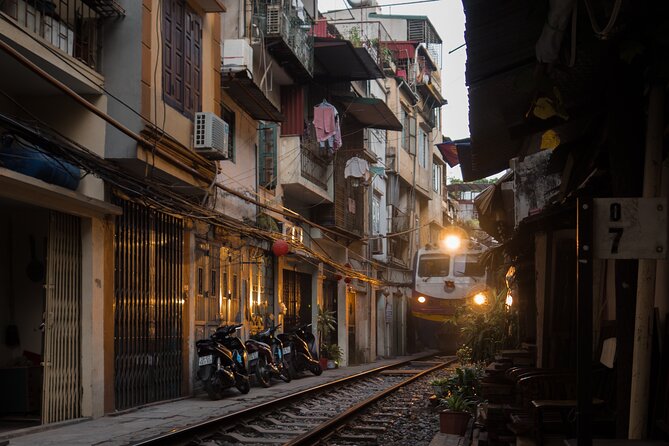
- Railway-focused street photography in a part of Hanoi most visitors skip
- Professional photographer guidance meant for both DSLR and phone shooters
- Real local routines through markets and everyday café moments
- Hotel pickup and drop-off so you can focus on shooting
- Early start at 5:30 am for the most natural morning light
- Good weather matters, since the experience is weather dependent
Narrowing it down? These Hanoi tours kept surfacing in our reviews.
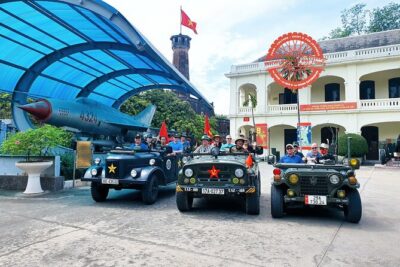
- Hanoi Jeep Tour: Food, Culture and Fun by Vietnam Army Jeep★ 5.0 · 15,222 reviews
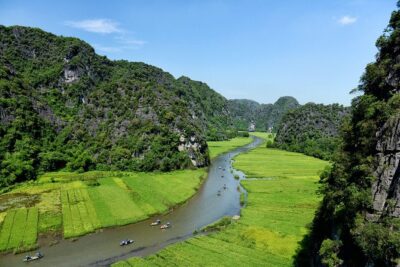
- Full-Day Ninh Binh Highlights Tour from Hanoi★ 5.0 · 7,761 reviews
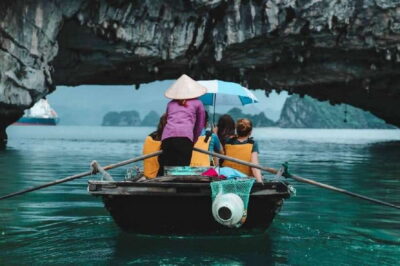
- Hanoi: Ha Long Bay Day Cruise – Swimming, Meal, Kayaking★ 4.7 · 7,415 reviews
- Hanoi: Water Puppet Show Tickets★ 4.6 · 7,029 reviews
Why Hanoi’s rail corridor is the best classroom for street photos
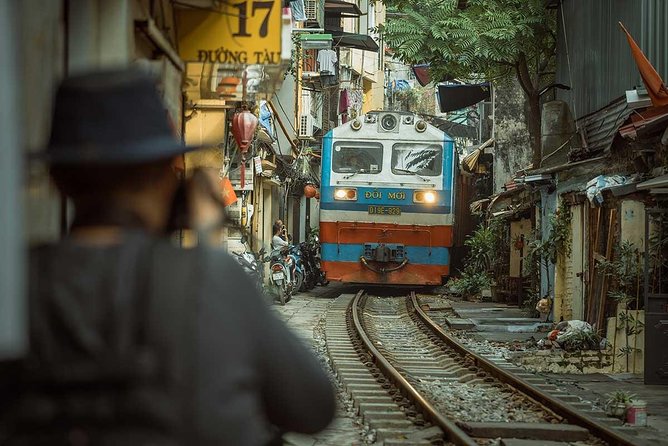
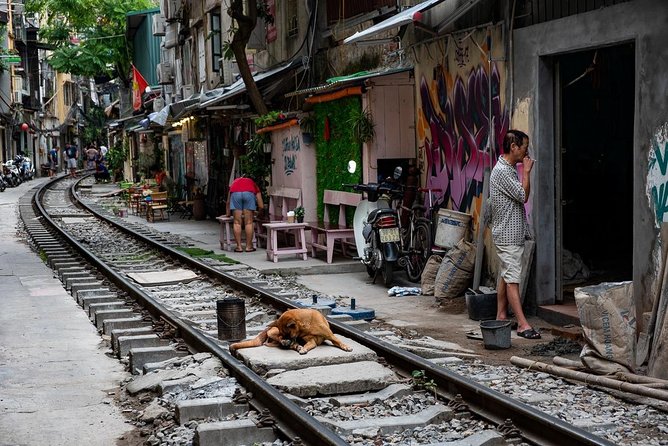
Most Hanoi photos you see are clean and staged. This one is different. The whole point is to work the railway stretch where homes and daily life sit close to the tracks, creating scenes that feel immediate and lived-in.
What makes it valuable for your camera is that you get multiple layers in one place. You’re not hunting for separate “attractions.” You’re photographing how people move, how morning commerce wakes up, and how trains cut through everyday space. That combination is exactly what strong street photojournalism is built on: people first, story second, and then the details that connect the two.
You’ll also benefit from being guided into the right spots. Shooting near active infrastructure can be tricky. The guide helps you find viewpoints and moments so you’re not only lucky, you’re learning how to repeat the results.
5:30 am pickup, and why the early light actually helps
This tour starts at 5:30 am, and they handle hotel pick up and drop off, so you’re not spending your morning guessing routes or losing daylight to transit. For photography, that early hour is a gift. The city is quieter, faces look more natural, and markets feel less like displays and more like real work getting going.
It also changes what you’re able to capture. Later in the day, a lot of street scenes turn into “background.” In the early morning, people are focused on tasks. That gives your photos a cleaner sense of rhythm, with fewer distractions and less of the tourist pattern.
The practical downside is simple: you’ll need to be awake and ready. Comfortable shoes matter more than you think, and if you’re used to a slow start on vacation, this one will nudge you out of that habit in a hurry.
Stop 1: Hanoi Railway Station and the morning routines around it
Your morning centers on Hanoi Railway Station, with the goal of capturing train action close to where people live and work. This is not framed as a visit to a landmark. It’s framed as an atmosphere hunt, finding moments where the train interacts with the neighborhood.
At this stop, you’ll be working through a morning cycle. The tour includes time to explore local spaces tied to morning life, including morning markets, lakes, and parks where locals start the day. Even if you’re only here for a few hours, that mix matters because it gives you choices:
- You can chase train timing for a more dramatic story.
- You can shoot human detail while people buy, cook, and move.
- You can use parks and lakes as breathing space when the station area gets intense.
A drawback to expect is that station-adjacent areas can be busy and slightly chaotic. That’s the point, but you’ll want to keep your awareness up. Don’t block walkways, and don’t treat people like props. Good street photos come from respectful positioning.
Learning street photojournalism, not just taking photos
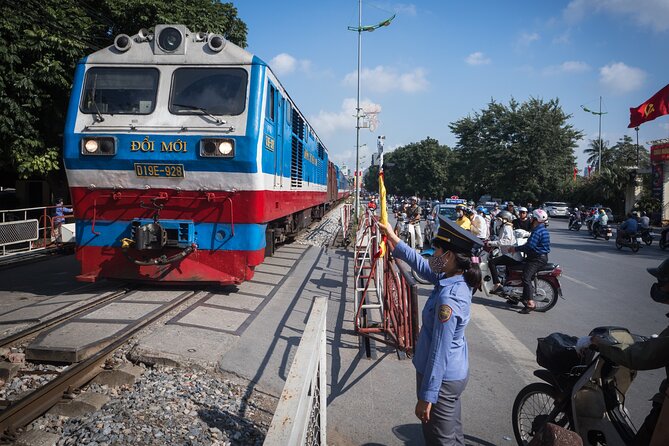
The best part of this tour is the teaching. You’re on a photography skills route, led by a professional guide who focuses on how to make images that tell a story, not just look pretty.
From past experiences with different guides on this route, the feedback style tends to be practical. One guide example is Tung, who reportedly offers suggestions right away to improve your shots, whether you’re using a DSLR or an iPhone. Another guide example is Fuong, described as bringing an insight lens from journalistic photography, which turns what could be random shooting time into intentional practice. A third example is William, who was noted for being helpful and supporting people as they learned techniques.
So what does that mean for you on the ground? It means you’ll get nudges like:
- where to stand to get a stronger foreground and subject relationship,
- how to simplify a scene so the story reads fast,
- and how to adjust your approach when people are in motion and lighting changes quickly.
This is especially worth it if you feel like your camera gets you “nice photos” but you want photos with meaning. A guided morning like this helps you build habits you can use later, even when you’re not on a tour.
Talking with locals, markets, and cafes for real context
A tour like this is more than visuals. You’re meant to learn from the neighborhood itself. The experience includes time to talk directly with locals and to visit markets and cafes, so you’re not photographing only surfaces.
That matters because street photos improve when you understand what you’re seeing. If you can connect a scene to a real routine, your captions and your sequencing make sense even if you never formally write them down. And your photos tend to feel less like sightseeing and more like storytelling.
Also, market and café moments create natural “in-between” scenes. Train moments are brief. Human interactions last longer. Cafés and stalls can give you portraits, hands at work, and casual eye contact moments. Those details can become the emotional center of your photo set.
Food and drinks are not included, so you’ll want to plan small purchases if you want a snack or water. If you’re carrying a camera all morning, hydration and a quick bite can help you keep your energy steady.
What to bring (and how to shoot near an active railway)
You can do this with a DSLR or a phone. The point is learning technique, not equipment bragging. If you’re bringing a DSLR, consider a way to keep your settings consistent while you move quickly. If you’re bringing a phone, you’ll still benefit from the guide’s framing and timing advice, because street photojournalism is about decisions, not just megapixels.
For your comfort, bring:
- Comfortable, grippy shoes for early-morning streets
- A light layer, because mornings near dawn can feel cooler than you expect
- Your camera strap or secure carry, since you’ll likely be moving and positioning often
- Sun protection if the morning turns bright after a cool start
And keep safety and respect front of mind. You’ll be photographing around active tracks and around people going to work. Move with purpose, watch where you place your feet, and get your shot without forcing space from others.
How long is the tour, and what makes the pacing work
The experience runs about 4 hours. That’s long enough to practice multiple styles, but short enough that you don’t burn out before the best light and best activity.
The pacing also helps your learning. You start at the station, where you have the most iconic photo opportunity, then you shift into spaces that show daily life. That mix prevents “train only” syndrome, where you end up with a set of similar images and miss the human stories happening around them.
Small-group attention also supports pacing. When the guide can see what you’re doing, you can correct habits early and improve on the fly. This is a big reason this tour earns such strong ratings.
Price and value: is $144 worth it?
At $144 per person for a roughly 4-hour morning, the question is value, not just cost. What you’re paying for is the combination of time, access, and instruction.
You get:
- a professional photography guide focused on how to shoot,
- hotel pickup and drop off (which quietly saves time and stress),
- a focused route in a working part of Hanoi near the railway, rather than generic city sightseeing,
- and enough time on-site to actually practice, not just pose.
If you were to replicate the experience on your own, you’d spend money on transportation, and you’d still be missing the coaching and the “where to stand” knowledge. That’s what makes it feel like more than a ride and a couple of photo stops.
Food and drinks are not included, so budget a small amount for water and a snack if you need it. In exchange, the tour gives you a structured shooting morning that you can’t easily duplicate without local guidance.
Who this Hanoi on the Tracks tour fits best
This is a strong match if you:
- want authentic street photography rather than polished monuments,
- enjoy early starts for better light and calmer streets,
- like photojournalism and want to improve how your photos tell a story,
- shoot with a DSLR, an iPhone, or both, and want technique that transfers between devices.
It’s also a good pick if you travel with a partner or friend who has different gear. Several accounts mention couples and mixed devices getting useful, practical guidance.
If you prefer slow, easy walking with lots of cafés and minimal movement, the early-morning station area might feel intense. But if you like gritty real-life energy and you want your camera work to improve fast, this tour suits you.
A few practical expectations for a smooth morning
Confirmation is received at booking time, so you’re not left waiting for a last-minute email. The experience is for a private group, meaning only your group participates.
The tour is listed as suitable for most travelers with no health restrictions mentioned. Still, you’ll be outside in a lively neighborhood, so dress for morning conditions and bring what you need for comfort.
Finally, remember the weather factor. It requires good weather, and if poor weather cancels it, you’ll be offered another date or a full refund.
Should you book Hanoi on the Tracks?
If your goal is better street photos with real context, I think you should book it. The mix of railway-focused scenes, hands-on photographer coaching, and early-morning local routines is exactly the recipe for images that feel alive.
I’d especially recommend it when you want more than “take pictures near cool places.” This is for learning how to look, when to shoot, and how to respect the people and space around you, all while working a part of Hanoi that most visitors never see.
FAQ
What time does the Hanoi on the Tracks photo tour start?
The start time is 5:30 am.
How long is the tour?
The tour duration is approximately 4 hours.
How much does it cost?
The price is $144.00 per person.
Is hotel pickup and drop-off included?
Yes, hotel pick up and drop off are included.
What’s included in the tour besides the guide?
The tour includes a professional photography guide and the hotel pickup and drop-off. Admission ticket fees are listed as free.
Are food and drinks included?
No, food and drinks are not included.
Is this a small-group or private experience?
It’s described as a small-group tour, and it’s also listed as a private tour/activity where only your group participates.
What happens if the weather is bad?
The experience requires good weather. If it’s canceled due to poor weather, you’ll be offered a different date or a full refund.
What is the cancellation policy?
You can cancel for free up to 24 hours in advance for a full refund. If you cancel less than 24 hours before the start time, you won’t receive a refund.
Other Hanoi tours our reviewers keep coming back to
- Hanoi Vespa After Dark Street food + Train Street+ Live Music
★ 5.0 · 18 reviews - (Free Pick-up) Vietnamese Body Massage in Hanoi City
★ 5.0 · 18 reviews - The Insider’s Hanoi,Train Street, Countryside Highlight by Vespa
★ 5.0 · 18 reviews - Skip the line: Thang Long Water Puppet Theater Entrance Tickets
★ 4.0 · 18 reviews - Hanoi Street Food Tour and MORE
★ 5.0 · 18 reviews - Hanoi – Hoa Lu – Tam Coc – Mua Cave – 1 Day / By Luxury Limousine & Small Group
★ 5.0 · 18 reviews
Photography Sessions, compared.
 ★ 5.0Hanoi Private Photoshoot – Iconic Spots & Hidden GemsFrom $20118 reviews
 ★ 5.0Professional Photography Tour Optional Ao Dai Dress in Hoi AnFrom $3699 reviews
 ★ 5.0Private Sunrise Photography Tour – Down in ChinatownFrom $8959 reviews
 ★ 5.0Saigon Street Photography ExperienceFrom $7356 reviews
 ★ 5.0Hanoi Explorer Photo TourFrom $11940 reviews
 ★ 5.0Photo Tour to Capture The Vanishing Craft of Making Fish TrapsFrom $16831 reviews
 ★ 5.0Hanoi Street Photography with a Pro – Phone & CameraFrom $3527 reviews
 ★ 5.0Private Photography Tour & Ho Chi Minh City Exploration By LocalFrom $8025 reviews
Also in these Vietnam lists