
REVIEW · HANOI TRAIN STREET
Hanoi City Half Day Private Tour: Hidden Corners & Train Street
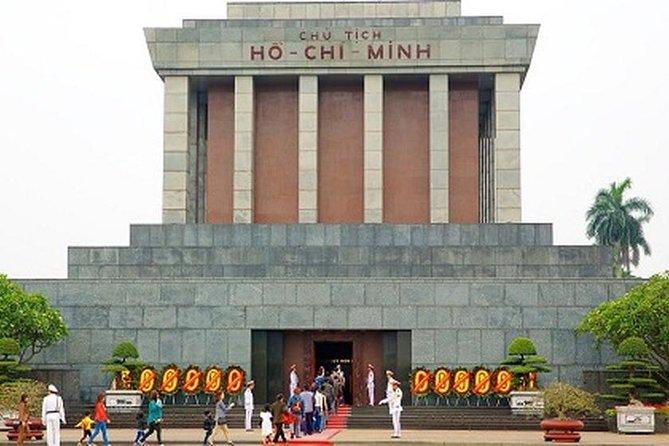
Train Street sells the ticket, but the guide makes it stick. I like the private, just-your-group pace and the way you get real Train Street time plus a drink while you’re there. The main thing to watch is that Ho Chi Minh’s Mausoleum has tight morning-only access and can also close for maintenance, so you may view it from the outside depending on your schedule.
This half-day runs about 4 to 5 hours and lets you pick a morning or afternoon start. You’ll move through some of Hanoi’s best-known landmarks and a few quieter back-street vibes, from pagodas and the Temple of Literature to the Old Quarter market area and French colonial architecture.
In This Review
- Key things worth knowing before you go
- Train Street and the Old Quarter, planned for a half-day
- Price and what $52 really buys in Hanoi
- Getting picked up, meeting the guide, and avoiding early-day confusion
- Ho Chi Minh’s Mausoleum: timing rules and the dress code reality
- One Pillar Pagoda and the Temple of Literature: symbols, learning, and why locals still care
- Dong Xuan Market and Long Bien Bridge: practical city texture
- Train Street time: what to expect, how the rail line changes the feeling
- Hanoi Opera House exterior: French architecture without the wait
- Guides and pacing: why the best part is the person next to you
- Who should book this Hanoi half-day tour, and who should skip it
- Should you book it?
Key things worth knowing before you go

- Private group time means the route can feel less rushed and more personal than a big bus tour
- Hotel pickup in the Old Quarter keeps the first hour from being a slog through traffic
- Train Street visit plus tea or egg-coffee gives you a small break during the most famous stop
- Entrance fees are included for the main sights on the route, so you do not hunt down tickets
- Ho Chi Minh Mausoleum rules can change your view (morning hours, weekly closures, and seasonal maintenance)
- Opera House is outside only so your time there is about architecture and history, not a full interior tour
More Train Street timings and coffee stops
- Hanoi: Street Food Tour with Train Street & Hidden Alleyways★ 5.0 · 2,831 reviews
- Hanoi: Guided Street Food Tour with Train Street Experience★ 4.9 · 2,479 reviews
- Hanoi City Tour Highlight, Train Street Combine visit Countryside★ 5.0 · 925 reviews
- Hanoi Jeep City Highlight, Backstreet, Train Street, Countryside★ 5.0 · 666 reviews
Train Street and the Old Quarter, planned for a half-day
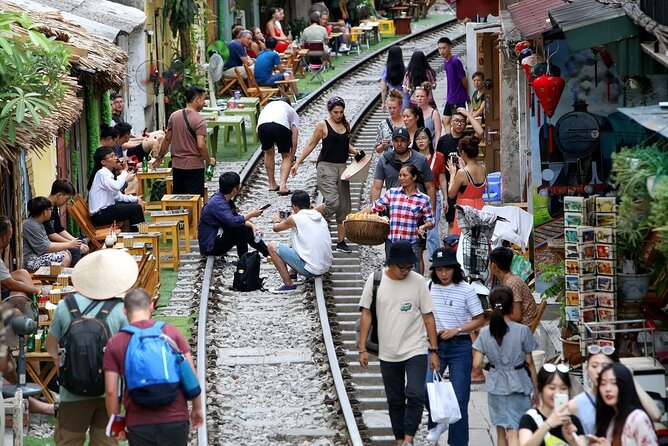
Hanoi can feel like a lot on day one, bright motorbikes, tight streets, and nonstop noise. This tour is built to give you structure fast. You’re not just chasing one Instagram stop. You get a connected route that shows how Hanoi’s layers overlap, old ceremonial places, learning traditions, market life, and that very specific Train Street scene with real rails cutting through the street.
The “private” part matters here. With a group tour, Train Street can turn into a quick shuffle, someone tapping your shoulder to keep moving. With a private setup, you get a bit more control over timing, photo angles, and how long you linger at each stop. In the real world, that means less stress and more time to actually look.
It’s also a good length for hot weather and short visits. Four to five hours is long enough to feel like you saw more than the headlines, but short enough that you’re not stuck all day. Your start time choice, morning or afternoon, helps you match the day to your energy, and it matters because one of the biggest sights on the route has morning restrictions.
Price and what $52 really buys in Hanoi
At $52 per person, you’re paying for more than sightseeing. You’re basically buying three things that are hard to assemble yourself without extra effort: an English-speaking guide, entrance fees for the key stops, and round-trip transfers.
Entrance fees are included for the main sites on the route, including Ho Chi Minh’s Mausoleum, One Pillar Pagoda, the Temple of Literature & National University, Dong Xuan Market, and Train Street. That can be a big value boost compared to DIY, where you end up paying in little chunks and losing time to ticket lines.
Transfers are also where the money quietly saves you time. Pickup is offered from hotels in Hanoi’s Old Quarter, and you get a car for the whole tour. If you’re staying near the noise and bustle of the center, you’ll appreciate not having to negotiate routes or find your way between far-flung stops.
One more value lever: you get a small included break at Train Street with tea (or egg-coffee). It’s not a long meal, but it helps you reset in the middle of a stop that can feel chaotic. Add in the private guide storytelling, and that’s usually what separates a “checklist day” from a day that actually helps you understand what you’re looking at.
Getting picked up, meeting the guide, and avoiding early-day confusion
The tour starts at the Thang Long Water Puppet Theatre area, at 57B Đinh Tiên Hoàng in Hoàn Kiếm. If your hotel is in the Hanoi Old Quarter, pickup is offered, which is the easiest scenario for most people.
If your hotel is near Noi Bai airport, you’ll need to go to the meeting point for pickup or contact the operator for details. That matters because airport-area logistics can be different from Old Quarter pickup, and you do not want to be figuring that out on a tight schedule.
Also note how the day ends. The activity returns back to the meeting point, which can make it easy to plan the rest of your afternoon on foot in the center. If you’re mapping dinners, check that you’re close to where you want to be after the tour ends, because you’ll likely want a short walk or a quick ride, not another long transfer.
Ho Chi Minh’s Mausoleum: timing rules and the dress code reality

This is the stop that can make or break your itinerary flow. The Mausoleum is open only in the morning, from 8:00 AM to 11:30 AM, and it’s closed weekly on Monday and Friday. If your chosen tour date lands on a closure day, or you join after the morning window (and the tour guidance applies, like tours scheduled after 10:00 AM), you visit outside instead of going inside.
There’s also a seasonal closure for maintenance, from June 10 to August 12 each year. If you’re traveling in that window, plan for an outside visit even if you book early.
Dress code is not optional here. Shoulders must be covered, and shorts need to be knee length. If you show up in tank tops or short shorts, you risk delays or being turned away. Bring a light layer that you can slip on quickly. It will make your morning smooth.
The payoff is that even an outside visit can help you understand how the city’s modern political story sits right next to its older cultural routines. With a good guide, this stop becomes more than a building. It becomes a timeline.



One Pillar Pagoda and the Temple of Literature: symbols, learning, and why locals still care
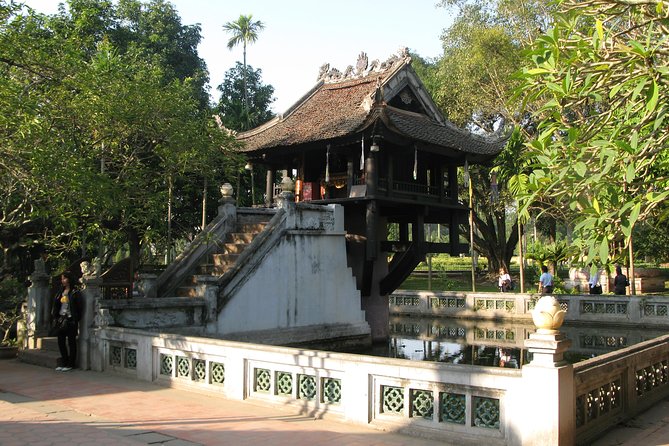
After the Mausoleum, the route moves into spiritual and intellectual Hanoi. One Pillar Pagoda is short, about 30 minutes, and it comes with a legend: it’s said to have been built after a dream connected to Avalokiteshvara, the compassionate being. The point of stopping here is not long sightseeing time. It’s a quick, focused look at an iconic symbol and a way to understand how stories and faith shaped architecture.
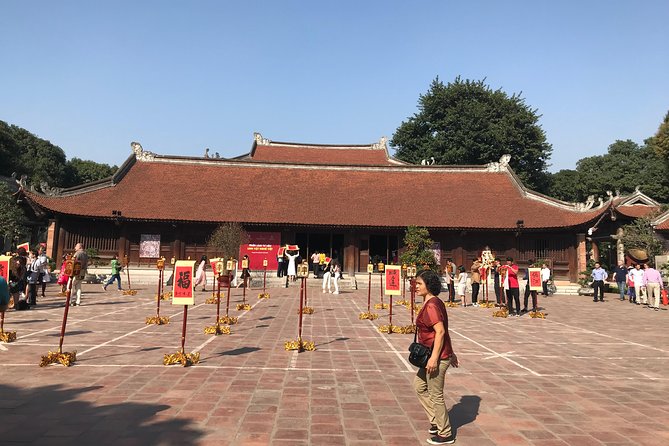
Then you go to the Temple of Literature & National University. This one is your “slow down and look” stop, about an hour. It started as a university in 1070 dedicated to Confucius, and that matters because the site is not just pretty. It was a place where scholarship and exams shaped careers and status. So when you walk around, you’ll want your guide’s context. It helps you read the carvings and courtyards as part of a long system of learning.
This is also where the quality of the guide really shows. I’ve seen guides like Linh and Lan use humor and story to connect the dots, so even if you are not into history, the site feels like it has a pulse. If you enjoy asking questions, this is a good stop to do it, because it’s easier to ask “how did this work?” when you can look at the physical spaces.
Dong Xuan Market and Long Bien Bridge: practical city texture
Markets in Hanoi can be overwhelming. This tour keeps Dong Xuan Market to about 20 minutes, which is enough to take in the scale without turning your whole tour into a shopping marathon. Dong Xuan is described as Hanoi’s largest wholesale market, built in 1889, and you’ll see why the location has such draw. It sits in the center, so it becomes a real snapshot of how commerce continues in the city’s older fabric.
If you’re hungry, be ready for the way food smells and snacks pull at you. The tea/egg-coffee inclusion is later at Train Street, but markets are where you might spot additional quick bites to try if your guide suggests them.
Long Bien Bridge is a quieter pause, about 20 minutes. It’s tied to the French period of construction in the late 1800s and early 1900s, and it has a reputation as a symbol of resilience. It’s not a “stand in the perfect photo spot for 20 minutes” kind of stop, but it works as a breather between the intense scenes.
This part of the day is also a good chance to notice the rhythms of the city, how people move, where the street energy concentrates, and how the older parts of Hanoi still function for daily life.
Train Street time: what to expect, how the rail line changes the feeling
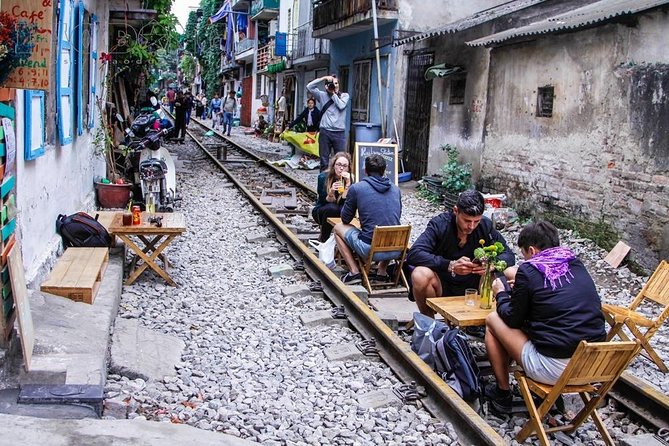
Train Street is the whole reason many people book this tour, and the tour gives you a proper block of time, about 40 minutes, with admission included. The key detail is that it’s not a themed street. It’s an area where real railway lines run through, and that changes everything. The street feels like it’s built around movement you cannot ignore.
You also get tea or egg-coffee while you’re visiting Train Street. That small inclusion matters because Train Street can feel loud, hot, and tightly packed. Having a drink helps you settle so you can actually pay attention to what’s happening.
Practical tip: plan your photo timing. The best photos usually come when you position yourself early and stop constantly shifting your spot. A private guide helps here because they can guide where to stand and how to keep your space while you wait.
One more nice detail I like in the way guides handle this stop: some guides focus on making it comfortable beyond the basics. For example, Sam reportedly had a pre-arranged table reservation, which is the kind of small convenience that can make the experience feel smoother.
Hanoi Opera House exterior: French architecture without the wait
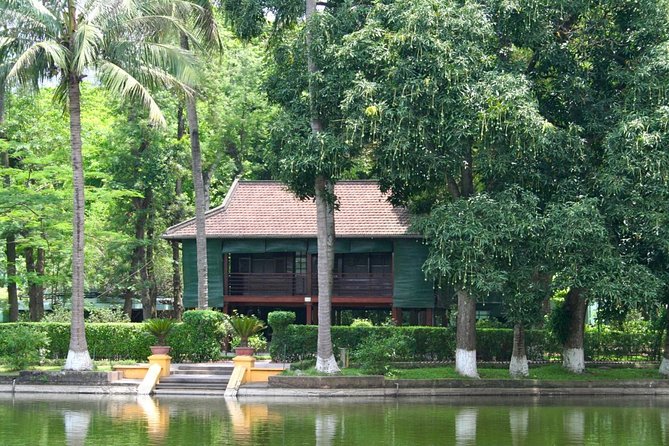
The Opera House stop is short, around 10 minutes, and you’re viewing the exterior. The interior is generally not open to public for casual visits. That means you’re here for architecture and historical context rather than a museum-style walkthrough.
The Opera House was erected by the French colonial administration between 1901 and 1911. Even as an outside view, it helps you see the French imprint in the center of Hanoi. When your guide ties this to what you’ve already seen, the day starts to feel like a story instead of a set of stops.
This is also where the tour’s “more than just the headlines” approach shows up. The tour description points to French colonial architecture photo moments and includes St. Joseph’s Cathedral as part of what you’ll see. You might not get an in-depth stop everywhere, but you should get the idea of the colonial-era streetscape.
If you love photo work, keep your camera ready here. The contrast between the older ceremonial sites and the French-era facades is a big part of what makes central Hanoi feel like a collage.
Guides and pacing: why the best part is the person next to you
This tour’s biggest repeat pattern is the guide. People often mention how guides like Ken, Linh, Lan, Sam, Anna, Andy, and others shared historical context in a way that made the day feel organized and fun. Some guides add dry humor. Others keep things clear and answer questions on the spot, even when you get curious and go off-script.
Pacing is another strength. Half-day tours can turn into a sprint, but the structure here spreads your time across different textures, ceremonial buildings, an academic site, a market, a bridge, Train Street, and a colonial architecture exterior. That mix helps you stay interested, and it reduces the fatigue that comes from doing only one style of place.
There is one caution to balance out the good. On any half-day with fixed opening times, things can shift. If a key site cannot be visited as expected, the plan may adjust, sometimes with less time spent at a stop than you hoped. That’s not unusual, but it’s worth remembering if you are strict about seeing everything inside.
Who should book this Hanoi half-day tour, and who should skip it
This is a great fit if you want a first-or second-day orientation. In a few hours, you’ll get a map of major neighborhoods and key landmarks, plus the context that helps you understand what you are looking at.
It’s also a good choice if you prefer to move with a car instead of navigating traffic and walking everywhere in heat. The route is compact, and the private transfers reduce friction.
You might want to skip or rethink if:
- Your schedule makes it hard to catch morning-only sites like Ho Chi Minh’s Mausoleum.
- You dislike crowds, because Train Street is popular and can feel busy.
- You want deep time in one attraction, since the day is designed for variety, not long stays.
If your travel style is “I want to get oriented and I like learning while I walk,” this tour fits well.
Should you book it?
If your dates allow a morning slot, I’d lean toward booking. The combination of Train Street time, included entrances, and private transfers is strong value, especially when you get a guide who turns the stops into a clear story. The Temple of Literature and One Pillar Pagoda are worth it even when Train Street is the main draw, and the Opera House exterior gives you a fast taste of Hanoi’s French-era side.
Just plan smart around the Mausoleum. If you can schedule for the morning opening window, you’ll have the best chance to see it as intended. If not, it can still be a good day, you just need to accept that part of the experience may shift to an outside view.
More Train Street
- Hanoi: Guided Food Tour with Train Street Visit★ 4.9 · 6,239 reviews
- Hanoi: Street Food Tour with Train Street & Hidden Alleyways★ 5.0 · 2,831 reviews
- Hanoi: Guided Street Food Tour with Train Street Experience★ 4.9 · 2,479 reviews
- Hanoi City Tour Highlight, Train Street Combine visit Countryside★ 5.0 · 925 reviews
- Hanoi Jeep City Highlight, Backstreet, Train Street, Countryside★ 5.0 · 666 reviews
Other Hanoi tours our reviewers keep coming back to
- Hanoi Vespa After Dark Street food + Train Street+ Live Music
★ 5.0 · 18 reviews - (Free Pick-up) Vietnamese Body Massage in Hanoi City
★ 5.0 · 18 reviews - The Insider’s Hanoi,Train Street, Countryside Highlight by Vespa
★ 5.0 · 18 reviews - Skip the line: Thang Long Water Puppet Theater Entrance Tickets
★ 4.0 · 18 reviews - Hanoi Street Food Tour and MORE
★ 5.0 · 18 reviews - Hanoi – Hoa Lu – Tam Coc – Mua Cave – 1 Day / By Luxury Limousine & Small Group
★ 5.0 · 18 reviews
Hanoi Train Street, compared.
 ★ 4.9Hanoi: Guided Food Tour with Train Street VisitFrom $196,239 reviews
 ★ 5.0Hanoi: Street Food Tour with Train Street & Hidden AlleywaysFrom $202,831 reviews
 ★ 4.9Hanoi: Guided Street Food Tour with Train Street ExperienceFrom $172,479 reviews
 ★ 5.0Hanoi City Tour Highlight, Train Street Combine visit CountrysideFrom $59925 reviews
 ★ 5.0Hanoi Jeep City Highlight, Backstreet, Train Street, CountrysideFrom $55666 reviews
 ★ 4.9Hanoi: 7 Tastings Street Food Tour with Train StreetFrom $24541 reviews
 ★ 5.0Guided Hanoi Food Tour With Train Street 8 Different Food TastingFrom $30535 reviews
 ★ 5.0Walking Street Food Tour in Hanoi and Train StreetFrom $38503 reviews
Also in these Vietnam lists