
REVIEW · HALF-DAY
Half-Day Mindfulness Meditation Retreat in Hanoi
Some peace training starts with chanting. This half-day retreat in Hanoi mixes Buddhist ritual (solemn sutra chanting and doctrine lessons) with hands-on mind skills like walking meditation and breathing. You also get a chance to talk with monks, then end with a compassion-focused activity and an included vegetarian lunch.
The program runs about 4 hours and uses a mobile ticket, so it feels structured and easy to fit in. One thing to consider: the price does not include an air-conditioned vehicle, so comfort for getting there and back will depend on your actual transport.
In This Review
- Key Highlights Worth Your Time
- Arriving at the Pagoda and Learning the Rules First
- Chanting Sutras and Picking Up Buddhist Lessons You Can Use Daily
- Qigong and Mindful Breathing for Health and Focus
- Walking Meditation and the Skill of Not Fighting Your Mind
- Touching Peace: Meditation Methods for True Happiness
- Talking With Monks About Doctrine and Renunciation
- Releasing Animals and the Gratitude-Focused Vegetarian Meal
- Gift Exchange, Farewell, and What to Take Home
- Price and Logistics in Hanoi: Is $60 Worth It?
- Who This Retreat Fits Best
- Should You Book This Half-Day Mindfulness Meditation Retreat in Hanoi?
- FAQ
- How long is the Half-Day Mindfulness Meditation Retreat?
- How much does the retreat cost?
- What is included in the price?
- Is transportation included, and is it air-conditioned?
- What ticket type is used?
- About how far in advance do people usually book?
Key Highlights Worth Your Time
- Sutra chanting at the start, so you begin with tradition before you sit down
- A clear sequence: qigong and mindful breathing, then meditation and walking practice
- Talking with monks, focused on doctrine and the noble life of renunciation
- Touching peace style instruction, centered on how to focus your mind for happiness
- Compassion activities, including releasing animals and a grateful meal
- Vegetarian lunch included, so you are not hunting food mid-practice
Narrowing it down? These Hanoi tours kept surfacing in our reviews.
- Hanoi Jeep Tour: Food, Culture and Fun by Vietnam Army Jeep★ 5.0 · 15,222 reviews
- Full-Day Ninh Binh Highlights Tour from Hanoi★ 5.0 · 7,761 reviews
- Hanoi: Ha Long Bay Day Cruise – Swimming, Meal, Kayaking★ 4.7 · 7,415 reviews
- Hanoi: Water Puppet Show Tickets★ 4.6 · 7,029 reviews
Arriving at the Pagoda and Learning the Rules First
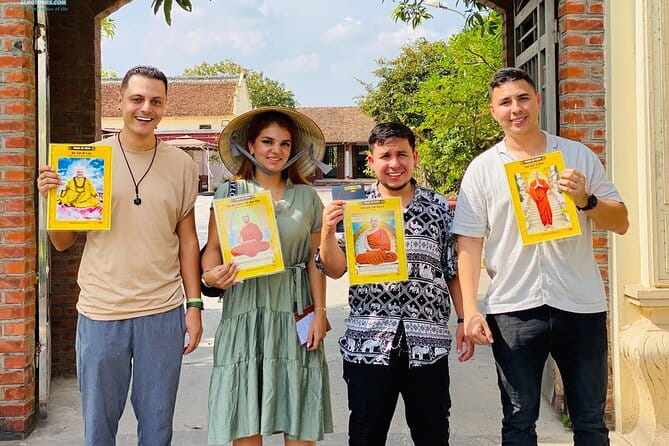
This retreat is built around being inside a Buddhist space from the very beginning. You arrive at the pagoda, and the guide lays out the rules right away. That early briefing matters because meditation is not only a breathing exercise, it is also behavior, speech, and attention. When the expectations are clear, you spend less energy guessing and more time practicing.
You can also treat this briefing like a warm-up. It sets the tone for the next steps, from chanting to sitting still. I like formats like this because they respect the setting instead of treating it like a “quick photo stop then class.” In a place of spiritual practice, the basics first is a big deal.
One practical point: expect a spiritual schedule, not a casual hangout. Your role is to follow along, be respectful, and join the group in the structured moments.
Chanting Sutras and Picking Up Buddhist Lessons You Can Use Daily
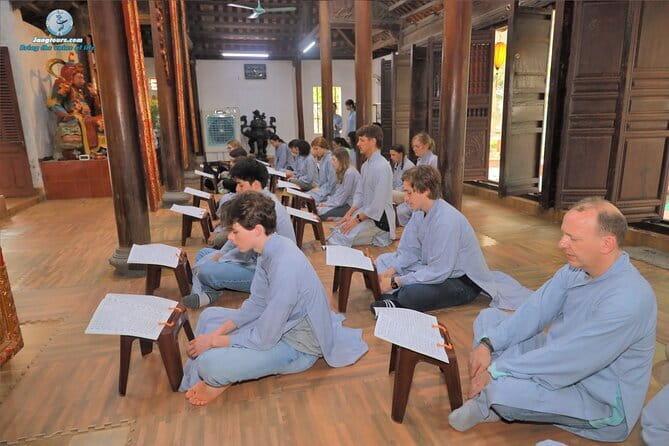
After the rules, the first major activity is chanting solemn sutras. These sutras carry Buddha’s teachings, and the retreat uses that ritual to introduce you to the ideas behind the practice. If you have never chanted in a Buddhist context before, this is a memorable way to enter the subject, because you are not only reading concepts. You are experiencing them through rhythm, repetition, and collective focus.
Then you shift into learning profound Buddhist doctrines with an eye toward daily life. The retreat frames this as more than theory. It links mindfulness to ethics and to how you treat life, not just how you clear your head. In plain terms, you are being offered a mental model: gratitude, loving-kindness, and compassion are not optional “nice-to-haves,” they are habits you can train.
What I like most here is the intent. The retreat does not pretend ethics is separate from meditation. It ties them together, which is exactly where most people struggle at home. You sit for a few minutes, then your day runs the show. Here, you get practice plus meaning.
Qigong and Mindful Breathing for Health and Focus
Next up is qigong and mindful breathing. The retreat presents this as good health work, but it is also a method for settling attention. If meditation feels vague, this section helps you land the plane. You are doing something physical and specific first, which can make it easier to sit later without feeling restless.
Mindful breathing also sets you up for the meditation session that follows. The point is not to force calm. The point is to notice your mind and your breath as you go. Even if you are brand-new, you can usually follow the cues, because breathing gives you a built-in “home base.”
Then you move into tranquil moments, including walking meditation. Walking is underrated training. It teaches awareness when you are upright, moving, and not hiding behind a cushion. For many people, walking meditation is the part that feels most usable on a normal day, like when you need to stay calm on a busy street.
Walking Meditation and the Skill of Not Fighting Your Mind
The retreat’s flow intentionally includes both sitting and walking. That matters because meditation is often sold as stillness. Here, you get a practice that also works while your body is active.
Walking meditation can be especially helpful if you get antsy when you sit too long. It gives your mind something to track, like each step and each shift in attention. You can also use it to notice how quickly thoughts pop up and how quickly you want to chase them. That is basically the whole game.
The retreat’s emphasis on calm moments and mindful movement is a practical reminder: you do not have to wait for a perfect mental mood to begin. You can train attention while you are in ordinary motion.



Touching Peace: Meditation Methods for True Happiness

A key segment in the retreat is the art of touching peace. The guide explains meditation methods and the idea of focusing the mind for true happiness. This is not framed as wishful thinking. It is presented as a training strategy: your attention needs a target, and your mind needs guidance on how to stay with what matters.
If you have ever tried to meditate and then spent the session arguing with yourself, this section is where things can click. Instead of treating meditation as passive “try harder,” you get a structure for attention. You learn how to focus your mind, which makes it easier to return when it wanders.
This part also connects to the retreat’s overall mission: nurture gratitude, loving-kindness, and compassion through earnest Buddhist rituals. So happiness is not just a personal mood, it is tied to how you relate to others and how you practice ethics in your daily choices.
Talking With Monks About Doctrine and Renunciation
The most anticipated moment is when you converse with monks. This is where the retreat stops being only instruction and becomes relationship. You learn more about Buddhist doctrine, and you hear about the noble life of those who renounced worldly pleasures.
That renunciation theme is important. It pushes you to think about what you actually chase day to day, whether it is comfort, status, or distraction. You do not need to copy their lifestyle, but you can borrow the lens. The retreat uses this conversation to highlight ideals behind the rituals, not just the rituals themselves.
Practical expectation: conversation time can be a mix of teaching and listening, and you may not catch everything if you are not familiar with Buddhist terms. Even so, it is still valuable. You are getting direct insight from people living the doctrine, not only learning about it secondhand.
Releasing Animals and the Gratitude-Focused Vegetarian Meal

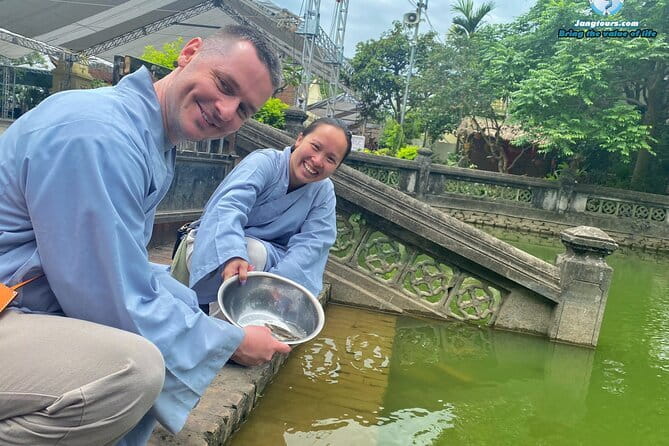
The retreat builds compassion through an activity of releasing animals. This is a moment that shifts the practice from inner work into outward symbolism. It reinforces compassion as something you express, not only something you feel privately.
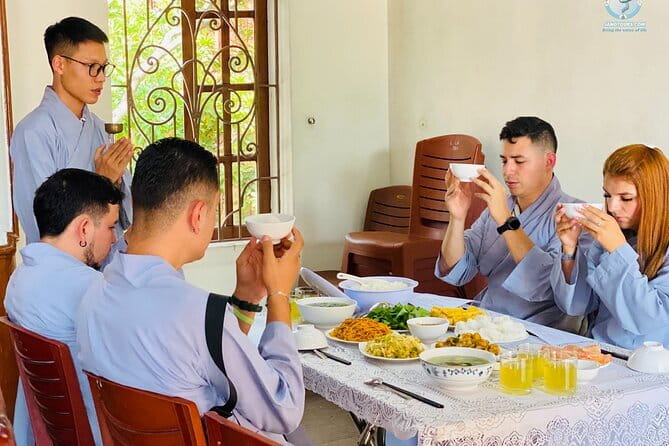
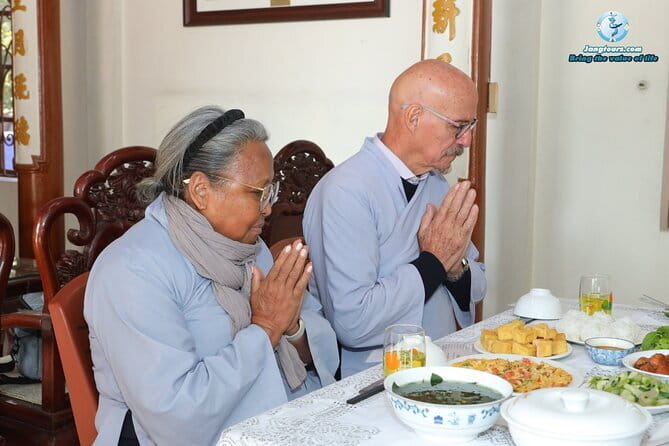
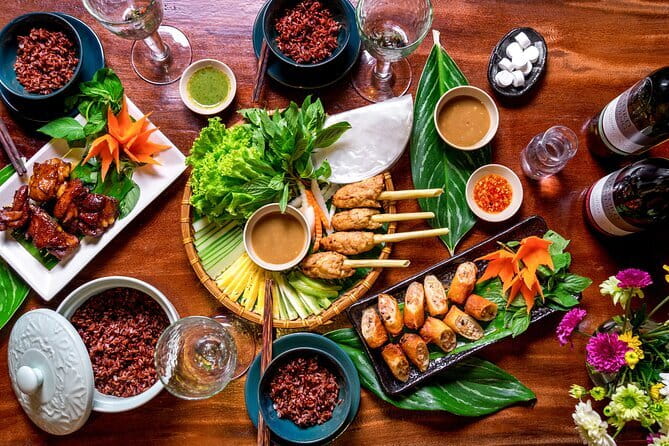
Right after, you enjoy a grateful meal, and vegetarian food is included. For many people, eating with intention is one of the fastest ways to carry the retreat home. You are reminded to connect food, ethics, and gratitude, instead of eating automatically while you scroll or talk about the next distraction.
This is also a practical bonus. With lunch included, you do not have to worry about timing food while your body is still in “practice mode.” You can focus on finishing the program grounded, not hungry and cranky.
Gift Exchange, Farewell, and What to Take Home
The retreat ends with exchange gifts and a farewell. It is a simple closing ritual, but it gives the experience a clear boundary. You do not leave mid-flow. You complete the arc: rules, chanting, breathing and meditation, walking, monk conversation, compassion activity, then gratitude and closing.
If you want to get value beyond the four hours, use the retreat like a starter kit. Pick one element that felt easiest to follow, like mindful breathing or walking meditation. Then practice it at home for a few minutes on days you feel busiest. The point is consistency, not intensity.
The retreat’s focus on gratitude, loving-kindness, and compassion also helps you decide how to apply what you learned. You can use it as a checklist for daily behavior, like asking what you appreciate, how you soften your tone, and how you respond with more patience.
Price and Logistics in Hanoi: Is $60 Worth It?
At $60 per person, you are paying for a guided half-day in a pagoda setting with structured activities and included lunch. For this price, the value comes from the mix. You are not only getting meditation instruction. You are getting solemn sutra chanting, qigong and mindful breathing, sitting and walking meditation, a conversation with monks, and a compassion-focused activity, plus vegetarian lunch.
Two logistics notes matter. First, the duration is about 4 hours, so it is realistic for a packed Hanoi itinerary. Second, an air-conditioned vehicle is not included. That does not mean it will be uncomfortable, but it does mean you should plan for local transport conditions.
Overall, I see this as good value if you want a meaningful introduction to Buddhist ritual plus practical mind training, not just a generic meditation class.
Who This Retreat Fits Best
This retreat fits best if you want a structured experience with real context. It is ideal for first-timers who are curious about Buddhist rituals, ethics, and how to approach meditation with guidance.
You’ll likely enjoy it if you like learning through a sequence, starting with chanting, then moving into breathing and mindful movement, then finishing with compassion and a gratitude-centered meal. It is also a solid choice if you want a half-day activity that feels purposeful and not like a tourist shuffle.
It may be less ideal if you prefer meditation without religious ritual, or if you feel strongly about participating in an animal-release symbolism. In that case, think carefully about what you are comfortable joining.
Should You Book This Half-Day Mindfulness Meditation Retreat in Hanoi?
Yes, if you want a short, guided introduction to Buddhist practice that goes beyond sitting. This one gives you a full arc: chanting, doctrine lessons, qigong and mindful breathing, walking meditation, a monk conversation, compassion work, and a vegetarian lunch.
Book it if you like hands-on structure and you want something you can carry into daily life as ethics plus attention training. If you know you prefer quiet instruction over ritual, or you need fully air-conditioned, comfort-first logistics, consider whether the setting and transport style match your needs.
FAQ
How long is the Half-Day Mindfulness Meditation Retreat?
The retreat lasts about 4 hours.
How much does the retreat cost?
It costs $60.00 per person.
What is included in the price?
Lunch vegetarian food is included.
Is transportation included, and is it air-conditioned?
An air-conditioned vehicle is not included.
What ticket type is used?
You receive a mobile ticket.
About how far in advance do people usually book?
On average, it is booked 47 days in advance.
Other Hanoi tours our reviewers keep coming back to
- Hanoi Vespa After Dark Street food + Train Street+ Live Music
★ 5.0 · 18 reviews - (Free Pick-up) Vietnamese Body Massage in Hanoi City
★ 5.0 · 18 reviews - The Insider’s Hanoi,Train Street, Countryside Highlight by Vespa
★ 5.0 · 18 reviews - Skip the line: Thang Long Water Puppet Theater Entrance Tickets
★ 4.0 · 18 reviews - Hanoi Street Food Tour and MORE
★ 5.0 · 18 reviews - Hanoi – Hoa Lu – Tam Coc – Mua Cave – 1 Day / By Luxury Limousine & Small Group
★ 5.0 · 18 reviews
Half-Day, compared.
 ★ 5.0Cu Chi Tunnels Half-Day Tour: Vietnam War Underground NetworkFrom $232,587 reviews
 ★ 5.0Small-Group Cu Chi Tunnel Half-day Tour: Morning or AfternoonFrom $401,521 reviews
 ★ 5.0Hanoi Half-day with Food + Fun + Culture By Russian JeepFrom $701,243 reviews
 ★ 5.0Ho Chi Minh City Private Half-Day Tour by U.S Army JeepFrom $711,164 reviews
 ★ 5.0Ben Duoc ‘Less-Crowded’ Cu Chi Tunnels Half-Day TourFrom $34712 reviews
 ★ 5.0Afternoon Cu Chi Tunnels – Small Group Half-Day TourFrom $25481 reviews
 ★ 5.0From Ho Chi Minh: Cu Chi Tunnels Half-Day History Tour with GuideFrom $14480 reviews
 ★ 5.0Hanoi City Tour: Private Half-Day Customized with Train StreetFrom $45455 reviews