

REVIEW · WALKING TOURS
Full-Day Private Walking Tour in Hanoi City
Hanoi fits neatly into one focused walk. This private route strings together the Old Quarter guild streets and the French Quarter mood in a way that helps you actually understand what you’re seeing.
I like two things most: the structured stop sequence (temples, a historic house tied to Ho Chi Minh, Hoan Kiem Lake, and St. Joseph’s Cathedral), and the way you get an English-speaking local student guide to explain the meaning behind each place. One consideration: if your guide is weaker on navigation or local context, the experience can feel less smooth, so it pays to confirm the guide details when you book.
In This Review
- Key highlights you will feel right away
- A 3 to 4 hour route that makes Hanoi easier to read
- Getting picked up in Hanoi, without wasting your best energy
- Old Quarter stop-by-stop: temples, tube houses, and street-level history
- Kim Ngân Temple, a communal house with trade roots
- The Old House (Memorial House), the tube-house layout lesson
- Bach Ma Temple, an 11th century anchor
- 48 Hang Ngang Street, Ho Chi Minh and the Declaration
- Hoan Kiem Lake, the turtle tower viewpoint and a breather
- Dền Ngọc Son and Ngoc Son Temple, Huc Bridge’s red approach
- St. Joseph’s Cathedral, the shift into French Quarter style
- French Quarter contrast: how the walk changes your eyes
- What it costs in real life: $35 plus a couple entrance fees
- Street food and pacing: where you can spend, and where to keep it simple
- Guide quality: usually a win, but watch for route confidence
- Who should book this walking tour, and who might want something else
- Should you book this Hanoi Old and French Quarter walk?
- FAQ
- How long is the walking tour?
- What time does hotel pickup happen?
- Is this tour private?
- What is included in the tour price?
- Which entrance fees are not included?
- Do I need to pay for food and drinks?
- What if the weather is bad?
Key highlights you will feel right away
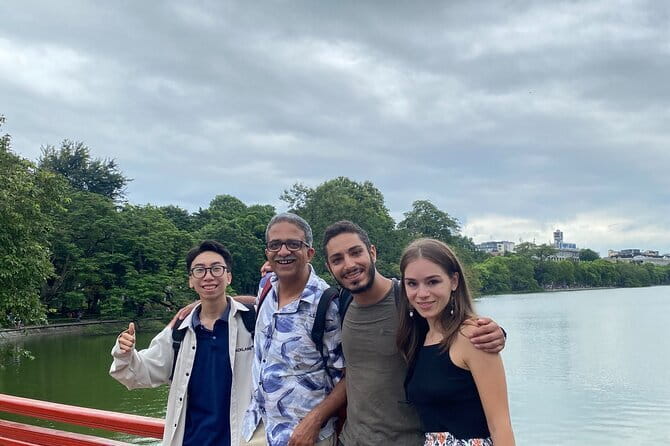
- Private group, only your party, so the pace can match your comfort level
- Hotel pickup at 9:00 or 14:00, making the walk easy to plug into your day
- A mix of Vietnamese religious sites and French-era landmarks, not just one theme
- Hoan Kiem Lake + Ngoc Son Temple, including the Huc Bridge approach
- Extra paid entrances are limited, mainly Ngoc Son Temple and the Ma May Old House
Narrowing it down? These Hanoi tours kept surfacing in our reviews.
- Hanoi Jeep Tour: Food, Culture and Fun by Vietnam Army Jeep★ 5.0 · 15,222 reviews
- Full-Day Ninh Binh Highlights Tour from Hanoi★ 5.0 · 7,761 reviews
- Hanoi: Ha Long Bay Day Cruise – Swimming, Meal, Kayaking★ 4.7 · 7,415 reviews
- Hanoi: Water Puppet Show Tickets★ 4.6 · 7,029 reviews
A 3 to 4 hour route that makes Hanoi easier to read
Even though this is advertised as a full-day experience, the real magic here is the tight timing. You’re looking at about 3 to 4 hours of walking and stopping, usually starting either 09:00 or 14:00 with hotel pickup. That time window is long enough to see meaningful sites, but short enough that you can still eat well and explore on your own afterward.
What I find practical about this tour style is that it helps you connect the dots. Hanoi’s Old Quarter can look like a maze of narrow lanes and signage. On foot with a guide, you start to understand why specific streets formed around trades, why certain communal spaces matter, and why French-era buildings appear just a shift away from the older core.
You’ll also get a good sense of the city’s “layers.” One part of the walk sits in the older, temple-and-community rhythm. The later part moves toward the more formal, French-colonial look, with St. Joseph’s Cathedral as a clear anchor.
Getting picked up in Hanoi, without wasting your best energy
The tour begins with hotel pickup, and that matters more in Hanoi than in many places. Old Quarter streets are busy, narrow, and sometimes chaotic. Starting with someone who can get you to the right zone means you spend your energy on the sights, not on figuring out which lane leads where.
You get two options:
- 09:00 departure for a morning walk
- 14:00 departure for an afternoon walk
If you’re planning other activities the same day, I suggest pairing the morning version with lighter plans after lunch. The afternoon option can work great if you want a slower start, then a guided walk that carries you into the early evening atmosphere near Hoan Kiem.
One more thing to keep in mind: this is a walking tour with moderate fitness requirements. Even if you are comfortable walking, expect uneven sidewalks at times and a fair number of stop-and-go transitions.
Old Quarter stop-by-stop: temples, tube houses, and street-level history
The Old Quarter segment is where the tour earns its structure. You’ll move through a sequence of community worship sites and historic addresses, so the area stops feeling like random scenery.
Kim Ngân Temple, a communal house with trade roots
Your first major stop is the Kim Ngân communal house on Hang Bac Street. This is not just a temple stop. It’s described as a space built for social gatherings and worship of a legendary figure revered as the inventor of all trades. That framing helps you understand the Old Quarter’s original logic: the city wasn’t just about markets, it was about shared identity through specific crafts.
Plan on about 30 minutes here. Since the tour includes the admission ticket, you can focus on the architecture, the rituals happening inside (if any), and the guide’s explanation of why this kind of communal worship mattered.
A practical note: communal houses can be sensitive spaces. Keep your pace respectful, and avoid turning this into a quick photo dash.



The Old House (Memorial House), the tube-house layout lesson
Next you visit the Heritage House, also known as the Memorial House, where you’ll learn about the layout of tube-houses. These are the narrow, deep homes designed around limited street frontage. The value of this stop is that it gives you a physical explanation for why the Old Quarter looks the way it does: narrow entrances, interior depth, and how families adapted to space constraints.
You’re typically shown through multiple rooms by a volunteer. The admission ticket for this stop is not included, so you should expect to pay a small entrance fee on your side. Still, it’s one of those stops that changes how you walk afterward, because you can start spotting the home style behind doors and gates.
Bach Ma Temple, an 11th century anchor
Then you head to Bach Ma Temple, erected in the 11th century during the reign of Emperor Ly Thai To. The tour highlights it as the oldest of its kind and an important structure in Vietnamese religion. Even if you’re not a religious-history person, these older temples are often where you see the continuity of local belief systems, and where the city’s centuries overlap.
This stop runs about 30 minutes, and the admission ticket is included. You can visit the temple, but you should expect on-site guidance on how visitors behave in sacred space. Think quiet voices, slower movement, and follow whatever rules the guide or staff mention.
48 Hang Ngang Street, Ho Chi Minh and the Declaration
At No. 48 Hang Ngang Street, you see the house where Ho Chi Minh penned the Declaration of Independence in late August 1945. This is one of the tour’s strongest “big-picture” moments because it places a key national turning point right inside the everyday fabric of the Old Quarter.
The tour treats this as a 30 minute stop, and the visit is free. I like this portion because it shifts you from craft and communal life toward modern national history, without leaving the Old Quarter lanes behind.
If you want to make this moment stick in your mind, pay attention to where you stand relative to the street and entrances. It’s easier to grasp the scale of history when you can see the exact street setting it happened in.
Hoan Kiem Lake, the turtle tower viewpoint and a breather
After the temple and historic house stops, you get a reset at Hoan Kiem Lake, also called the Lake of the Restored Sword. This is one of the most recognizable spots in Hanoi, located right in the heart of the Old Quarter.
You’re given about 30 minutes, and the admission ticket is included. There’s time to walk around the lake and get photos, with the Turtle Tower as the focal feature across the water.
What makes this stop valuable on a walking tour is that it helps you recover. You’ve been in temples and tight streets. Here you can breathe, take in the lake views, and watch the mix of locals moving through the area.
Dền Ngọc Son and Ngoc Son Temple, Huc Bridge’s red approach
Next is Ngoc Son Temple in Dền Ngọc Son, accessible via Huc Bridge, a red and wooden footbridge. The tour notes that the shrine honors military commander Tran Hung Dao, who battled Mongol forces. It’s also described as an 18th-century pagoda-style temple.
This stop is about 30 minutes, and the admission ticket is included on the itinerary. Separately, the tour’s extra-cost notes list Đền Ngọc Sơn entrance fees at $2 per person, so plan to have that covered as part of your own budget.
This is one of those Hanoi experiences where timing matters for photos. If the lighting is right, the bridge and the temple setting look dramatic. Even if it’s not perfect weather, the scene still helps you understand why Hoan Kiem is the city’s visual center.
St. Joseph’s Cathedral, the shift into French Quarter style
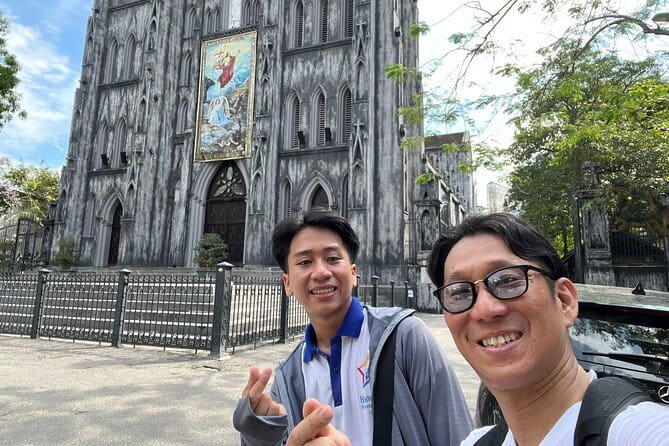
The tour ends the formal sightseeing around the St. Joseph’s Cathedral on Nhà Chung Street. It’s described as a late 19th-century Gothic Revival, Neo-Gothic style Catholic church, in the Hoàn Kiếm District.
You only get about 15 minutes here, and the admission ticket is included. That’s enough for a quick exterior look and a calm interior moment if it’s open to visitors. The real point is the contrast. You’ve spent the morning or afternoon moving through older communal life and Vietnamese temple space. Now you see French-era architecture that feels visually different in shape, materials, and styling.
The French Quarter part of the tour makes more sense once you include this cathedral stop. Even if you don’t have time for a full colonial-walking day, you still get a clear “before and after” in the city’s look.
French Quarter contrast: how the walk changes your eyes
The overview says the tour uncovers contrasts between the historic Old Quarter and the elegant French Quarter, and the route supports that idea. You start with places rooted in community worship and trade identity. Then you move toward more formal, monumental architecture.
I recommend treating the transition as a cue for your own attention. When you reach the later part of the walk, slow down and look at the building lines and street edges. You’ll probably notice broader visual spacing and more architectural symmetry around the cathedral area compared to the tight Old Quarter lanes.
This is also a good moment to ask your guide how the two worlds coexisted in Hanoi. Even with just a few minutes of conversation, you’ll likely pick up on the idea that Hanoi didn’t replace its old center when newer European influence arrived. The city layered them, street by street.
What it costs in real life: $35 plus a couple entrance fees

The price is $35.00 per person. On paper, it looks straightforward. In practice, value comes from what’s included and what you can expect to pay separately.
Included:
- A tour guide (English-speaking local student)
- Hotel pickup
- Tickets for several major stops, based on the itinerary
Not included (extra you should budget):
- Food and drinks (personal spending)
- Tips for the guide
- Entrance fees at Ngọc Sơn (listed as $2 per person)
- Entrance fee at the Ma May Old House / Old House (listed as $1 per person), plus guide-related entrance fee notes
Why I think it still feels like good value: the guide handles the route and explanations across multiple important sites in a short block of time. You’re not just visiting one attraction. You’re getting a sequence that covers religion, domestic architecture (tube-houses), modern historical context, and French-era architecture. In Hanoi, that kind of structured route often saves you both time and confusion, especially in the Old Quarter.
Also, small entrance fees are pretty normal in this style of tour. The key is that the “paid extras” are relatively limited to a couple of specific stops, rather than turning into a pile of charges every 15 minutes.
Street food and pacing: where you can spend, and where to keep it simple

The tour overview mentions street food as part of the experience. The itinerary itself focuses on temples, historic addresses, and landmarks, so food likely becomes an on-the-walk option rather than a formal sit-down meal. That fits with the note that foods and drinks are not included.
Here’s a smart way to handle it:
- If you’re hungry, pick one simple snack or drink during a break
- Keep water handy, since walking plus temple visits can add up
Pacing matters because many stops are around 30 minutes. That’s enough time to enter, listen, and look around without rushing. When you reach Hoan Kiem Lake, take advantage of that pause to sit for a moment if you need it.
If you have a camera, this is also a good tour for photos. The Huc Bridge approach, Hoan Kiem shoreline angles, and exterior looks at the cathedral give you more than one “easy win” shot.
Guide quality: usually a win, but watch for route confidence
Most people rate this experience very highly, with 96% recommending it and an average 4.9 from 27 reviews. One highlight includes a guide named Minh (Arthur), praised for sharing Hanoi with both expertise and real enjoyment of his hometown.
That said, there’s one practical consideration worth taking seriously. A walking tour is only as good as the guide’s ability to keep the flow right. If the guide seems unsure about where to go next or how to frame each stop, the experience can feel choppy and less meaningful.
How do you protect yourself? When you book, confirm the guide name if that detail is available, and arrive a few minutes early for the pickup so the start is smooth. Once you’re underway, ask one clear question early on, like what you should notice at the first stop. A confident guide will answer in a way that sets the tone for the whole walk.
Who should book this walking tour, and who might want something else

This tour is a good fit if:
- You want a first-time-friendly way to cover Old Quarter highlights plus a French-era architectural contrast
- You prefer structure, with an English-speaking guide guiding you from stop to stop
- You enjoy temples, historic addresses, and seeing how daily life connects to the past
- You like a shorter tour block, 3 to 4 hours, rather than an all-day marathon
You might look for a different option if:
- You want long time at each attraction. Here, most stops are around 30 minutes, so you will move.
- You’re extremely sensitive to guide variations. Because it’s private, it will be your guide and your group only, so you want confidence in the person leading.
Should you book this Hanoi Old and French Quarter walk?
I’d book it if you want the most efficient way to understand Hanoi in one guided session. The mix of Hoan Kiem Lake, Ngoc Son Temple, the 1945 Declaration-linked house at 48 Hang Ngang, tube-house history at the Old House, and the architectural contrast of St. Joseph’s Cathedral gives you a clear, balanced picture without spending your whole day in transit.
Before you confirm, plan for the two likely paid entrances, Ngọc Sơn ($2 per person) and the Old House ($1 per person), plus your own spending for food and drinks. Then show up with comfortable shoes and a willingness to slow down at temples and sacred spaces.
If you want a Hanoi walk that helps you see the city’s layers instead of just checking off points, this private route is a strong choice.
FAQ
How long is the walking tour?
It runs about 3 to 4 hours.
What time does hotel pickup happen?
Pickup is offered at 09:00 or 14:00, depending on the option you choose.
Is this tour private?
Yes, it’s private, and only your group participates.
What is included in the tour price?
The tour includes a tour guide (English-speaking local student). Some site admission tickets are also included based on the stops.
Which entrance fees are not included?
Entrance fees are listed as extra for Ngọc Sơn (shown as $2 per person) and the Ma May Old House / Old House (shown as $1 per person).
Do I need to pay for food and drinks?
Yes. Personal expenses (foods, drinks) are not included.
What if the weather is bad?
The experience requires good weather. If it’s canceled due to poor weather, you’ll be offered a different date or a full refund.
Other Hanoi tours our reviewers keep coming back to
- Hanoi Vespa After Dark Street food + Train Street+ Live Music
★ 5.0 · 18 reviews - (Free Pick-up) Vietnamese Body Massage in Hanoi City
★ 5.0 · 18 reviews - The Insider’s Hanoi,Train Street, Countryside Highlight by Vespa
★ 5.0 · 18 reviews - Skip the line: Thang Long Water Puppet Theater Entrance Tickets
★ 4.0 · 18 reviews - Hanoi Street Food Tour and MORE
★ 5.0 · 18 reviews - Hanoi – Hoa Lu – Tam Coc – Mua Cave – 1 Day / By Luxury Limousine & Small Group
★ 5.0 · 18 reviews
Walking Tours, compared.
 ★ 5.0Private Street Food Evening Walking Tour in Ho Chi Minh CityFrom $493,175 reviews
 ★ 5.0[HOT] Hanoi Old Quarter Walking Street Food – Small Group TourFrom $142,163 reviews
 ★ 5.0Super Niche Walking Street Food Tour in Ho Chi Minh CityFrom $291,636 reviews
 ★ 5.0Private Walking Tour of Hanoi CityFrom $51,251 reviews
 ★ 4.8Hanoi: Small-Group Street Food Walking TourFrom $151,165 reviews
 ★ 5.0Private Hanoi Street Food Walking Tour With Real FoodieFrom $361,042 reviews
 ★ 4.8Hanoi: Michelin Guide Street Food Walking TourFrom $19961 reviews
 ★ 5.0Hanoi Walking Street Food Tour with Train-Street VisitFrom $18857 reviews
Also in these Vietnam lists