
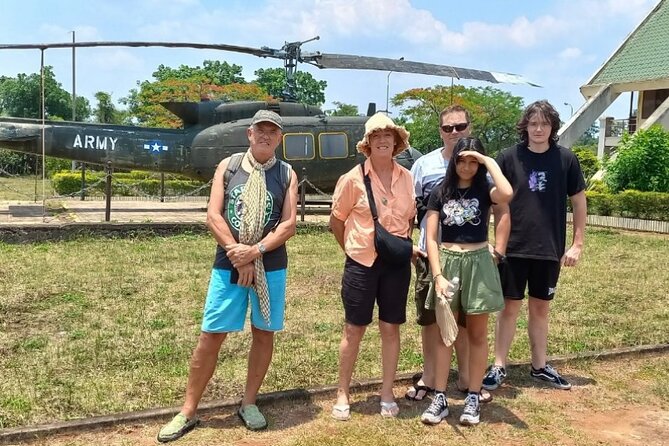
REVIEW · VIETNAM WAR HISTORY SITES
Full-Day DMZ Tour: 17th Parallel, Vinh Moc Tunnel & Khe Sanh Base
War history hits harder here, with real places.
I like that the day includes key DMZ stops with admission tickets, plus a proper lunch in Quang Tri, not just a rushed drive-by. I also like the small group setup (up to 15) and the English-speaking guide, who can connect what you see to what happened on the ground. The main consideration is the subject matter is heavy, so it is not the best pick if you want a light, casual day.
You also get practical comforts that matter on a 10 to 11 hour route: hotel pickup in Dong Hoi city, air-conditioned transport, bottled water, and even a travel hat. With a full day schedule, you will want to plan for long sitting time and early starts.
In This Review
- Key things I’d watch for on this DMZ tour
- A 7:00 am Dong Hoi start that sets your whole pace
- Vinh Mộc Tunnel: seeing the war from underground
- Bến Hải River and the 17th Parallel: a border you can stand on
- Khe Sanh Combat Base museum: relics that explain the 170-day battle
- Đa Krông Bridge: the Ho Chi Minh Trail origin point
- Bodhi School Relic Site: the quiet side of war memory
- Quang Tri Citadel: 1972 fighting and a bombed memorial zone
- Lunch in Quang Tri and staying comfortable during a long war day
- Price and value: about $80.73, and what that covers
- Who this DMZ tour fits best, and who might not love it
- Should you book this DMZ tour from Dong Hoi?
- FAQ
- What is the duration of the full-day DMZ tour?
- How much does the tour cost?
- Where is the tour meeting point and what time does it start?
- Is hotel pickup included?
- What stops are included in the itinerary?
- Are admission tickets included?
- Is lunch included, and are vegetarian options available?
- What language is the guide?
- How large is the group?
- What is the cancellation policy if plans change?
Key things I’d watch for on this DMZ tour
- Vinh Moc Tunnel stop (1 hour 30 minutes, ticket included) for a moving look at the civilian cost of the war
- Bến Hải River and the 17th Parallel bridge (30 minutes, free) to understand the line between north and south
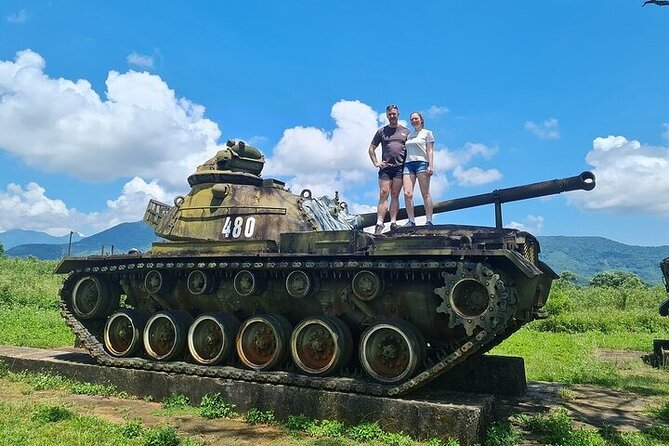
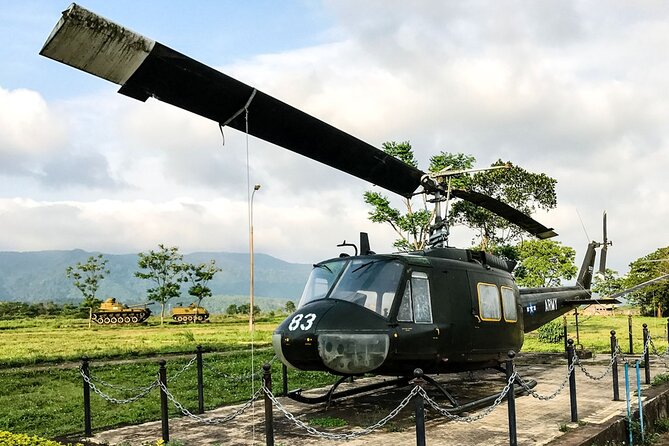
- Khe Sanh Combat Base museum (2 hours, ticket included) with visible war relics like destroyed tanks and aircraft
- Đa Krông Bridge (30 minutes, ticket included) tied to the Ho Chi Minh Trail story and repeated destruction
- Quang Tri Citadel (1 hour, ticket included) focused on 1972 fighting and today’s memorial setting
- Up to 15 people with English guidance plus hotel pickup and drop-off, which keeps the day organized
Narrowing it down? These Dong Hoi tours kept surfacing in our reviews.
- Phong Nha Cave and Paradise Cave: Guided Boat Tour & Exploration★ 5.0 · 294 reviews
- Paradise Cave – Phong Nha Cave 1 day tour in National Park★ 5.0 · 214 reviews
- From Dong Hoi: Paradise Cave, Phong Nha Cave Tour, and Lunch★ 4.6 · 204 reviews
- Phong Nha & Paradise Cave – 1 Day All Inclusive★ 5.0 · 166 reviews
A 7:00 am Dong Hoi start that sets your whole pace
This tour is built for an early day, starting at 7:00 am from SOVABA TRAVEL at 15A Phan Bội Châu in Đồng Hới (Dong Hoi). You return to that same meeting point at the end. If you are staying in Dong Hoi city, you get hotel pickup and drop-off. The route uses an air-conditioned vehicle and covers multiple sights in Quang Trị, then back to Dong Hoi.
Why the early start helps: the big sights are spaced out by driving time, and once you reach the DMZ area, the schedule compresses. You will still have breaks at each stop, but the overall flow is one long “see, learn, move” day. That is exactly why having a guide, admissions, and a planned lunch matters. You are not trying to coordinate buses between war sites yourself.
Also, the group limit is 15 travelers, so you are not stuck in a huge crowd. It is still a full-day outing, so expect plenty of time in the vehicle, not just at each monument.
Vinh Mộc Tunnel: seeing the war from underground
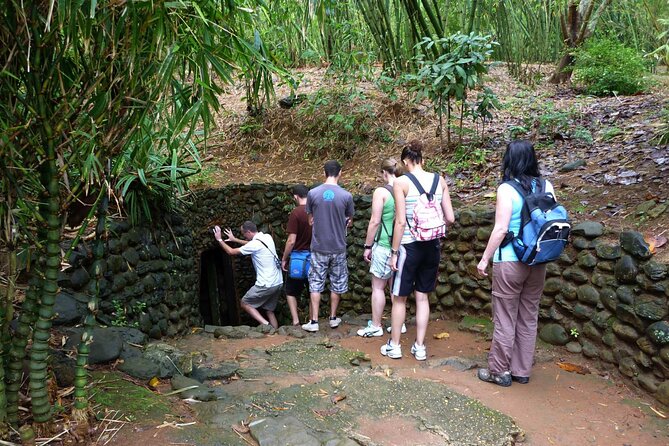
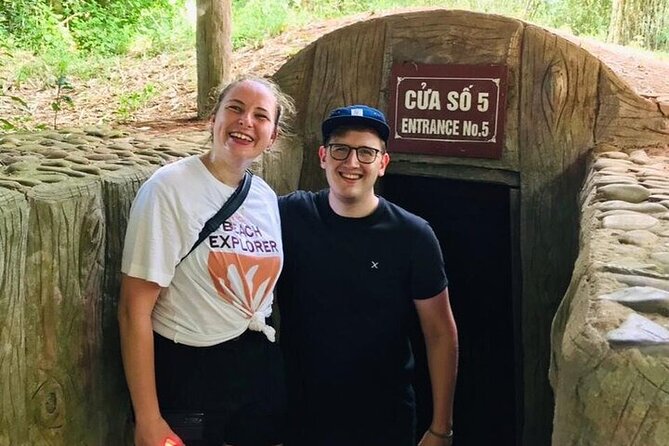
The first stop is the Vinh Mộc Tunnel, with 1 hour 30 minutes and an admission ticket included. This is one of the hardest places on the itinerary. The site connects to an attack on Highway 1 on May 1, 1972, when thousands of civilians were killed, including women, children, the elderly, and soldiers. It is described as one of the most horrifying massacres of the Vietnam War, and the memorial framing makes sure you understand what you are looking at.
What you will likely appreciate here is not just the tunnel itself, but the way the tour guide connects it to civilian survival. A tunnel is practical architecture, and on this route it becomes evidence of fear, improvisation, and the brutal reality that even people who were trying to stay hidden could be caught.
A practical note: bring comfortable shoes and light layers. You will spend time moving around and reading, and tunnels tend to feel cooler and enclosed. If you are sensitive to enclosed spaces, pace yourself and take breaks when you need them.
Bến Hải River and the 17th Parallel: a border you can stand on
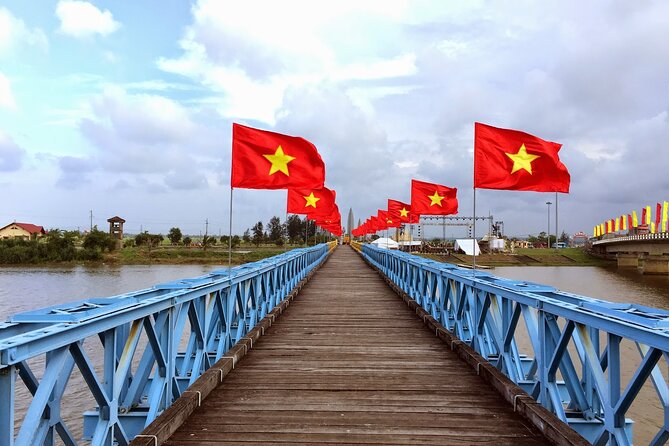
Next comes the Bến Hải River stop, right by the famous 17th Parallel marker. This segment is 30 minutes, and admission is free. The key idea is the division of Vietnam under the 1954 Geneva Agreements, with the parallel serving as the painful symbol of separation for 21 years until reunification.
This stop works well because it changes the tone from “war sites” to “the geography of a political decision.” From a visitor perspective, it is easier to picture history when you are physically at the line. The bridge over the river is also a useful reference point for photos, because you can frame the day’s theme visually: before and after, north and south, a country split by an invisible rule until later events made that rule end.
Because the time here is short, you should use it to ask your guide questions. If something feels unclear, this is the part where it is easiest to get context fast.
Khe Sanh Combat Base museum: relics that explain the 170-day battle
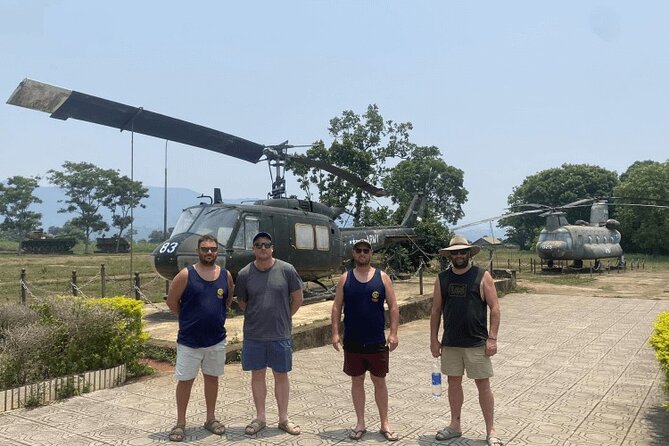
The third major stop is the Khe Sanh Combat Base, with 2 hours and admission included. Today it functions as a museum with war relics, including destroyed US tanks and aircraft from the Battle of Khe Sanh, described as an intense 170-day battle.
This is where the tour becomes less about broad memorials and more about tangible objects. Museums like this can sometimes feel like a display. On this itinerary, the guide’s role is what keeps it from turning into a quick photo stop. When someone can explain why tanks and aircraft ended up here, you understand the logic of the battle more clearly, not just the headline duration.
What I’d do during this stop: focus on how the relics relate to the terrain and strategy the guide describes. Even if you are not a military-history person, you can still follow the story through the objects. The time block is generous enough that you can read carefully without feeling you are being rushed out.
Đa Krông Bridge: the Ho Chi Minh Trail origin point
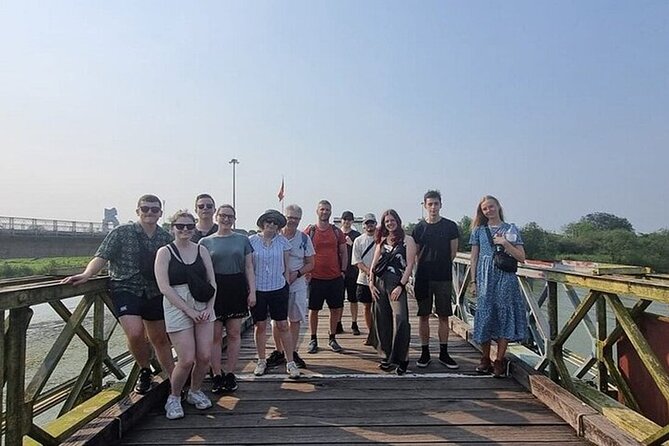
You then reach Đa Krông Bridge, scheduled for 30 minutes with an admission ticket included. This bridge is considered the starting point of the Ho Chi Minh Trail. During the war, it was a heavily contested site, and it was destroyed multiple times before being rebuilt later as a symbol of resilience.
This stop is short, but it is placed strategically in the itinerary. After Khe Sanh and the 17th Parallel, Đa Krông shifts the story toward movement, supply routes, and the ways the war expanded beyond a single battlefield. Bridges are also good “hinge” sites for understanding because they are control points. If you control crossing, you control access.
For photos, treat this as a documentation moment rather than an all-day wander. The value is in understanding what the location represents, then moving on.
Bodhi School Relic Site: the quiet side of war memory
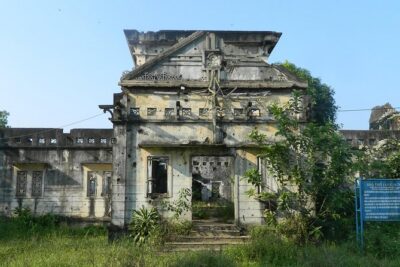
The Bodhi School Relic Site is next, with 30 minutes and admission included. This is described as a historic school deeply marked by wartime memories, where you can see weathered walls and quiet remnants that reflect resilience during the most trying moments.
This stop is emotionally different from the larger battle-oriented sites. Instead of focusing on tanks or a citadel, you are looking at a place meant for learning, shaped by conflict. Even in a short time window, it helps you balance the day. The war did not only happen at battle lines. It changed schools, routines, and childhood.
If you want to get the most out of this stop, lower your pace. Read slowly and look at the building details your guide highlights. A 30-minute block can feel tight, but school relic sites are the kind of place where a few extra seconds of attention make a big difference.
Quang Tri Citadel: 1972 fighting and a bombed memorial zone
The final scheduled stop is Quang Tri Citadel, with 1 hour and admission included. This is a historic battlefield connected to resistance against the US in 1972, with fighting lasting over 81 days. The area was devastated by thousands of tons of bombs, and today it serves as a memorial that helps you connect the scale of destruction to remembrance.
Why this stop matters on a DMZ day: the day’s other sites are spread out across different parts of the story. Quang Tri brings the story back into a focused “place name” battle space. It is also one of the most powerful stops for understanding how long conflict can last. When you hear 81 days, it can stay abstract. Here, the memorial framing helps make the time feel real.
Practical tip for this part of the day: wear sunscreen and take breaks. Citadel areas can be exposed depending on where you walk. Your guide will keep you moving, but you will still want to have water in hand and a hat ready.
Lunch in Quang Tri and staying comfortable during a long war day
Lunch is included, eaten at a restaurant in Quang Tri. There is also an option to choose vegetarian dishes. This matters more than it sounds. On a full-day route with multiple sites and no control over when you get hungry, a planned lunch keeps you from spending your energy searching for food or sacrificing the last two stops.
Other included comforts that make the pacing easier: bottled water and a travel hat. An air-conditioned vehicle also helps a lot when Central Vietnam is hot.
What you should plan for mentally: the tour is 10 to 11 hours, so even if every stop is scheduled efficiently, you will still feel tired. I like tours like this best when I accept that the goal is education plus respect, not “sightseeing sprinting.”
Price and value: about $80.73, and what that covers
The price is $80.73 per person, which is fair when you look at what is bundled. You are paying for transport (round-trip from Dong Hoi city area), an English-speaking tour guide, and admissions for most stops. You also get hotel pickup and drop-off in Dong Hoi city, plus lunch in Quang Tri, bottled water, and a travel hat.
This is the kind of day where DIY can get expensive in hidden ways. If you were to arrange your own transport, you would still likely pay entrance fees for multiple sites and spend time negotiating stops. Here, the schedule is already stitched together, and with a maximum group size of 15, the day stays manageable.
Two cost notes to consider:
- If you are staying outside the pickup area, there may be a far pick up surcharge.
- During Tet holiday, there is a 10 USD per person fee.
If you are traveling during Tet or just want predictable costs, it is worth confirming pickup details with the operator ahead of time.
Who this DMZ tour fits best, and who might not love it
This is a strong fit if you want a structured, guided day focused on DMZ sites tied to real events, not generic monuments. The combination of Vinh Moc Tunnel, the 17th Parallel, Khe Sanh, Đa Krông Bridge, the Bodhi School relic, and Quang Tri Citadel gives you a full arc, from civilian survival to borders, battle, routes, and memorialization.
It also works well for people who appreciate context. The reviews highlight how informative and energetic the guide experience is, and on this itinerary, that matters. War history sites can feel fragmented unless someone can connect the dots across stops. An English-speaking guide helps you keep the story straight while you move from location to location.
Who might skip it: if you want a relaxing day with minimal emotional weight, this is not that. Even if you like history, the itinerary includes massacres and bombed battle zones. Also, if you dislike long hours on the road, be aware the overall duration is 10 to 11 hours.
Should you book this DMZ tour from Dong Hoi?
I think this is a book-worthy choice if you want a single-day DMZ overview with admissions, lunch, and a guide who can explain what you are seeing. The value is in the bundle: guided stops, air-conditioned transport, and the time saved versus planning it yourself.
Book it if you can handle heavy themes respectfully, and if you are okay starting early and spending most of the day moving between major sites. Skip it if you are looking for a light itinerary or you get worn out by long, emotionally intense history.
If you do book, I’d prepare for the practical basics: sunscreen, comfortable shoes, a light layer for enclosed spaces, and a calm mindset for memorial stops. This day is intense, but it is also one of the most direct ways to understand how this region’s history shaped modern Vietnam.
FAQ
What is the duration of the full-day DMZ tour?
The tour runs about 10 to 11 hours.
How much does the tour cost?
The price is $80.73 per person.
Where is the tour meeting point and what time does it start?
The start point is SOVABA TRAVEL, 15A Phan Bội Châu, Đồng Hải, Đồng Hới, Quảng Bình, Vietnam, and the start time is 7:00 am.
Is hotel pickup included?
Yes, hotel pickup and drop-off in Dong Hoi city are included. If you are outside the pickup area, a far pickup surcharge may apply.
What stops are included in the itinerary?
The itinerary includes Vinh Mộc Tunnel, Bến Hải River (17th Parallel), Khe Sanh Combat Base, Đa Krông Bridge, Bodhi School Relic Site, and Quang Tri Citadel.
Are admission tickets included?
Yes, admission tickets are included for the listed stops that require tickets, including Vinh Mộc Tunnel, Khe Sanh Combat Base, Đa Krông Bridge, Bodhi School, and Quang Tri Citadel. Admission for Bến Hải River is free.
Is lunch included, and are vegetarian options available?
Yes, lunch is included at a restaurant in Quang Tri, and you can choose vegetarian dishes.
What language is the guide?
The tour includes an English-speaking tour guide.
How large is the group?
The maximum group size is 15 travelers.
What is the cancellation policy if plans change?
You can cancel for a full refund up to 24 hours in advance. If you cancel less than 24 hours before the start time, the amount paid is not refunded. The tour also requires good weather, and if canceled due to poor weather, you will be offered a different date or a full refund.
Other Dong Hoi tours our reviewers keep coming back to
- From Ninh Binh: Phong Nha Cave and Dark Cave Day Trip
★ 4.9 · 19 reviews - PHONG NHA CAVE -DARK CAVE 1 DAY TRIP FROM DONG HOI or PHONG NHA
★ 5.0 · 20 reviews - Amazing Phong Nha- Paradise Cave – Dark Cave 1 Day -All Inclusive
★ 5.0 · 23 reviews - Paradise Cave & Dark Cave Full Day Trip
★ 5.0 · 24 reviews - Dong Hoi Sightseeing and Street Food Bike Tour
★ 5.0 · 24 reviews - Phong Nha Cave & Paradise Cave Day Tour with All Inclusive
★ 4.5 · 28 reviews
Vietnam War History Sites, compared.
 ★ 4.9From Hue: DMZ Tour with Vinh Moc Tunnels and Khe Sanh BaseFrom $54503 reviews
 ★ 5.0DMZ TOUR HUE – Deluxe group tour full dayFrom $49383 reviews
 ★ 5.0DMZ & Vinh Moc Tunnels – Private Historical Tour from HueFrom $80188 reviews
 ★ 5.0Explore DMZ in Private: Vinh Moc & Khe Sanh from HueFrom $10199 reviews
 ★ 4.5War Remnants Museum – Ho Chi Minh City Half Day ToursFrom $3988 reviews
 ★ 5.0Cu Chi Ben Duoc Tunnel & War Museum – Original, Less TouristyFrom $2780 reviews
 ★ 4.9Hue: Half-Day DMZ Tour to Vinh Moc Tunnels by Private CarFrom $1657 reviews
 ★ 4.9Hue: DMZ Half-Day Tour by Private Car to Vinh Moc TunnelsFrom $1755 reviews
Also in these Vietnam lists