
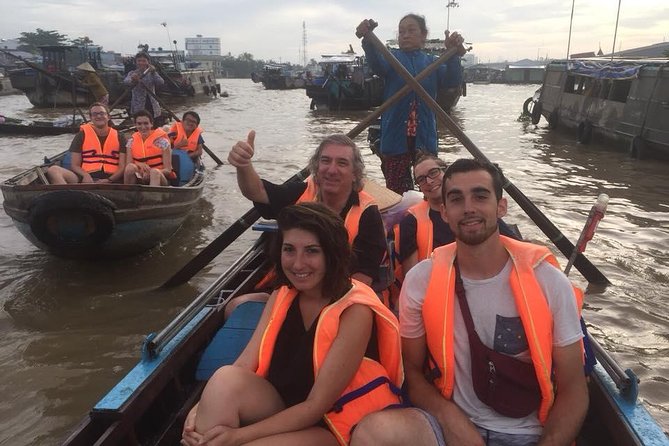
REVIEW · CAI RANG FLOATING MARKETS
Full-day Cai Rang floating market – explore countryside, make bakery – from HCM
A 3:30 AM wake-up becomes a real river show. This full-day Cai Rang floating market trip from Ho Chi Minh City strings together sunrise boats, working food-making, and island life on the Mekong Delta.
I like that you get meals built into the day, not just snacks. I also like the hands-on cake and noodle experiences, so you do more than stand and look. One real consideration: it is a long, early start, and there is some walking that may feel rough if you are not steady on your feet.
In This Review
- Key highlights you will feel on the day
- The 3:30 AM departure that makes Cai Rang work
- Cai Rang Floating Market: breakfast, boats, and why the sunrise matters
- Sau Hoai rice noodle and pho factory: the craft behind what you eat
- Can Tho canals by car and ferry: a slower tempo between busy stops
- Binh Thuy Ancient House: a historical pause without dragging the pace
- Cồn Sơn island time: countryside walking, orchards, and village lunch
- Floating fish raft village and the snakehead fish dance
- Cake making: what you actually take home from the workshop
- Guides and pacing: why names keep coming up
- Is $119 worth it for a Mekong Delta day from HCMC?
- What to pack and how to handle a long, early day
- So, should you book this Cai Rang floating market tour?
Key highlights you will feel on the day
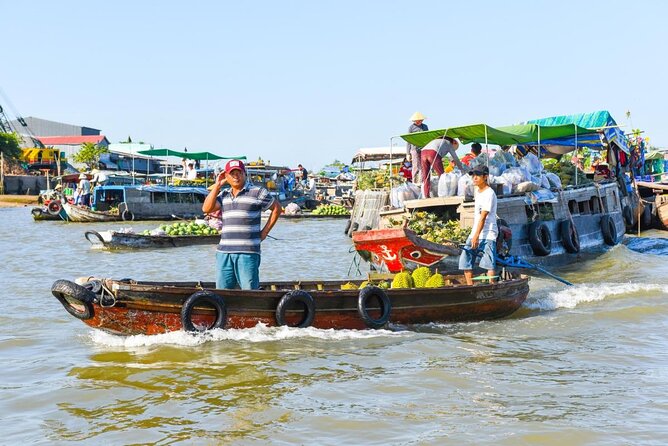
- Cai Rang sunrise breakfast on the floating market gives you the best light and the busiest trading energy, early enough to miss some crowds
- Rice noodle and pho factory visit shows the craft behind everyday comfort food
- Ferry, canals, and a historical house stop break up the day so it does not feel like one long bus ride
- Cồn Sơn island time includes countryside trekking and local village-style activities
- Fruit orchard tasting plus cake making turns the trip into a food-focused cultural day
- Fish raft village moments, including snakehead fish dancing bring the Mekong Delta to life beyond the market
Other early mornings on the water
- From HCM: Mekong Delta & Cai Rang Floating Market 2-Day Tour★ 4.5 · 1,183 reviews
- Cai Rang Floating Market & Mekong Delta 2-Day Tour from HCM City★ 5.0 · 942 reviews
- Small-group Mekong Floating Market Day Trip from Ho Chi Minh City★ 5.0 · 886 reviews
- Mekong Delta & Cai Rang Floating Market 2-Day Tour from HCMC★ 5.0 · 813 reviews
The 3:30 AM departure that makes Cai Rang work
This is not a slow morning tour. You are picked up from downtown Ho Chi Minh City hotels around 3:30 to 4:00 AM, then you head out in a private car. The payoff is timing. Cai Rang feels most alive at sunrise, when boats are already moving and vendors are set up for trade.
The tour is listed at about 15 hours, with return to Ho Chi Minh City by around 17:00 (timing can vary). That means you are basically trading one full day in the city for a full Mekong Delta experience. If you hate early starts, this may feel like too much. If you want the real rhythm of the river, the early departure is the whole point.
Group size is kept to a maximum of 16 travelers, so you usually do not feel like you are lost inside a crowd. That also helps if your guide needs a moment to explain what you are seeing, like how boats trade produce or how noodle dough turns into noodles.
Cai Rang Floating Market: breakfast, boats, and why the sunrise matters
Your day begins at Cai Rang Floating Market, after reaching the ferry area to get there. You spend about two hours on the water market experience, including breakfast time. A lot of tours reach the floating market later, when the morning energy starts to fade. Here, the schedule is built to get you there early.
Cai Rang is big for a reason. The market is a living workplace, not just a scenic backdrop. You see how produce moves from orchards and farms onto boats, and you notice the patterns. Some boats arrive with goods to sell, others buy, and the flow is constant.
Food is part of why Cai Rang is unforgettable. Expect breakfast served in a way that feels local to the setting. You are also likely to taste fruits that match what is in season and what vendors have on hand, which is one of the easiest ways to understand the delta’s food culture.
Practical tip: sunrise on the Mekong Delta can mean cooler air than you expect in southern Vietnam, even if the day later warms up. Dress in layers so you are not stuck either freezing during the early ferry ride or sweating later during walking segments.
Sau Hoai rice noodle and pho factory: the craft behind what you eat
After the market, you head to a rice noodle and pho factory stop, around 20 minutes. This is a short visit, but it is focused. You get guided access to see how noodles are made, with local experts explaining the process.
Why this stop matters: rice noodles are a daily staple in southern Vietnam. Seeing the steps helps you connect your breakfast and lunch to something real and work-based, not just a plate of food. It also makes the rest of the day click, because you start noticing how much of delta life connects to food production.
This is not a hands-on workshop where you spend hours kneading dough, but it is enough to understand the scale and seriousness of noodle-making. If you are the type of traveler who likes to know where a dish comes from, this stop is a strong use of time.
Can Tho canals by car and ferry: a slower tempo between busy stops
You also get time on Sông Cần Thơ to explore the canals, about 30 minutes. This segment is listed as admission-free, but it is not filler. It is the bridge between market energy and island/countryside activities.
Canals in this region shape everything, including how people farm, transport goods, and build communities. Even if your focus is food, this stop gives you geography. You start to understand why boats matter more than roads here.
A nice bonus is variety of movement. The tour includes travel by car, foot, and ferry, so your body is not stuck in one position the entire day. That variety is one of the reasons the day feels complete instead of rushed.


Binh Thuy Ancient House: a historical pause without dragging the pace
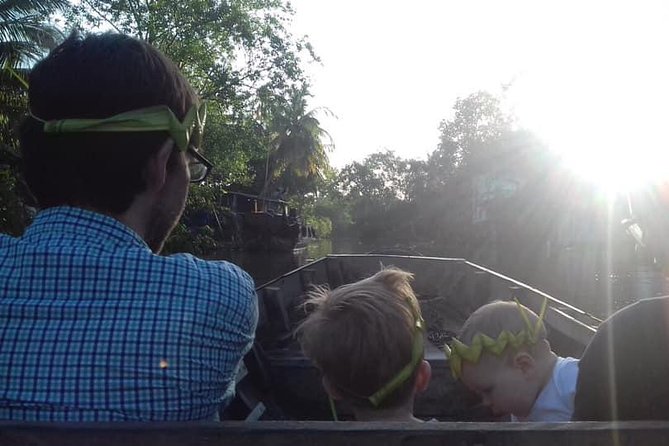
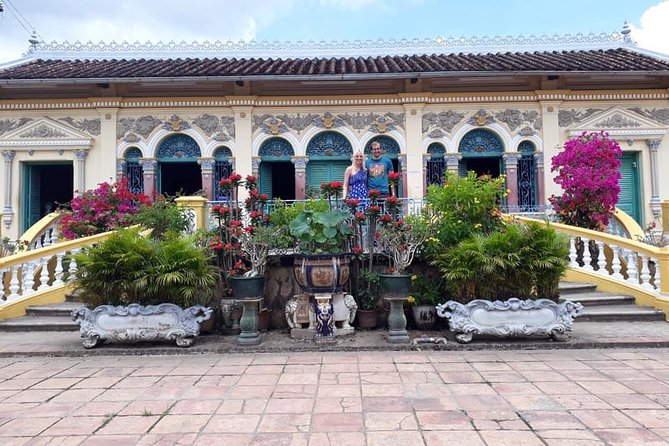
Next you visit Binh Thuy Ancient House, with about 30 minutes there. This is a historic house over a century old. It gives you a different kind of story than markets and factories, one connected to architecture and local heritage in Can Tho.
This stop is useful in a practical way. It breaks the pattern of only seeing working spaces. You get a moment to slow down, look carefully, and understand that the delta has long had both rural livelihoods and distinct cultural identity.
The drawback is that it is time-limited. If you love deep museum-style history, you might wish this segment lasted longer. If you just want context while keeping the day moving, it fits the overall pacing.
Cồn Sơn island time: countryside walking, orchards, and village lunch
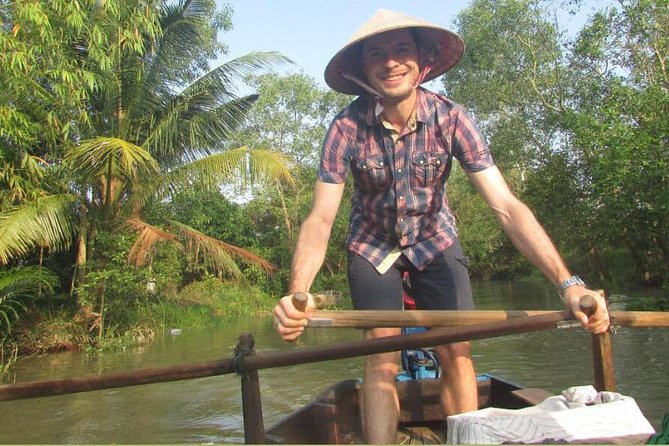
Then comes Cồn Sơn, where you take a small boat to a tropical island and spend about two hours on activities with local people. This is where the tour shifts from mainland stops to a more village-and-countryside feel.
You are likely to experience a scenic trek through the Mekong countryside and islands. This is also where orchard-style food experiences often appear, including tasting fruit such as pomelo and star apple. The goal is to show you how local agriculture connects to the market food chain.
Lunch in the village setting is built into the plan. The overview describes an authentic village lunch plus a cake buffet, which is a great format for sampling different local flavors without waiting in lines or constantly ordering.
This segment is also where the day’s hands-on element becomes more memorable. The tour includes cooking trials, including making traditional cakes and local delicacies yourself. Even if you are not a confident cook, a short guided workshop is usually enough to let you participate, take home a few techniques, and feel the difference between homemade and mass-produced.
Comfort note: island walking and any bridge or uneven paths can be part of the experience. One negative account mentioned being pushed into a walking route that felt unsafe. If you have mobility concerns, it is smart to tell your guide early, and ask what surfaces you will cross before you commit yourself to a longer walkway.
Floating fish raft village and the snakehead fish dance
A major part of the cultural package is a floating fish raft village, paired with a performance moment: you watch the snakehead fish dance. This is exactly the kind of stop that is hard to replicate on your own, because it is tied to local farming and daily river routines.
Some food-and-animal experiences around fish farms have also shown up in descriptions tied to this kind of stop. For example, several accounts highlight the fun of fish-farm interaction such as koi fish foot nibbles, often called a fish spa. If you do not like the idea of fish near your feet, skip any optional foot interaction and stick to watching.
The deeper value here is that you see how the river supports livelihoods. Fish farming is not a side activity. It is part of the food economy alongside fruit, rice noodles, and local baked goods.
If you are photographing, bring a phone cover or something that helps you handle mist and early-morning humidity. River areas can be damp, and you do not want to risk your camera for a single great shot.
Cake making: what you actually take home from the workshop
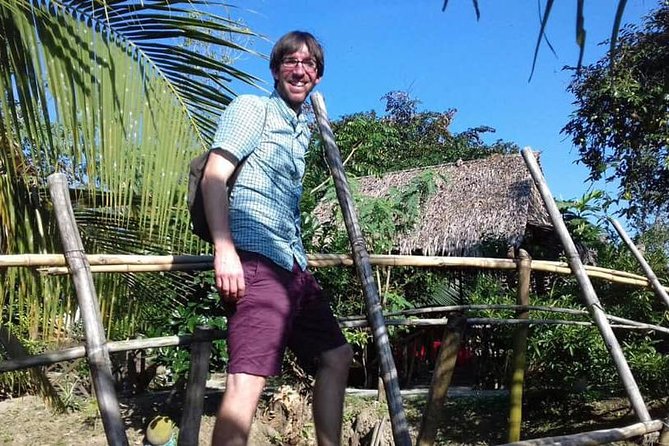
This tour is not only a sightseeing checklist. It includes cake and local delicacy making trials. From the way the day is described, you are not watching a chef do a show. You are participating, tasting, and learning the basics behind traditional treats.
Why this matters for value: a lot of day trips include food, but only a few include a skill. A short workshop gives you a story you can remember later, like what ingredient textures feel like and what the steaming process does to the final cake.
If you have a sweet tooth, you will likely enjoy the rhythm. The day builds from sunrise market breakfast into noodle craft, then into orchard fruit tasting and ends with village lunch and cake buffet. It is a full food arc, not just random bites.
If you do not eat much sweets, it is still worth it for the cultural angle. Cake is one of the easiest entry points to local ingredients and seasonal produce, like fruit pairings and how local bakeries work with what is grown nearby.
Guides and pacing: why names keep coming up
Even without naming every person you might meet, the pattern is clear. People on these tours often mention guides like Nga, An, Trinh, Dai, Nhu Y, Windy, Donny, and Dao. The praise is usually for a few things: friendly explanations, careful attention to comfort, and the ability to connect what you see to how people live.
Some accounts also say guides helped with questions about plants and fruits, and that the day stayed stress-free because the guide knew local vendors well. If you are the type of traveler who likes to ask, this kind of guide makes the trip more than a photo tour.
The caution is that one review flagged a guide issue involving tone and a route that felt risky. That does not mean your day will go wrong. It does mean you should plan to communicate. If you want a calm pace, say so. If you want to avoid steep or questionable walkways, ask early.
Is $119 worth it for a Mekong Delta day from HCMC?
At $119 per person, this trip sits in the higher range for a day tour, but it is also packed with inclusions. The big value points are the ones that cost real money if you book them separately: pickup from your Ho Chi Minh hotel in a private car, entrance fees included, breakfast and lunch included, and cooking trials that are part of the price.
You also get ferry and boat time folded into the day, plus multiple stops that cover markets, canals, a historic house, island activities, and a floating fish raft village. That variety is hard to recreate without hiring transport and a local guide.
There is also a small-team factor. With a maximum of 16 travelers, you are more likely to get attention and smoother logistics than with very large groups.
One more practical sign of value: the experience is often booked around 28 days in advance on average. That usually means people see it as a smart add-on when they want one big Mekong day but do not want to organize the details themselves.
My bottom-line take: it is worth it if you want a full food-and-river day with built-in meals and a hands-on cooking component. If you just want a cheap, scenic boat ride, you can find simpler options, but they tend to cut out the workshop and some of the meal structure.
What to pack and how to handle a long, early day
The day runs from very early morning to early evening, and you will be on water, then walking, then back on boats again. Pack for comfort, not just weather.
Bring:
- Comfortable shoes you can trust on uneven paths (especially around island time)
- Sun protection for later in the day
- Light layers for the early morning start
- A small bag for snacks or fruit tasting extras if you have dietary needs
- A reusable water bottle if you like to sip through the day
Also, if you have dietary restrictions, it is wise to mention them when you book. Some accounts describe guides accommodating needs, but you should still communicate clearly so the kitchen plan fits you.
Finally, set expectations. This is a packed day. You will not have time to lounge. You will walk, ride, taste, and watch. If that sounds like your kind of travel, you will likely have fun.
So, should you book this Cai Rang floating market tour?
Book it if you want:
- Cai Rang sunrise with breakfast and market action
- A day that mixes market life, food production, and island countryside
- Hands-on cake making and cooking trials so you leave with more than photos
- A smaller group size (up to 16 travelers) with a local guide who explains what you see
Skip it or ask more questions first if:
- You strongly dislike very early starts and long travel days
- You have mobility concerns about walking routes, especially around bridges or island paths
- You are sensitive to fish-farm interactions and prefer to avoid any foot-nibbling experiences
If you book with the right mindset, this trip does what the best Mekong Delta days do. It gives you the river as a workplace, the food as culture, and the sunrise market as the scene you came for.
Markets on the Water
- From HCM: Mekong Delta & Cai Rang Floating Market 2-Day Tour★ 4.5 · 1,183 reviews
- Cai Rang Floating Market & Mekong Delta 2-Day Tour from HCM City★ 5.0 · 942 reviews
- Small-group Mekong Floating Market Day Trip from Ho Chi Minh City★ 5.0 · 886 reviews
- Mekong Delta & Cai Rang Floating Market 2-Day Tour from HCMC★ 5.0 · 813 reviews
- 1-Day Mekong Delta Cai Rang Floating Market-Ancient House-Pancake★ 5.0 · 653 reviews
Other Ho Chi Minh City tours our reviewers keep coming back to
- Ho Chi Minh: Southern Vietnam 4-Day Authentic Mekong Farm Trip
★ 5.0 · 18 reviews - Private Long Tan Tour and Nui Dat Battle Field
★ 4.0 · 18 reviews - Mekong Delta Adventure from Ho Chi Minh City
★ 5.0 · 18 reviews - LUXURY Mekong 2 Days 1 Night SMALL GROUP Stay at Tiny Homestay with BBQ Dinner
★ 5.0 · 18 reviews - Cu Chi Tunnels Eco Boat Tour
★ 5.0 · 18 reviews - City Sightseeing Saigon Bus Tour
★ 3.5 · 18 reviews
Cai Rang Floating Markets, compared.
 ★ 5.0Can Tho: Floating Market & Mekong’s Legacy( About 6 Pax)From $261,438 reviews
 ★ 4.5From HCM: Mekong Delta & Cai Rang Floating Market 2-Day TourFrom $811,183 reviews
 ★ 5.0Cai Rang Floating Market & Mekong Delta 2-Day Tour from HCM CityFrom $61942 reviews
 ★ 5.0Small-group Mekong Floating Market Day Trip from Ho Chi Minh CityFrom $92886 reviews
 ★ 5.0Mekong Delta & Cai Rang Floating Market 2-Day Tour from HCMCFrom $67813 reviews
 ★ 5.01-Day Mekong Delta Cai Rang Floating Market-Ancient House-PancakeFrom $47653 reviews
 ★ 4.9Can Tho: A Real Mekong Tour, Floating Market, Cacao & Life’sFrom $25574 reviews
 ★ 5.0Largest Floating Market, Wild Small Canal System & Organic cocoaFrom $38564 reviews
Also in these Vietnam lists