
REVIEW · VIETNAM
From War to Peace: Long Tân & the Australian Base Today
The scars of Long Tan still speak. This tour is built to make the Vietnam War feel clear, human, and specific, with visits to the Long Tan site, the tunnel network of Long Phuoc, and the Australian base area at Nui Dat. It also aims to connect the stories of different sides, using an interpreter and sharing the day in a way that helps you understand more than just dates and distances.
I love the chance to walk through key places tied to the Battle of Long Tan and the nearby Long Phuoc tunnels, not just read about them. I also like that the day is anchored by an English-speaking guide and a straightforward plan, with entrance fees, water, and cool towels handled for you.
One consideration: the pickup timing can be tight, so I’d give yourself a little buffer. In at least one real-world booking, pickup ran late compared to the stated time.
In This Review
- Key Things to Know Before You Go
- Long Tan Memorial Cross: where the battle story becomes physical
- The value of the guide and the two-sided approach
- Long Phuoc tunnels: understanding how people lived under pressure
- Lunch on the road: fuel up without breaking the flow
- Nui Dat SS Hill: the Australian base viewpoint in 1966
- Why the “both sides” framing can change how you see it
- Price and value: what $91.19 really buys you
- Timing and pickup reality: plan like a local, not like a timetable
- What to bring for Long Tan and tunnels
- Who this tour suits best
- Should you book From War to Peace: Long Tân & the Australian Base Today?
- FAQ
- How long is the tour?
- What stops will I visit?
- Is hotel pickup and drop-off included?
- Is lunch included?
- Are entrance fees included?
- Do I need to bring a ticket?
- Is the tour private?
- What if weather is bad?
- Can I get a refund if I cancel?
Key Things to Know Before You Go
- Long Tan Memorial Cross is the main arrival moment, tied directly to the battle site
- Long Phuoc tunnels show how the village connected to jungle areas nearby
- Nui Dat SS Hill ties the story to the Australian base presence in 1966
- Lunch is included so you can focus on the sites, not scrambling for food
- Private group format means only your group participates, not a mixed herd
Narrowing it down? These Ho Chi Minh City tours kept surfacing in our reviews.
- Cu Chi Tunnels Tour from HCM City – Morning or Afternoon★ 5.0 · 15,833 reviews
- From HCM City: Mekong Delta Tour with Sampan Journey★ 4.5 · 13,132 reviews
- Ho Chi Minh City Street Food Tour & Sightseeing By Motorbike★ 5.0 · 9,413 reviews
- HCM: Cu Chi Tunnels-Tapioca Small Group Tour Morning or Afternoon★ 5.0 · 7,485 reviews
Long Tan Memorial Cross: where the battle story becomes physical
Most Vietnam War tours in Ho Chi Minh City end up feeling like a drive-by, photo stop, and goodbye. This one gives you a proper block of time at the Long Tan Memorial Cross, and that matters. The cross marks the site of the Battle of Long Tan, and it sits in Ba Ria-Vung Tau Province, around 110 km east of Ho Chi Minh City. That distance is more than geography, it is a shift from city life into the terrain where history happened.
You’ll start with the trip out, then land at the memorial and spend time there before moving on. The Long Tan Cross works like a fixed point on a map. Once you see it, the rest of the day makes more sense. The guide can connect what you are looking at to what the different sides faced, and you are not left piecing everything together later.
A practical note: since this stop is about focused time on the memorial, wear something comfortable you can sit through if there is a short waiting period. It is not a “dash in for 30 seconds” kind of moment. This is your first real “slow down and take it in” stop.
The value of the guide and the two-sided approach
The tour is designed for people interested in American, Australian, and Kiwi veterans from the Vietnam War, and it also tries to address a common gap: Viet Cong actions are less widely known. The operator’s approach is to bring former protagonists together through interpretation, and the experience is framed around conversations that help both sides be heard.
That matters because Long Tan is one battle with many perspectives. If you only hear one side, you get a story that feels complete but actually isn’t. Here, the plan aims to broaden your understanding by finding Vietnamese veterans who fought at Long Tan and using an interpreter to connect the dots.
I’d look at the guide as your translator for context, not just your driver with a script. You want someone who can explain why certain locations mattered, not just what happened in a report-like way. The tour includes an English-speaking guide, and that is key for reading the sites as you move through them.
Also, it is worth keeping your expectations realistic. Even with a strong two-sided framework, you still may not get every detail you personally hope for. What you should get is a structured, respectful day centered on places tied to the war.
Long Phuoc tunnels: understanding how people lived under pressure
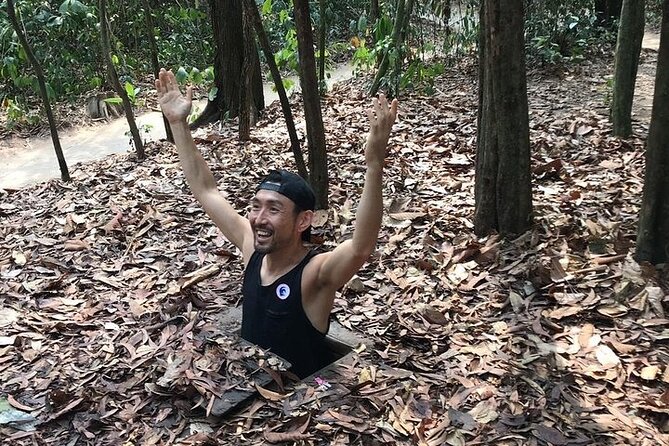
Next comes Long Phuoc, where the village had an extensive tunnel system linking the village to jungle areas to the northeast. Tunnel systems in Vietnam were not one thing. They were many things in one, meeting places, pathways, first aid stations, and more. At Long Phuoc, the goal is to help you visualize how this network supported people and activities beyond the surface.
This is the short stop on the route, about an hour, with entrance fees included. In that time, the tour should do two jobs: first, show the layout conceptually, then give you enough explanation for it to mean something. If you rush through, tunnels become just holes in the ground. If you slow down, you start to understand the logic of survival and movement.
One drawback to keep in mind: tunnels are physically limiting. If you do not love tight spaces or uneven ground, you may prefer focusing on the explanations and the visible sections. This stop is designed for general participation, but comfort varies person to person.
Still, even without getting into every detail, the tunnel visit is a strong change of pace. It shifts the day from battlefield monuments to the mechanics of daily life during conflict. That balance helps the larger story feel less abstract.
Lunch on the road: fuel up without breaking the flow
After the tunnels, the day moves toward the Long Tan battlefield story again, with lunch included before heading to the Nui Dat SS Hill area. You are getting a Vietnamese meal with Asian food, and there is a vegetarian option if needed.
The practical value here is simple: you do not have to find food between stops. With an 8-hour day, that keeps your schedule intact. It also means you can take in more of what the guide is saying, rather than losing time buying snacks or waiting for your turn at a restaurant.
My advice: eat like someone who expects to be walking and standing later. Use lunch as a recharge, not as your whole meal for the day. Bring water habits too, since the tour provides mineral water but the heat outdoors can still catch you off guard.


Nui Dat SS Hill: the Australian base viewpoint in 1966
The final major stop takes you to the Nui Dat SS Hill area, a prominent Australian military base location in South Vietnam during the Vietnam War. In 1966, this area was part of the then Phuoc Tuy Province. Understanding that matters. A base is not the same as a battlefield, but bases shape what battles can happen and where they happen.
This stop is where the day ties together. You’ve seen the Long Tan Memorial Cross, you’ve learned how Long Phuoc connected village and jungle space, and now you look at the base area context. SS Hill adds a different kind of geography, one tied to positioning, movement, and operational planning.
Because this segment is about an hour, you will want to focus on the guide’s explanation. Ask questions if you can, especially about why that location mattered. The more you can connect viewpoint to movement, the more the day stops being a list of stops and becomes a chain of understanding.
Why the “both sides” framing can change how you see it
A lot of war history trips focus on one narrative. This one tries to bring different perspectives together. That is not just a feel-good concept. It changes the way you process what you see.
If you are interested in Australian involvement, you are getting the Long Tan memorial and the Nui Dat SS Hill base context. If you want a fuller Vietnam War picture, you are also getting the emphasis on Viet Cong actions and the chance to meet local Vietnamese veterans who fought in the Long Tan area. The interpreter component is the bridge that makes those connections understandable in English.
And yes, the experience is described as including interpreter-facilitated exchange and plenty of rice wine. Since rice wine is not explicitly listed in the included items, I would treat it as part of the operator’s approach rather than something you should plan your day around. Still, the idea signals that the tour is meant to be more personal than museum-only history.
How to think about it on the ground: you are not just looking at memorials. You are meeting the living layer of memory attached to them. That can be powerful, and it can also be heavy. Keep a respectful tone. Let the silence do its job when it comes.
Price and value: what $91.19 really buys you
At about $91.19 per person, this half-day-style tour can be good value if you compare what you would otherwise pay on your own.
Here is what is handled for you:
- Modern transportation during the tour, plus hotel pickup and drop-off
- Lunch with Vietnamese and Asian food, plus a vegetarian option
- An English-speaking guide
- Cool towels and mineral water
- Entrance fees
There are also extras baked in, like group discounts and a mobile ticket. Even if you ignore the sentimental value, the logistics help. Entrance fees and pickup can add up when you DIY, and the time saved is real when your schedule is tight in Ho Chi Minh City.
The main “cost” you should factor is time and emotional energy. You are spending a full 8 hours approx on sites tied to conflict. If you are the type who prefers lighter themes after visiting museums all day, you may want a slower second day. But if war history, memory, and place-based storytelling are your thing, this price becomes easier to justify.
Timing and pickup reality: plan like a local, not like a timetable
The tour runs about 8 hours. Stop 1 is the longest, about 4 hours at the Long Tan Memorial Cross, then Long Phuoc tunnels for about an hour, and then lunch plus time at Nui Dat SS Hill. Travel time is part of the schedule, since Long Tan is roughly 110 km east of Ho Chi Minh City.
The tour includes pickup and drop-off, and that is great. It also means you need to be ready when the van arrives. One booking issue highlighted a pickup delay, with pickup arriving later than the stated time. That is not unusual in big-city logistics, traffic, or coordination, so I strongly recommend you do not schedule another hard obligation right after.
A simple plan: keep your next commitment later the same evening, or at least leave an hour or two buffer. If you like calm mornings, consider having breakfast and relaxing in the hotel lobby instead of rushing out.
What to bring for Long Tan and tunnels
You are going to be outside for parts of the day, including the memorial area and the tunnel-adjacent environment. Here are smart, non-complicated choices:
- Comfortable shoes for walking on uneven surfaces
- Sun protection (hat and sunscreen), because this area is hot during much of the year
- A light layer, since vehicles can be air-conditioned
- A refillable water bottle mindset, even though the tour provides mineral water
Also, keep your phone charged. The day is photo-friendly in the sense that there are clear memorial viewpoints, but you should treat it as a history visit first. If you can, put your camera away during guide explanations and save it for transitions.
If you have any mobility concerns about uneven ground, mention it ahead of time so the guide can suggest how to manage the stops comfortably. The tour states most travelers can participate, but it never hurts to plan for your own limits.
Who this tour suits best
This is a strong fit if you:
- Want a focused day that links Long Tan, tunnels, and the Australian base context
- Care about English commentary and a guided sequence that makes the sites understandable
- Prefer private-group attention rather than a large multi-stop scramble
- Have interest in how different sides remember the same places, with interpreter support
It is also a good choice when you have limited time in Ho Chi Minh City. You get a full historical arc without spending days on logistics.
If you want a “just give me the facts fast” experience, you might find some parts slower or more reflective than a strict timeline. And if you dislike emotionally heavy topics, you may prefer a lighter tour that day. This one is about memory and conflict, even though it is structured as a sightseeing route.
Should you book From War to Peace: Long Tân & the Australian Base Today?
I think it is worth booking if you want more than a drive-by photo tour. The combination of Long Tan Memorial Cross, Long Phuoc tunnels, and Nui Dat SS Hill gives you a clear, connected story. Add in the included lunch, entrance fees, English-speaking guide, and pickup, and the value holds up well.
Book it if you can handle an 8-hour day focused on war sites and you want local perspective through interpreter-facilitated exchange. Skip it if you are only looking for casual sightseeing, or if you hate schedule uncertainty and cannot tolerate possible pickup delays.
If you do book, plan a calm morning, give yourself a buffer for pickup, and treat the guide’s context as the main attraction. The places are important, but the meaning comes from how the day is framed and explained.
FAQ
How long is the tour?
The experience runs about 8 hours.
What stops will I visit?
You’ll visit the Long Tan Memorial Cross area, the Long Phuoc tunnels, and the Nui Dat SS Hill area connected to the battle and base context.
Is hotel pickup and drop-off included?
Yes, modern transportation plus hotel pickup and drop-off are included.
Is lunch included?
Yes. Lunch is included with Vietnamese food and Asian food, and there is a vegetarian option if needed.
Are entrance fees included?
Yes, all entrance fees are included.
Do I need to bring a ticket?
You’ll use a mobile ticket.
Is the tour private?
Yes. It is described as a private tour/activity, and only your group will participate.
What if weather is bad?
The tour requires good weather. If it is canceled due to poor weather, you’ll be offered a different date or a full refund.
Can I get a refund if I cancel?
Yes. Free cancellation is available up to 24 hours in advance for a full refund.
Other Ho Chi Minh City tours our reviewers keep coming back to
- Ho Chi Minh: Southern Vietnam 4-Day Authentic Mekong Farm Trip
★ 5.0 · 18 reviews - Private Long Tan Tour and Nui Dat Battle Field
★ 4.0 · 18 reviews - Mekong Delta Adventure from Ho Chi Minh City
★ 5.0 · 18 reviews - LUXURY Mekong 2 Days 1 Night SMALL GROUP Stay at Tiny Homestay with BBQ Dinner
★ 5.0 · 18 reviews - Cu Chi Tunnels Eco Boat Tour
★ 5.0 · 18 reviews - City Sightseeing Saigon Bus Tour
★ 3.5 · 18 reviews