
REVIEW · VIETNAM
Deep Water Solo
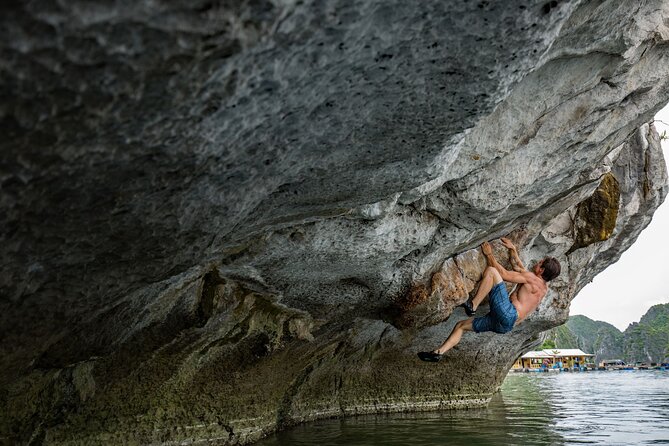
Tides turn these cliffs into a playground. In Lan Ha Bay on Cat Ba Island, the high water gap lets you climb limestone faces and finish with a jump into the blue water, all in one smooth session. I love the small-group feel, capped at 8 travelers, so you get more attention than you do on bigger day tours.
What I like even more is that the guides teach you how to read the rock, not just where to place your feet. A possible drawback is that this activity is tide and weather dependent, so your timing can shift if conditions are not right.
In This Review
- Key highlights to know before you go
- Lan Ha Bay tides and why deep water solo here is special
- Meeting at Kem Tràng Tiền and getting to the cliffs
- Basket boat to limestone: how the climb + jump rhythm works
- Guides and coaching that builds confidence (Edcel, Covan, Alex, Jack)
- Half-day or all-day, tide timing, and how to plan your Cat Ba day
- What’s included: shoes, routes info, lunch, and a small group cap
- Price and value for $58 in a high-tide setting
- Safety mindset, fitness level, and who should think twice
- Should you book this Deep Water Solo in Lan Ha Bay?
- FAQ
- How long is the Deep Water Solo experience in Cat Ba?
- Where does the tour start and end?
- Is it half-day or all-day?
- Does the tour depend on tides?
- What is included in the tour price?
- What skill level do I need?
- How big is the group?
- Do I need to bring a ticket?
- What happens if weather is bad or I need to cancel?
Key highlights to know before you go
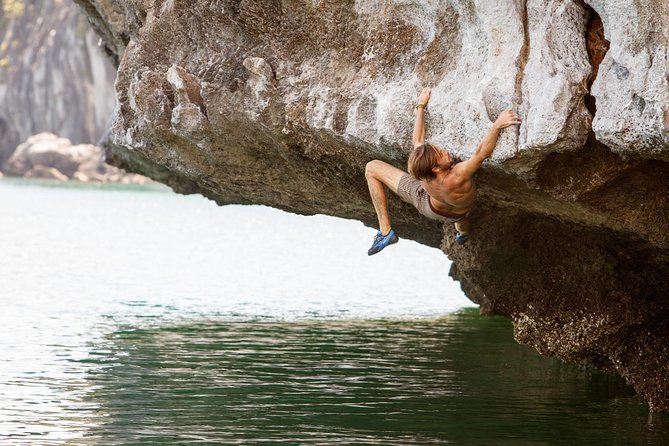
- Lan Ha Bay limestone + high tides, built for deep water solo
- Basket boat start, then climbing with guide direction
- Options by ability, from beginners to more experienced climbers
- Coaching that builds confidence, with guides like Edcel, Covan, Alex, and Jack mentioned in feedback
- Shoes, route info, and lunch included, which makes the $58 feel more reasonable
Narrowing it down? These Cat Ba tours kept surfacing in our reviews.
- Lan Ha – Ha Long Bay – Dau Be island 2D/1N from Cat Ba in less touristy areas.★ 5.0 · 3,460 reviews
- Full day trip to Lan Ha-Ha Long Bay from Cat Ba, avoid the crowds★ 5.0 · 3,317 reviews
- From Ha Noi/Cat Ba: Full-Day Cruise to Lan Ha bay – Ha Long Bay★ 5.0 · 504 reviews
- Lan Ha – Ha Long bay with local experts (small group guaranteed)★ 5.0 · 342 reviews
Lan Ha Bay tides and why deep water solo here is special
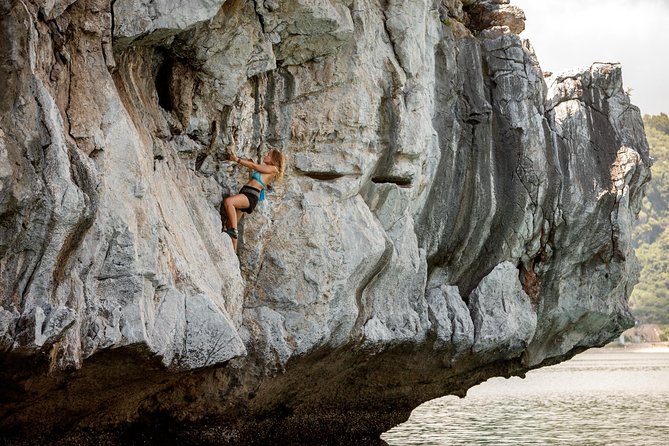
Cat Ba and nearby Lan Ha Bay have a rare trick of nature: big tidal swings. When the water is high, the limestone cliffs end close to the surface, which is exactly what deep water solo needs.
That means the whole experience feels more usable and less “stunt-like.” You are not just looking at dramatic rock from afar. You are actually climbing it, then dropping into the water right after each climb.
And yes, it is thrilling. But it is also practical thrill, because the setting does most of the work for you.
Meeting at Kem Tràng Tiền and getting to the cliffs
Your day starts at Kem Tràng Tiền, 224 Đường 1/4, TT. Cát Bà, Cát Hải, Hải Phòng, Vietnam. The plan brings you back to the same meeting point at the end, which is handy when you want to keep the rest of your Cat Ba schedule simple.
From there, the trip uses a basket boat to reach the climbing area. That part is not just transport. It is time to settle in, look at the limestone walls, and get your bearings before you start moving up rock.
Expect this to be guided from start to finish, not a free-for-all. The guides are there to run the climbing flow and keep everyone on the right route for the tide and your level.
Basket boat to limestone: how the climb + jump rhythm works
The format is straightforward, and that is a good thing. You hop on the basket boat, climb your chosen lines with the guide’s direction, then do a jump into the water after each climb.
Between climbs, there is usually a lot of downtime to watch others, get tips, and reset mentally. Several pieces of feedback point out that the experience feels manageable even if you are nervous at first, because you are not being rushed into the hardest move every time.
What makes this rhythm work for different people is that the guides can steer you toward problems that match what you can do today. If you are new, you’ll focus on safer-feeling sequences. If you already climb, you can go for more technical options.
This is one of those tours where the scenery is great, but the real star is the combo of rock movement + water reset.
Guides and coaching that builds confidence (Edcel, Covan, Alex, Jack)
The coaching is one of the most praised parts of the whole trip. In feedback, guides are described as real pros, calm teachers, and genuinely supportive when people feel shaky.
A few names come up:
- Edcel is noted for being a high-level climber and helping people with the exact technique they need.
- Alex is praised for guiding people up and offering hands-on instruction during climbs.
- Covan, including mention of his background as a South African guide, is highlighted for encouragement, especially for beginners.
- Jack is mentioned for picking climbs for a child, which suggests the team pays attention to matching ability and bravery level.
One very practical detail worth paying attention to is how some guides use tools and tactics to help you find the right holds and direction. A laser pointer is mentioned as a way to show where to move next, which can be a big deal when you are standing on rock and your brain freezes.
If you are nervous about the water part, you can take comfort from the way guides reportedly create a secure feeling before you try. Confidence here is not luck. It is instruction, step by step.


Half-day or all-day, tide timing, and how to plan your Cat Ba day
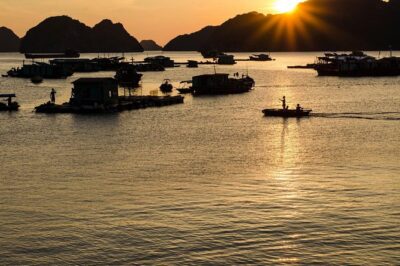
This tour can be organized as a half-day (morning or afternoon) or all day, depending on tide levels. That matters because deep water solo only works well when the water is high enough to make the landing zone usable.
So the main planning rule is simple: check the tide and your schedule before you book. If you lock yourself into a tour time that leaves no flexibility, you might end up waiting longer or having the plan adjusted.
A good mindset is to treat this as a tide window experience, not an exact-hour factory assembly line. When conditions line up, you get the full value of the cliffs, the water jump, and the flow between climbs.
Duration is listed at about 5 hours for the experience, but your actual time on the water can vary based on whether you do half-day or full-day options.
What’s included: shoes, routes info, lunch, and a small group cap
At $58, the “what’s included” list is a big reason this tour feels like solid value.
You get:
- Climbing shoes
- Climbing routes information
- Lunch
- A guide and route guidance throughout the climbing
Several people also mention a good lunch, including feedback that it is part of the day on the boat or boathouse setup during full-day formats.
The small-group cap is another strong point. With a maximum of 8 travelers, you are less likely to get ignored when you need help on a move or a setup. In practice, that means more time thinking about climbing, less time waiting for instructions.
What you should also consider is that this is not a sit-and-watch tour. It is active, and you’ll want to dress and prepare for moving on rock and then getting into the water.
If you are a beginner, you may get more value from doing this before you spend days only doing scenic boat rides. Deep water solo forces you to learn faster, but with supportive coaching.
Price and value for $58 in a high-tide setting
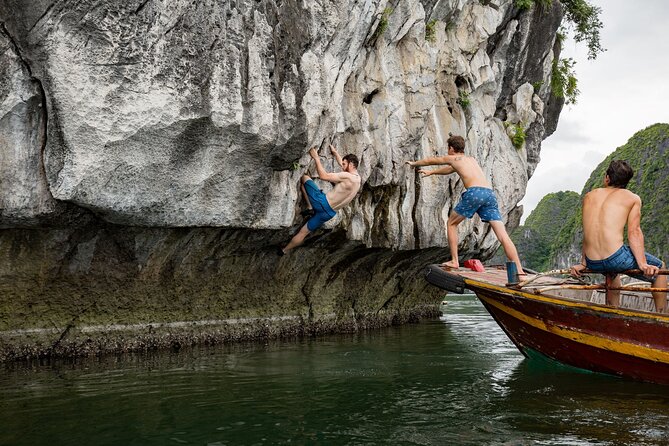
Let’s talk value in real terms. The price is $58 for a guided half-day or similar time block, with climbing shoes and lunch included.
Deep water solo in a place like Lan Ha Bay is weather and tide dependent. That is operational risk on the provider side, not yours. So when the tour happens, you are paying for two things at once:
1) access to the right coastline condition at the right time
2) hands-on instruction so you can actually climb safely and confidently
You are also paying for a small-group experience. In places with higher capacity, a guide might spend most of their time herding people. Here, the group size cap makes it more plausible you get real coaching, not generic safety talk.
The one caveat on value is experience level. One piece of feedback suggests it is probably better if you have some climbing experience beforehand. That said, other feedback specifically praises the team for teaching beginners and keeping them secure and laughing while they try.
So, you should judge value based on what kind of learner you are. If you like hands-on coaching, you will likely find the price fair.
Safety mindset, fitness level, and who should think twice
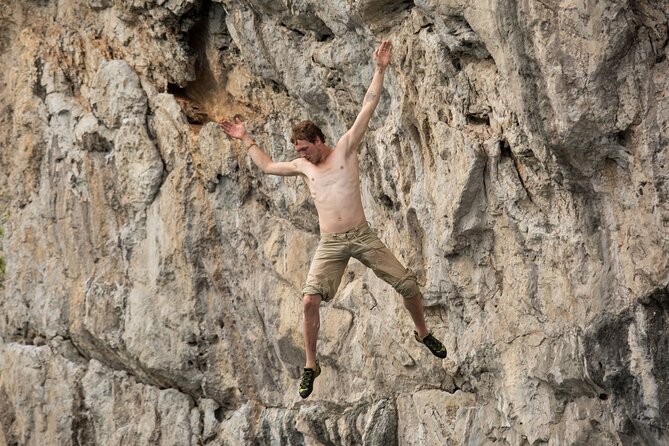
The tour asks for moderate physical fitness. That does not mean you need to be an athlete, but it does mean you should be comfortable with climbing effort, balance, and getting in and out of the water.
Also, “deep water” sounds simple until you feel it. This is why guide support matters so much. People in feedback describe feeling secure and confident even when they had little experience.
If you have a strong fear of water or a serious anxiety about jumping, be honest with yourself. The tour does include a jump after each climb. You are not just climbing near the water and stepping away.
Finally, remember the weather requirement. This experience requires good weather. If conditions are not good, the tour can be canceled, and you’ll be offered a different date or a full refund.
Should you book this Deep Water Solo in Lan Ha Bay?
I think you should book if you want a hands-on, scenic activity where the setting does not just look impressive, it actively improves the experience. The combination of limestone climbing and a post-climb jump is hard to replicate on other islands.
You’ll especially like it if:
- you want guidance, not just a route handout
- you enjoy learning through trying, even when you feel nervous
- you like small groups and want more attention from your guide
You might pause if:
- you are unsure about climbing at all, or the idea of the jump stresses you out
- your schedule is tight and you cannot handle tide-driven timing changes
If your dates line up and you are ready to try, this tour is the kind of Cat Ba day that becomes a real memory, not just a photo stop.
FAQ
How long is the Deep Water Solo experience in Cat Ba?
The experience is listed as about 5 hours (approx.).
Where does the tour start and end?
It starts at Kem Tràng Tiền, 224 Đường 1/4, TT. Cát Bà, Cát Hải, Hải Phòng, Vietnam, and it ends back at the same meeting point.
Is it half-day or all-day?
It can be organized as a half-day (morning or afternoon) or as an all-day experience, depending on tide level.
Does the tour depend on tides?
Yes. The schedule depends on the tide level, since the activity is designed for the right conditions for deep water solo.
What is included in the tour price?
You receive climbing shoes, climbing route information, and lunch, along with guided climbing.
What skill level do I need?
The tour is best with travelers who have moderate physical fitness. Some feedback suggests it is probably better if you have some climbing experience, but the guides also provide support for beginners.
How big is the group?
The tour has a maximum of 8 travelers.
Do I need to bring a ticket?
No. It uses a mobile ticket.
What happens if weather is bad or I need to cancel?
The experience requires good weather. If it is canceled due to poor weather, you’ll be offered a different date or a full refund. You can also cancel for a full refund if you do so at least 24 hours in advance.
Other Cat Ba tours our reviewers keep coming back to
- Sunset and Plankton Bioluminescent Night Kayak Lan Ha Bay
★ 5.0 · 18 reviews - Half day Deep Water Solo
★ 5.0 · 18 reviews - Full day deep water soloing – Kayaking in Cat Ba – Ha Long Bay.
★ 5.0 · 20 reviews - Best love – Full Day Boat Tour to Lan Ha Bay and Ha Long Bay
★ 4.5 · 20 reviews - One Day Lan Ha Bay with Cat Ba Expedition Tour
★ 5.0 · 22 reviews - Sunset Tour in Lan Ha Bay | 4-star Daiichi Cruise
★ 5.0 · 24 reviews